Masked Cardinal or Red-Crested Cardinal?
Here's how to tell the difference



Masked Cardinal
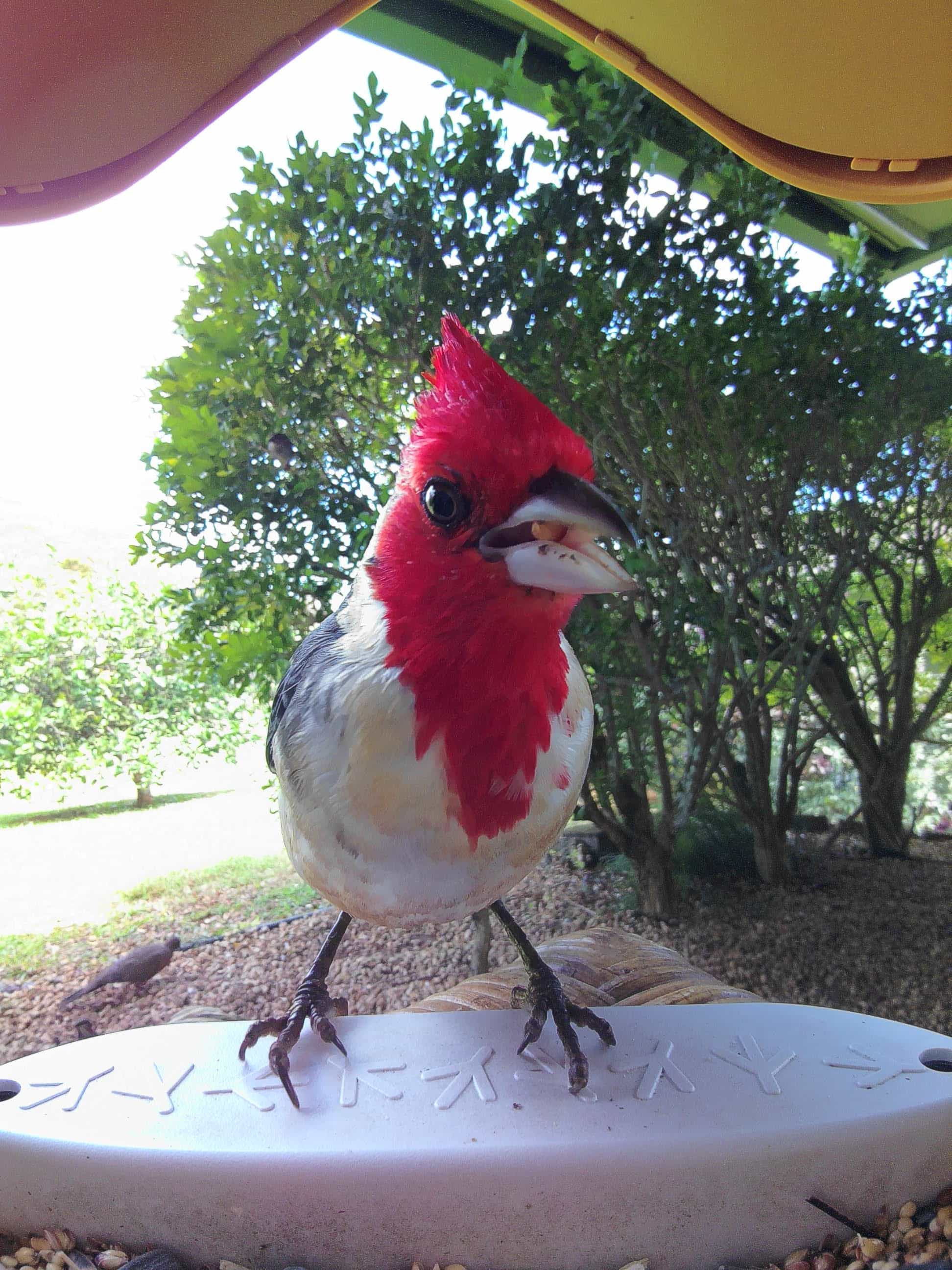


Red-Crested Cardinal
Masked Cardinal
Paroaria nigrogenis
General Appearance
The Masked Cardinal is medium-sized with striking coloration that makes it easy to identify. Its body is predominantly vibrant red, offset by a stark black mask around the eyes extending to the nape, creating a distinct contrast. The wings and tail are a darker shade of red, giving it a rich, full-bodied appearance. The bird's beak is short and robust, often displaying a light orange or pinkish hue, complementing its flamboyant plumage.
Male vs Female
Both male and female Masked Cardinals share similar plumage, making it challenging to differentiate them based solely on appearance. Both sexes exhibit the same bright red coloration with the characteristic black mask. There may be slight variations in shade intensity or beak coloration, but these are minimal and not always apparent to the casual observer. Behavioral differences during breeding season, such as increased vocalizations or display behaviors in males, might aid in distinguishing them.
Juvenile
Juvenile Masked Cardinals differ significantly from adults in terms of coloration. Initially, juveniles have more subdued hues with a brownish tinge that gradually transitions to the characteristic bright red as they mature. The black mask is less pronounced and can be patchy in younger birds. Over time, as they molt and mature, their plumage develops the more intense colors and distinct markings seen in adults.
Size
5.9 - 6.3 in/0.7 - 0.9 oz
There's more to learn about Masked Cardinal
View full detailsRed-Crested Cardinal
Paroaria coronata
Also known as: Brazilian Cardinal
General appearance
The red-crested cardinal, also known as the Brazilian cardinal, is a bird species characterized by a vivid red head and crest contrasted with a grey body, black wings, and white underparts. Adults have a powerful, conical-shaped beak that is often gray-blue or dusky. They reach an average length between 17.5-20 cm. The species doesn't undergo any pronounced seasonal variations in appearance.
Male vs female
Both sexes display similar coloration; the males and females are almost identical in their plumage with no significant differences in size or color. This is a sexually monomorphic bird species, thus making it challenging to differentiate between males and females.
Juvenile
Juvenile red-crested cardinals differ from mature adults in their coloration. They have a dull overall color with lesser redness on the head, a sign of maturation. The young also have a less prominent crest and brownish hues in their plumage that gradually turn to the characteristic scarlet red as they mature.
Size
7.1 - 7.9 in/1.1 - 1.4 oz
There's more to learn about Red-Crested Cardinal
View full detailsHow to tell the Masked Cardinal from the Red-Crested Cardinal
Visual differences
The Masked Cardinal (20-25g, 6-6.5 inches) features a distinctive black mask and bright red head, with a smaller stature and more uniform plumage. In contrast, the Red-Crested Cardinal (30-39g, 7-8 inches) is larger, has a vivid red crest, grey body, black wings, and white underparts. The Masked Cardinal's beak is less conical than the Red-Crested's strong, dusky beak. Juveniles of both species are duller but differ in development patterns, with the Masked showing brownish tones initially, while the Red-Crested juveniles have a paler head.
Key differences and behavior
The Masked Cardinal (Paroaria nigrogenis) and Red-Crested Cardinal (Paroaria coronata) exhibit notable behavioral differences. Masked Cardinals, residing in northeastern South America's riparian forests, are social, often forming small flocks near water. They adapt to urban areas, feeding on fruits, seeds, and insects. In contrast, Red-Crested Cardinals favor dry subtropical shrublands and are introduced in Hawaii. Both monogamous, Masked Cardinals nest during the rainy season, while Red-Crested Cardinals' nests occur in shrubs with 2-3 eggs. Masked Cardinals' chicks fledge within three weeks, needing further care, whereas Red-Crested fledglings are more independent, leaving the nest in two weeks.
Still not sure? Here are more lookalikes!

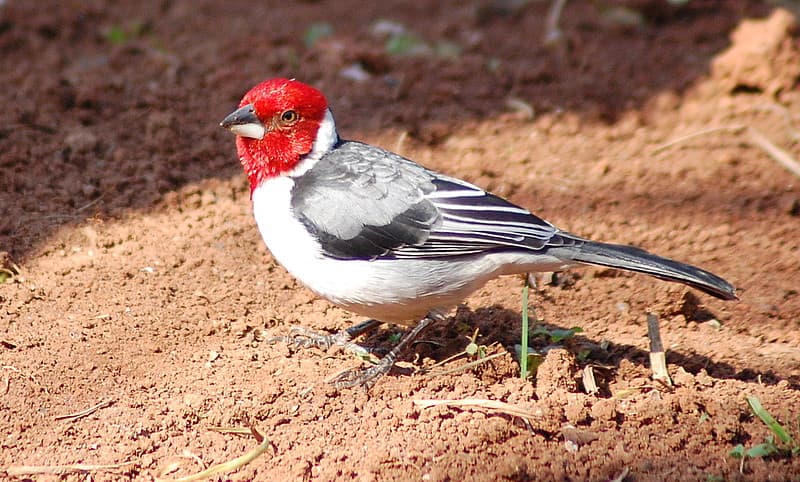

Red-Crested Cardinal vs Red-Cowled Cardinal
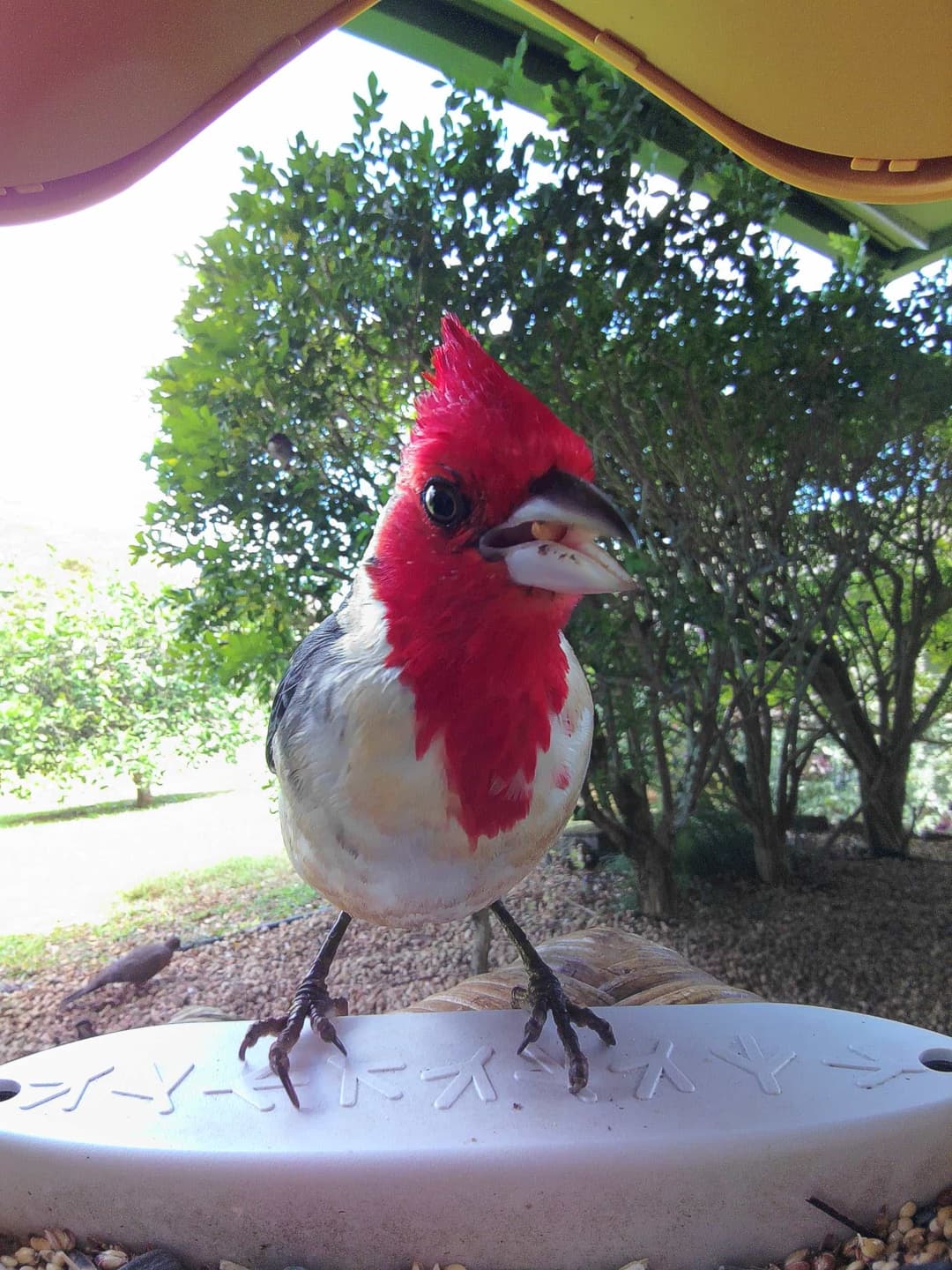
Red-Crested Cardinal vs Red-Headed Cardinal
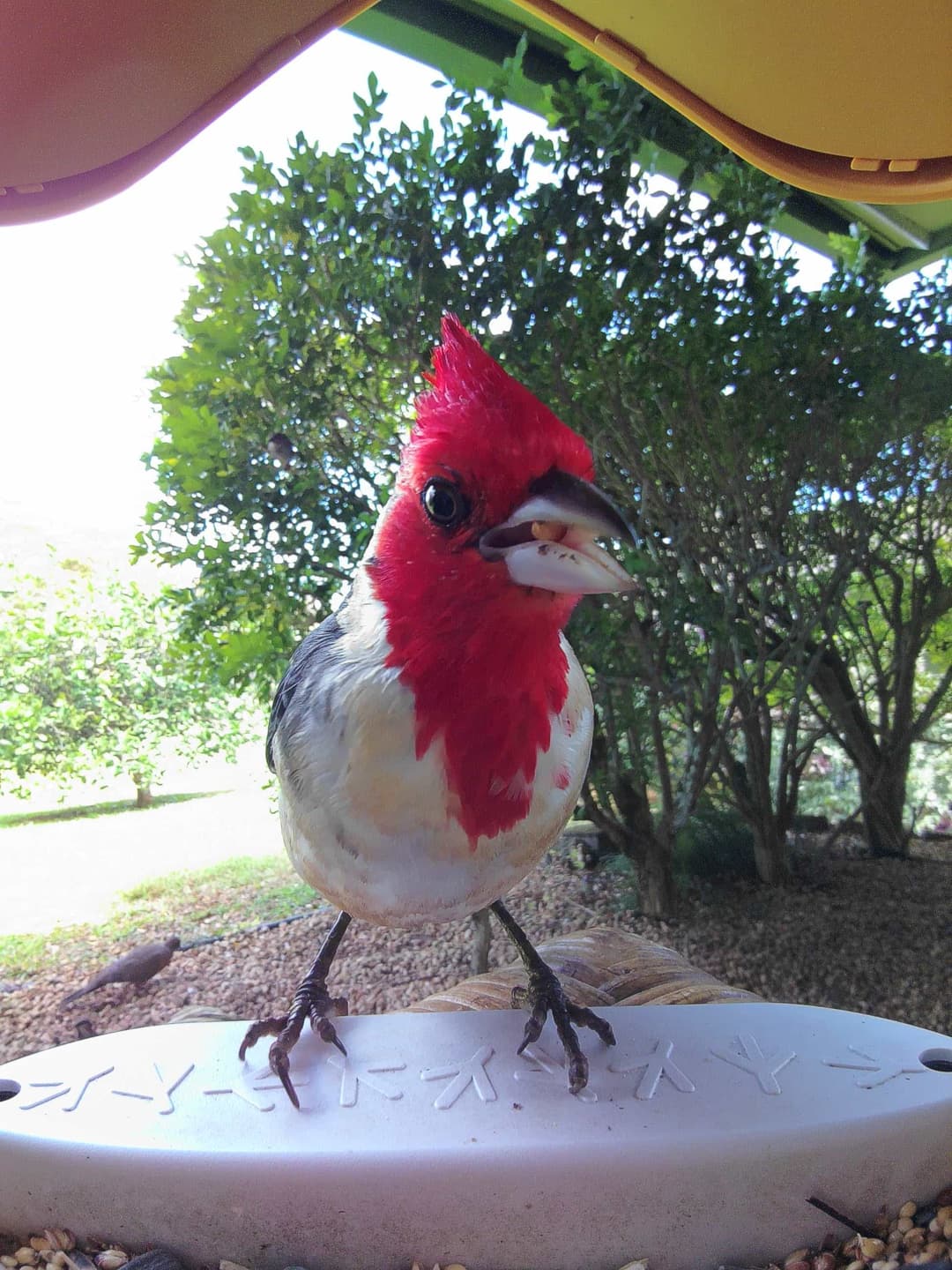
Masked Cardinal vs [Select a bird]

[Select a bird]
Pick a bird to compare
Red-Crested Cardinal vs [Select a bird]
[Select a bird]
Pick a bird to compare