
Red-Headed Cardinal
Red-Headed Cardinal
Paroaria
Quick Identification guide
Quick Identification guide
- •
Features a bright red head and throat, contrasting sharply with its body colors
- •
Body is mostly white with grayish-black wings and back
- •
Possesses a sturdy, conical beak well-adapted for seed consumption
Description
Did you know that Paroaria means a small yellow, red and grey bird in the extinct Tupi language? These six species of birds are all characterised by a distinctive look and are typically found in pairs or small groups. They are pretty expressive, too! For example, when excited, the red-crested cardinal is known to raise its crest!
The red-headed cardinal can weigh between 17to48grams and be from16.5to19centimeters tall.
The red-headed cardinal typically has a lifespan of 10-15 years. This is comparable to close relatives such as the house finch that lives around 11-14 years, and other songbirds like the house sparrow with a life expectancy of 10-15 years. Like many birds, mortality is highest in their first year, but survivors can live longer in captivity.
Did you know?
Most popular questions about red-headed cardinal
How to recognise a red-headed cardinal?
General appearance
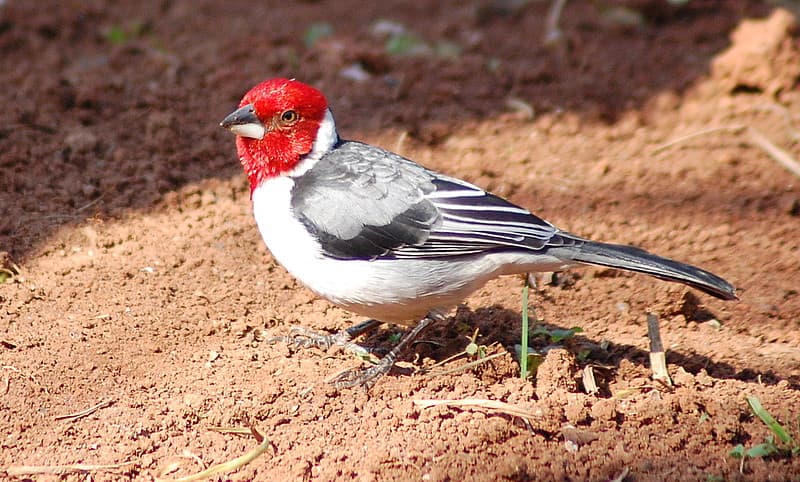
The red-headed cardinal, also known as Brazilian Cardinal, is a remarkable bird known for its brilliant red head and black mask, in contrast with the grey body-texture. Their beak is cone-shaped and extremely sharp, able to crack seeds and nuts easily. The bird is medium-sized, around 19-22 centimeters long. The overall hue shifts are not very drastic seasonally, the signature red-head remains prominent throughout the year.
Male vs female
Sexual dimorphism is not highly pronounced in red-headed cardinals. Males and females largely look similar with red heads, masked faces, and grey bodies. However, males tend to be marginally larger and have a slightly brighter red coloring. They also boast more melodiously complex songs than females.
Juvenile
Juvenile red-headed cardinals show a more subdued color palette than adults. Their heads are brown or dull red, gradually brightening to the characteristic scarlet as they mature. They also lack the distinctive black mask of the adults.
Often mistaken for
Red-Cowled Cardinal vs Red-Headed Cardinal
The Red-Cowled Cardinal has a red patch on the back of its head that extends onto the wings, while the Red-Headed Cardinal has a predominantly red head.
Red-Crested Cardinal vs Red-Headed Cardinal
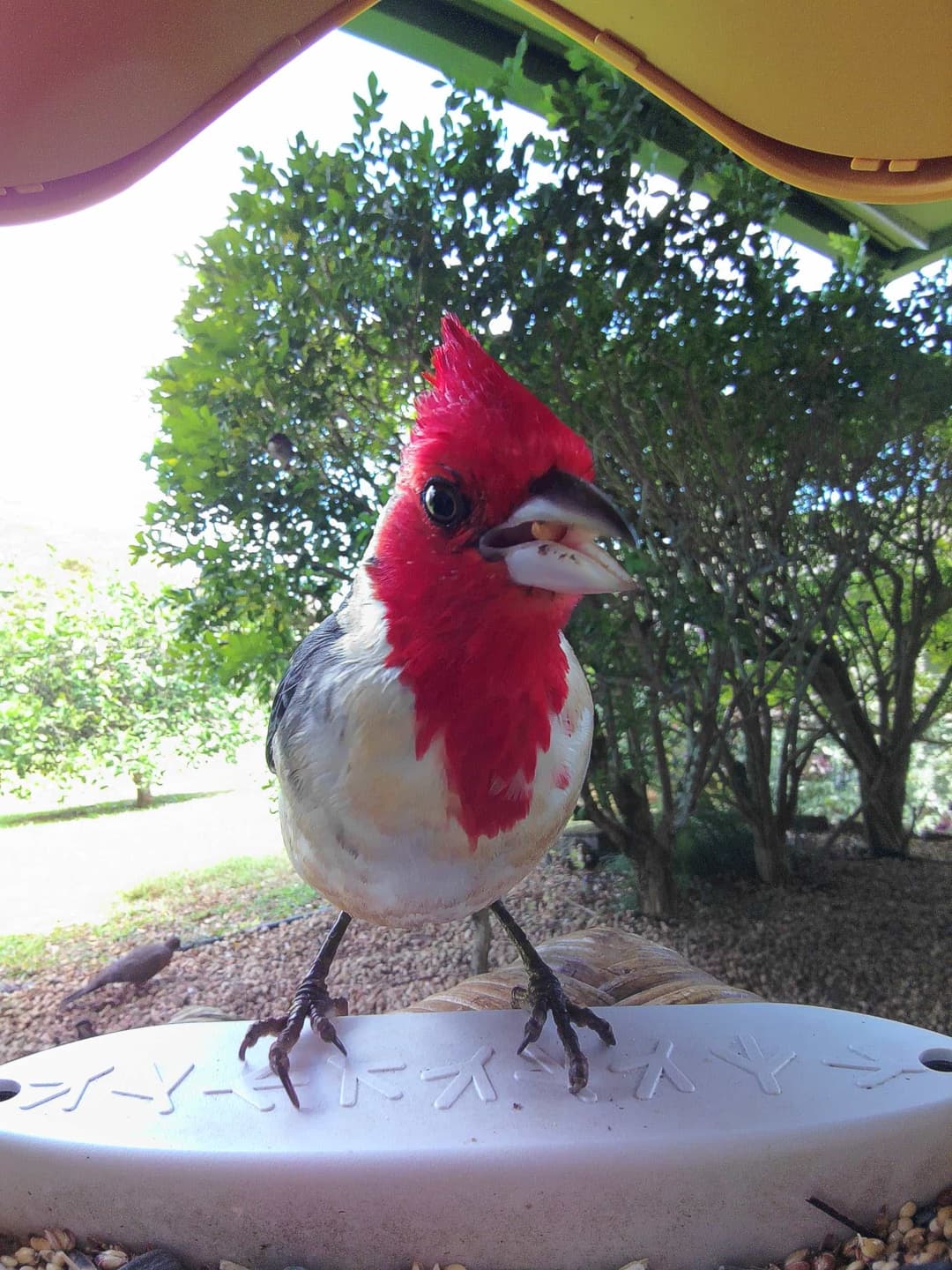
The Red-Crested Cardinal has a distinctive red crest atop its head and a white underbelly, whereas the Red-Headed Cardinal lacks the prominent crest.
Breeding and nesting habits of the red-headed cardinal
Mating behaviors
During the breeding season, red-headed cardinals engage in vibrant displays to attract mates, which include singing and aerial displays. Males perform courtship dances, accompanied by melodious songs to appeal to potential female partners.
Nesting details
Red-headed cardinals prefer building their nests in dense shrubs or low trees. They use materials such as twigs, grass, and leaves. For those looking to attract cardinals to their gardens, providing dense shrubbery and native plants can create a suitable nesting environment.
Eggs and chick-rearing
The female typically lays 2-4 eggs, which are incubated for about two weeks. Both parents contribute to feeding the chicks, bringing insects and seeds to the nest until fledglings are ready to leave after about 10-12 days. Ensuring a supply of seeds and fresh water in your garden can support chick-rearing.
What does a red-headed cardinal like to eat?
Berries
Fruits
Insects
Plants
Seeds
Natural diet
The red-headed cardinal primarily feeds on a variety of seeds, fruits, and insects. In its natural habitat, it consumes seeds from grass and other plants, while also eating small fruits and berries. Insects are a significant part of its diet, providing essential protein, especially during the breeding season. It often forages on the ground or in low vegetation, seeking out food sources that are abundant in its environment.
Bird feeders
At bird feeders, the red-headed cardinal is known to consume a range of seeds and grains. Black-oil sunflower seeds are particularly favored due to their high nutritional value and accessibility. Safflower seeds are another common choice, as well as millet and cracked corn. These offerings mimic the seeds found in its natural diet, making bird feeders a supplementary source of nourishment, especially in urban and suburban settings where natural food sources may be limited.
Top cardinal attracting strategies
Attracting the red-headed cardinal can be simple if you set your yard up to be friendly and inviting. Start by picking the right feeder - cardinals prefer a sturdy, flat surface they can land on, like a platform, tray, or hopper style feeder. Tube feeders are also suitable if they have a large enough perch. Opt for a feeder with a wide, reinforced perch that can hold the heavier weight of a cardinal.
Snacks cardinals love and bird buddy seeds
When it comes to food, cardinals love sunflower seeds. But for best results, choose Bird Buddy seeds - specifically designed to tempt these beautiful birds. Chosen by experts and perfectly compatible with all seasons, Bird Buddy seeds will provide the nutritional support cardinals need. Safflower seeds, cracked corn, and peanut chunks are also favorites. Notably, ensure the feeders are near shrubbery or trees for cardinals who favor a quick retreat to cover.
Try these fun tricks to tempt cardinals
A few tricks can also encourage cardinals to visit and maybe stay for a sing-along. Placing feeders near a birdbath will help, as these birds love water sources. Cardinals are territorial, so setting up a few feeders spaced apart can attract more birds. Also, these birds are typically early risers, so make sure food is available at dawn. Lastly, keep a quiet and peaceful environment since loud noises or fast movements can scare them away.
Where can you find red-headed cardinals?
Primary habitat
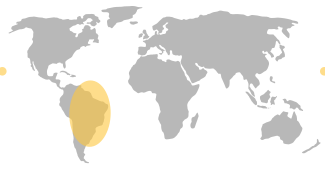
The red-headed cardinal typically resides in the South and Midwest of the United States, favoring woodlands, swamps and riparian areas.
Additional range
They can sometimes be found in suburban and urban areas. They have no specific climate preference, but they migrate to warmer regions during winter.
Do they migrate?
The red-headed cardinal, also known as the red-crested cardinal, primarily does not migrate and tends to be a resident bird throughout its range. This species is native to parts of South America, including Argentina, Bolivia, Paraguay, Uruguay, and southern Brazil. It inhabits open and semi-open areas, often near water sources and can adapt to urban environments. There is no significant migratory behavior observed in red-crested cardinals, as they generally remain within their home territories year-round. They are adaptable to seasonal variations within their habitats but do not undertake long-distance migrations like some North American cardinal species. Although they do not migrate, red-crested cardinals may exhibit local movements in response to environmental changes, such as food availability or breeding needs. These movements are typically within a localized area, and there is no defined migratory route, timing, or specific key locations for such shifts. Overall, the red-crested cardinal maintains a relatively stable presence in its native regions throughout the year, reflecting its adaptability to various habitats and conditions.
What is the role of red-headed cardinals in nature and how to protect them?
Conservation status
The red-headed cardinal is currently classified as being of Least Concern. It is relatively common within its range, but faces threats from habitat loss due to deforestation and land conversion for agriculture. Conservation efforts focus on preserving natural habitats and implementing sustainable land-use practices. Additionally, illegal trapping for the pet trade poses a threat, and local initiatives aim to curb this activity. While not immediately endangered, ongoing habitat protection is crucial to ensure the species' continued stability.
Ecological role of red-headed cardinals
Its role in the ecosystem
The red-headed cardinal, or paroaria coronata, serves a significant role in its ecosystem as a pest controller and seed disperser. Being omnivorous, it feeds on a variety of insects, helping to keep pest populations manageable and contributing to the maintaining of the balance in its ecosystem. Furthermore, the red-headed cardinal's diet includes a range of seeds and fruits. It disperses these seeds through its droppings, aiding in plant propagation. This bird also encourages biodiversity by building nests in various habitats, contributing to the growth of diverse plant communities. Its presence hence influences the sustenance of many other species, highlighting its crucial role in the environment.
How to help protect red-headed cardinals
Preservation tips
Habitat preservation strategies
To support red-headed cardinal conservation, habitat preservation is key. Protect nesting and breeding sites by avoiding unnecessary disturbances. Maintain their native vegetation such as trees and scrublands, facilitating a conducive environment for sourcing food and nesting. On farms, practice responsible farming methods that do not harm the bird's habitat, such as organic farming which reduces the use of harmful pesticides.
Community science initiatives
Involve the community in conservation efforts. Kick-off bird-spotting projects where local residents are encouraged to report sightings of the red-headed cardinal. Use these observations to better understand the species' behaviours and trends, which will help tailor future conservation strategies. Educate the public about the bird's importance to ecosystem balance and encourage their active involvement in preserving these species - be it through volunteering, donating or advocating for policy changes.