
Red-Crested Cardinal
Red-Crested Cardinal
Also known as: Brazilian Cardinal
Paroaria coronata


Quick Identification guide
Quick Identification guide
- •
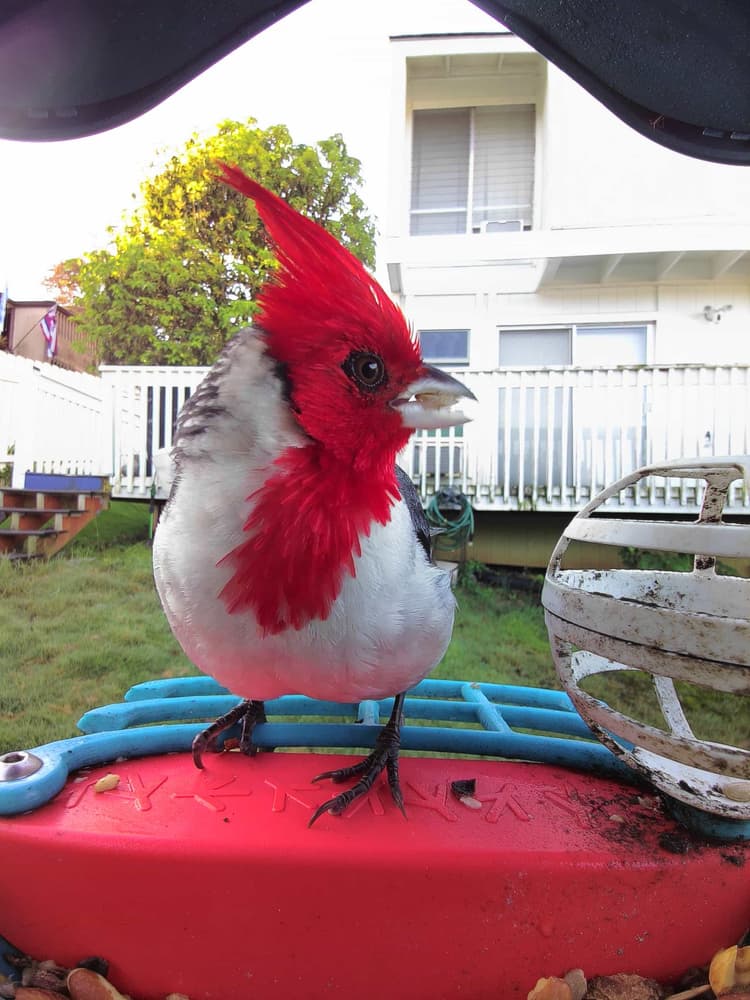
Features a striking red crest on its head, paired with a white and grey body
- •
Has a short, thick beak that is ideal for its feeding habits
- •
Boasts black markings around its face, which contrast sharply with its bright crest
What does a red-crested cardinal sound like?
The red-crested cardinal emits complex, melodious warbling songs often including flute-like whistles and trills. It utters several calls including a sharp "tsip" and a high-pitched, long-drawn, rising "seeip". Other vocalizations often include mimicking sounds of other bird species. Its song is described as particularly sweet and pleasant, making it a favorite among bird-watchers and ornithologists.


Description
Did you know that Paroaria means 'small, red, yellow and grey bird' in the language of the Brazilian Tupí people? It sure is! When excited, these little birds will raise their red crest! Although called a cardinal, they're not actually closely related to the true cardinal family.
The red-crested cardinal can weigh between 30to39grams and be from18to20centimeters tall.
The red-crested cardinal typically lives for up to 15 years in the wild. This is longer compared to some related songbirds like the northern cardinal and the Red-crowned Ant Tanager, which live up to 13 and 9 years respectively.
Did you know?
Most popular questions about red-crested cardinal
How to recognise a red-crested cardinal?
General appearance
The red-crested cardinal, also known as the Brazilian cardinal, is a bird species characterized by a vivid red head and crest contrasted with a grey body, black wings, and white underparts. Adults have a powerful, conical-shaped beak that is often gray-blue or dusky. They reach an average length between 17.5-20 cm. The species doesn't undergo any pronounced seasonal variations in appearance.
Male vs female
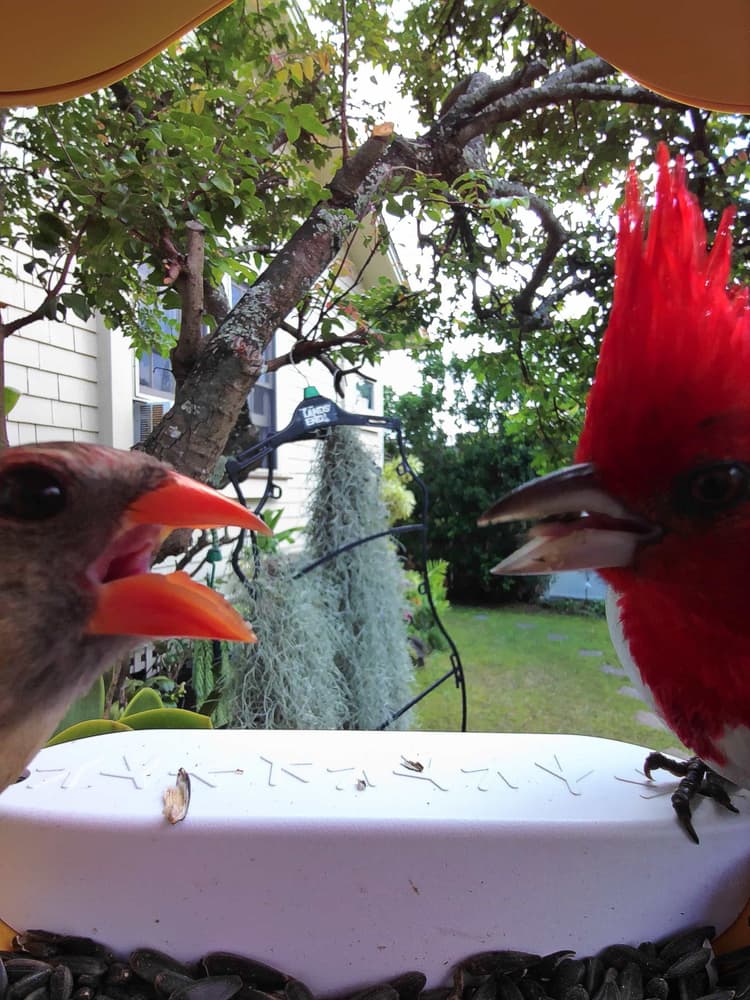
Both sexes display similar coloration; the males and females are almost identical in their plumage with no significant differences in size or color. This is a sexually monomorphic bird species, thus making it challenging to differentiate between males and females.
Juvenile
Juvenile red-crested cardinals differ from mature adults in their coloration. They have a dull overall color with lesser redness on the head, a sign of maturation. The young also have a less prominent crest and brownish hues in their plumage that gradually turn to the characteristic scarlet red as they mature.
Often mistaken for
Red-Cowled Cardinal vs Red-Crested Cardinal
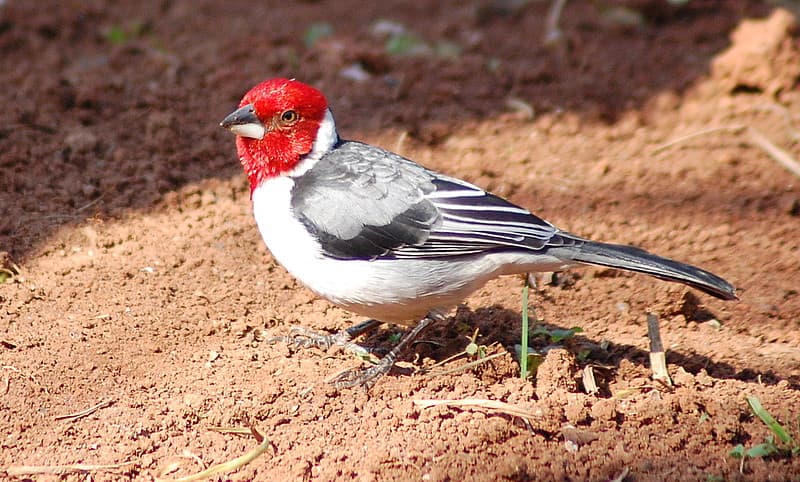
The Red-Cowled Cardinal resembles the Red-Crested Cardinal with its red plumage on the head. However, the Red-Cowled Cardinal has a more extensive red area covering the head compared to the Red-Crested Cardinal's more contained and vivid crest.
Red-Headed Cardinal vs Red-Crested Cardinal
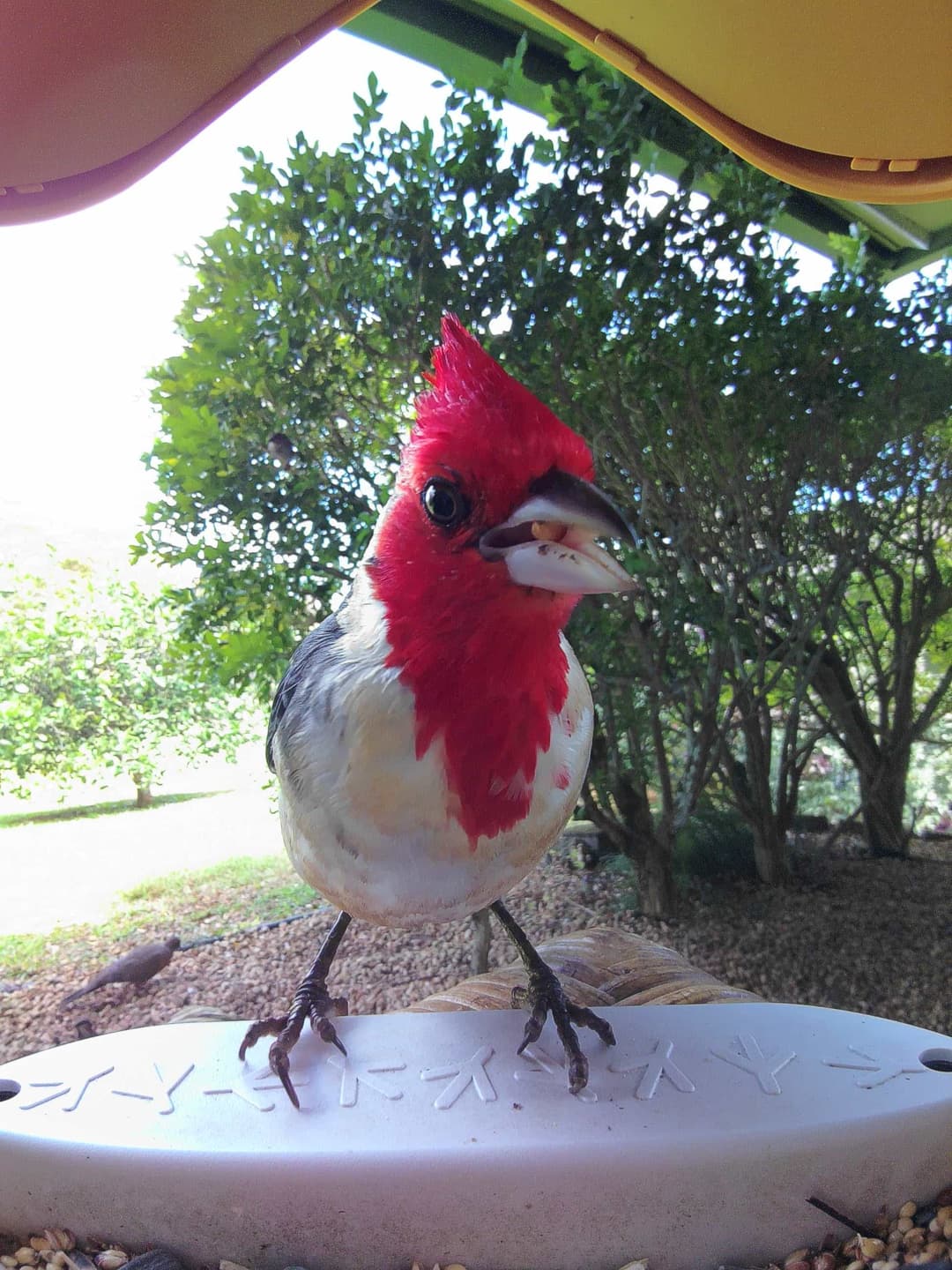
The Red-Headed Cardinal can be confused with the Red-Crested Cardinal due to its similar red head. Unlike the Red-Crested Cardinal, the Red-Headed Cardinal does not have a pronounced crest and has a lighter red coloration.
Breeding and nesting habits of the red-crested cardinal
Mating behaviors
Red-crested cardinals engage in courtship that includes vocalizations and displays of their vibrant plumage to attract mates. Pairs are often monogamous and form long-term bonds.
Nesting details
They build cup-shaped nests in shrubs or trees, using twigs, grasses, and plant fibers. Nesting in gardens is common if there is adequate shrubbery and little disturbance. Providing dense, native shrubs can create an inviting habitat.
Eggs and chick-rearing
Females typically lay 2-3 eggs, with both parents sharing incubation duties for about two weeks. After hatching, both parents feed the chicks, which leave the nest approximately two weeks later.
What does a red-crested cardinal like to eat?
Fruits
Insects
Scraps
Seeds
Natural diet
The red-crested cardinal primarily feeds on seeds, fruits, and insects. Its diet includes a variety of grass seeds, berries from shrubs, and small invertebrates. This bird often forages on the ground or among low bushes, exploiting its habitat's resources.
Bird feeders
At bird feeders, the red-crested cardinal is commonly drawn to black oil sunflower seeds and millet. These birds may also enjoy cracked corn and fruit offerings, such as slices of apple or orange. Their striking plumage makes them a welcome sight for bird enthusiasts.
Use the favorites: what red-crested cardinals enjoy the most
One easy method to invite red-crested cardinals to your yard is by providing their favorite foods. Stock your feeders with sunflower seeds, insects, and berries. Remember, Bird Buddy seeds are your best bet - they're chosen by experts per the seasons and will draw cardinals easily to your yard.
Provide the right feeder: accessible and cardinal-friendly
The type of feeder you go with plays a vital role. Cardinals, including the red-crested variety, prefer large, strong feeders with flat surfaces for them to rest on. They should be set up at a height of approximately 5-6 feet from the ground, ideally in a quiet and secure spot.
Fun tricks to keep the red-crested cardinals around your yard
If you want these beautiful birds to stay around and not just visit, consider setting up a bird bath or water feature. Cardinals love water and will make a stop in your yard a routine if they can enjoy a good bath and drink. Additionally, offering nesting materials like small twigs, straw, or leaves can encourage them to nest in your yard.
Sing-along session: making use of cardinal calls
Did you know that red-crested cardinals are very vocal? Try playing a recording of their song or calls - they often respond well to this and will pay a visit to investigate. Just be sure you are not disturbing any other creatures or neighbours with the calls.
Where can you find red-crested cardinals?

Primary habitat
The red-crested cardinal is found mostly in South America, particularly in Brazil, where it occupies shrublands and forests. It prefers subtropical or tropical dry environments.
Additional range
Unexpectedly, this bird can also inhabit urban areas, parks, and gardens in its range. It has been introduced to and thrives in Hawaii.
Do they migrate?
The red-crested cardinal is predominantly a resident bird, meaning it generally does not migrate and tends to stay in one place throughout the year. This species is native to South America, especially abundant in countries like Argentina, Brazil, Paraguay, Uruguay, and Bolivia. It thrives in open and semi-open habitats such as savannas, shrublands, and urban areas. Throughout the year, red-crested cardinals maintain relatively stable populations within their range, adapting to local environmental conditions. Although these birds are not known for long-distance migrations, they may exhibit some local movements in response to seasonal changes in food availability or habitat conditions, particularly in regions where environmental resources fluctuate. Invasive populations of red-crested cardinals can also be found in Hawaii and Puerto Rico, where they similarly maintain residential patterns without notable migration. In these introduced areas, they have adapted to the local environment and have established stable populations, further underscoring their tendency to remain within a consistent geographic area year-round.
What is the role of red-crested cardinals in nature and how to protect them?
Conservation status
The red-crested cardinal is generally considered common and is not classified as vulnerable or endangered. This bird thrives in a variety of habitats, including urban areas and parks. Key conservation efforts focus on preserving its natural habitats and mitigating the effects of habitat destruction. Although the species faces some threats from urban development and habitat loss, its adaptability and broad range help maintain stable population levels. Predation by introduced species and climate change could pose future risks, but currently, there are no major conservation concerns for this vibrant bird.
Ecological role of red-crested cardinals
Its role in the ecosystem
The Red-crested Cardinal is a bird native to South America that has established itself in other parts of the world. It plays crucial roles in the ecosystem such as pest control and seed dispersal. Its diet largely consists of insects, effectively controlling the population of potentially harmful pests. This not only aids in maintaining the ecological balance but also benefits in agricultural aspects by preventing damage to crops. As a frugivore, it consumes a variety of berries and fruits. While feeding, it inadvertently aids in seed dispersal, contributing to the propagation of many plant species. The Red-crested Cardinal's excreta often contain undigested seeds which germinate and grow into new plants in different locations, thus helping in maintaining biodiversity. Apart from this, the bird is also an indicator species, meaning changes in its population or behavior can signal alterations in environmental conditions. Such early warning signs can aid in implementing conservation strategies. Overall, the Red-crested Cardinal contributes significantly to its ecosystem.
How to help protect red-crested cardinals
Preservation tips
Habitat preservation strategies
Preservation of natural habitats is crucial to Red-crested Cardinal conservation. Ensure local forests and woodlands, which are home to these birds, remain undisturbed by human development. Proposed construction projects should undergo strict environment impact assessments. Planting native plant species helps provide food and nesting areas. Strict laws and regulations should be enforced against the illegal capture and trade of these birds.
Community science initiatives
Community engagement plays a significant role in conservation. Encourage participation in bird-watching and citizen science projects, such as bird counts and habitat monitoring. Offer educational programs on the importance of birds and their role in the ecosystem, highlighting protection of the red-crested cardinal. Partner with local schools and organizations to promote habitat restoration projects. Organize training workshops for community members to identify and report illegal activities like poaching or capture of the birds.