Long-Billed Corella or Little Corella?
Here's how to tell the difference




Long-Billed Corella


Little Corella
Long-Billed Corella
Cacatua tenuirostris
Also known as: Slender-Billed Corella
General appearance
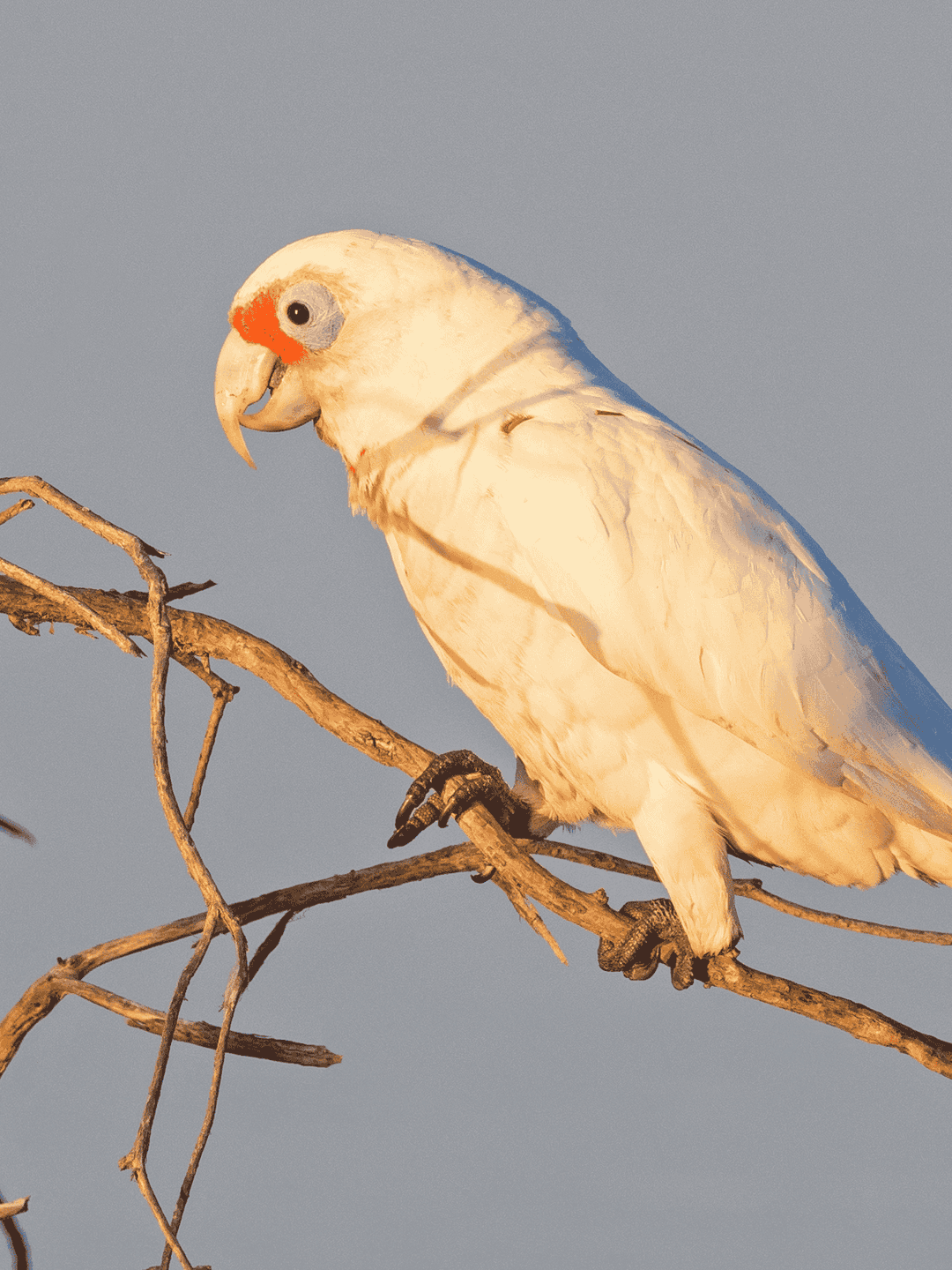
The long-billed corella is the large, white cockatoo, distinct by its lengthy, sharp beak and a broad, sulphur-yellow band across its chest and neck. It has a white or slightly pink plumage, with a pale blue eye-ring and a prominent, rounded crest. It differentiates itself by a long upper mandible that is used for digging out roots and bulbs.
Male vs female
Male and female long-billed corellas are similar in terms of size and coloration, often making it hard to distinguish between the sexes. However, males typically have a larger body and bill size, and a more intense coloring around the eyes. Female corellas have more circular eyes while males have slightly more oval-shaped eyes.
Juvenile
Juvenile long-billed corellas resemble adults, but are generally smaller in size with shorter bills. They also lack the bright yellow crest, which develops as they age, and have dark brown, rather than black, eyes. Juvenile birds also display a more muted, greyish tone to their plumage.
Size
14.6 - 15.7 in/17.6 - 21.2 oz
There's more to learn about Long-Billed Corella
View full detailsLittle Corella
Cacatua sanguinea
Also known as: Short-Billed Corella, Bare-Eyed Cockatoo, Blood-Stained Cockatoo, Little Cockatoo
General appearance
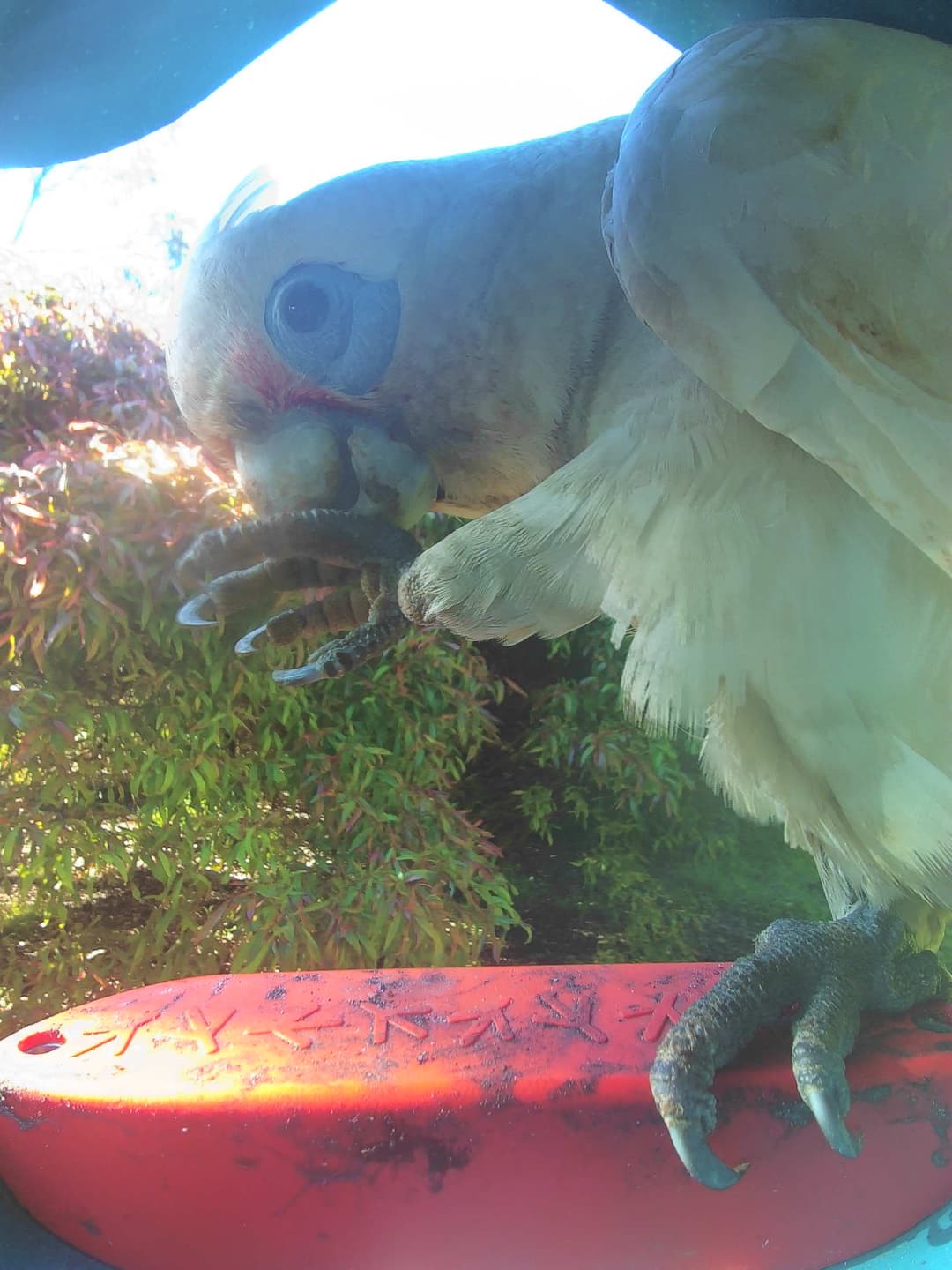
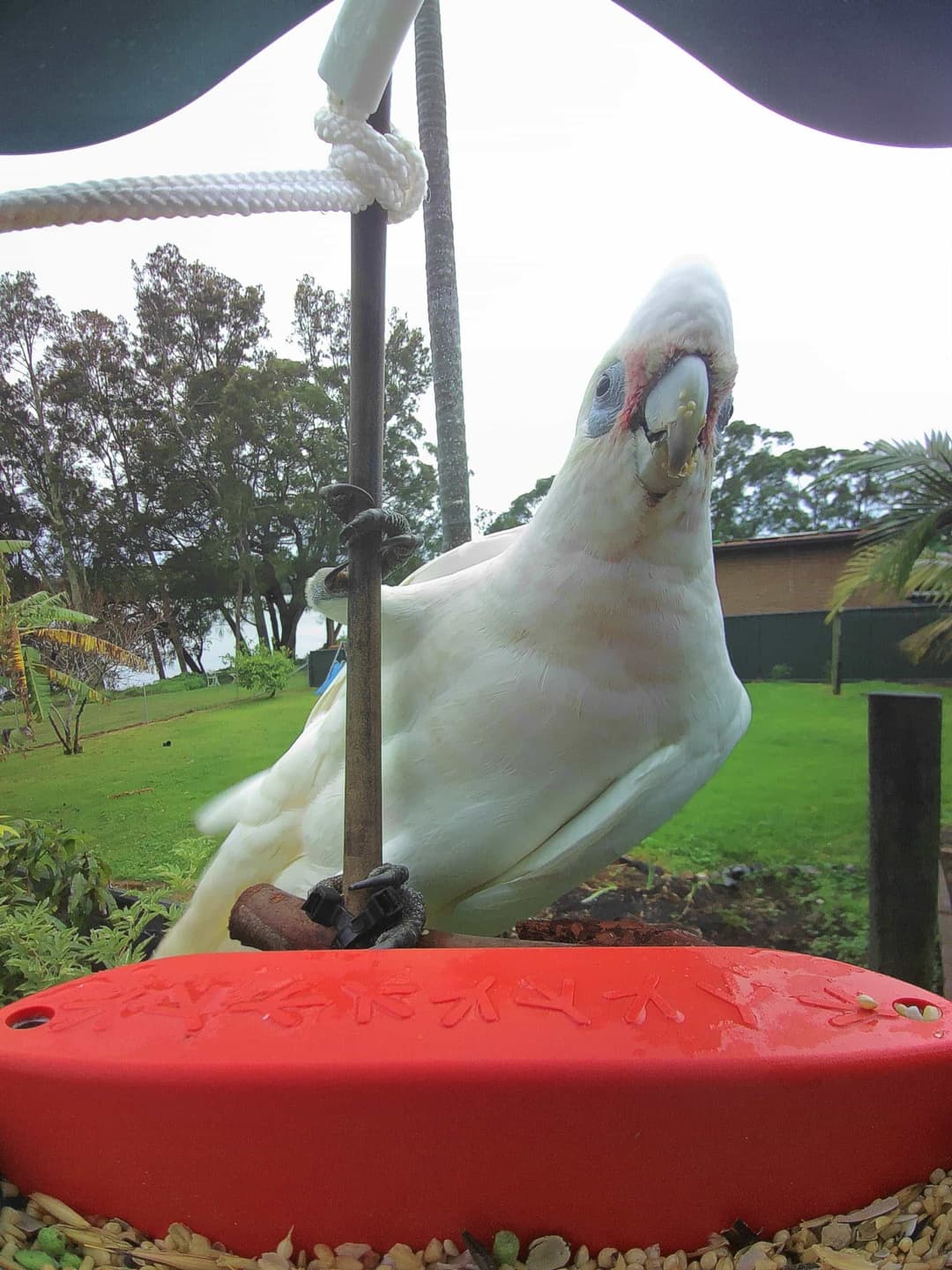
The little corella is a medium-sized cockatoo, predominantly white, with light blue circles around the eyes, and a pink flush on the throat and under-eye. Its bill is short and curved, and it has a distinctive white crest which can be pulled upright.
Male vs female
Males and females display almost identical physical characteristics making it difficult to differentiate between them by appearance alone. Both sexes possess the same coloration and size. However, males tend to have larger beaks and broader heads.
Juvenile
Juvenile little corellas resemble adults but have slightly duller coloration. Their feathers are not as brightly white, and their eyes are dark brown rather than the adult's light blue. They gain their adult plumage at around one year of age.
Size
13.8 - 16.1 in/13.1 - 22.2 oz
There's more to learn about Little Corella
View full detailsHow to tell the Long-Billed Corella from the Little Corella
Visual differences
The Long-Billed Corella (14.5-15.7 inches, 17.6-21.2 oz) has a lengthy, sharp beak and a broad, sulphur-yellow band across its chest and neck, distinguishing it from the Little Corella (13.8-16.1 inches, 13.1-22.2 oz). The Little Corella features a short, curved beak and a pink flush on the throat and under-eye. Additionally, while both have white plumage, the Long-Billed displays a pale blue eye-ring, whereas the Little has a notable light blue eye circle and a distinctive white crest.
Key differences and behavior
In behavior, Long-Billed Corellas are highly sociable, often forming large flocks and engaging in synchronized courtship displays. Their calls are distinct and repetitive, akin to "Cadillac, Cadillac." Little Corellas are also social, but they gather in much larger numbers, often thousands, creating a cacophony of animated chatter. Both species form monogamous pairs, but differ in their courtship behaviors; Little Corellas engage in more dynamic displays like wing-flapping. In habitat, Long-Billed Corellas favor southeastern Australia's open woodlands, while Little Corellas thrive in the arid interior. Both adapt well to urban areas. Diet-wise, Long-Billed Corellas use their long bills to dig up plant roots, whereas Little Corellas favor seeds, nuts, and fruits, both foraging on the ground. Nesting similarities include utilizing tree hollows and joint parental care, but Long-Billed Corellas show a preference for eucalyptus trees, and Little Corellas use diverse natural cavities.
Still not sure? Here are more lookalikes!
Long-Billed Corella vs [Select a bird]

[Select a bird]
Pick a bird to compare
Little Corella vs [Select a bird]
[Select a bird]
Pick a bird to compare