
Little Corella
Little Corella
Also known as: Short-Billed Corella, Bare-Eyed Cockatoo, Blood-Stained Cockatoo, Little Cockatoo
Cacatua sanguinea


Quick Identification guide
Quick Identification guide
- •
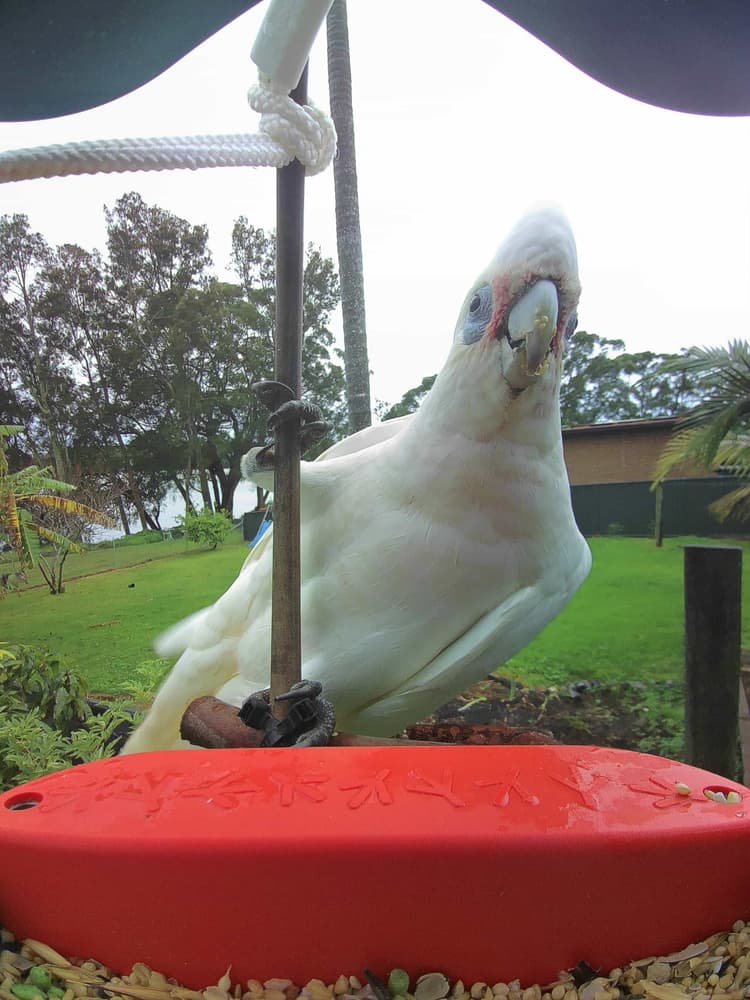
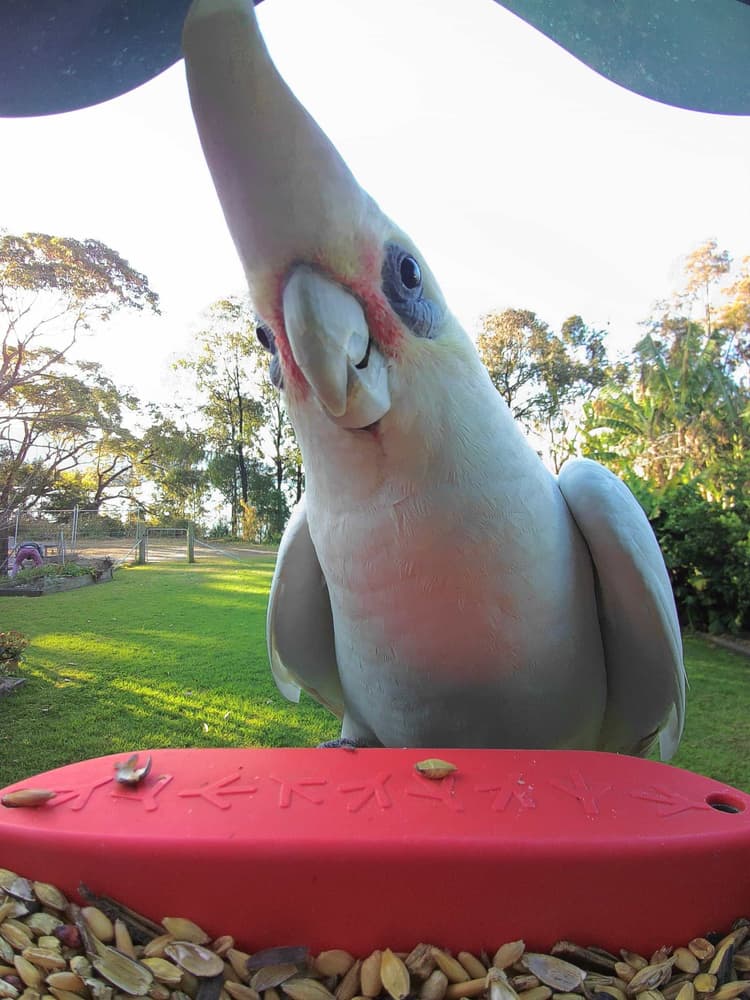
The Little Corella is predominantly white with a slight pink flush around the base of the upper mandible and cheeks
- •
Features a short, square-shaped white crest that it can raise or lower
- •
Exhibits a stout, pale blue-gray beak that is relatively short and robust
What does a little corella sound like?
The little corella vocalizes with a variety of calls and cackling sounds, which can be very loud and include croaking, screeching, and whistling. They also emit high-pitched, metallic “klee” notes. Their calls are often repetitive, with sounds being rapidly repeated in a series. This bird species doesn't really have a song, like a songbird would, but they can mimic human speech when in captivity.


Description
Little corellas may be small and cute but when these guys get together by the several thousands, their animated conversations can culminate into a deafening screeching. Still, they are adorable: they have been observed playing, talking to each other and goofing off by doing things like perching on the blades of a rotating windmill!
The little corella can weigh between 370to630grams and be from35to41centimeters tall.
The typical lifespan of a Little Corella is around 20 to 30 years in the wild, and they could live up to 50-60 years in captivity. Compared to the lifespan of the closely related cockatoo species, Little Corella has a similar lifespan. Some cockatoo species like sulfur-crested cockatoo can live beyond 70 years.
Did you know?
Most popular questions about little corella
How to recognise a little corella?
General appearance
The little corella is a medium-sized cockatoo, predominantly white, with light blue circles around the eyes, and a pink flush on the throat and under-eye. Its bill is short and curved, and it has a distinctive white crest which can be pulled upright.
Male vs female
Males and females display almost identical physical characteristics making it difficult to differentiate between them by appearance alone. Both sexes possess the same coloration and size. However, males tend to have larger beaks and broader heads.
Juvenile
Juvenile little corellas resemble adults but have slightly duller coloration. Their feathers are not as brightly white, and their eyes are dark brown rather than the adult's light blue. They gain their adult plumage at around one year of age.
Breeding and nesting habits of the little corella
Mating behaviors
The little corella performs courtship rituals involving vocalizations and physical displays, such as wing-flapping and head-bobbing, to attract mates. Pairs form strong bonds, often remaining together across breeding seasons.
Nesting details
Little corellas commonly nest in tree cavities but also adapt to other cavities in cliff faces or wooden structures within gardens. Ideal nesting sites include eucalyptus trees. They use leaves, bark, and twigs to line their nests.
Eggs and chick-rearing
Females usually lay 2-4 eggs, which are incubated by both parents for about 24 days. After hatching, chicks are fed regurgitated food by both parents. Fledging occurs approximately 8 weeks after hatching.
What does a little corella like to eat?
Berries
Insects
Nuts
Plants
Seeds
Natural diet
The little corella primarily feeds on seeds, including those of grasses and crops like wheat and barley. It also consumes nuts, berries, and fruits. The birds are known to forage on the ground and in trees, using their strong beaks to crack open hard shells and access food.
Bird feeders
At bird feeders, little corellas are attracted to seeds and grains, especially sunflower seeds, oats, and corn. They may also enjoy commercially available bird feed blends. Their presence at feeders can sometimes deter smaller bird species due to their larger size and social behavior.
Create a tempting environment
To attract a little corella to your yard, you need to create an inviting atmosphere. This bird species enjoys large open spaces to fly and busy feeding grounds with ample tree coverage for shelter and nesting. Planting native Australian shrubs and trees could be beneficial.
Offer their favorite snacks
Corellas are omnivorous birds and their diet consists primarily of seeds, bulbs, and fruits. Our preferred recommendation for birdseed is 'Bird Buddy' seeds. Chosen by experts for each season, these seeds have consistently attracted corellas to our users' yards.
Use the right feeder
While Corellas are adaptable and will eat from ground or hanging feeders, they particularly love platform feeders where they can easily see and select their food.
Add some fun tricks
Corellas are intelligent and curious birds, who enjoy playing. Incorporate spinning feeders, food hidden in toys, or a birdbath in your yard to make it more interesting and inviting for these avian visitors.
Play corella-friendly sounds
Playing a recording of the little corella’s call could help to attract these birds. It makes them think that your yard is a safe and friendly environment, and they may even join in the sing-along!
Where can you find little corellas?

Primary habitat
The little corella typically inhabits Australia's arid interior, woodlands, and grasslands. They have a preference for semi-arid or arid climates.
Additional range
Unexpectedly, they adapted to urban environments too, found in city parks and suburban areas in addition to their native habitats.
Do they migrate?
The little corella, a bird native to Australia, is generally considered a resident species rather than a migratory one. However, it exhibits nomadic or locally dispersive behavior rather than long-distance migration. These movements are influenced by the availability of food and water, particularly in arid or semi-arid regions. During periods of drought or when food sources become scarce, little corellas may travel significant distances to find more favorable conditions. These movements do not follow a strict migratory pattern with fixed routes or schedules, as seen in true migratory birds. Instead, they may travel across various areas, such as from inland arid regions towards coastal areas or regions with reliable water sources and food availability, such as agricultural lands. Key locations for little corellas can include areas with abundant seed sources, like riverbanks, farmlands, and woodland habitats. These birds are adaptable and can often be found in urban areas where they forage for food in parks and gardens. Overall, while the little corella does not undergo predictable migrations, its flexible movement patterns help it survive in diverse and changing environments.
What is the role of little corellas in nature and how to protect them?
Conservation status
The little corella is listed as a species of least concern globally, meaning it is relatively common and not currently vulnerable or endangered. Key threats to the species include habitat loss and competition with other bird species. In some areas, they are considered pests due to their large flocks and impact on agriculture. Conservation efforts focus on habitat management and monitoring their population to prevent future declines. Protection measures in urban areas may also be necessary to balance coexistence with human activities. Overall, the little corella is thriving, but attention is needed to maintain its status.
Ecological role of little corellas
Its role in the ecosystem
The Little Corella, a species of white cockatoo native to Australia, plays a significant role in the ecosystem. One of its crucial ecological function is in seed dispersal - Little Corellas feed on a variety of seeds, nuts, fruits, and roots. As they travel and excrete, they aid in the distribution of these plants, thereby contributing to the biodiversity of their environment. Secondly, they help with pest control. By feeding on certain insects and larvae, they help limit the population of these potential pests, thus maintaining a balanced ecosystem. Additionally, their nesting habits can affect tree health and provide habitats for other species. Despite being perceived as pests themselves due to their destructive feeding habits on crops and infrastructure, their ecological role in seed dispersal and pest control measures their significance within their environment.
How to help protect little corellas
Preservation tips
Habitat preservation strategies for little corella
Preserve the little corella's natural habitats involving grasslands, woodlands, and wetlands. Implement strict regulations against deforestation and land conversion. Manage public green areas to mimic these natural environments. Provide nesting areas in urban settings such as tree hollows to support their reproduction.
Community science initiatives for little corella conservation
Involve communities in bird-watching and monitoring initiatives to track little corella populations. Hold educational seminars about their role in the ecosystem. Create and promote mobile apps where everyone can record sightings and behaviors. These data can be used in scientific research and forming conservation policies.