
Western Corella
Western Corella
Also known as: Western Long-Billed Corella
Cacatua pastinator


Quick Identification guide
Quick Identification guide
- •
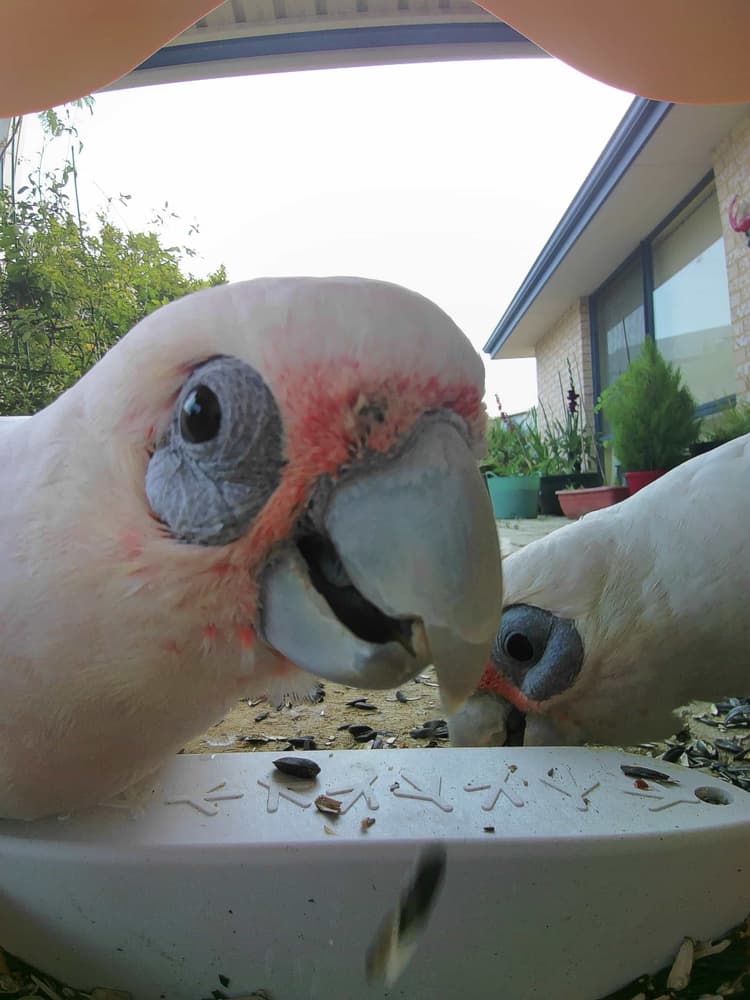
The Western Corella has white plumage with a subtle pink tinge around the throat and face
- •
It features a pale eye ring and a slightly curved pale beak, which is relatively short and broad
- •
Its rounded wings and a short, stocky build give it a robust appearance
What does a western corella sound like?
The Western Corella, a large white cockatoo native to Australia, exhibits a range of vocalizations including high-pitched, repeated squawks and screeches. These calls, often made in flight or when foraging in groups, serve as communication signals. The bird also demonstrates an ability for mimicry, like other parrots, and can replicate a variety of sounds including human speech when in captivity. While it doesn't sing in the traditional sense, its complex, raucous vocal performances can be considered its own form of song.


Description
Did you know that these birds' Noongar language name, manatj, is used to describe the Western Australian Police? These are perceived to be noisy and inquisitive, much like them. Western corellas are also incredibly resourceful and have learnt how to exploit humans' presence in nature to their advantage! They are nomads and like to gather in huge flocks of up to 700 birds.
The western corella can weigh between 560to815grams and be from37to45centimeters tall.
The Western Corella typically lives for approximately 50 to 80 years. In comparison, other related species of cockatoos like the Sulphur-crested Cockatoo can live up to 70 years while the Galah has an average lifespan of 40 years. However, captive corellas, with exceptional care, could potentially live over 100 years.
Did you know?
Most popular questions about western corella
How to recognise a western corella?
General appearance
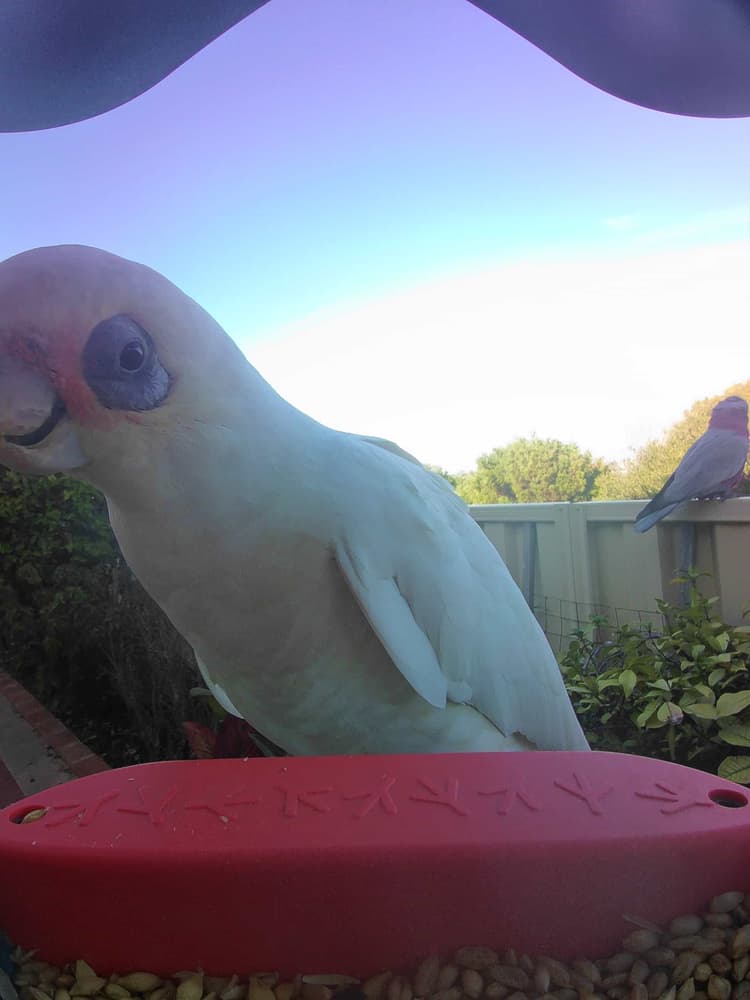
The Western Corella is a large cockatoo native to Australia, most prominently displaying a white plumage. Its most characteristic features include a long, white crest, a hooked beak, and a blue-grey eye ring. The under-wings and tail exhibit a pale yellow color. Importantly, these birds are known for their distinct, loud call, making them easily identifiable in the wild.
Male vs female
Sexual dimorphism is not prominently exhibited within the Western Corella species. Both males and females exhibit white plumage, with pale yellow under-wings and tails. The main difference lies in the iris coloration: males have a dark iris while females possess a lighter, reddish color. Size may also vary, with males being slightly larger than females.
Juvenile
Juveniles of Western Corella species resemble adults, but are generally smaller in size. Their eye coloration is distinctly different from adults, with juveniles showcasing a grey iris which later turns to dark in males, or light reddish in females. Their beaks and feathers also display a softer texture than found in adults. Changes in these characteristics signal the onset of maturity.
Often mistaken for
Little Corella vs Western Corella
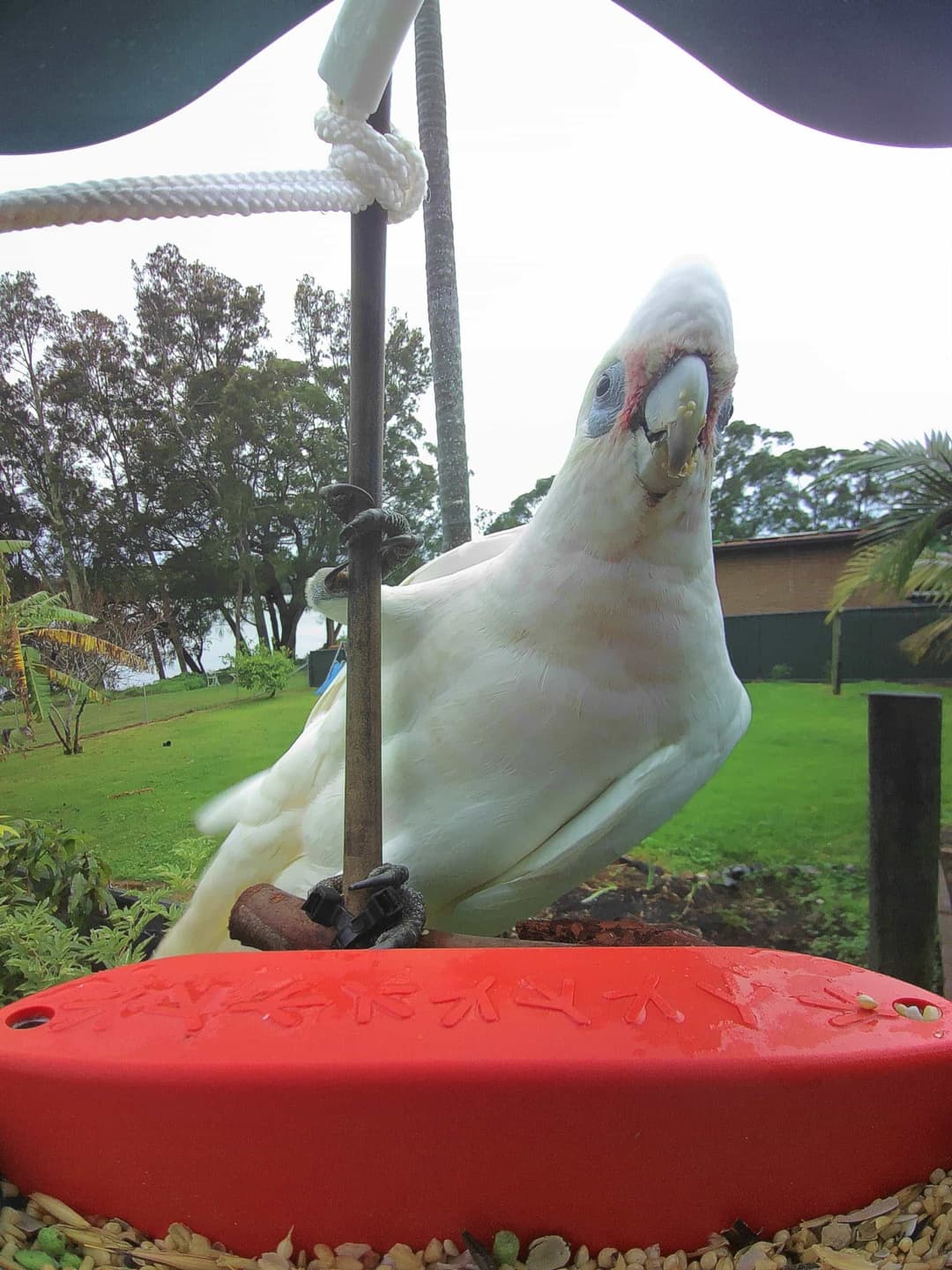
The Little Corella and Western Corella look similar but can be distinguished by their size, where the Little Corella is generally smaller. The Little Corella also lacks the red patch on the throat that the Western Corella has.
Long-Billed Corella vs Western Corella
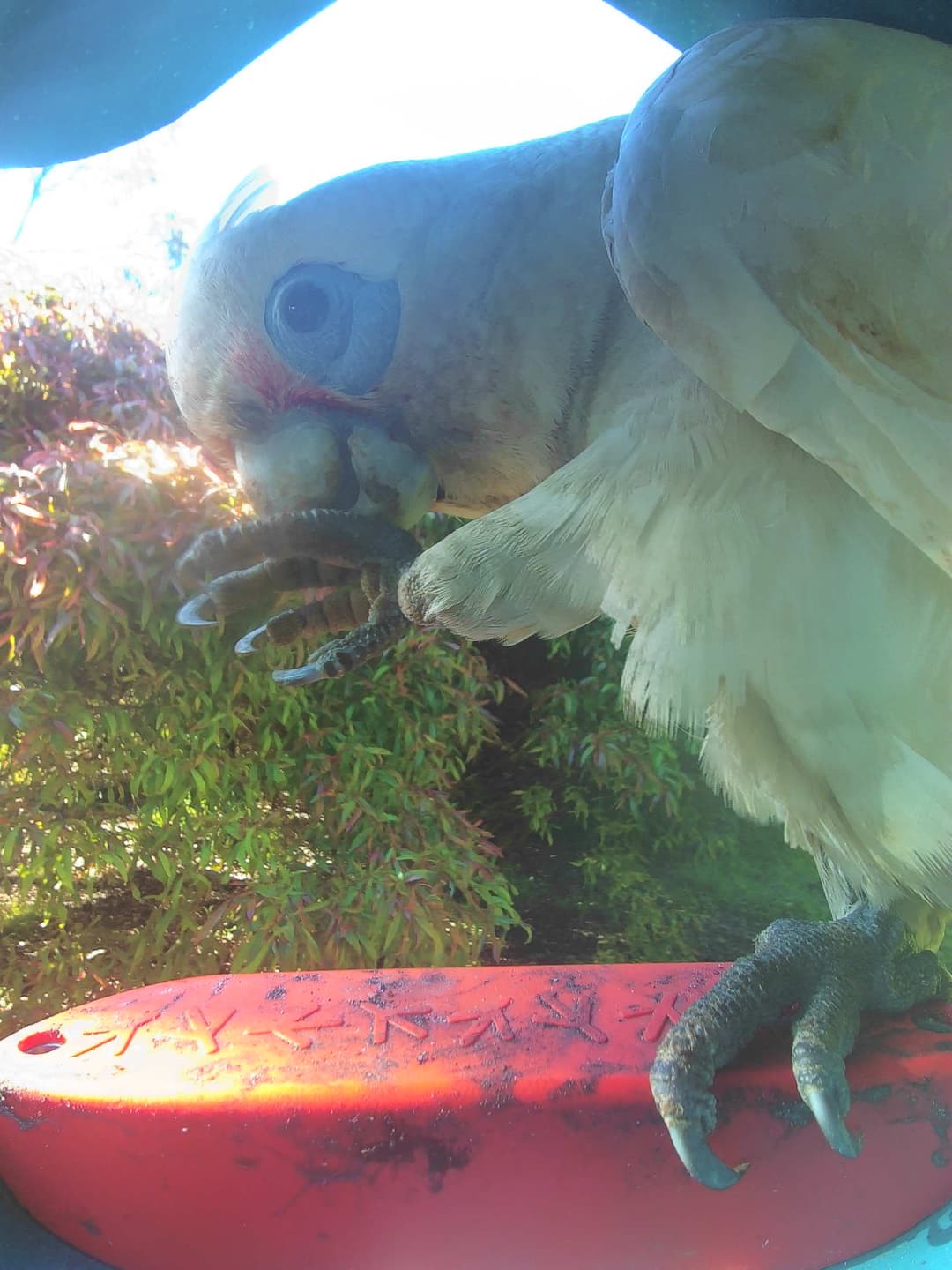
The Long-Billed Corella has a longer bill than the Western Corella. Additionally, the Long-Billed Corella has more prominent red marks on the throat and breast, setting it apart from the Western Corella.
Breeding and nesting habits of the western corella
Mating behaviors
Western corellas engage in elaborate courtship displays involving vocalizations and physical gestures. Pairs form strong bonds and often mate for life.
Nesting details
Nesting occurs in tree hollows, typically eucalyptus, where pairs use leaves and bark as nesting materials. In gardens, provide large trees with suitable hollows or install nest boxes to attract them.
Eggs and chick-rearing
Females lay 2-4 eggs, incubating them for about 24 days. Both parents feed chicks, which remain in the nest for 8-9 weeks. They continue parental dependency for a few months post-fledging.
What does a western corella like to eat?
Insects
Plants
Seeds
Natural diet
The western corella primarily feeds on seeds, grains, fruits, and nuts. It favors seeds of native plants, grains from agricultural land, and occasionally insects. These birds are often seen foraging on the ground for fallen seeds and plant material.
Bird feeders
At bird feeders, western corellas are attracted to a variety of seeds such as sunflower seeds, millet, and oats. They might also consume fruits and nuts provided in feeders, making them adaptable to human-influenced environments.
Attracting western corellas with feeders and snacks
To attract the Western Corella, it's best to start with placing large feeders in your yard. These birds love large platform or tray feeders that they can comfortably perch on. Fresh water available in a birdbath or bird-friendly waterfall also really draws them in. As for snacks, they have a diverse palate, but nuts are certainly their most favored. Peanuts, in particular, are a hit, but also consider walnuts and almonds. Finally, don't forget to use Bird Buddy seeds - they're expert-chosen for the season and have been seen to yield the best results.
Fun tricks to encourage western corellas to visit
One interesting characteristic of Western Corellas is their love of song and noise. They're intelligent birds who are attracted to entertaining visuals and sounds, so think about wind chimes or bird-safe, non-reflective mirrors around your garden. Remember, a chat or a sing-along every now and then can really help to make them feel welcome and more likely to visit on a regular basis. Lastly, always make sure the feeding area is clean, as these birds appreciate an unpolluted environment.
Where can you find western corellas?

Primary habitat
The western corella, native to Australia, primarily inhabits woodlands, forests, and significant urban areas.
Additional range
Though usually found in Southwest Australia, it has adapted to suburban environments and is occasionally observed in city parks and gardens.
Do they migrate?
The western corella (Cacatua pastinator), a species native to Australia, primarily does not migrate and tends to stay within its range year-round. This bird is mostly found in the southwestern regions of Western Australia. Its range extends from the northern Wheatbelt region, through the Perth area, and down to the Great Southern region. Rather than long-distance migration, the western corella exhibits localized movements that are generally linked to food availability and breeding conditions. During the breeding season, which occurs between July and November, they are often found in open woodlands, farmlands, and areas near water sources. Outside of the breeding season, they may move to suburban areas or different parts of their range to find food, such as seeds and nuts. These nomadic movements are not well-documented in terms of specific routes or key locations, as they are opportunistic foragers adapting to changing environmental conditions within their established range. Unlike some other bird species that have extensive migratory patterns, the western corella's movements are largely confined to responding to local ecological cues, making them relatively sedentary in comparison.
What is the role of western corellas in nature and how to protect them?
Conservation status
The western corella is currently listed as near threatened. Although populations are relatively stable in some areas due to successful conservation efforts, the species faces significant threats such as habitat loss from agricultural expansion, competition for nesting sites, and illegal trapping. Conservation efforts include habitat restoration, legal protection, and public awareness campaigns aimed at reducing illegal poaching. Continued monitoring and habitat preservation are essential to prevent further population decline and ensure the species does not move to a more critical conservation status.
Ecological role of western corellas
Its role in the ecosystem
The Western Corella is an integral part of their native ecosystem in Western Australia. Known for foraging for seeds and insects, they contribute to natural pest control by feeding on pests that could be harmful to plants. This predatory behavior is beneficial for maintaining the balance of insect populations. They play a significant role in seed dispersal which aids in plant biodiversity. As they move from place to place, seeds that stick to their feathers or those that pass through their digestive system are dispersed over a wide area, promoting growth of various plant species. Western Corellas also influence forest dynamics by their chewing and nesting activities, which lead to the transformation and development of habitats. In this way, they indirectly provide dwelling niches for other species. It is important to note that despite these ecological benefits, in some agricultural areas they are often seen as pests due to their habit of damaging crops.
How to help protect western corellas
Preservation tips
Habitat preservation strategies
Support the government to create and enforce laws protecting the habitats of the Western Corella. It requires mature eucalyptus forest for nesting. Preservation of these areas is paramount to their survival. Individuals can also plant native plants which provide food for the Corella in their gardens. Avoid other landscape changes that can destroy their habitat.
Community science initiatives
Engaging in community science initiatives can be immensely helpful. Participate in bird census activities to monitor the population growth of the Western Corella. Educate the community about these birds and their importance to the ecosystem. Encourage them to report sightings and to refrain from feeding them, which can lead to overpopulation in urban areas. Lastly, support local conservation organizations and researchers who are working to protect these birds.