
Long-Billed Corella
Long-Billed Corella
Also known as: Slender-Billed Corella
Cacatua tenuirostris


Quick Identification guide
Quick Identification guide
- •
Boasts a medium-sized white body with faint red markings around the throat and lores
- •
Features a long, slender, curved beak that distinguishes it from other cockatoos
- •
Displays an orange-red patch at the base of the wings and above the beak, with a soft, rounded crest
What does a long-billed corella sound like?
The long-billed Corella vocalizes using an array of calls that include soft, high-pitched, musical notes and a loud 'rak-rak'. Their regular call is a clear, descending, plaintive whistle. In flight, they let out high, far-carrying screeches. While feeding on the ground, they often communicate with low, gurgling chatter. It doesn’t have a standardized song, but it can mimic human speech when kept as a pet. Their vocalizations are generally proclaimed during flight or feeding and become intensified and persistent if they sense danger or threat.


Description
Long-billed corellas are impossible to miss; these energetic and sociable birds like to get together in large flocks! Keep your ears open for their call that sounds like 'cadillac cadillac'! Partners form monogamous pairs and are truly a team; both mum and dad build the nest, incubate the eggs and take care of the young once they hatch.
The long-billed corella can weigh between 500to600grams and be from37to40centimeters tall.
The long-billed corella, a native Australian bird, typically has a lifespan of 50-60 years. This is significantly longer than the lifespan of some related species like the galah and sulphur-crested cockatoo, which usually live around 40 years. However, it is comparable to the lifespan of the Major Mitchell's cockatoo, another related species known to survive for approximately 50-60 years.
Did you know?
Most popular questions about long-billed corella
How to recognise a long-billed corella?
General appearance
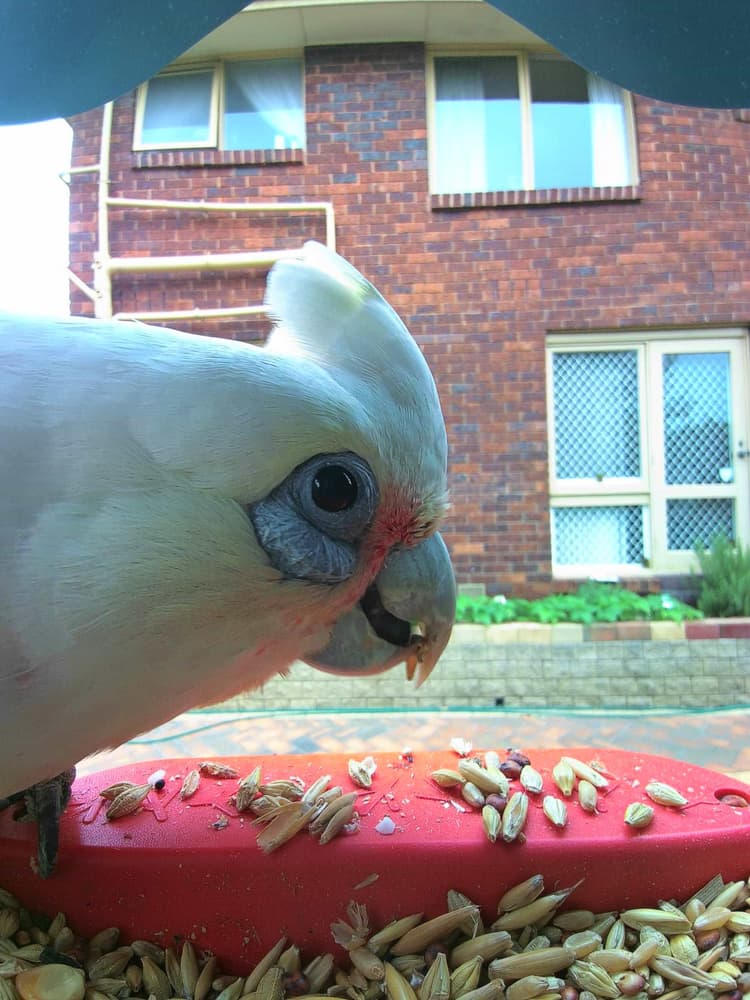
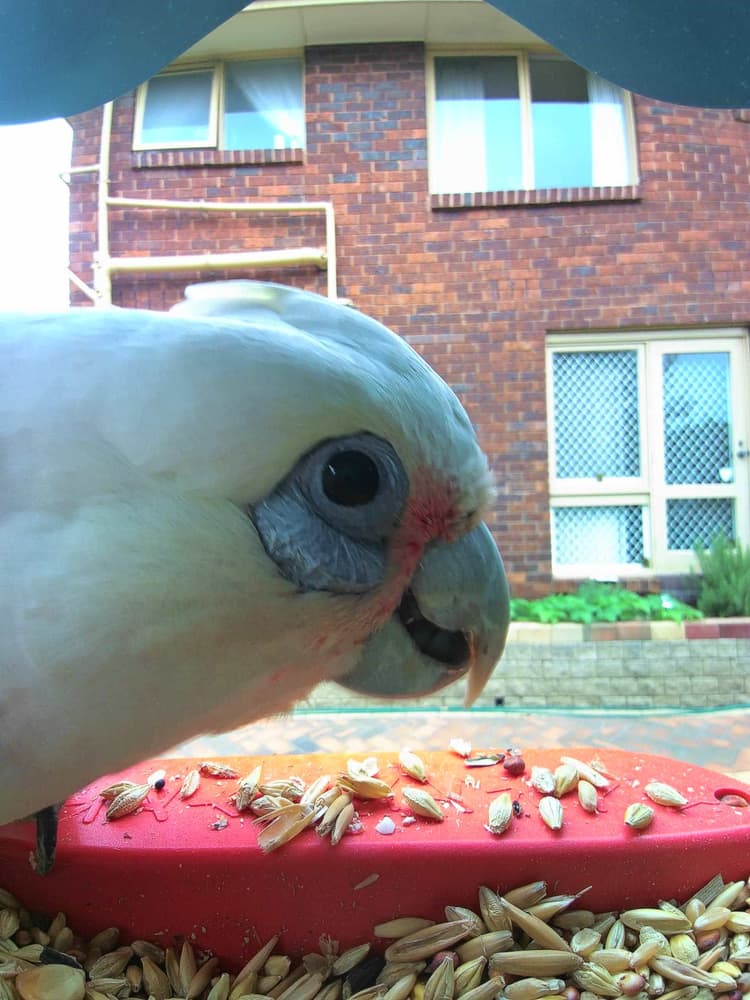
The long-billed corella is the large, white cockatoo, distinct by its lengthy, sharp beak and a broad, sulphur-yellow band across its chest and neck. It has a white or slightly pink plumage, with a pale blue eye-ring and a prominent, rounded crest. It differentiates itself by a long upper mandible that is used for digging out roots and bulbs.
Male vs female
Male and female long-billed corellas are similar in terms of size and coloration, often making it hard to distinguish between the sexes. However, males typically have a larger body and bill size, and a more intense coloring around the eyes. Female corellas have more circular eyes while males have slightly more oval-shaped eyes.
Juvenile
Juvenile long-billed corellas resemble adults, but are generally smaller in size with shorter bills. They also lack the bright yellow crest, which develops as they age, and have dark brown, rather than black, eyes. Juvenile birds also display a more muted, greyish tone to their plumage.
Often mistaken for
Little Corella vs Long-Billed Corella
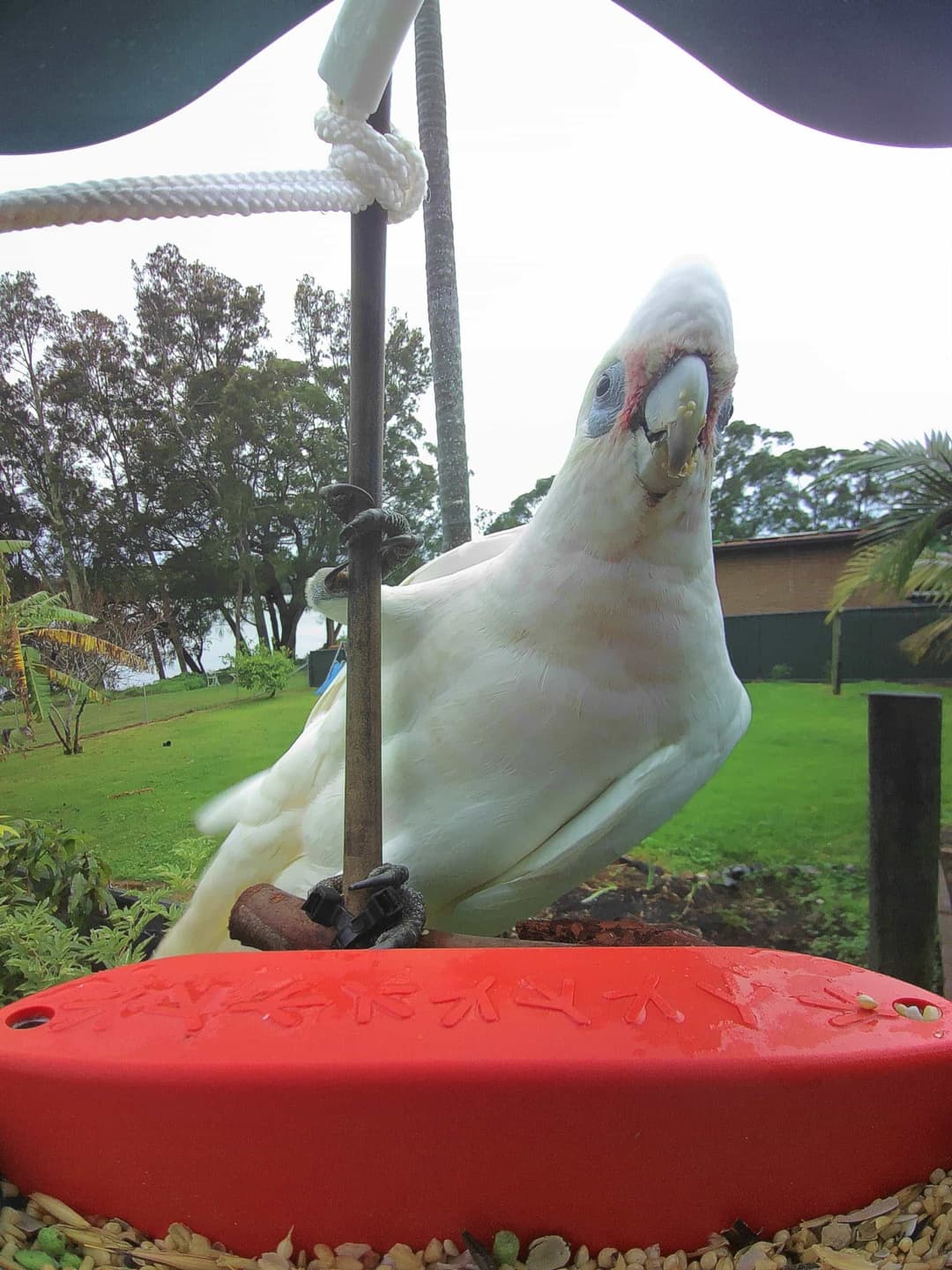
The Little Corella is similar in appearance to the Long-Billed Corella but can be distinguished by its shorter bill and the absence of pink around the eye.
Western Corella vs Long-Billed Corella
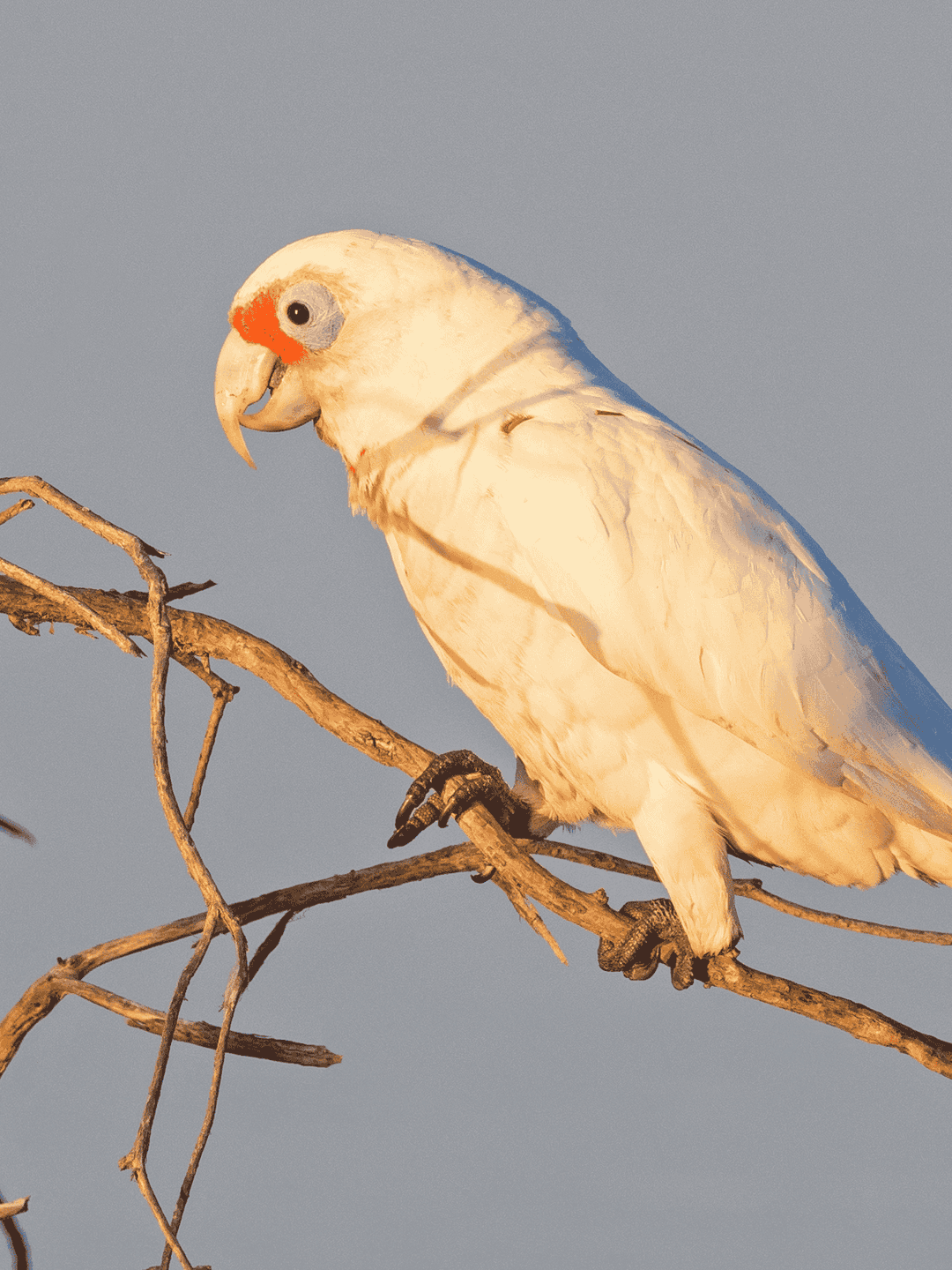
The Western Corella closely resembles the Long-Billed Corella but is typically found in Western Australia and has a smaller, differently shaped bill.
Breeding and nesting habits of the long-billed corella
Mating behaviors
Long-billed corellas engage in mutual preening and vocalizations during courtship. Pairs are monogamous, forming long-term bonds, often performing synchronized displays to strengthen the bond.
Nesting details
They typically nest in tree hollows or cavities, preferring eucalyptus trees. Nests are lined with wood chips and foliage. In urban areas, they may nest in large gardens if mature trees are present.
Eggs and chick-rearing
Females lay 2-4 eggs per clutch. Both parents incubate for about 24 days and feed the chicks, which fledge around 7 weeks. Creating a suitable habitat involves planting native trees and providing water sources.
What does a long-billed corella like to eat?
Insects
Plants
Seeds
Natural diet
The long-billed corella primarily feeds on seeds, bulbs, corms, and roots of plants. It often digs into the soil to extract these, using its long bill as a tool. In addition to plant roots and bulbs, it consumes grains and occasionally insects. These birds often forage on the ground where they find their diverse natural food sources.
Bird feeders
At bird feeders, the long-billed corella is known to consume a variety of seeds, particularly sunflower seeds and mixed birdseed blends. Additionally, they may eat pieces of fruits and nuts. Their adaptable feeding habits allow them to exploit food sources provided by humans, especially in urban settings where bird feeders are more common.
Attracting the long-billed corella
The first step to lure a long-billed corella to your yard is to provide it with a balanced diet. For this, you can use Bird Buddy seeds, as they are tested and approved by experts to match the feeder's seasonal needs. The corella is partial to these seeds due to their high nutritional value and the combination of different seasonal seeds. This ensures the bird has a diverse diet, enticing them to frequent your yard or feeder.
Setting up the feeder
Ensure that you use a sturdy, hanging feeder, placed at a secure height (away from predators) but within the visibility of the birds. Corellas prefer feeders that provide ample space to land and take off. Remember, the feeder should be cleaned regularly to ensure healthy feeding for the birds.
Making your yard corella-friendly
Another factor to consider while trying to attract the long-billed corella is making your yard habitable for them. This means having trees or structures for them to perch on, providing a water source for them to bathe and drink from, and ensuring a safe environment free from predators.
Enjoying their company
Once the corellas start coming to your yard or feeder, try to make the experience enjoyable for both parties. Who knows, if you're lucky, after a hearty meal, the birds might even stay for a sing-along!
Where can you find long-billed corellas?

Primary habitat
The long-billed corella primarily occupies areas of southeastern Australia, encompassing Victoria and southern New South Wales. They thrive in open woodlands, grassy plains, and farmlands.
Additional range
Corellas are highly adaptable and are also found in urban environments such as parks and suburban gardens, where they often feed.
Do they migrate?
The long-billed corella is a mainly sedentary bird and does not engage in long-distance migration. These birds are native to southeastern Australia, primarily found in regions of Victoria and parts of New South Wales and South Australia. They inhabit woodlands, grasslands, and areas with scattered trees, often forming large, noisy flocks. Although they are not migratory, long-billed corellas may exhibit some local movements in response to food availability and environmental conditions. These movements are generally short-range and involve seeking areas with adequate food resources, such as seeds, bulbs, and roots. Changes in local conditions such as drought or habitat modification can also prompt some movement, but these are not considered migratory behaviors. Long-billed corellas have adapted well to modified environments, often being found in urban and semi-urban areas where they may move about locally in search of food and roosting sites. Overall, their movements are more accurately described as nomadic rather than migratory, reflecting an opportunistic approach to resource availability rather than a fixed seasonal migration pattern.
What is the role of long-billed corellas in nature and how to protect them?
Conservation status
The long-billed corella is currently listed as "Least Concern" on the IUCN Red List, indicating it is a common species. It has adapted well to modified habitats and urban areas in Australia. Significant threats include habitat loss due to agriculture and urban development, as well as competition for nesting sites. However, the species benefits from legal protection and some local conservation programs focused on managing populations in urban settings to mitigate human-wildlife conflicts. Overall, the long-billed corella has a stable population and faces fewer immediate threats compared to more vulnerable species.
Ecological role of long-billed corellas
Its role in the ecosystem
The long-billed corella, a native Australian bird species, plays a crucial role in its ecosystem. It is known for its ability as a pest controller. This bird preys on insect larvae, grubs, and pests which can harm agricultural crops, thus indirectly contributing to pest control and maintaining ecological balance. It also has a significant role in seed dispersal. As the long-billed corella feeds on various types of seeds, it aids in their spread, thus promoting plant growth and biodiversity. Moreover, through its feeding habits on roots and bulbs, the species assists in soil aeration enhancing soil fertility. Despite occasional conflicts with farmers due to their feeding habits, the long-billed corella has an important role in its ecosystem.
How to help protect long-billed corellas
Preservation tips
Habitat preservation strategies
Engage in habitat protection and restoration. Avoid destruction of woodland habitats, their nest-trees and food sources. Support regulations that protect old-growth forests as these provide natural cavities for nesting. Implement responsible farming practices by limiting the use of pesticides which may be harmful to the Long-billed Corella.
Community science initiatives
Support and participate in community science programs. Regularly monitor Long-billed Corella populations and report observations to local wildlife groups or via citizen science apps. Conduct awareness campaigns within communities about the importance of species and habitat conservation. Encourage local schools to include conservation education in their curriculum.