Colombian Chachalaca or Plain Chachalaca?
Here's how to tell the difference

Colombian Chachalaca


Plain Chachalaca
Colombian Chachalaca
Ortalis columbiana
General appearance
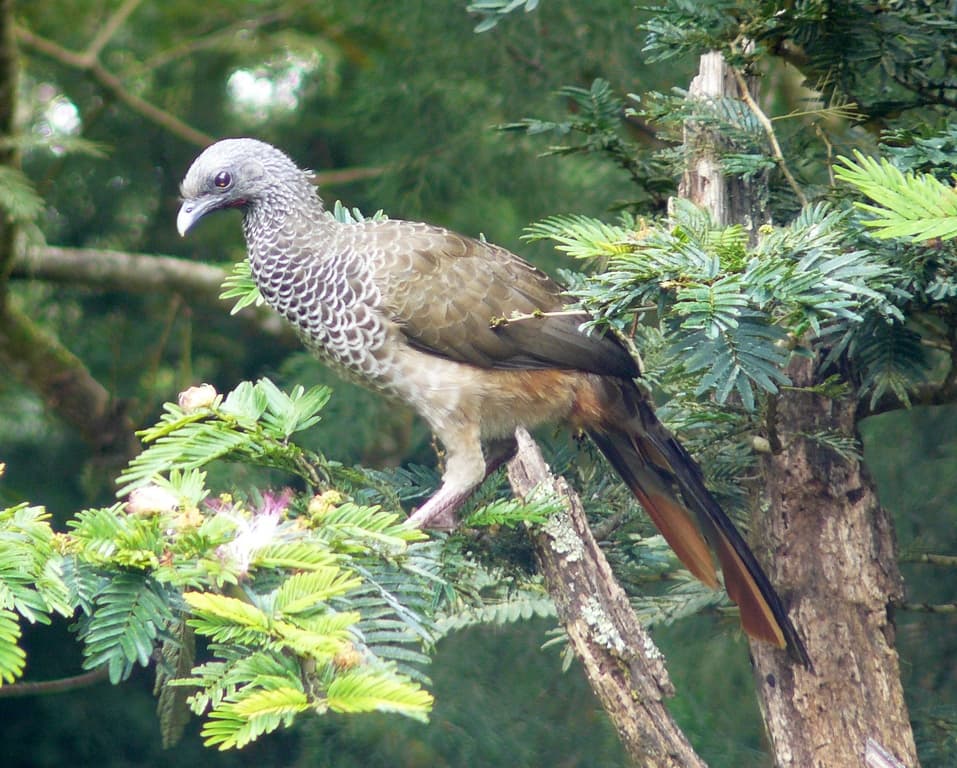
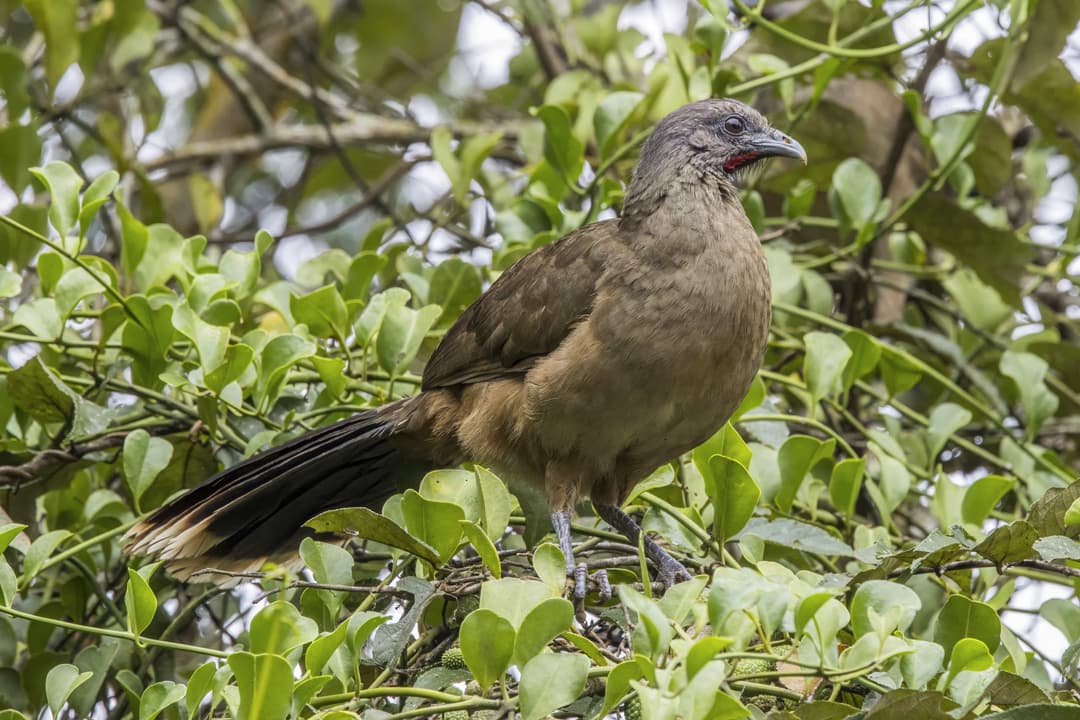
The Colombian chachalaca is an average-sized bird with a length ranging from 55-60 cm. It has a largely olive-brown coloration with shades of chestnut along the belly and tail. Its head and neck are grayish-black giving it a unique look. They're well-known for a long, broad tail, and strong legs equipped with sharp claws.
Male vs female
Both males and females are similar in coloration with the males having a slightly larger body. Females appear to have a little more greenish sheen and less chestnut color on the belly. Males also usually have a more robust vocal performance, particularly during mating season.
Juvenile
Juveniles also resemble the adults in terms of coloration, but they are duller with less brilliance in their feathers. Their overall size is smaller and they usually have less chestnut color visible on their belly. They also have a grayer throat. As they mature, they gradually acquire the distinctive hues of the adults.
Size
20.5 - 21.7 in/17.6 - 21.2 oz
There's more to learn about Colombian Chachalaca
View full detailsPlain Chachalaca
Ortalis vetula
General appearance
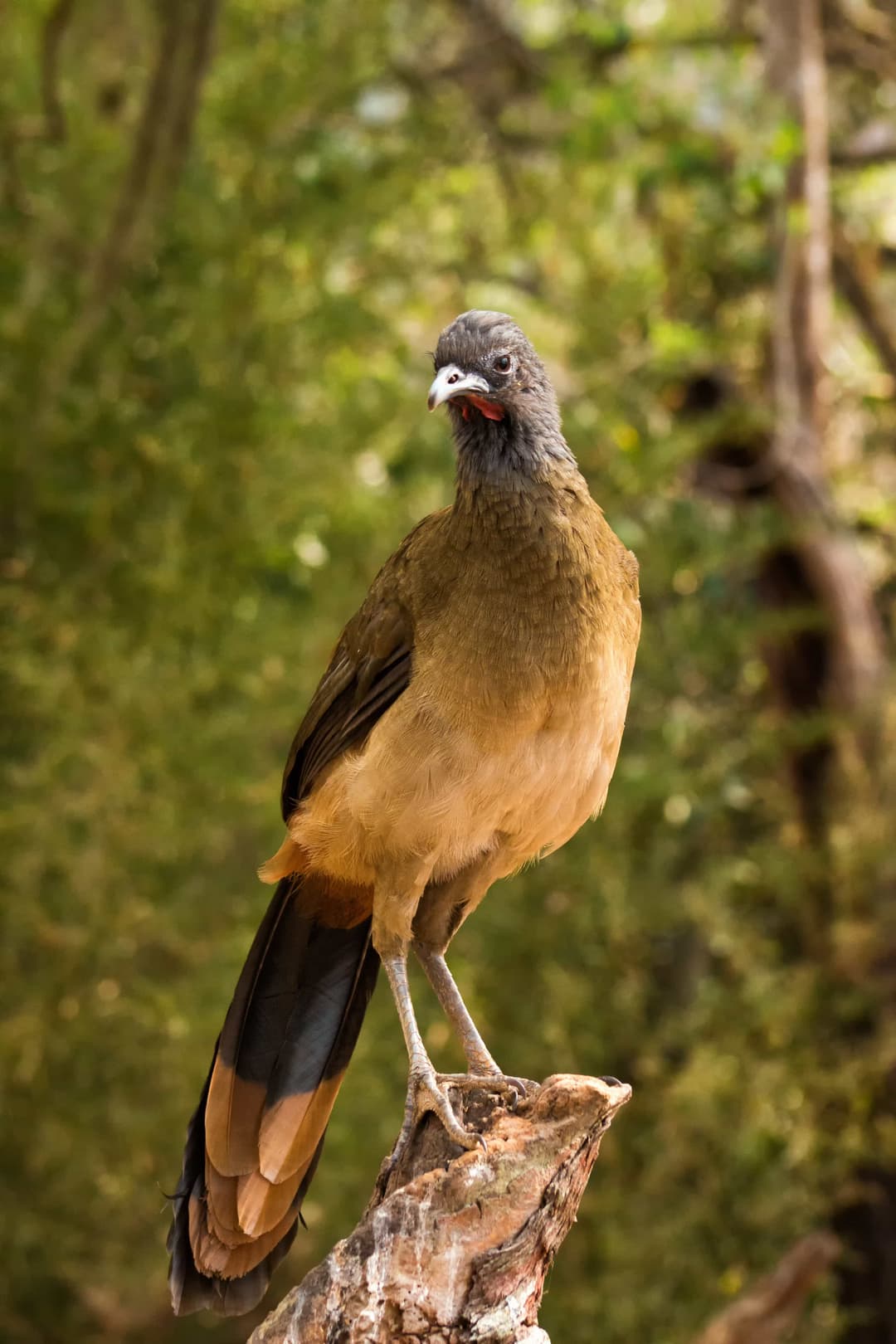
The Plain Chachalaca bears a size resembling a Crow or a Mallard. It has a massive structure, having a length of 18-21 inches and a wingspan of approximately 26 inches. Characterized by a small head and large, long tail feathers, the bird predominantly carries an olive-brown hue which progressively becomes grayer on the head and buff on the belly. The tail feathers are black, contrasting with white tips. It also may display hints of red on the throat area.
Male vs female
Generally, male and female Plain Chachalacas appear quite similar, making it challenging to distinguish between the sexes based on physical traits. However, males sometimes may carry a slightly more vibrant red coloration on the throat area compared to females, especially during the mating season. Detailed scrutiny or behavioral observation may be required for accurate sex determination.
Juvenile
Juvenile Chachalacas bear a resemblance to the adults, though they may be slightly smaller in size. Their coloration may seem less vibrant as they generally exhibit a duller plumage. The characteristic red on the throat area may also be underdeveloped or absent during early stages of growth.
Size
18.9 - 22.8 in/11.2 - 24.2 oz
There's more to learn about Plain Chachalaca
View full detailsHow to tell the Colombian Chachalaca from the Plain Chachalaca
Visual differences
The Colombian Chachalaca is generally larger, reaching lengths of 22-24 inches, compared to the Plain Chachalaca's 18-21 inches. The Colombian variety features olive-brown plumage with chestnut on the belly and tail, grayish-black head, and neck, whereas the Plain Chachalaca turns gray on the head and buff on the belly, with black tail feathers tipped in white. The Plain Chachalaca may have occasional red on the throat. Both have long tails, but their head colors and belly patterns are key visual differentiators.
Key differences and behavior
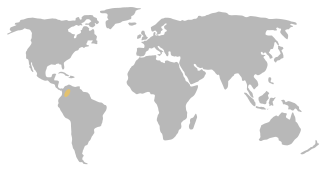
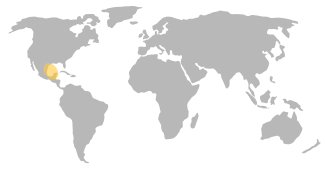
The Colombian and Plain Chachalacas exhibit distinct behaviors and habitat preferences. Colombian Chachalacas are typically found in Colombia's dry forests, adapting to urban areas, and prefer perching in trees, with loud group calls critical for attracting mates and defining territory. They primarily consume fruits, seeds, and play notable roles in seed dispersal; human food interaction is occasional. In contrast, Plain Chachalacas are native to South Texas, preferring subtropical woodlands close to water. Their morning and evening calls, along with weather-predictive behaviors, are distinguishing. Their diet leans towards vegetarian, consuming local berries and occasionally visiting feeders for assorted treats. Nesting styles differ too, with Plain Chachalacas nesting higher and close to water compared to the Colombian counterpart, which uses low shrubs or trees. Both species contribute significantly to local ecosystems through their feeding habits.
Still not sure? Here are more lookalikes!
Colombian Chachalaca vs [Select a bird]

[Select a bird]
Pick a bird to compare
Plain Chachalaca vs [Select a bird]
[Select a bird]
Pick a bird to compare