Chachalaca or Colombian Chachalaca?
Here's how to tell the difference
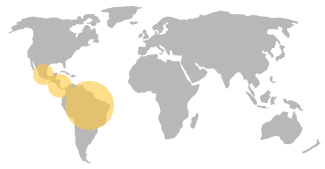

Chachalaca

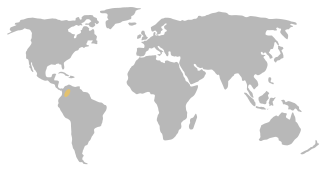
Colombian Chachalaca
Chachalaca
Ortalis
General appearance
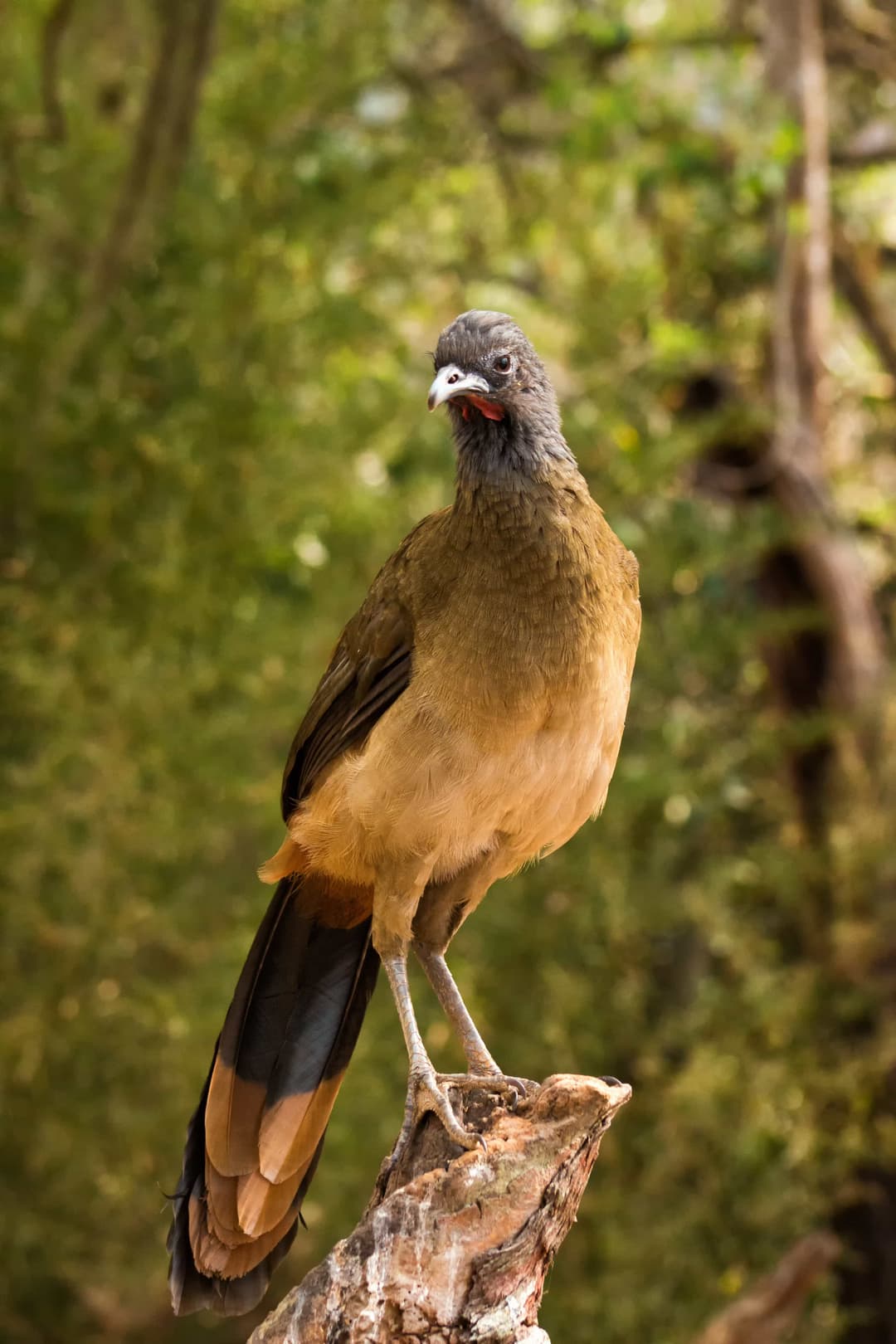
Chachalacas are large, pheasant-like birds, reaching up to 63cm in length. They exhibit predominantly brown and green coloration, often featuring greyish-olive and light russet tones. The bird's conspicuous, elongated and flattened tail characterizes its profile, while a host of white streaks and squares pattern its wing coverts.
Male vs female
Male and female chachalacas are sexually monomorphic, meaning both sexes share a similarity in appearance. Both have long legs, a long, broad tail, and a small head on a thin neck. Their key difference lies in their vocalizations, with males producing louder, more guttural calls.
Juvenile
Juvenile chachalacas resemble adults in coloration but are slightly duller with less distinct patterns. Their tails are shorter and they lack the fully developed throat pouch of mature birds, which is used for vocalizations. Their coloration becomes richer and the tail grows longer as they mature.
Size
16.5 - 26.4 in/12.2 - 29.4 oz
There's more to learn about Chachalaca
View full detailsColombian Chachalaca
Ortalis columbiana
General appearance
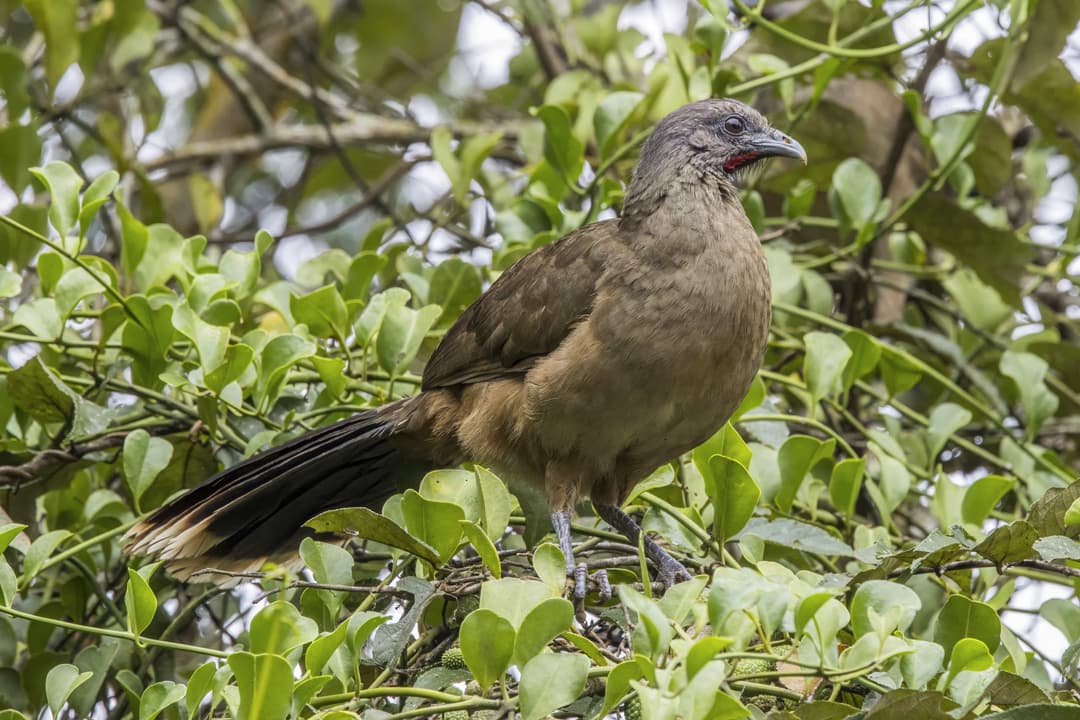
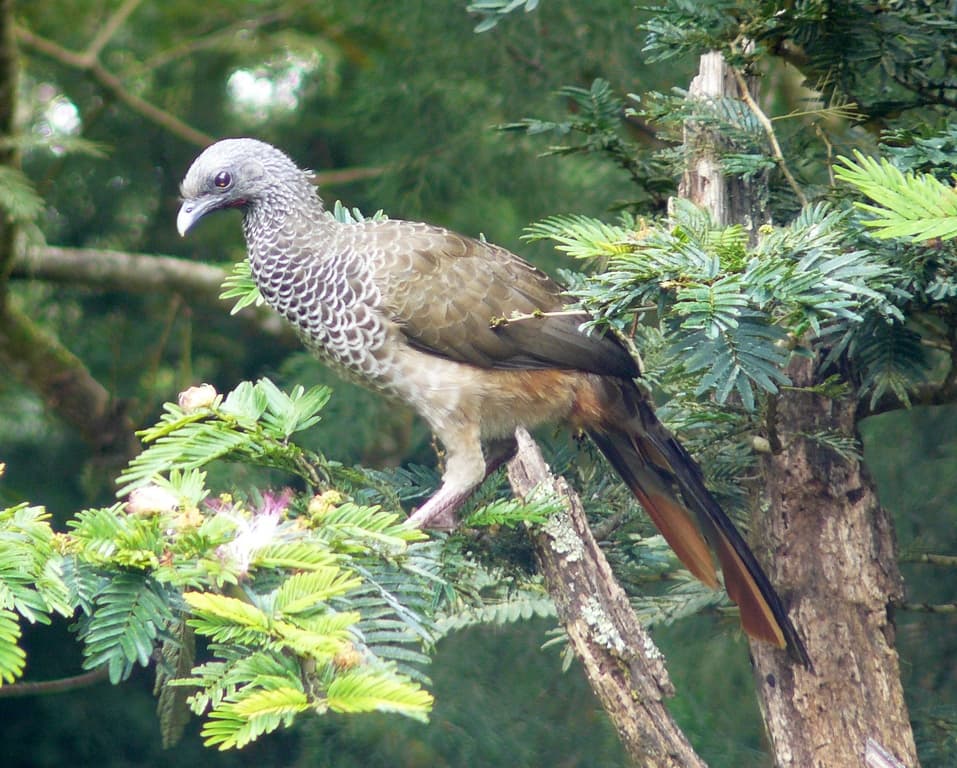
The Colombian chachalaca is an average-sized bird with a length ranging from 55-60 cm. It has a largely olive-brown coloration with shades of chestnut along the belly and tail. Its head and neck are grayish-black giving it a unique look. They're well-known for a long, broad tail, and strong legs equipped with sharp claws.
Male vs female
Both males and females are similar in coloration with the males having a slightly larger body. Females appear to have a little more greenish sheen and less chestnut color on the belly. Males also usually have a more robust vocal performance, particularly during mating season.
Juvenile
Juveniles also resemble the adults in terms of coloration, but they are duller with less brilliance in their feathers. Their overall size is smaller and they usually have less chestnut color visible on their belly. They also have a grayer throat. As they mature, they gradually acquire the distinctive hues of the adults.
Size
20.5 - 21.7 in/17.6 - 21.2 oz
There's more to learn about Colombian Chachalaca
View full detailsHow to tell the Chachalaca from the Colombian Chachalaca
Visual differences
The Chachalaca (Ortalis) generally appears larger at up to 26.4 inches with brown and green plumage, whereas the Colombian Chachalaca (Ortalis columbiana) reaches around 21.7 to 23.6 inches, showcasing olive-brown with a grayish-black head and neck. The Colombian Chachalaca is more chestnut on the belly and tail, with stronger legs. Both species exhibit long tails, but the Colombian variant's belly and neck are more distinctly colored. Males of both are similar, though Colombian males can be more robust. Juveniles in both species are duller and less vividly patterned.
Key differences and behavior
Chachalacas and Colombian Chachalacas, both social birds named for their chatter, exhibit notable behavioral differences. Chachalacas, found in North and Central America, are highly adaptable to various habitats, including urban areas, and often foray into gardens, potentially damaging vegetation. They thrive on fruits, seeds, and occasionally insects. Their courtship involves duet singing, with both sexes sharing parental duties. In contrast, Colombian Chachalacas, native to Colombia's dry forests and urban parks, prefer trees and seldom visit bird feeders. They focus on fruits with large seeds, crucial for seed dispersal. Their mating involves loud calls, and nests are constructed in low shrubs, with both parents caring for chicks. Although both species exhibit group behaviors and similar nesting habits, the Colombian Chachalaca's forest preference and seed dispersion role distinguish it. Both species contribute significantly to their ecosystems but in distinct ways.
Still not sure? Here are more lookalikes!
Chachalaca vs [Select a bird]

[Select a bird]
Pick a bird to compare
Colombian Chachalaca vs [Select a bird]
[Select a bird]
Pick a bird to compare