
Chachalaca
Chachalaca
Ortalis
Quick Identification guide
Quick Identification guide
Male
- •
dark brown plumage with a slight greenish gloss on the upper parts
- •
A grayish head with a bare, bluish face and red eye
- •
Rounded wings and a long, fan-shaped tail with broad, pale tips
Female
- •
duller brown plumage compared to males, lacking the greenish gloss
- •
Similar grayish head with a bluish, featherless face and red eye
- •
Shares the rounded wings and fan-shaped tail, with broad, pale tips
What does a chachalaca sound like?
The vocalizations of the chachalaca resembles raucous cackling and clucking, which is how they got their name. Their most characteristic sound is a loud, repetitive "cha-cha-lac," often made in the early morning and evenings. Other calls include a galloping "klo-klo-klo" and high pitched, excited squealing. These social birds often engage in communal calling, where one bird's calls are answered and amplified by others, creating a resounding chorus.
Description
Did you know that the chacalaca's name comes from the same Nahuatl verb that means 'to chatter'. Chatter these 16 species of social birds definitely do! They go about in groups of 12 and the only thing they love more than some conversation is going to town on a vegetable garden, so hide your tomatoes if these birds happen to be nearby!
The chachalaca can weigh between 345to834grams and be from42to67centimeters tall.
Chachalacas typically live for about 10-15 years in the wild. This is fairly typical for galliformes, a group of heavy-bodied ground-feasting birds that includes turkeys, grouse, and chickens. Lifespan can vary depending upon species, diet, and habitat. Turkeys, close relatives of chachalacas, can live up to 10 years in the wild, while chickens often live roughly 5-10 years.
Did you know?
Most popular questions about chachalaca
How to recognise a chachalaca?
General appearance
Chachalacas are large, pheasant-like birds, reaching up to 63cm in length. They exhibit predominantly brown and green coloration, often featuring greyish-olive and light russet tones. The bird's conspicuous, elongated and flattened tail characterizes its profile, while a host of white streaks and squares pattern its wing coverts.
Male vs female
Male and female chachalacas are sexually monomorphic, meaning both sexes share a similarity in appearance. Both have long legs, a long, broad tail, and a small head on a thin neck. Their key difference lies in their vocalizations, with males producing louder, more guttural calls.
Juvenile
Juvenile chachalacas resemble adults in coloration but are slightly duller with less distinct patterns. Their tails are shorter and they lack the fully developed throat pouch of mature birds, which is used for vocalizations. Their coloration becomes richer and the tail grows longer as they mature.
Often mistaken for
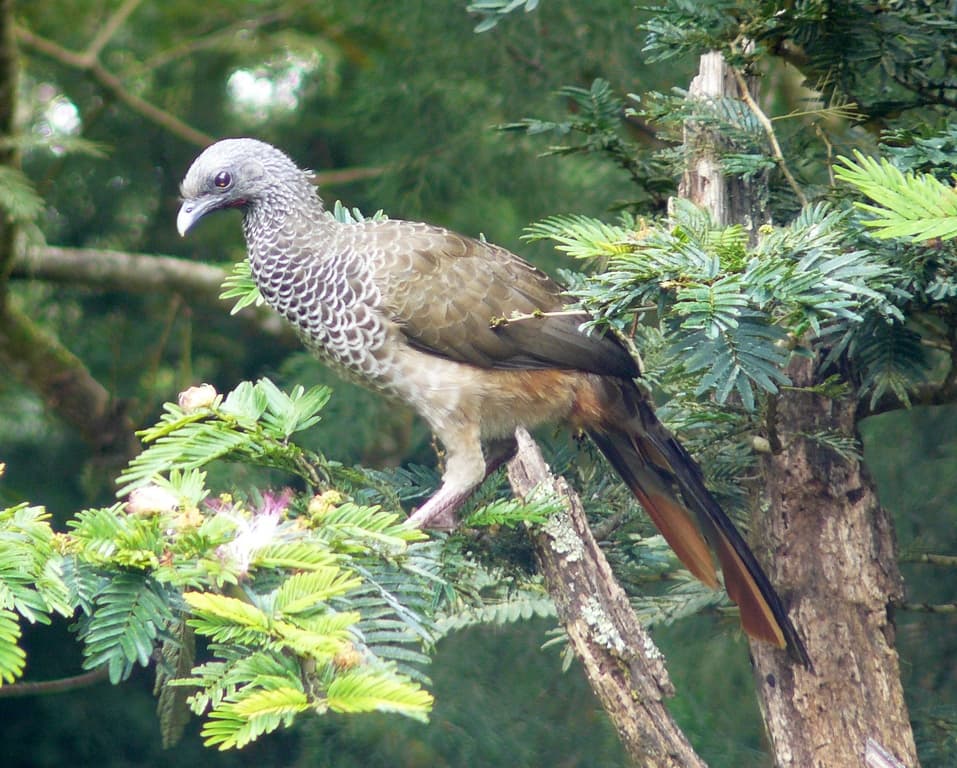
Colombian Chachalaca vs Chachalaca
The Colombian Chachalaca resembles the Chachalaca but can be distinguished by its slightly smaller size and more olive-colored plumage.
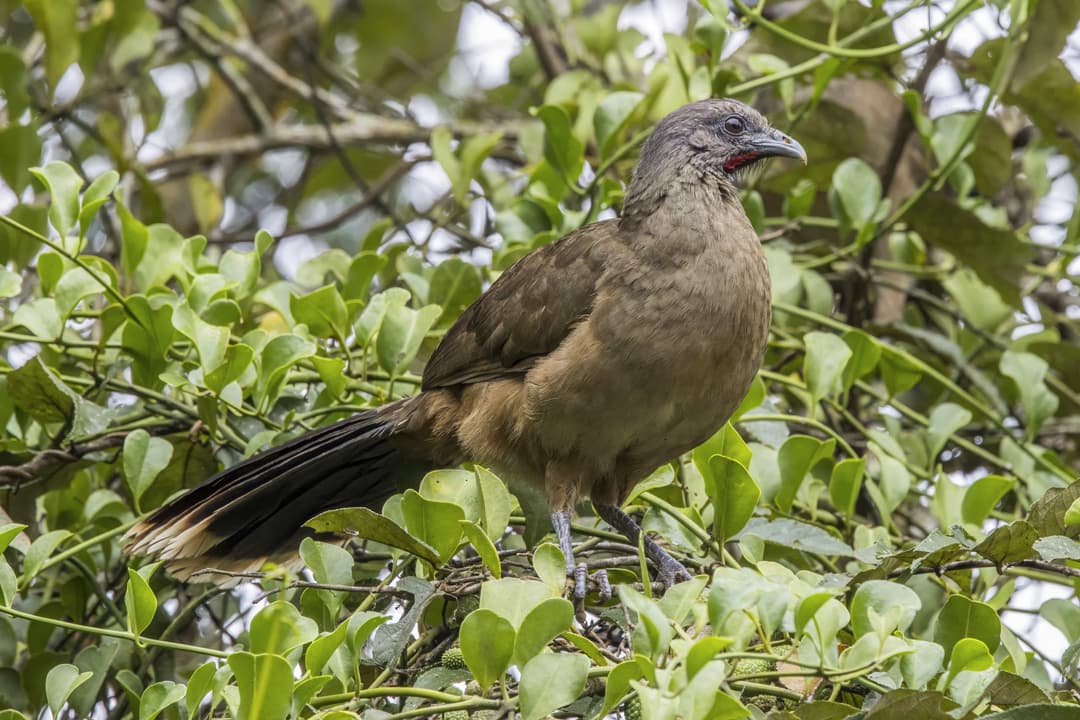
Plain Chachalaca vs Chachalaca
The Plain Chachalaca looks similar to the Chachalaca, but it can be identified by its more uniform grayish-brown color and less contrast on its wings.
Breeding and nesting habits of the chachalaca
Mating behaviors
Chachalacas engage in elaborate vocal displays to attract mates, involving duet singing between males and females. During courtship, males may display plumage and make short flights to show strength and vitality.
Nesting details
Chachalacas build their nests in trees or shrubs, using twigs, leaves, and grass. These nests are typically located 2-6 meters above the ground for protection. In gardens, providing dense shrubs and small trees can encourage nesting.
Eggs and chick-rearing
Females lay 2-4 eggs, which are incubated for about 22-24 days. Both parents are involved in feeding and protecting the chicks, which fledge approximately 2 weeks after hatching. Chicks are nourished with a variety of fruits and insects.
What does a chachalaca like to eat?
Berries
Flowers
Fruits
Insects
Plants
Seeds
Spiders
Natural diet
Chachalacas are primarily frugivorous but also consume various plant material. Their natural diet includes fruits, seeds, and berries from diverse plant species. They are known to eat tender leaves and buds, which they glean from shrubs and trees. Occasionally, they may consume flowers, which provides them with necessary nutrients. Additionally, they might feed on small insects like beetles or caterpillars, especially during the breeding season when protein is essential.
Bird feeders
At bird feeders, chachalacas are attracted to grains and seeds, with a preference for corn and millet. They may also consume sunflower seeds when offered. In some regions, they are fed with commercial bird food mixes that contain nuts and dried fruits. Occasionally, they might try suet blocks or peanut butter mixtures, although these are not staples in their diet. Chachalacas are adaptable and open to a variety of options presented at feeders.
Attracting chachalacas to your yard
Chachalacas are known for their love of fruits and berries. Consider planting native shrubs and trees that produce these treats, such as figs and hackberries. These birds are also drawn to areas with thick vegetation, so ensure your yard provides enough cover and nesting places.
Providing feeders for chachalacas
Install feeders that can accommodate the larger size of Chachalacas. Platform or tray feeders work best. Fill them with fruits, a favorite of the Chachalaca, along with seeds. Bird Buddy seeds are especially recommended because they are expertly chosen for the season, ensuring that your feeders are stocked with the best possible food at any given time of the year.
Encouraging regular chachalaca visits
To ensure regular visits from the Chachalaca, consistency in providing food sources is key. Regularly replenishing the feeders with Bird Buddy seeds and fruits will ensure they keep returning to your yard. Additionally, creating a safe and quiet environment will help make the Chachalaca feel at home. These birds are also known for their loud vocalizations, so don't be surprised if they treat you to a sing-along when they visit!
Where can you find chachalacas?
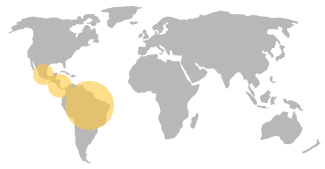
Primary habitat
Chachalacas typically inhabit tropical and subtropical forests, thorn forests, and brushy spaces in North and Central America.
Additional range
They have adapted to habitats like scrublands and, surprisingly, urban areas.
Do they migrate?
The chachalaca is primarily a non-migratory bird. Specifically, species like the Plain Chachalaca tend to reside year-round in their native habitats. These birds are found in subtropical and tropical forests, woodlands, and scrublands, particularly in regions of the southern United States, Mexico, and Central America. The habitat preferences of chachalacas include areas with dense vegetation, which provide ample food sources and protection. They primarily feed on fruits, seeds, and foliage, exploiting the resources available in their local environments throughout the year. Given their adaptability to various environments within their range, there is no necessity for them to migrate, and they do not engage in long-distance seasonal movements like some other bird species. Occasionally, local movements might occur if food becomes scarce, but these are not true migrations. Therefore, chachalacas remain largely stationary, maintaining territorial presence in their customary habitats year-round.
What is the role of chachalacas in nature and how to protect them?
Conservation status
The chachalaca is generally considered common, with populations stable across much of its range. However, some regional populations face threats from habitat loss, hunting, and deforestation. Conservation efforts include habitat protection and legal restrictions on hunting in certain areas. While not globally classified as vulnerable or endangered, specific local populations may be at risk due to increasing human activities. Organizations continue to promote awareness and implement measures to ensure their habitats are preserved, aiming to maintain healthy population levels across its range.
Ecological role of chachalacas
Its role in the ecosystem
Chachalacas hold a substantial role in their ecosystems. Living mainly in the forests, they aid in pest control by feeding on insects that could otherwise harm the vegetation. Likewise, they are instrumental in seed dispersal, as the fruits and berries they consume propel the propagation of various plant species. This act of feeding and consequent seed dispersal enhances the biodiversity of their habitats, facilitating a healthy and balanced ecosystem. Moreover, their distinctive early morning calls act as 'ecological indicators', providing insights into the overall health and dynamics of the ecosystem. In essence, their presence and behaviors contribute to the ecological stability and diversity of their habitats.
How to help protect chachalacas
Preservation tips
Habitat preservation strategies
Protecting and restoring chachalaca habitats such as subtropical and tropical dry forests is crucial. Prioritizing the preservation of these areas within land management plans and supporting policies that discourage deforestation can play a significant role. Additionally, encouraging sustainable agricultural practices can reduce the degradation of chachalaca habitats.
Community science initiatives
Engage local communities in chachalaca conservation efforts. Launch educational programs about the importance of these species and their ecological roles. Initiate citizen science projects where community members can contribute to monitoring chachalaca populations and report any threats. Participation in bird watching societies can also be promoted to generate awareness and enthusiasm for preserving these birds and their habitats.