
Zenaida Dove
Zenaida Dove
Also known as: Turtle Dove
Zenaida aurita
Quick Identification guide
Quick Identification guide
- •
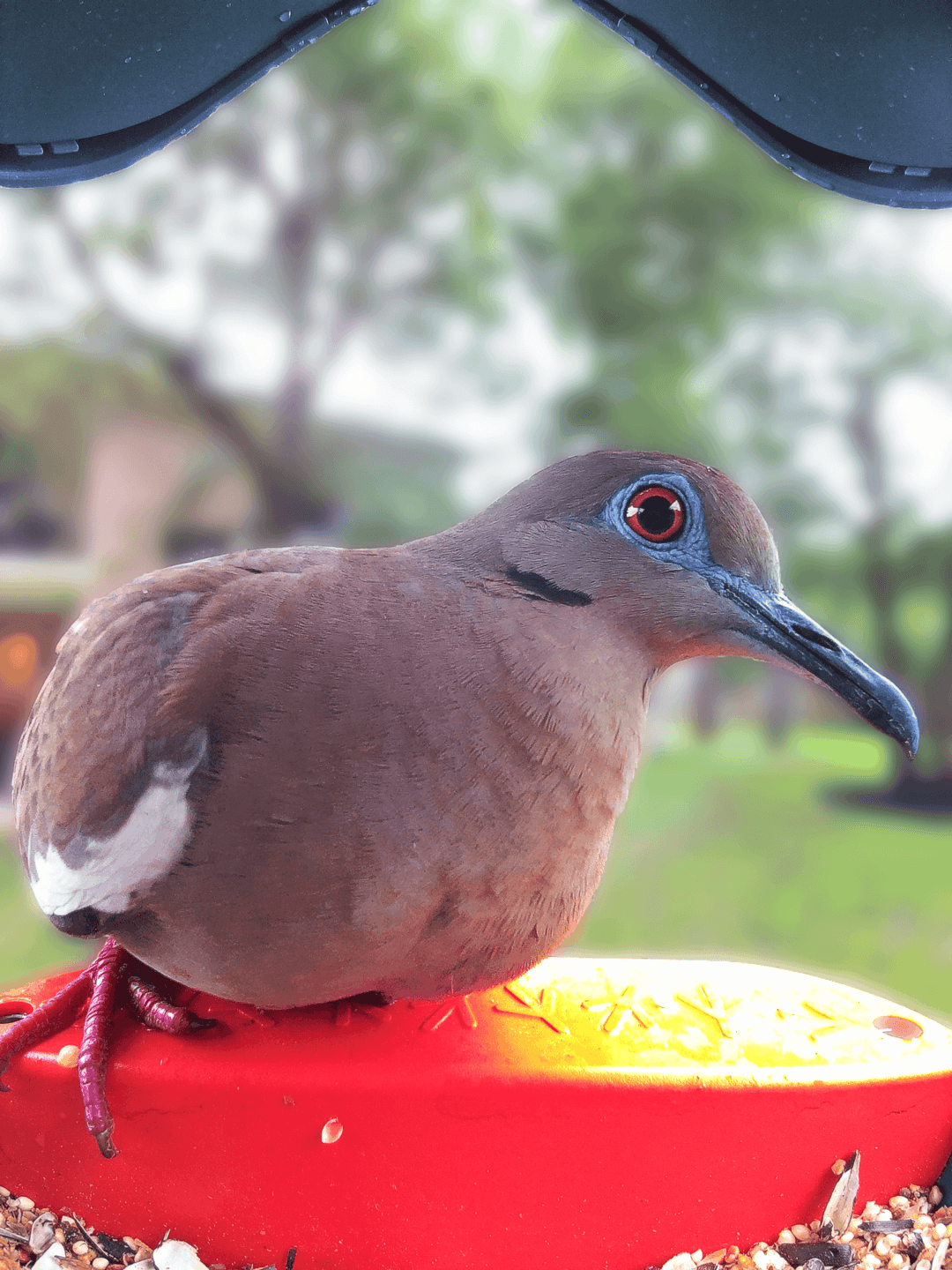
Small to medium-sized bird with a rounded body and short legs providing a compact appearance
- •
Exhibits a light brown plumage with a slight pinkish hue, complemented by black spots on the wings
- •
Features a relatively slender, black beak and a distinctive white trailing edge on the tail
Description
Zenaida doves are the national bird of Anguilla, and are known for their slightly more fast-paced, though still mournful cooing. These ingenious birds often munch on gravel to help ease their digestion, and love a good livestock salt stick or salty soil to help their egg development and crop milk production. It's called self-care!
The zenaida dove can weigh between 95to194grams and be from28to30.5centimeters tall.
The typical lifespan of the Zenaida Dove (Zenaida aurita) is around 5 to 7 years in the wild. This is similar to the Mourning Dove (Zenaida macroura), which also typically lives 5 to 7 years. In contrast, the closely related Rock Pigeon (Columba livia) often lives 3 to 5 years in the wild, although it can reach 15 years under human care. While environmental factors and predators affect wild lifespans, these doves share similar life expectancies due to comparable ecological niches and survival strategies.
Did you know?
Most popular questions about zenaida dove
How to recognise a zenaida dove?
General appearance
The Zenaida Dove is a medium-sized bird characterized by its plump body and small head. It has a muted coloration with a light brown or tan overall plumage coupled with a distinctive pink hue on the chest. The wings display a notable blue-grey color with black markings visible during flight. Its long tail is marked with white edges, providing contrast to the more subdued body tones.
Male vs female
Male and female Zenaida Doves are quite similar in appearance, making sex differentiation challenging. Both exhibit the same coloration and pattern, with no significant differences in plumage or size. Occasionally, during the breeding season, males may appear slightly more vibrant in color due to enhanced hormones impacting their feather hues. Despite these traits, visual identification of gender requires expert observation.
Juvenile
Juvenile Zenaida Doves differ from adults in a few subtle ways. Their overall plumage tends to be duller and more muted compared to the brighter adults. Young doves often show less distinction in the pink breast area and might possess more brownish tones, especially in the tail feathers. As they mature, their colors gradually shift to mirror the adults. Juveniles might also display less iridescence on the neck and wings until full maturity.
Often mistaken for
Mourning Dove vs Zenaida Dove
The Mourning Dove is slightly larger and has a more streamlined body. It has subtle pink on its chest and bluish around the eyes, unlike the Zenaida Dove’s grayish tones. Mourning Doves also have a more pronounced neck patch with iridescence.

White-Winged Dove vs Zenaida Dove
White-Winged Doves are distinguished by their prominent white wing patches that are visible when perched and in flight. They are larger than the Zenaida Dove and have a blue orbital ring around the eye.
Breeding and nesting habits of the zenaida dove
Mating Behaviors
The Zenaida Dove engages in gentle courtship displays, with males performing soft cooing sounds and head bobbing to attract females. These doves exhibit monogamous pairing, often forming strong lifelong bonds with their chosen mate. Breeding typically occurs during the warmer months, allowing for optimal conditions for rearing young.
Nesting Details
Nesting locations for Zenaida Doves include low shrubs, trees, and even gardens, where they find relative safety from predators. They prefer dense foliage offering concealment from threats. The nest construction is a collaborative effort, consisting of twigs and grass, forming a loose cup-like structure. When encouraging these doves to nest in gardens, providing a mix of dense vegetation and accessible water sources can create an inviting environment.
Eggs and Chick-rearing
Typically, the female Zenaida Dove lays two white eggs. The incubation period spans approximately two weeks, with both parents sharing the responsibility of keeping the eggs warm. After hatching, the chicks are fed 'pigeon milk,' a nutrient-rich secretion. Parent doves are diligent caregivers, spending several weeks nurturing their young until they are fledged and independently capable of foraging.
What does a zenaida dove like to eat?
Fruits
Insects
Seeds
Worms
Natural diet
The Zenaida Dove, commonly found in tropical and subtropical regions, primarily forages on the ground for a diverse range of foods. Its natural diet typically consists of seeds, grains, and small fruits, relying heavily on various grass seeds and the seeds of woody plants. They may also consume small insects and other invertebrates, though these make up only a minor part of their diet. Seasonal variations can affect the availability of these food sources, with a preference for newly sprouted seeds during the wet season and more reliance on fallen fruits in drier months. Nectar is occasionally consumed, particularly during flowering seasons when it's readily available.
Bird feeders
Zenaida Doves can be attracted to bird feeders in gardens and backyards, where they enjoy various seed mixes, including cracked corn, millet, and sunflower seeds. They show a preference for larger seeds and grains, which are easier for them to handle and digest. Offering finely chopped fruits like apples or pears can also appeal to these doves, adding to the natural variety they experience. Providing a ground-level feeder is advised, as they are more comfortable feeding on flat surfaces, mimicking their natural foraging behavior. Maintaining cleanliness and ensuring a supply of fresh water nearby can help entice these birds to become regular visitors.
Choose ideal feeders for the zenaida dove
Utilize platform or tray feeders when attracting Zenaida Doves to your backyard. These feeders offer ample space for the dove's size and provide easy access to their favorite foods. Consider placing these feeders near shrubs or open areas where these birds often forage.
Provide zenaida dove's favorite snacks
Zenaida Doves are fond of seeds, grains, and cracked corn. Opt for Bird Buddy seeds, specifically designed to cater to a variety of bird species with high-quality ingredients. This blend ensures that Zenaida Doves get the nutrients they require throughout the year.
Strategic feeder placement for maximum appeal
Place your feeders about five feet off the ground, ensuring they're stable and easily accessible. Location is key; choose open, yet sheltered spots, where doves can comfortably land and feed without feeling threatened by predators.
Seasonal strategies for year-round visitors
While Zenaida Doves may visit year-round, availability of food varies with seasons. Increase food supply during colder months when natural resources are scarce. During breeding seasons, ensure a consistent supply of seeds to support growing families.
Enhancements to create a dove-friendly habitat
Beyond feeders, provide shallow birdbaths for water access, and incorporate native shrubs or trees that offer natural shelter and nesting sites. Native plantings can attract insects, further enticing Zenaida Doves with additional food sources.
Where can you find zenaida doves?
Primary habitat
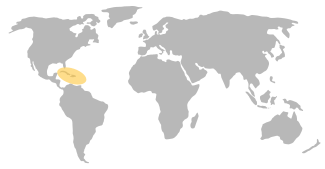
The Zenaida Dove (Zenaida aurita) primarily inhabits subtropical and tropical regions, favoring coastal forests, woodlands, and scrublands across the Caribbean, including islands such as Barbados, Puerto Rico, and Cuba. These areas provide the warm climate and abundant vegetation that support the food sources and nesting sites necessary for their survival. The dove is commonly sighted in these lush environments, where they thrive on seeds and fruits.
Additional range
Apart from its coastal and tropical preferences, the Zenaida Dove demonstrates adaptability by occupying urban areas, gardens, and agricultural lands. Unexpectedly, these birds can sometimes be found in more arid or disturbed habitats. Their ability to exploit various environments showcases their resilience in adapting to altered landscapes, provided that they have access to food and water resources.
Do they migrate?
The Zenaida Dove (Zenaida aurita) is generally a non-migratory bird, primarily staying in one place year-round. It inhabits the Caribbean, including the Greater and Lesser Antilles, and parts of the Yucatan Peninsula. Unlike many other bird species, Zenaida Doves do not undertake long migratory journeys. Instead, they are resident birds, adapting to the local environment where they can find adequate food sources and nesting sites. While they do not embark on migration, they may exhibit some local movement depending on food availability or environmental conditions like drought. These movements are usually short-range and not considered true migration. Breeding typically occurs between February and July, but this can vary by location due to climatic and environmental conditions. In summary, the Zenaida Dove is primarily sedentary, residing within its established range in the Caribbean and nearby regions throughout the year, without engaging in long-distance migratory behavior.
What is the role of zenaida doves in nature and how to protect them?
Conservation status
The Zenaida Dove is currently listed as "Least Concern" by the IUCN, indicating it is relatively common. It inhabits the Caribbean, Central America, and parts of the southern United States. Key conservation efforts include habitat protection and monitoring population trends. Significant threats to the species include habitat loss due to urbanization and agriculture, as well as hunting in some areas. Conservationists focus on addressing these challenges through legal protection of habitats and public awareness campaigns. Despite these threats, the species maintains stable populations across much of its range.
Ecological role of zenaida doves
Its role in the ecosystem
The Zenaida Dove, native to the Caribbean region, holds a notable place in maintaining ecological balance. This bird species plays a crucial role in pest control by consuming a variety of seeds, grains, and insects, thus limiting overpopulation of plant pests. The Zenaida Dove also aids seed dispersal through its feeding habits. As the bird consumes seeds across a wide range of land, it facilitates plant propagation by excreting uneaten seeds away from the parent plant, promoting germination and promoting forest regeneration. Although direct pollination by Zenaida Doves may not be significant, their movement across various habitats supports the diversity of flora and fauna. Interactions with other species highlight their role in the food web, serving as prey for predators like hawks and contributing to the nutrient cycling within the ecosystem. As they decompose organic matter through their droppings, they enrich the soil and promote healthy plant growth. Moreover, by inhabiting diverse environments, from coastal regions to inland forests, Zenaida Doves showcase adaptability that supports various ecosystems' health. In their modest way, these doves exhibit the interconnectedness of life, proving essential in maintaining ecological equilibrium.
How to help protect zenaida doves
Preservation tips
Habitat preservation strategies
Protecting and restoring the natural habitat of the Zenaida Dove is crucial for its conservation. Supporting conservation organizations that focus on preserving the Caribbean islands, where the doves are predominantly found, can make a significant difference. Donating to or volunteering with these organizations helps fund land purchases to protect natural environments from development. Advocacy through lobbying efforts can also be crucial in persuading governments to enact stronger environmental protection laws. Local communities can reduce habitat destruction by actively opposing deforestation and promoting sustainable land-use practices. Creating and maintaining protected areas or reserves where the doves can thrive is also vital for their long-term survival.
Community science initiatives
Engaging in community science initiatives offers individuals a way to contribute actively to the conservation of the Zenaida Dove. By participating in birdwatching groups, citizens can monitor dove populations, aiding researchers in tracking changes in their numbers and distributions. Reporting sightings to wildlife databases helps create comprehensive data that scientists use to assess conservation strategies. Communities can organize educational workshops to raise awareness about the dove's importance and how to protect its habitat. Furthermore, promoting and participating in awareness campaigns on social media helps spread essential conservation messages to a wider audience, encouraging more people to take an active role in protecting this beautiful species.