
Screaming Cowbird
Screaming Cowbird
Molothrus rufoaxillaris
Quick Identification guide
Quick Identification guide
- •
Displays a glossy black plumage in males, while females exhibit a more subdued brownish tone
- •
Has a stout, curved beak, characteristic of cowbirds, aiding in their foraging habits
- •
Features a slender body build with a relatively short tail, contributing to its streamlined appearance
What does a screaming cowbird sound like?
The Screaming Cowbird (Molothrus rufoaxillaris) is known for its distinctive vocalizations, which include a variety of calls and songs. Its calls are often described as harsh and abrupt, featuring sharp "chik" or "chk" sounds. The bird's song is a series of mechanical, gurgling phrases combined with high-pitched notes, creating a rhythmic and choppy pattern. The vocal repertoire is used for communication and consists of both solo and interactive calls, often heard during its breeding season. These vocalizations are crucial for territory establishment and mate attraction within their habitats in South America.
Description
You probably won't be the least bit surprised to find out that the screaming cowbird is, well, loud! What about that they don't build nests? They don't need them! They are famous brood parasites and are known to sneakily deposit their eggs in other species' nests.
The screaming cowbird can weigh between 48to58grams and be from18to21centimeters tall.
The typical lifespan of a Screaming Cowbird (Molothrus rufoaxillaris) is around 8-10 years in the wild. This parasitic bird, found in South America, often targets the nests of Bay-winged Cowbirds for laying its eggs. Compared to the closely related Brown-headed Cowbird, which has a similar lifespan of approximately 8 years, the Screaming Cowbird's longevity is influenced by environmental factors and host availability. In contrast, the Shiny Cowbird, another relative, averages slightly longer at up to 12 years, benefiting from its broader geographic range and adaptability to various hosts.
Did you know?
Most popular questions about screaming cowbird
How to recognise a screaming cowbird?
Screaming cowbird overview
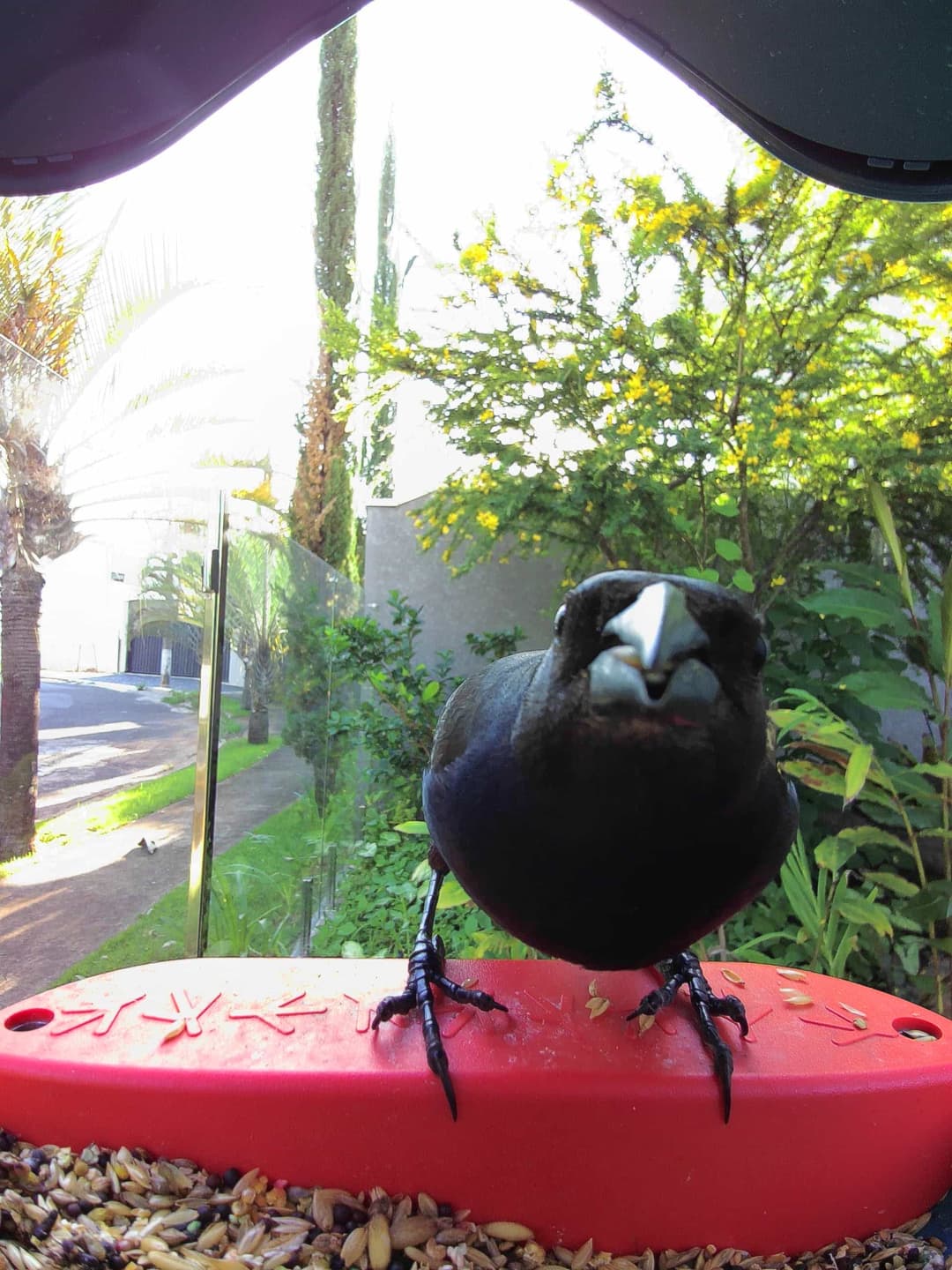
The Screaming Cowbird, Molothrus rufoaxillaris, is a small bird species with fairly uniform plumage. Adult Screaming Cowbirds exhibit a striking black coloration that covers their entire body, including their head, back, and wings. The feathers often have a glossy sheen that reflects subtle hints of purple or blue in the right light. Their eyes are dark and beady, complementing their equally dark, stout bill which is perfectly adapted for their diverse diet.
Male vs female screaming cowbird
There is little distinction between the male and female Screaming Cowbirds in terms of appearance. Both sexes share the same overall black plumage and size, making them challenging to differentiate. However, during the breeding season, males may be observed engaging in more vocal and conspicuous behaviors to attract mates, often perching in open areas and calling loudly.
Juvenile screaming cowbird
Juvenile Screaming Cowbirds differ notably from adults in terms of plumage coloration. These young birds usually present a more brownish hue, with patchy and less uniform feathering compared to the sleek black of adults. As they mature, their feathers gradually transition to the characteristic adult black. Juveniles are also readily identified by their relatively quieter demeanor, as they are less likely to engage in the distinctive loud calls until they approach adulthood.
Often mistaken for
Brown-Headed Cowbird vs Screaming Cowbird
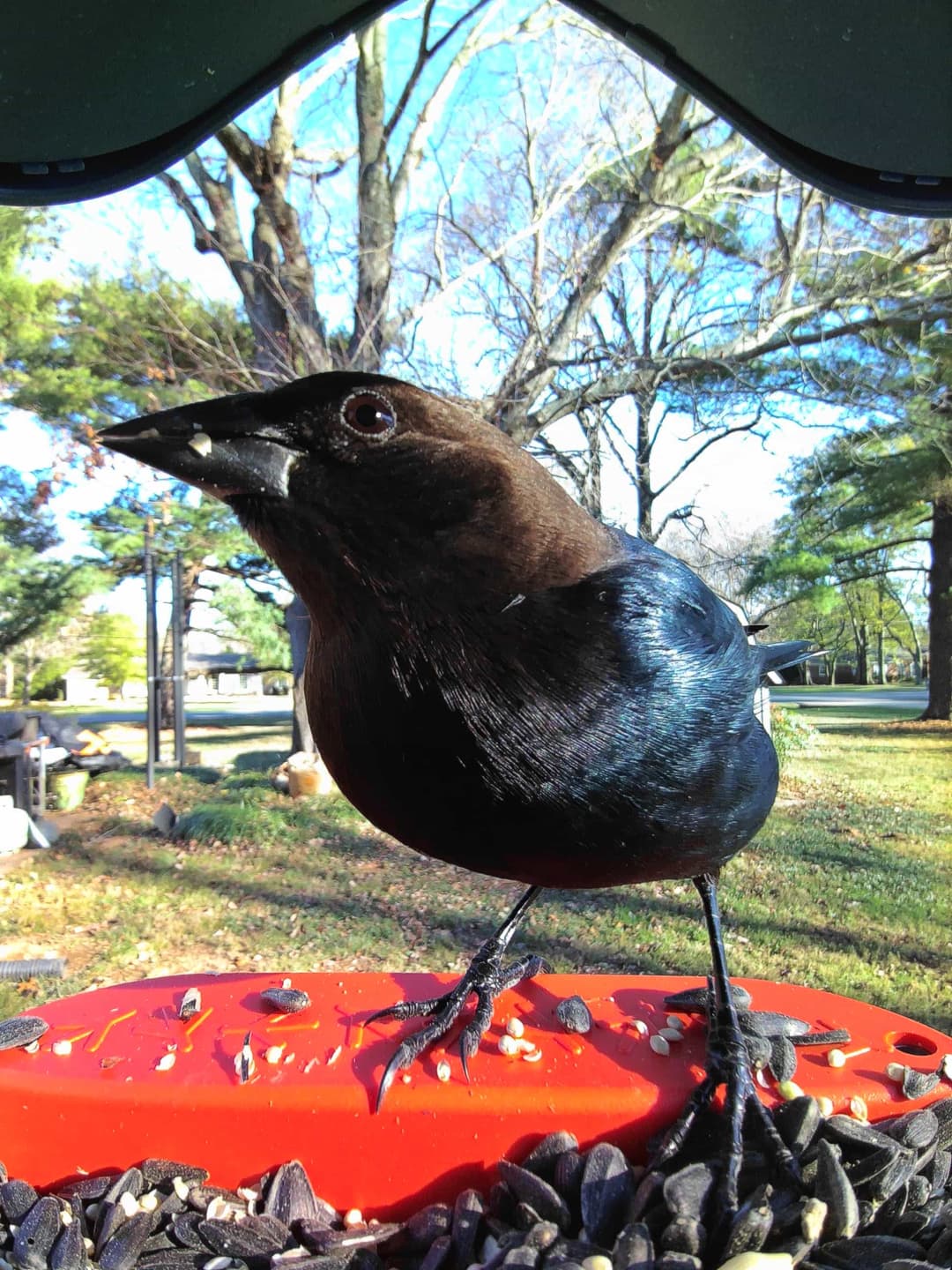
While similar in structure, the Brown-Headed Cowbird differs from the Screaming Cowbird by having a glossier texture and a more uniformly brown head. The Screaming Cowbird, on the other hand, has more subtle plumage overall.
Shiny Cowbird vs Screaming Cowbird
Often confused due to their similar size, the Shiny Cowbird is glossier and has a distinct purplish sheen compared to the matte finish of the Screaming Cowbird. The habitats of these two birds occasionally overlap, leading to frequent misidentification.
Breeding and nesting habits of the screaming cowbird
Mating Behaviors
The Screaming Cowbird, a brood parasite, relies on other birds to raise its offspring. Males engage in vocal displays to attract females, often assembling in small groups, vocalizing loudly, and performing flight displays. Courtship involves mutual calling and physical displays such as wing fluttering, showcasing their plumage to capture the attention of potential mates.
Nesting Details
Unconventionally, Screaming Cowbirds do not construct their own nests. Instead, they sneaky lay their eggs in the nests of other bird species, particularly in the nests of Bay-winged Cowbirds. This reliance on host nests means they need neither nesting materials nor construction skills. They are typically found in open areas in proximity to their host species' preferred environments, such as shrubs or small trees in gardens.
Eggs and Chick-Rearing
Female Screaming Cowbirds lay a single egg in the chosen host's nest, often removing one of the host's eggs to increase the chance of successfully parasitizing. The eggs hatch after approximately 11 days of incubation. With none of their own parental duties, the cowbird chick is cared for by the unsuspecting host parents, who feed and nurture it alongside or instead of their offspring until it fledges.
What does a screaming cowbird like to eat?
Insects
Snails
Spiders
Worms
Natural diet
The Screaming Cowbird (Molothrus rufoaxillaris) primarily feeds on insects found in grassy landscapes and open fields, complementing its diet with seeds and grains from wild grasses. During the spring and summer months, these birds are particularly fond of foraging for caterpillars and beetles, which are abundant in the warmer seasons. As temperatures drop in autumn, they turn more toward seeds and leftover grains. Occasionally, they may consume small fruits and berries, although this is less common in their diet.
Bird feeders
At bird feeders, the Screaming Cowbird may consume a variety of seeds and grains. They show a preference for millet and cracked corn, often flocking to feeders that provide these staples. Though not their first choice, they have been known to try suet, especially if it contains seeds or insects. To attract these birds, feeder enthusiasts can offer commercial seed mixes that are rich in small grains. While they might not visit fruit or nectar feeders frequently, providing a diverse array of seeds can encourage their visit and add to the enjoyment of observing their unique behavioral patterns.
Choose the right feeder for the screaming cowbird
To attract Screaming Cowbirds, choose a sturdy tube feeder with multiple perches. These birds prefer feeders where they can sit comfortably and have easy access to seeds. Opt for adjustable perches or a tray-style feeder to accommodate the different size preferences of these sociable birds.
Offer screaming cowbird approved snacks
Screaming Cowbirds are partial to grains and seeds. Provide a mix of millet, cracked corn, and sunflower seeds. Bird Buddy seeds are highly recommended for their nutritious content and quality. This ensures the cowbirds get the energy they need while frequenting your feeder.
Strategic feeder placement brings cowbirds close
Place your feeder in an open area to allow easy access and visibility for the Screaming Cowbirds. Ensure it's 5-10 feet above the ground to protect them from potential predators and disturbances. A quiet corner of your backyard or a secluded section of the garden often works best.
Seasonal strategies for attracting cowbirds
During breeding season, Screaming Cowbirds are more active. Clear away excessive foliage around feeders to offer unobstructed access. In colder months, keep feeders stocked, as natural food sources become scarce, making your backyard a reliable feeding site.
Enhance your backyard with water sources
Screaming Cowbirds are drawn to water for drinking and bathing. Adding a birdbath with shallow edges can significantly boost chances of attracting them. Ensure that water is fresh and replenished regularly to keep their interest alive.
Where can you find screaming cowbirds?

Preferred habitats of the screaming cowbird
The primary habitat of the Screaming Cowbird is the open and semi-open landscapes of southern South America. It favors grasslands and scrublands, frequently found in countries like Argentina, Uruguay, and southern Brazil. These regions provide the mild climate the bird thrives in, with abundant grassy spaces for finding food and suitable sites for social interactions.
Unexpected adaptations
Apart from its primary range, the Screaming Cowbird occasionally appears in urban areas and agricultural lands where human activities have modified the natural landscape. These adaptable habitats offer alternative spaces for foraging, often in close proximity to human settlements, although this is less common. Such adaptability showcases the bird's resilience in changing environments.
Do they migrate?
The Screaming Cowbird (*Molothrus rufoaxillaris*) is primarily a resident bird and does not engage in long-distance migrations. Its range is largely restricted to the lowland regions of central South America, including parts of Argentina, Uruguay, Paraguay, and southern Brazil. Instead of migrating, the Screaming Cowbird exhibits more localized movements based on seasonal availability of resources and breeding opportunities. It tends to follow the regional patterns of host bird species like the Bay-winged Cowbird (*Agelaioides badius*), which it parasitizes. During the breeding season, which typically occurs in the austral spring and summer (September to February), Screaming Cowbirds remain closer to the breeding sites of these host species. These cowbirds might moderately extend their range to take advantage of different ecological niches throughout the year. However, they do not embark on the typical migratory journeys seen in many other bird species. Instead, their movement patterns are best described as local or regional, aligning closely with their reliance on host species for reproduction.
What is the role of screaming cowbirds in nature and how to protect them?
Conservation status
The Screaming Cowbird is currently classified as near threatened. It primarily inhabits parts of South America, where its population is threatened by habitat loss and fragmentation due to agricultural expansion and urbanization. Also, its dependence on the nests of other bird species, particularly the Bay-winged Cowbird, poses challenges as host species decline. Conservation efforts focus on habitat protection and monitoring population trends. Collaborative programs aim to preserve wetland areas and natural grasslands vital to their survival, while raising awareness about the ecological role of these birds.
Ecological role of screaming cowbirds
Its role in the ecosystem
The Screaming Cowbird plays a complex role in its ecosystem largely due to its unique reproductive strategy and feeding habits. As a brood parasite, it primarily lays its eggs in the nests of other bird species, particularly targeting the Bay-winged Cowbird. This strategy pressures host species but also maintains ecosystem balance by indirectly supporting diverse bird populations, as hosts develop adaptive strategies. This cowbird's diet mainly consists of insects and seeds, which allows it to potentially contribute to pest control by reducing insect populations that could harm local flora. By consuming seeds, it can inadvertently facilitate seed dispersion as uneaten seeds pass through its digestive system and are deposited in new locations, allowing for plant propagation and diversity maintenance. While not directly involved in pollination, the Screaming Cowbird enhances nutrient cycling as its waste returns vital nutrients to the soil, promoting plant growth and soil health. Interactions with other species include competing for hosts with similar parasitic birds but also encouraging biodiversity through its complex ecological interactions. Thus, despite its challenging behaviors, this bird contributes to ecosystem resilience and adaptability.
How to help protect screaming cowbirds
Preservation tips
Habitat preservation strategies
To support the conservation of the Screaming Cowbird, focus on preserving and restoring its natural habitats, such as grasslands and savannahs. Encourage local governments and organizations to protect these areas by designating them as protected reserves. Support conservation organizations working on habitat conservation efforts. Participate in lobbying for stricter environmental protection laws and policies that safeguard against land conversion into agricultural or developmental zones. Additionally, landowners in key areas can establish conservation easements to limit land use and prevent habitat destruction.
Community science initiatives
Engage in community science projects aimed at monitoring Screaming Cowbird populations. Participate in birdwatching groups that record and share sightings, contributing valuable data for research. Encourage schools and community centers to host workshops that raise awareness about the bird's ecological role and the importance of our natural ecosystems. Involve local communities in planting native vegetation that attracts both the Screaming Cowbird and its host species, helping maintain biodiversity. Volunteer for or donate to initiatives that train local residents in identifying and reporting on bird populations, fostering a community-driven approach to conservation.