
Pileated Woodpecker
Pileated Woodpecker
Dryocopus pileatus


Quick Identification guide
Quick Identification guide
- •
Notable for its large size and striking appearance, the Pileated Woodpecker features a black body with bold white stripes on its face.
- •
Its head is capped by a brilliant red crest, which is a key distinguishing trait among woodpeckers.
- •
The long chisel-like bill and distinctive white underwings visible in flight make it easy to identify.
What does a pileated woodpecker sound like?
The pileated woodpecker produces distinct vocalizations, characterized by a loud, flicker-like 'cuk-cuk-cuk-cuk-cuk' sound. The unique call pattern fluctuates, first rising then falling in pitch and volume, much like a rhythmic drumbeat. The woodpecker's calls vary from chips and chirps to emphatic screams, each serving different communication purposes. These intriguing sounds contribute immensely to the creature's identifiable charm within its forest habitat.


Description
Did you know thag the largest North American woodpecker's beak is as long as its head? That's quite the hardware! It needs to be because they use it to chisel out a large round hole to nest in. They don't just use trees; poles used for power lines are also a favourite. One problem: the nest is so large that it sometimes makes the poles snap, taking out power for the surrounding area! Whoops.
The pileated woodpecker can weigh between 250to350grams and be from40to49centimeters tall.
The Pileated Woodpecker typically has a lifespan of around 13 years, with the oldest recorded being 12 years and 11 months. This is significantly longer than many other woodpecker species, such as Downy Woodpeckers and Red-bellied Woodpeckers. Factors influencing their longevity include available habitat quality, food abundance, and a low predation rate.
Did you know?
Most popular questions about pileated woodpecker
How to recognise a pileated woodpecker?
General appearance
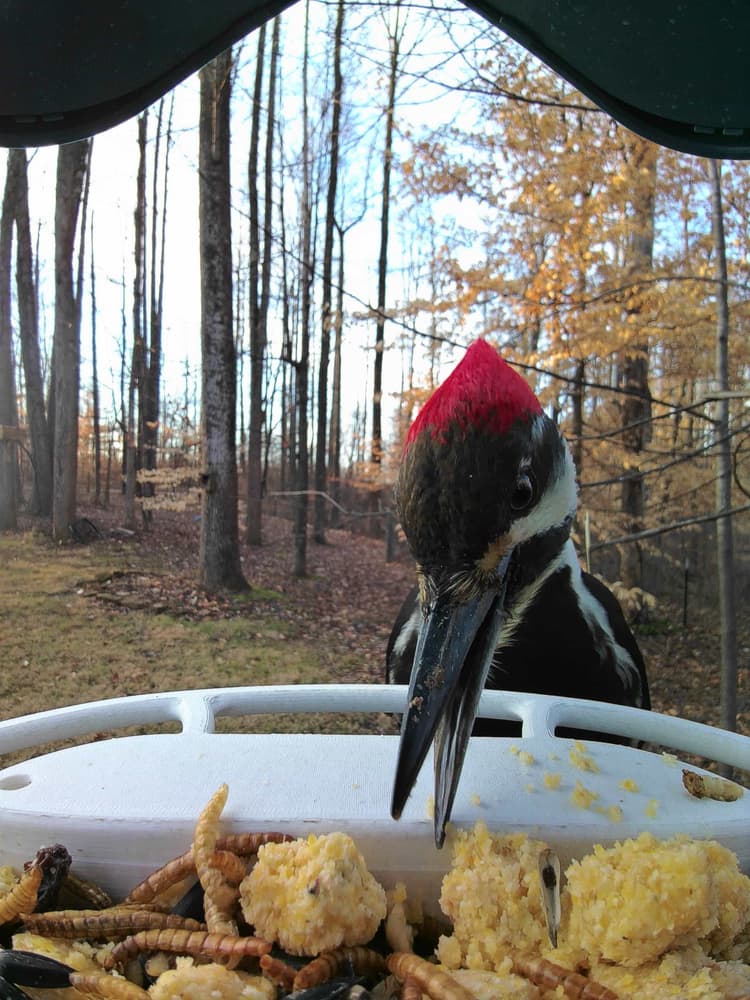
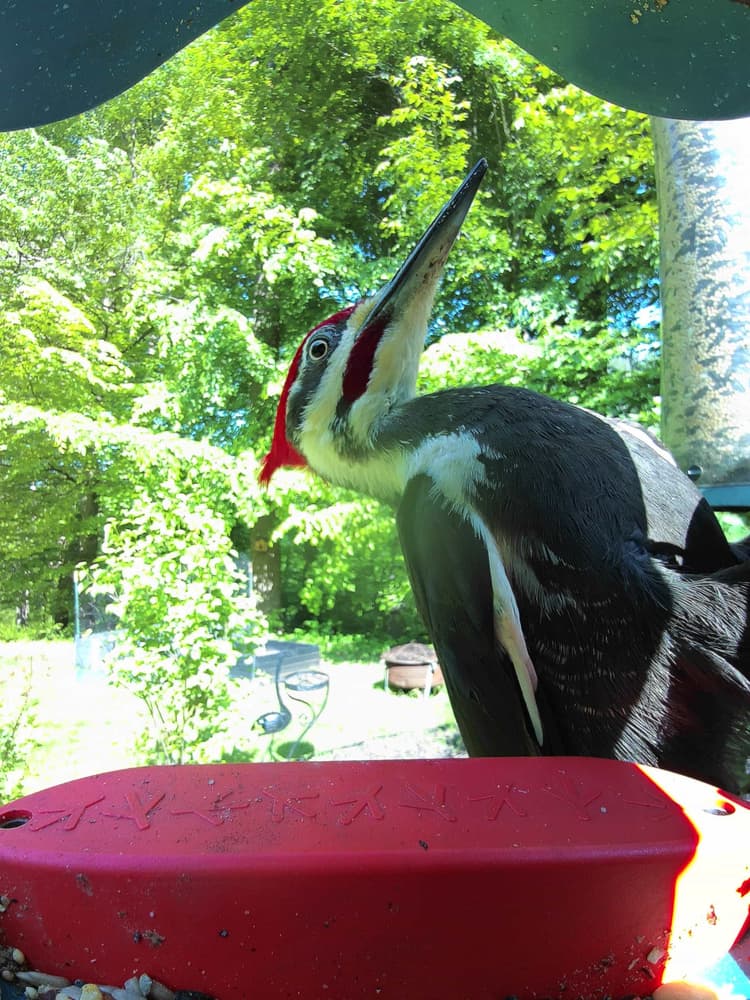
The Pileated Woodpecker is a large bird approximately the size of a crow, measuring about 17 inches (43 cm). Characterized by a primarily black body, its most distinctive feature is a vibrant red crest. In flight, this bird's white under-wings flash conspicuously. With broad rounded wings and a multi-pointed, wedge-shaped tail, these woodpeckers possess a striking appearance.
Male vs female
There are subtle differences in coloration between male and female Pileated Woodpeckers. Specifically, both have a red crest but the males exhibit a red forehead and mustache while in female counterparts these parts are black. This is a key identifier determining the sex of these birds.
Juvenile
Juvenile Pileated Woodpeckers largely resemble adults in coloration though typically less vivid. As they mature, the coloration deepens, becoming more pronounced and vibrant. It is important to observe closely for these nuanced changes in plumage when birdwatching in the wild.
Often mistaken for
Red-Headed Woodpecker vs Pileated Woodpecker
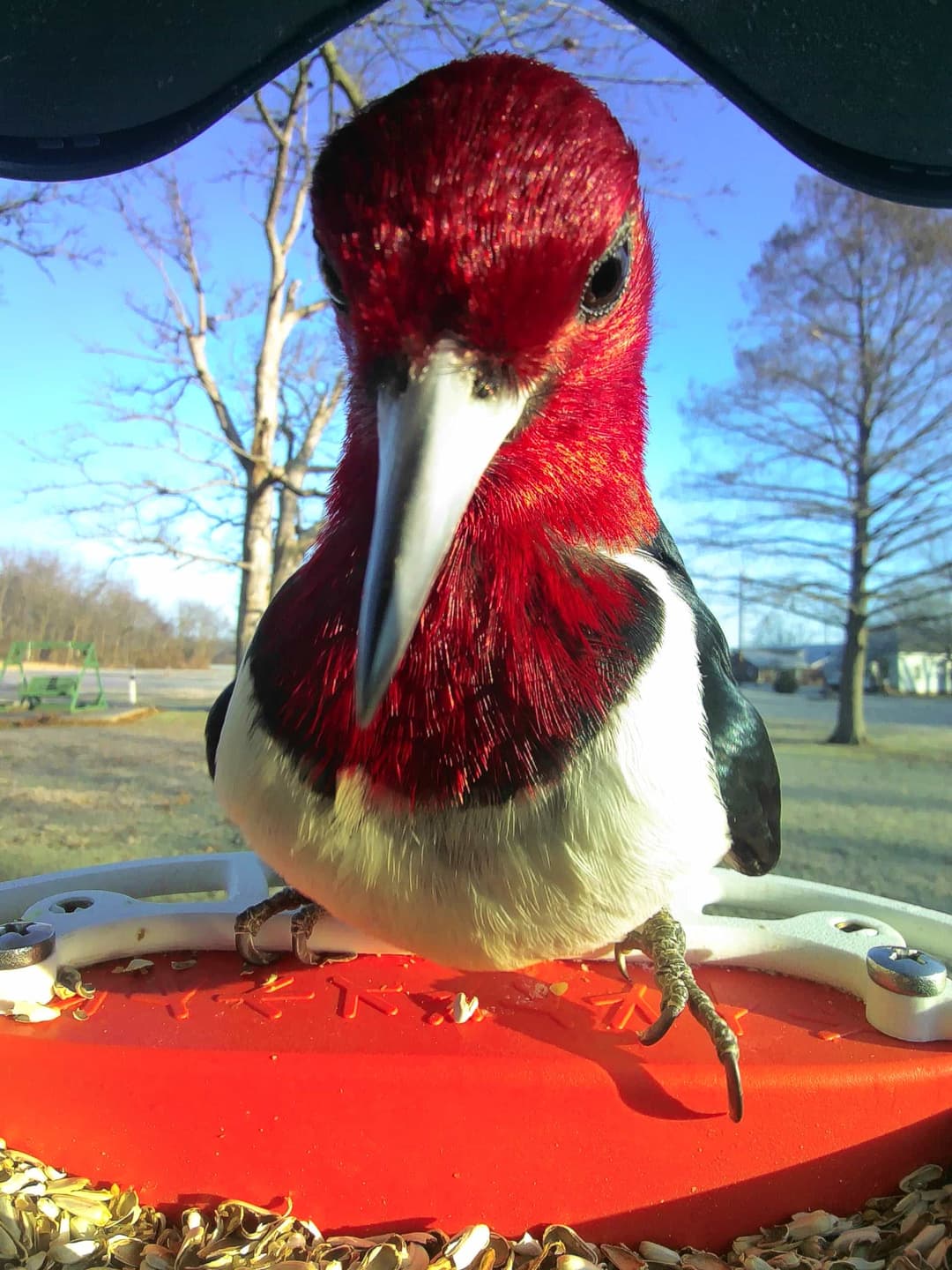
The Pileated Woodpecker is larger with a prominent crest and a mostly black body with white stripes on the face. The Red-Headed Woodpecker has a bright red head, a contrasting white body with black back and wings. Pileated has a loud, ringing call, whereas the Red-Headed's call is softer. Look for the Pileated's rectangular drumming and larger size to tell them apart.
American Crow vs Pileated Woodpecker
The Pileated Woodpecker is smaller than the American Crow, with a distinctive red crest and white underwings that are visible in flight. While crows have a glossy all-black appearance, the Pileated has contrasting colors and a unique, powerful flight pattern. Listen for the Pileated's loud, laughing 'kuk-kuk' call, distinct from the crow's 'caw'.

Breeding and nesting habits of the pileated woodpecker
Mating behaviors
Pileated woodpeckers engage in vibrant courtship displays, which include spreading their wings to reveal a white wing patch, raising their crest, and swinging their head back and forth. They also perform elaborate gliding display flights to attract mates. Territory is defended with loud drumming and ringing calls.
Nesting details
Pileated woodpeckers typically choose to nest in cavities of dead trees or the dead branches of live trees, though they may also opt for utility poles. These cavities are usually located 15-80 feet above the ground. Both males and females participate in excavating a new cavity each year, often tapping or drumming on wood at prospective sites.
Eggs and chick-rearing
Once a suitable cavity is prepared, the female lays eggs, which both parents incubate. After hatching, both the male and female share responsibilities in feeding and caring for the chicks until they are ready to leave the nest.
What does a pileated woodpecker like to eat?
Berries
Fruits
Insects
Nuts
Natural diet
The pileated woodpecker primarily feeds on ants and other insects. Carpenter ants can constitute up to 60% of their diet. They also consume other ants, albeit rarely by digging into anthills on the ground, as well as termites, larvae of wood-boring beetles, and other insects. Roughly one-quarter of their diet includes wild fruits, berries, and nuts.
Bird feeders
While not exclusively known for this, pileated woodpeckers may visit bird feeders in search of common offerings such as suet or mixed nuts. These additions to their diet are less frequent and often only supplement their natural foraging habits.
Delicious snacks for pileated woodpeckers
Pileated Woodpeckers are big birds and enjoy a hefty snack. Offering suet cakes made of beef fat can particularly delight them. You can also provide black oil sunflower seeds, a favorite among these birds. For the best results, use Bird Buddy seeds, expertly chosen for the season.
Preferred woodpecker feeder types
Large platform feeders or suet cages are excellent choices for attracting Pileated Woodpeckers. They appreciate feeders that can accommodate their size and allow them to have a firm foothold. Strong, secure feeders are a must as these birds can be aggressive feeders.
Encourage regular visits from pileated woodpeckers
Place the feeders near mature trees or forested areas as Pileated Woodpeckers prefer woodland environments. Keeping the feeding area clean will also help to attract these birds. Additionally, if you're lucky enough to have their favorite food, ants and beetles, infesting a dead tree, leave it and watch the woodpeckers work!
Sing-along with pileated woodpeckers
Pileated Woodpeckers are known for their resonant, drumming calls. Watch and listen when they are around, and you may be able to pick up their patterns. Mimicking their calls or using bird call apps may attract their curiosity and bring them in for a closer look, and possibly a sing-along!
Where can you find pileated woodpeckers?

Primary habitat
The pileated woodpecker favors mature deciduous or mixed deciduous-coniferous forests including conifer, mixed, and hardwood forests, and woodlots. They require large trees in their habitat.
Additional range
They are found in a variety of forest types from southern swamps to northwest's old-growth Douglas-fir forests. They may also inhabit second-growth and fragmented woodlots.
Do they migrate?
The pileated woodpecker is generally a permanent resident and does not engage in long-distance migration like many bird species. It typically stays in one place throughout the year, maintaining a territory within its breeding area. However, individuals sometimes wander far from their established territories, which can give the appearance of migratory behavior. These wanderings are not systematic or seasonal migrations but rather irregular movements likely influenced by factors such as food availability or climatic conditions. The pileated woodpecker is primarily found in mature forests across North America, particularly in the eastern United States, the Great Lakes region, parts of the Pacific Northwest, and southern Canada. These birds are adapted to live in forests with plenty of dead or decaying trees, which provide food and nesting sites. While they may occasionally leave these home territories, such movements are generally limited and not typical long-distance migrations. Therefore, the pileated woodpecker remains in its local habitat year-round, making seasonal movements unnecessary for this species.
What is the role of pileated woodpeckers in nature and how to protect them?
Conservation status
The pileated woodpecker experienced significant decline in the eastern United States during the 18th and 19th centuries due to forest clearing. However, since around 1900, the species has made a gradual comeback and is now common in some areas. This resurgence may be linked to its adaptation to second-growth forests and human proximity. The pileated woodpecker is not considered vulnerable or endangered, but conservation efforts focus on habitat preservation given its reliance on large trees for nesting and foraging. Key threats include deforestation and habitat fragmentation.
Ecological role of pileated woodpeckers
Its role in the ecosystem
The pileated woodpecker plays key roles in its ecosystem. Its diet largely consists of ants, especially carpenter ants, which comprise up to 60% of its food intake, and other insects such as termites and larvae of wood-boring beetles. This predation contributes significantly to the control of these insect populations, which would be pests if left unchecked. Hence, this bird effectively serves as a natural pest control agent. Furthermore, its feeding behavior involves excavating deep into dead wood and even dismantling stumps and logs to reach ant nests, a behavior that assists in the decomposition of dead wood and contributes to nutrient cycling in the ecosystem. In addition to insects, the woodpecker's diet includes fruits, berries, and nuts, about a quarter of its total diet. By consuming these and later excreting the seeds, the woodpecker aids in the dispersal of these plant species. Its nesting behavior also generates cavities in dead trees that can subsequently be used by other species as nesting or roosting sites. The pileated woodpecker, therefore, contributes to the maintenance of biodiversity in its habitats.
How to help protect pileated woodpeckers
Preservation tips
Habitat preservation
The Pileated Woodpecker thrives in mature forests, especially deciduous and mixed deciduous-coniferous woodlands. Land development threatens this environment, so conserving and responsibly managing these forests is crucial. Leave dead trees standing, if safe, as they provide crucial nesting sites. Public and private landowners can play a significant role in preserving these habitats.
Community science initiatives
Engage in citizen science projects, such as the Cornell Lab of Ornithology's 'Project FeederWatch' or the Audubon Society's 'Christmas Bird Count'. These programs collect data on bird populations and can help scientists understand the Pileated Woodpecker's range and abundance. Public participation can provide valuable data and spread awareness about conservation issues.