
Red-Eyed Dove
Red-Eyed Dove
Streptopelia semitorquata


Quick Identification guide
Quick Identification guide
Male
- •
Overall grayish plumage with a prominent black half-collar on the nape
- •
Striking red eyes stand out against the head
- •
White underparts contrast with the darker upper parts
Female
- •
Similar grayish plumage as the male with a less distinct half-collar
- •
Red eyes that are a shared feature with the male
- •
Pale underparts which appear slightly duller than those of the male
What does a red-eyed dove sound like?
The red-eyed dove’s vocalizations involve a distinct and repetitive cooing sound. The song is a sorrowful "co-OO-oo", repeated in sequences. It is commonly mistaken for a human sounding 'no hope'. The rhythmic sequence and tone often earn them a place in local folklore. Furthermore, its coos are broken down into a series of notes, giving its song a unique touch. The duration of their songs varies but is frequently prolonged, especially during dawn and dusk. Their vocalizations play a significant role in courtship and territory marking.


Description
The red-eyed dove could also be called the politest of doves as its call is also an introduction! Seriously, listen for its call that sounds like, 'I am a red-eyed dove'! Did you know that this is the largest of the ringneck doves? And the chunkiest, too! It's large, in charge and not overly sociable, preferring instead to feed alone or in pairs.
The red-eyed dove can weigh between 162to310grams and be from30to34centimeters tall.
The red-eyed dove typically has a lifespan of 10 to 15 years. This is relatively long compared to other species: the mourning dove, for example, only lives for 1 to 3 years on average, while the ring-necked dove typically lives for around 10 to 15 years in the wild, very similar to the red-eyed dove's lifespan.
Did you know?
Most popular questions about red-eyed dove
How to recognise a red-eyed dove?
General appearance
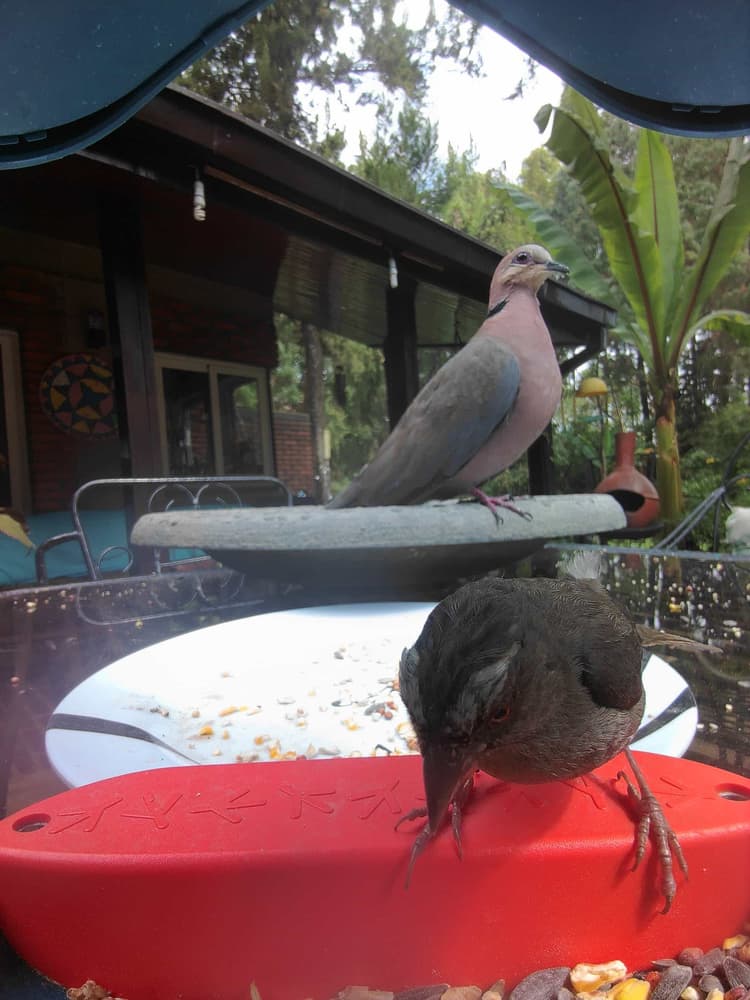
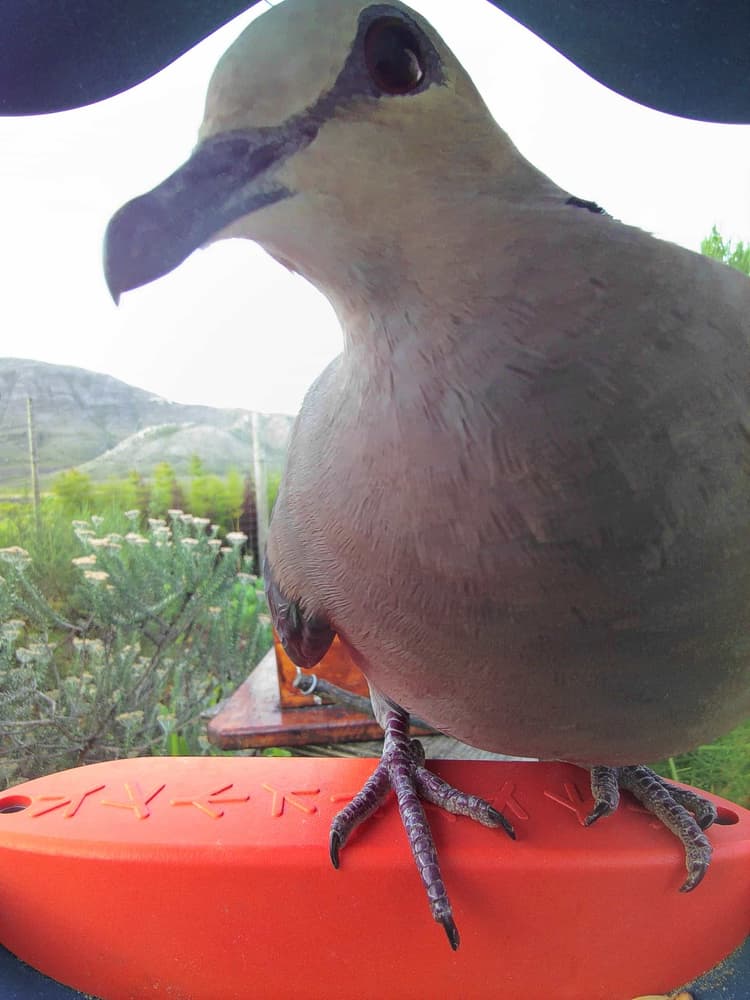
The red-eyed dove is a large, long-tailed bird known for its distinct red eyes, contrasted by a grey head and lavender-grey body. It exhibits a particular wing pattern, with its back and wings being slate-grey, crossed by broad black bands. Its underparts are slightly pink, with its tail having a white tip.
Male vs female
The males and females of the red-eyed dove species exhibit monomorphism, meaning they share similar plumage and are difficult to distinguish visually. The unique identifying factor lies in their vocalization patterns where the male has a distinct five-part coo sound sequence, differing from the female's call.
Juvenile
Juvenile red-eyed doves possess a uniform brown colouration compared to adults, lacking the distinctive black wing bands. Their overall colour is duller with their eyes being more of a brownish-grey shade. As they mature, they gradually acquire the adult's characteristic markings and vibrant red eyes.
Often mistaken for
Mourning Dove vs Red-Eyed Dove
Mourning Doves can be distinguished from Red-Eyed Doves by their soft gray color and mourning call. They have no red eyes, and their tail ends are usually white-tipped.

Eurasian Collared Dove vs Red-Eyed Dove
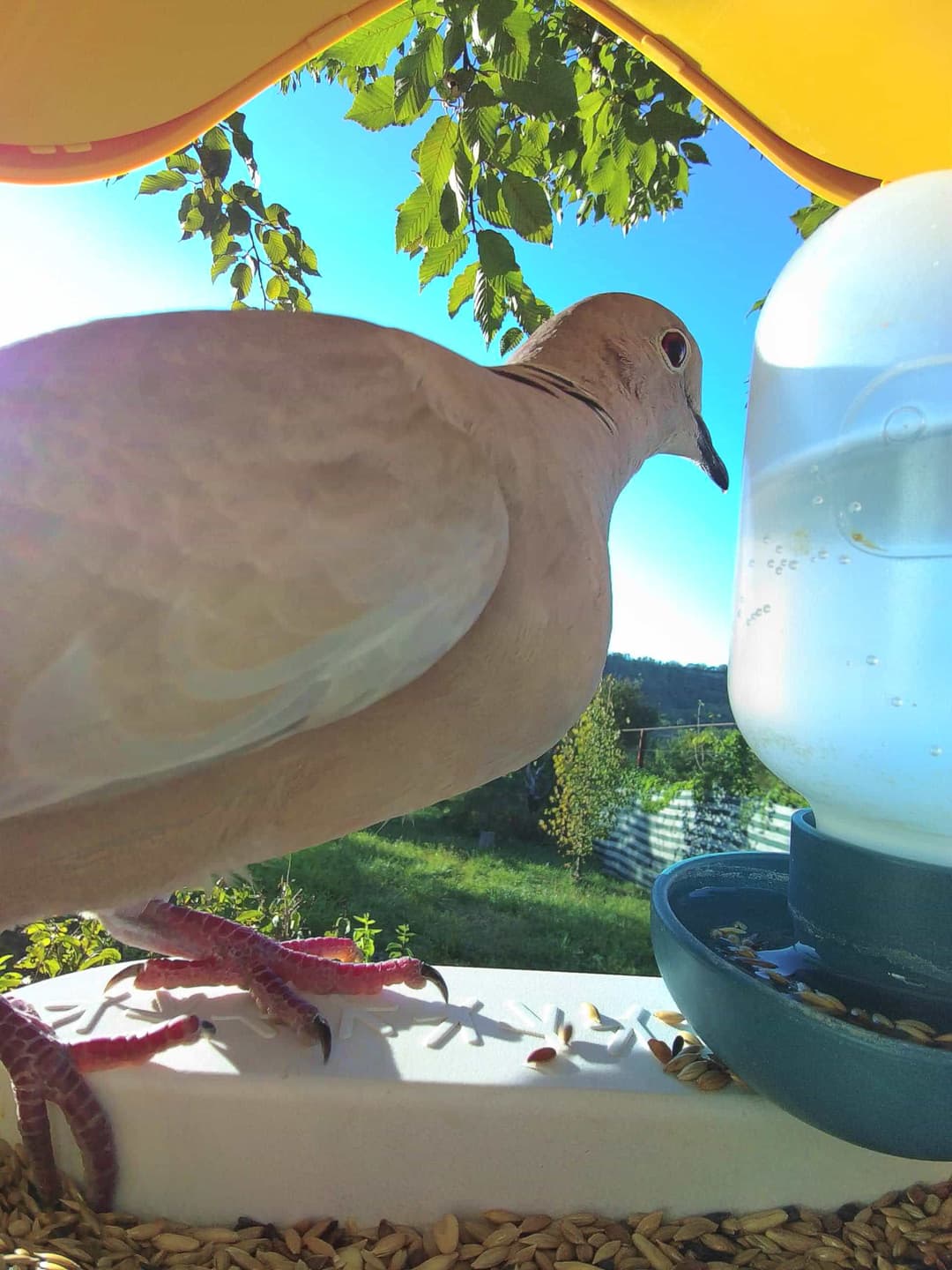
Eurasian Collared Doves have a distinctive black 'collar' on the nape of their neck which the Red-Eyed Dove lacks. They are generally paler and have gray undertones.
Ring-Necked Dove vs Red-Eyed Dove
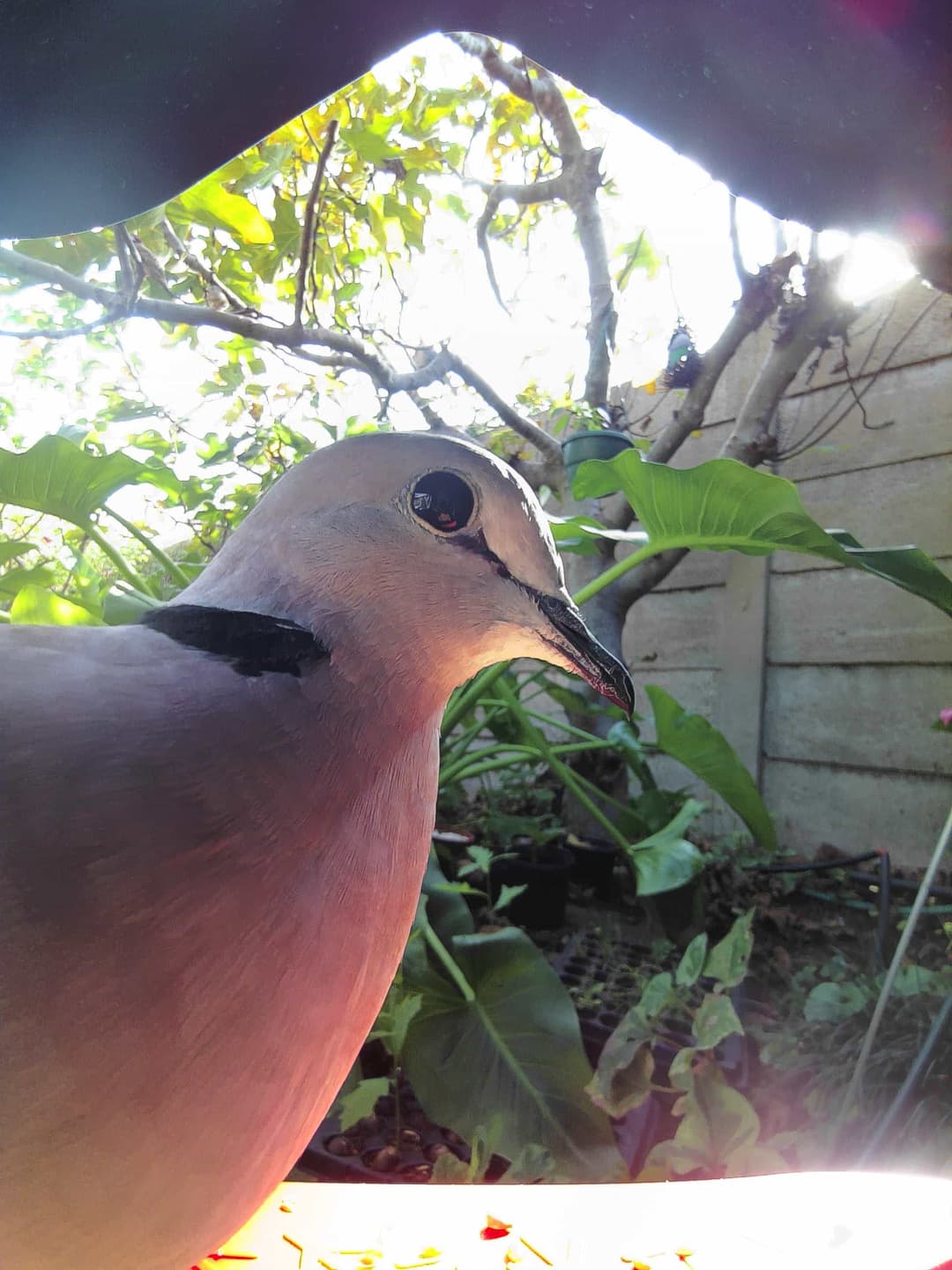
Ring-Necked Doves have a clearer, slimmer body shape with a distinctive black neck ring. They are generally lighter and have a distinct call.
Breeding and nesting habits of the red-eyed dove
Mating behaviors
Red-eyed doves engage in a series of vocalizations and displays to attract mates. The male performs a display flight, characterized by clapping wings, followed by a cooing sound when perched. Courtship feeding may occur where the male offers food to the female.
Nesting details
Red-eyed doves construct simple platform nests using twigs. They typically choose trees or shrubs, often in gardens or open woodland, as nesting sites. They prefer dense foliage for concealment.
Eggs and chick-rearing
The female usually lays two white eggs. Both parents participate in incubating the eggs for about 14-16 days. After hatching, both continue to feed the chicks until they fledge at around 20 days. Providing a garden with native shrubs and trees can attract nesting doves, offering a natural and safe habitat.
What does a red-eyed dove like to eat?
Berries
Plants
Seeds
Natural diet
The red-eyed dove primarily feeds on seeds, grains, and fallen fruits. It often forages on the ground, searching for these food sources in its natural habitat. Additionally, it may consume small insects and invertebrates, providing essential protein, especially during the breeding season.
Bird feeders
At bird feeders, the red-eyed dove is often attracted to a variety of seeds, such as sunflower seeds, millet, and cracked corn. These components offer a similar nutritional profile to its natural diet, encouraging the dove to visit areas where bird feeders are present.
Provide tasty treats
Red-eyed doves are fond of seeds, particularly sunflower seeds, millet, and sorghum. We highly recommend offering Bird Buddy seeds since they're chosen by experts for the season, ensuring the best taste and nutrition for your visiting doves.
Choose the right feeder
Use platform feeders or larger hopper feeders for red-eyed doves. These birds are larger than many species and require a sizable and stable place to eat. Don't forget to clean it regularly to keep the doves coming back for more.
Offer fresh water
Red-eyed doves love fresh water sources. Set up a birdbath or a shallow dish with clean water in your yard. Change the water daily to make it more inviting for the doves.
Make your yard safe
Ensure your yard environment is safe and secure. Keep pets away from the feeder areas and place them in quieter regions of the yard to attract these shy doves. Provide some cover, like bushes or trees, for the doves to retreat to if they feel threatened.
Sing-along
While you can't exactly engage in a sing-along session with the doves themselves, playing soft, quiet bird calls can often prove to attract red-eyed doves. Just make sure the volume isn't too loud; the goal is to mimic natural sounds, not overpower them.
Where can you find red-eyed doves?
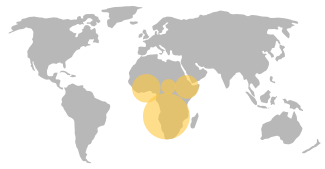
Primary habitat
The red-eyed dove typically inhabits light woodland, savannas, and gardens in sub-Saharan Africa.
Additional range
Unexpectedly, it also thrives in urban areas and can be found in the Middle East, extending to the Arabian Peninsula.
Do they migrate?
The red-eyed dove is primarily a non-migratory species. It is largely sedentary, residing in sub-Saharan Africa. This dove is well-adapted to a variety of habitats including woodlands, savannas, gardens, and urban areas. Its distribution stretches from Senegal and Gambia in the west to Ethiopia and Somalia in the east, reaching down to South Africa. While the red-eyed dove does not undertake long-distance migrations like some other bird species, it may exhibit local movements depending on food availability and environmental conditions. These movements are generally not well-defined migratory patterns but are instead responses to seasonal changes, such as water and food scarcity. It often remains at its breeding sites throughout the year, as long as the conditions are favorable. In summary, the red-eyed dove is predominantly sedentary with some local movements rather than being migratory, adapting to the environmental conditions within its range in sub-Saharan Africa.
What is the role of red-eyed doves in nature and how to protect them?
Conservation status
The red-eyed dove is considered a common species and is classified as "Least Concern" by the IUCN. It is widespread across sub-Saharan Africa, thriving in various habitats, including woodlands and urban areas. Key conservation efforts are not a major focus due to its stable population and adaptability. However, potential threats include habitat loss and degradation due to deforestation and urbanization. Mitigation of these threats generally involves broader conservation strategies aimed at preserving habitats and ecosystems rather than species-specific interventions.
Ecological role of red-eyed doves
Its role in the ecosystem
The red-eyed dove plays a vital role in maintaining the ecological balance of its habitat. As a granivore, it contributes significantly to seed dispersion by feeding on a variety of seeds, then disposing them in different locations through their droppings. This helps in plant propagation and assures diversity in plant life. Furthermore, they consume harmful insects and pests, thereby acting as a natural form of pest control and preventing damage to vegetation and agriculture. Throughout its lifespan, the red-eyed dove can also serve as a food source for larger predators, playing a part within the broader food chain. This bird's coexistence within its ecosystem illustrates a critical symbiosis, where its survival adds value and promotes survival of other species and the ecosystem as a whole.
How to help protect red-eyed doves
Preservation tips
Habitat preservation strategies
To work towards the preservation of the red-eyed dove, it is critical to protect and restore their natural habitats which consist of woodland and farmland areas. Avoid deforestation and excessive farming practices that can degrade these habitats. Support or initiate tree planting initiatives to not only restore the habitats but also counteract climate change, a threat worsening the dove's survival.
Community science initiatives
Promote and participate in community science initiatives geared towards studying the red-eyed dove. Support bird counting projects and habitat assessments which gather vital data for conservation plans. Regularly report sightings to local conservationists and organizations. Educate community members about the importance of this species and their role in the ecosystem to foster an environment of co-existence.