
Great Tit
Great Tit
Parus major


Quick Identification guide
Quick Identification guide
- •
Displays a bright yellow underbody contrasted by a bold black stripe running from the throat down to the belly
- •
Has a glossy black head, complemented by white cheeks and a distinct black bib
- •
Equipped with a sturdy, short beak suited for various diets, along with greenish upperparts and a blue-edged tail
What does a great tit sound like?
The Great Tit's vocalizations are diverse and well-structured, comprising more than 70 distinct calls and songs. Common songs include a 'teacher-teacher' or 'see-saw' sound, often executed with variations in pitch and tempo. Alert calls exhibit metallic, chirping notes. Intriguingly, Great Tits also use 'syntax,' sequencing their calls to convey complex messages, and can adapt their vocal repertoire by learning new sounds.


Description
If you're looking to spot some great tits, head on over to Germany! They have the largest population of these little birds – around two million. Did you know that the oldest study of great tits started in the 1930s in Wytham University, near Oxford, and is still being run by the university to this day? Talk about dedication! Most of us probably know their distinctive double-note song but males jazz it up. An adult male can sing around 40 variations of the tune.
The great tit can weigh between 10to22grams and be from12.5to15centimeters tall.
The average lifespan of a great tit is around 3 years. This is significantly longer than many other similar-sized birds, such as the blue tit, which generally live for just 2 years. However, some great tits have been reported to reach remarkable ages of up to 13 years in the wild – a testament to their resilience and adaptability.
Did you know?
Most popular questions about great tit
How to recognise a great tit?
General appearance
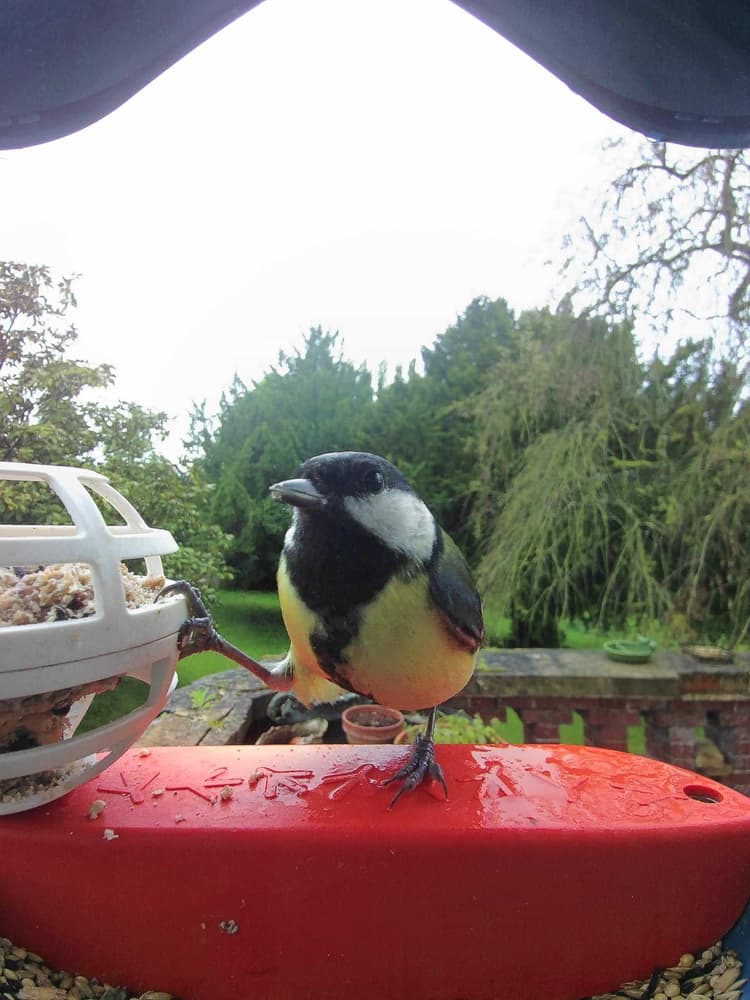
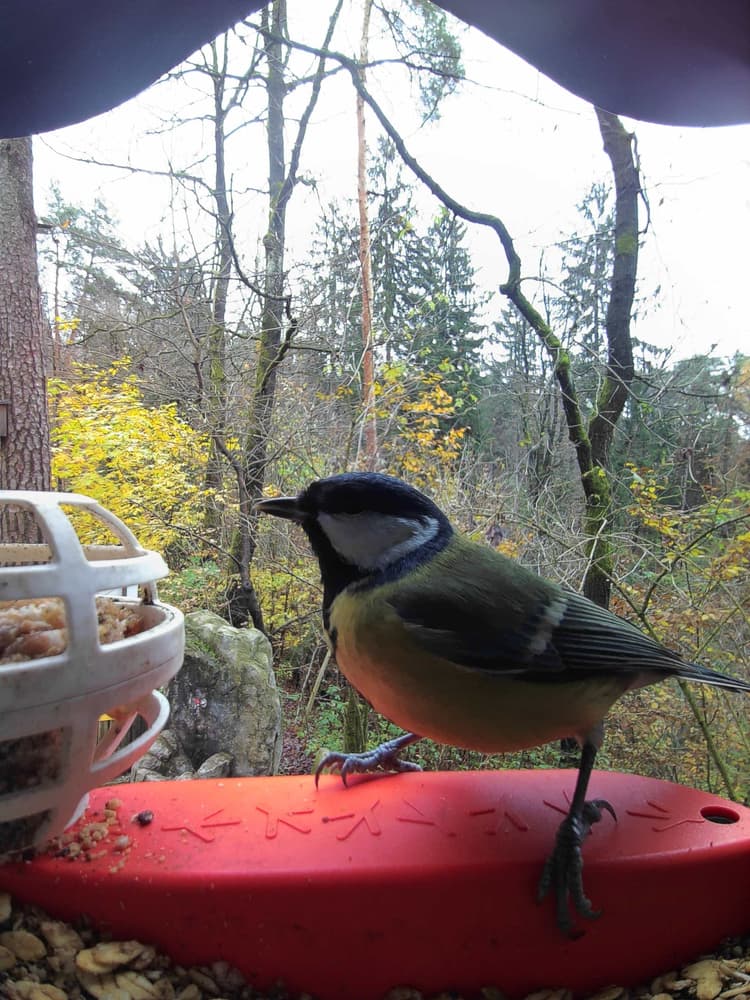
The great tit is a large and robust tit species characterized by its bright and striking coloration. It features a distinctive black head with white cheeks, a bright yellow underbody, and olive-green upperparts. Its wings exhibit a bluish tint with a white wing bar, and it has a long, narrow tail. This species is easy to identify by its bold color contrasts.
Male vs female
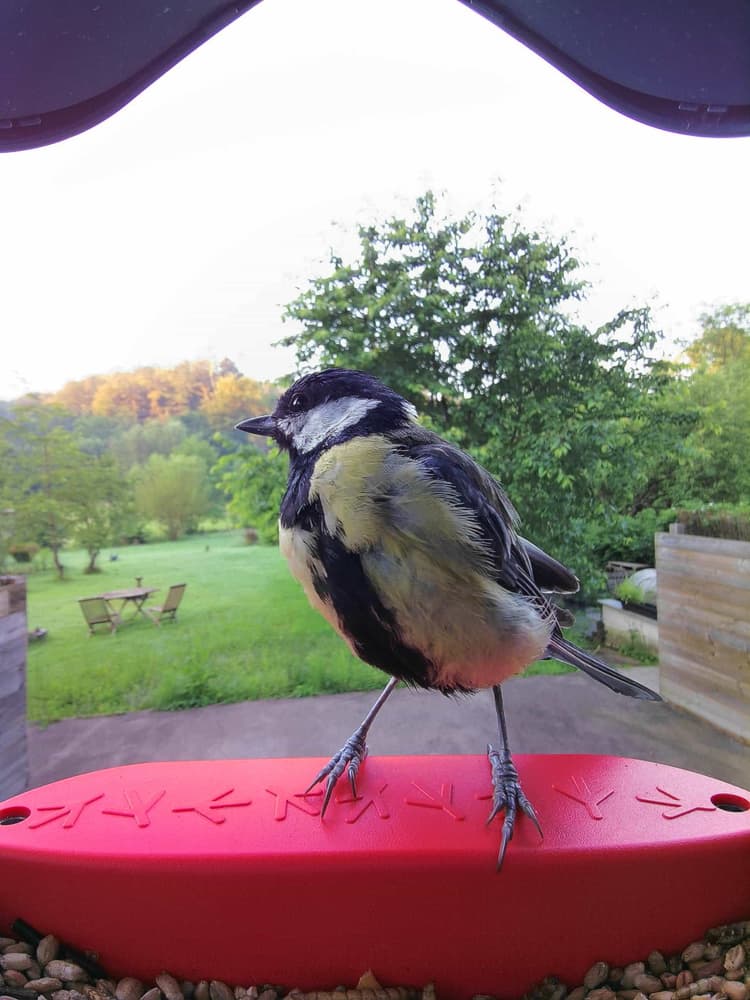
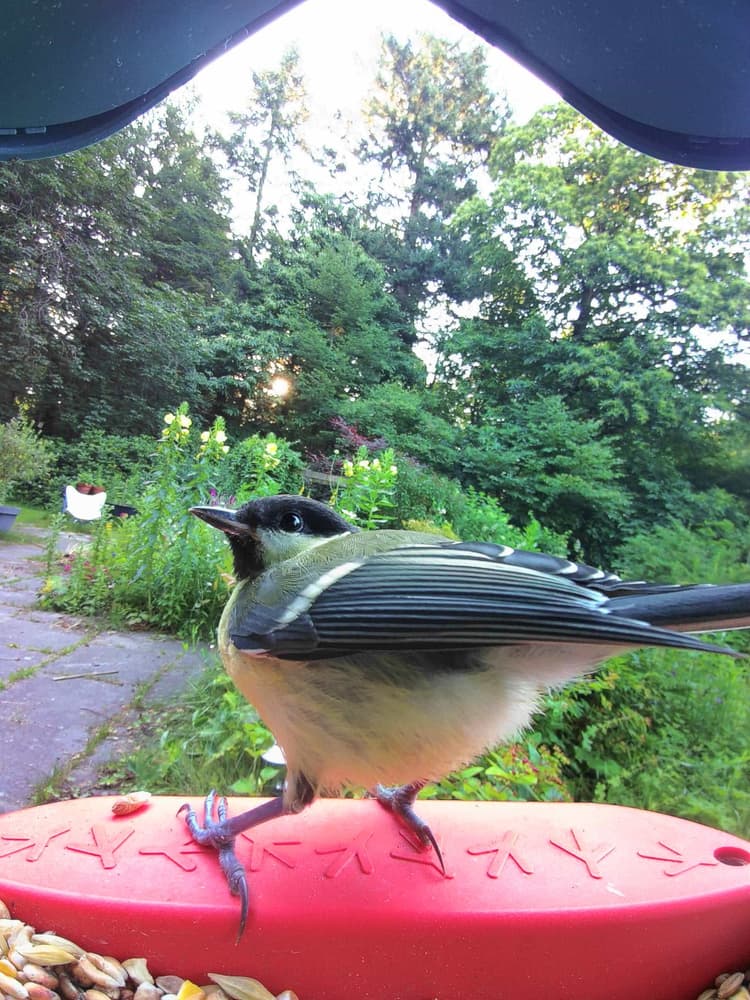
Both male and female great tits have similar color patterns, but males are more vibrant. Males typically have a broader black breast stripe compared to females, which can be narrower or less pronounced. This stripe extends down to the belly, and the overall coloration of males is generally more vivid.
Male Great Tit
Female Great Tit
Juvenile
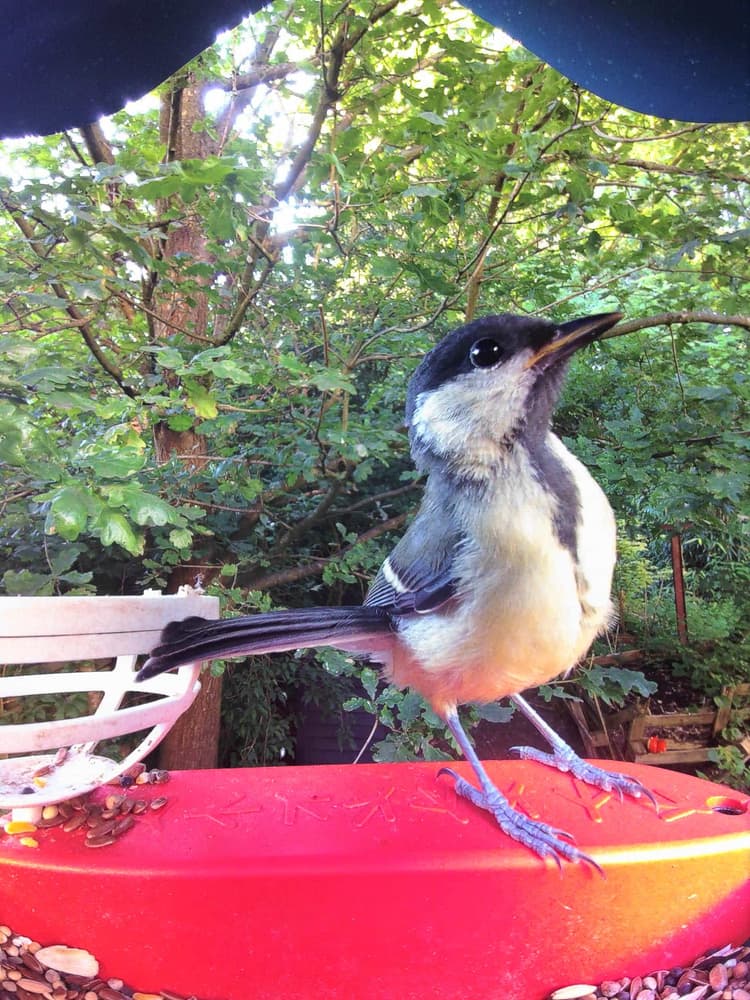
Juvenile great tits appear duller than adults, with a generally paler yellow underpart and less prominent black markings. The head markings are more subdued, with a less defined color contrast between the head and cheek patches. As they mature, juveniles gradually develop the brighter coloration and distinctive markings of adults.
Often mistaken for
Eurasian Blue Tit vs Great Tit
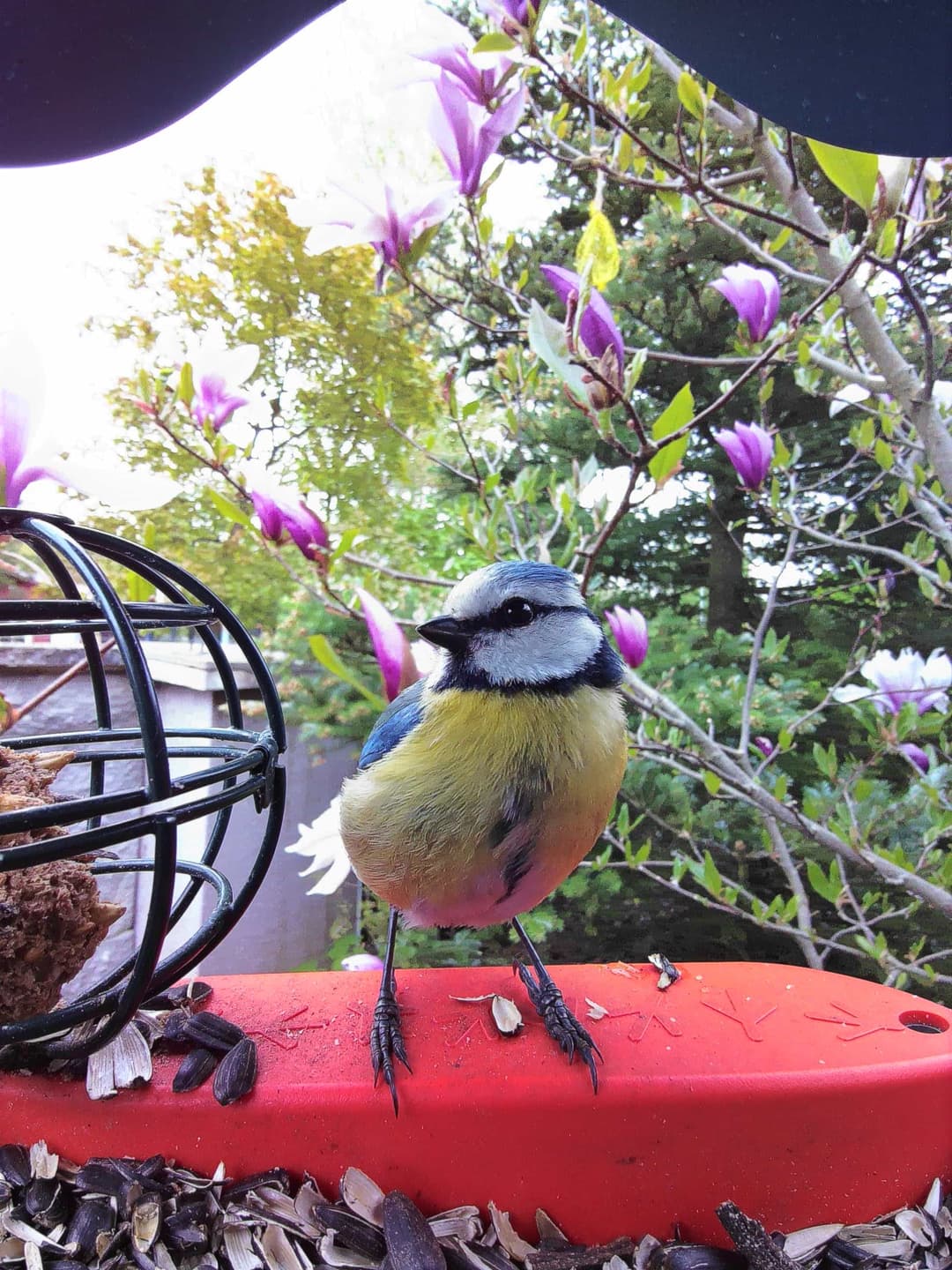
The Great Tit is larger and has a more robust body than the Eurasian Blue Tit. The Great Tit's head is black with white cheeks, while the Blue Tit sports a blue crown and a distinctive eye stripe. The Great Tit's belly is yellow with a black stripe down the center, compared to the Blue Tit's more consistent blue and yellow plumage.
Green-Backed Tit vs Great Tit
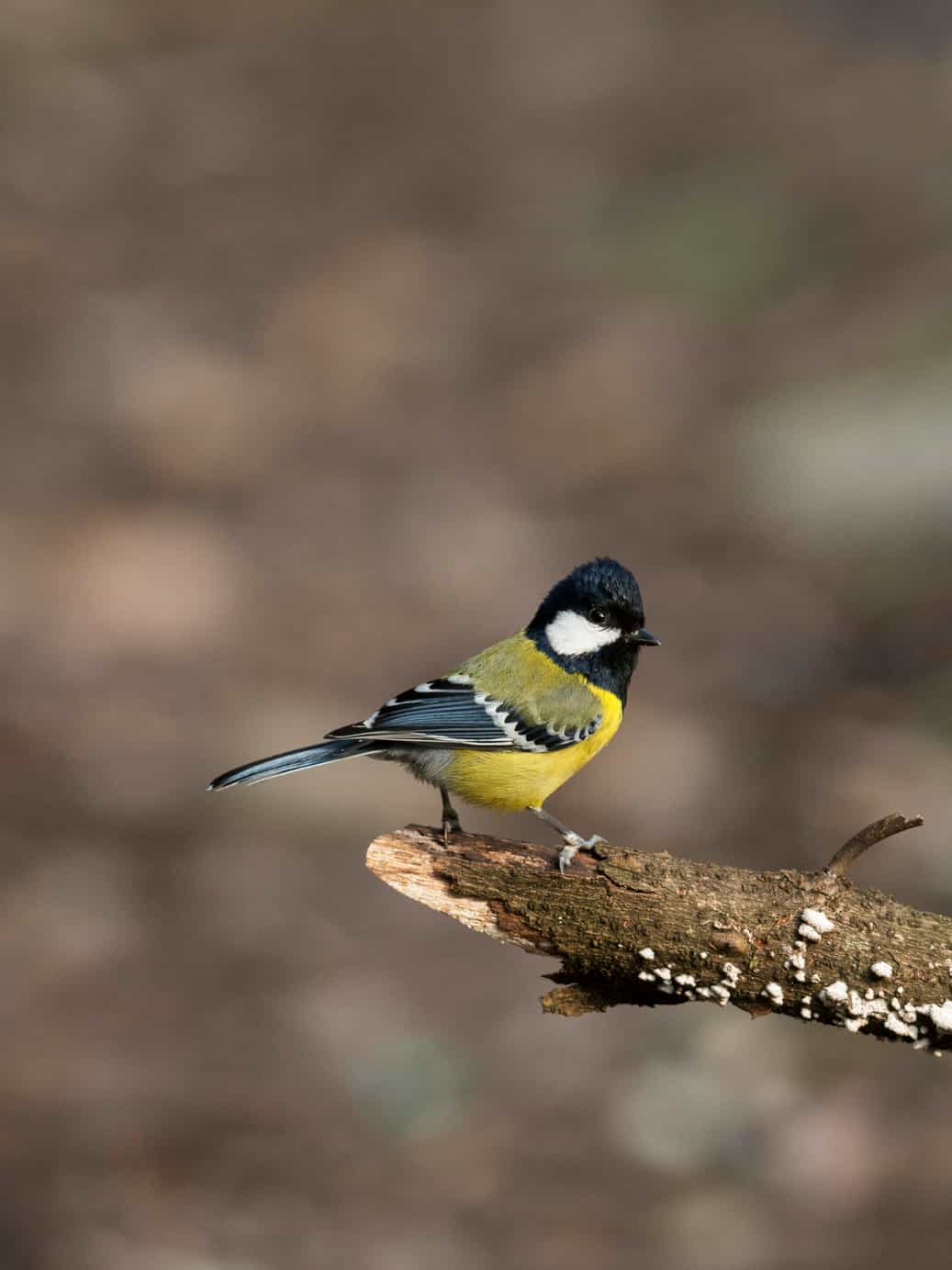
While both species exhibit green on their bodies, the Great Tit has a bolder black head and distinctive white cheeks, unlike the Green-Backed Tit, which features a green nape. The Great Tit also has a more striking yellow underbelly with a black central stripe, compared to the Green-Backed Tit's more muted tones.
Cinereous Tit vs Great Tit
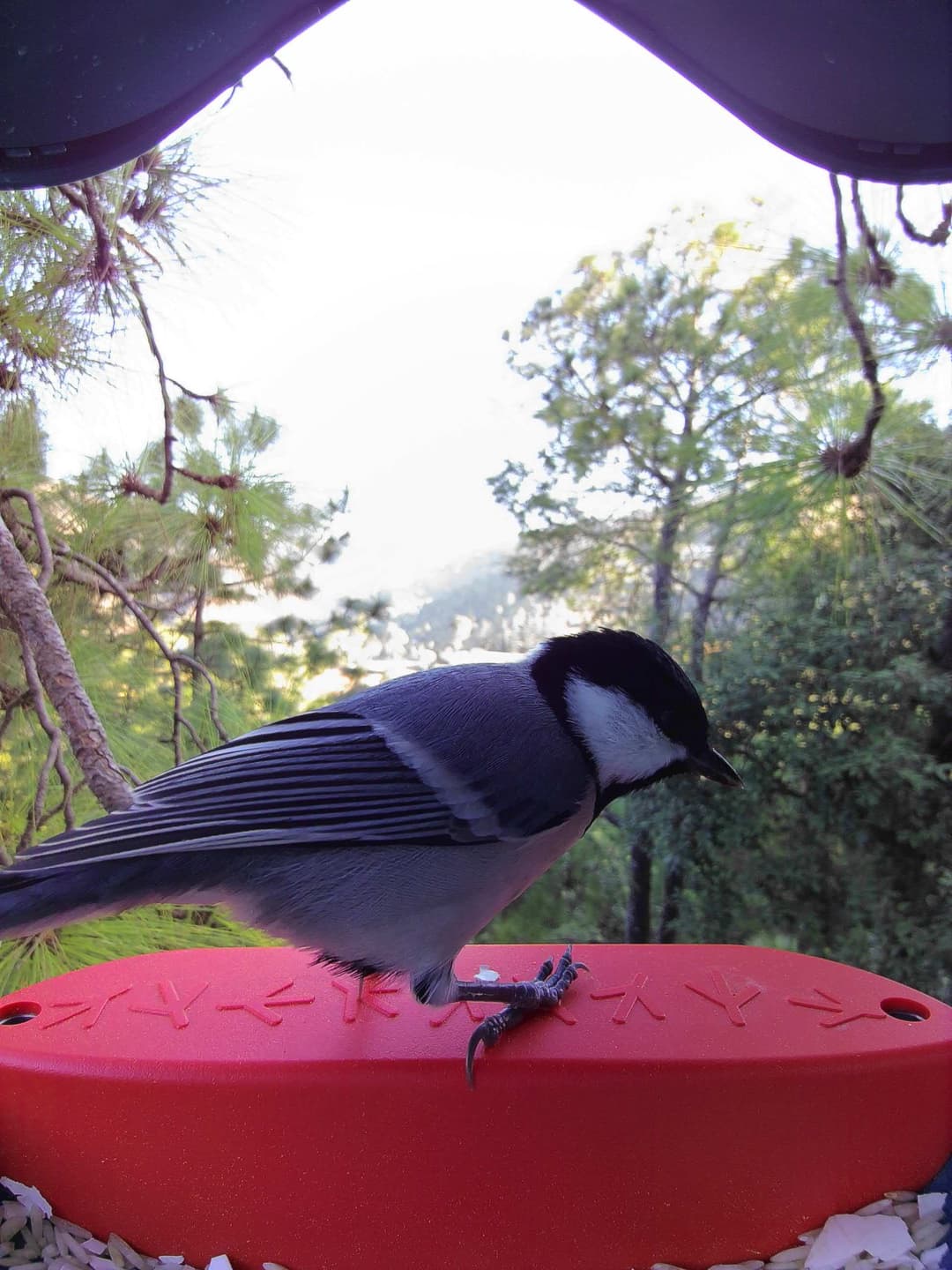
The Cinereous Tit is similar in size to the Great Tit but can be distinguished by its predominantly grey body. The Great Tit has a vivid yellow underbelly with a black central stripe, contrasting with the Cinereous Tit's muted grey tones. Additionally, the Great Tit’s more pronounced black head and cheeks set it apart.
Breeding and nesting habits of the great tit
Mating behaviors
Great Tits engage in courtship displays that include singing, posturing, and feeding to attract mates. The pair bond strengthens through mutual preening and sharing nesting duties.
Nesting details
Great Tits nest in cavities, utilizing both artificial nest boxes and natural tree holes or crevices in buildings. The nest is cup-shaped, constructed with moss and dried vegetation, then lined with wool, hair, and feathers. In gardens, provide nest boxes with a 28mm entrance hole, placed 2-4 meters above ground.
Eggs and chick-rearing
Females lay 5-12 eggs per clutch, which are incubated for about 13-15 days. Both parents feed the chicks, offering insects and larvae, ensuring rapid growth over a three-week period before fledging.
What does a great tit like to eat?
Fruits
Insects
Nuts
Plants
Seeds
Spiders
Worms
Natural diet
The Great Tit's diet is primarily composed of insects, including adults, pupae, larvae, and eggs. Favored among these are moths, butterflies, beetles, bugs, flies, wasps, bees, and ants. Depending on availability, they also consume other insect types and spiders. In winter months, the diet expands to include seeds, especially from beech and hazel trees, as well as various fruits. Foraging mostly occurs in trees with the birds hopping along branches, probing bark, and occasionally hanging upside down. They also search on the ground for invertebrates or fallen seeds. After finding food, Great Tits typically fly to a perch, holding insects with one foot or seeds with two to peck at them.
Bird feeders
Great Tits are frequent visitors to bird feeders, where they supplement their natural diet with readily available foods. While specific types of common bird feeder offerings are not detailed here, they generally adapt well to consuming seeds and various other offerings provided at feeders, especially during resource-scarce winter months.
Attracting great tits to your yard
Inviting these sociable, adorable birds, the Great Tits into your yard or to your feeder is quite simple. Ensure you have a good combination of food, shelter, and nesting spaces. Great Tits also love a variety of foods - more about that next.
Favorite snacks for great tits
Great Tits are omnivores, meaning they enjoy both plants and insects. They particularly love peanuts and sunflower seeds, but they will also snack on apples and soft fruits, and a selection of insects and spiders. For this reason, we highly recommend Bird Buddy seeds. These spectacular seeds are selected by experts for the season, ensuring the best results in attracting Great Tits.
The best feeders for great tits
Great Tits are comfortable with a variety of feeder types. They are agile enough to cling to mesh feeders offering peanuts or sunflower seeds. Alternatively, a simple plate or ground feeding will work quite fine. Just ensure the feeding area is safe and not too exposed to predators.
Fun tricks to encourage great tits to visit
To encourage the Great Tits to visit regularly and stay, try adding a birdbath or a source of fresh water. This not only helps them hydrate, but also aids in preening their feathers. Also, try placing your feeders near your windows where you frequently stay, the Great Tits could entertain you with their singing.
Where can you find great tits?
Based on Birdbuddy sighting data. The heatmap shows where Birdbuddy users have spotted this species.
Embed this map
This map shows the full native range based on scientific range data.
Primary habitat
Great tits primarily inhabit deciduous and mixed forests across Europe, northern Africa, and Asia. They also adapt to parks and gardens.
Additional range
Despite being a temperate species, they've adapted to Mediterranean climates and even subarctic regions. Unexpectedly, they can also inhabit mountainous areas up to 4700m altitude.
Do they migrate?
The great tit generally exhibits facultative migration, meaning its migratory behavior can vary based on environmental conditions. In many regions of Europe and Asia, great tits are residents and stay in one place throughout the year. However, some populations, especially those in the northern parts of their range, may migrate southward in the fall to escape harsh winter conditions. Migration routes for great tits are not as well-defined or extensive as those of long-distance migratory birds. Some Scandinavian and northern European populations move south to central Europe, while Siberian populations may head towards more temperate areas of southern Russia, Eastern Europe, or Central Asia. The timing of migration is typically in autumn, with a return trip in spring. Key stopover locations are not well-documented, but they likely include suitable habitats such as woodlands and gardens where food resources are abundant. The extent and nature of migration are influenced by various factors, including food availability and weather conditions. In milder winters, more great tits may opt to stay in their breeding territories rather than migrate.
What is the role of great tits in nature and how to protect them?
Conservation status
The great tit is classified as "Least Concern" by the International Union for Conservation of Nature in Europe. This status is due to its extremely large range, stable population trend, and vast population size, estimated at 127–205 million mature individuals in 2020. The species is common, facing no immediate significant threats or conservation efforts required. Its robust numbers indicate a thriving population, reducing concerns over vulnerability or endangerment.
Ecological role of great tits
Its role in the ecosystem
The Great Tit plays an essential role in ecosystems due to its varied diet and ability to adapt to different food sources. A talented problem solver, it can access food from complex bird feeder puzzles, which signifies its intelligence and resourcefulness. Additionally, it uses tools, like conifer needles, to extract insect larvae from trees, highlighting its crucial role in pest control in its environment. Its feeding habits also lead to seed dispersal, aiding plants' propagation in the areas it inhabits. Its social behavior and ability to form large mixed-species flocks further contribute to its ecological significance by promoting diversity and balance within bird communities, and potentially increasing seeds and pest dispersal. Its monogamous mating pattern, high average clutch size and shared responsibility in feeding nestlings contribute to the stability of its population, thus ensuring its continued role in the ecosystem.
How to help protect great tits
Preservation tips
Habitat preservation strategies for great tit
Preserving and creating nesting sites contributes to Great Tit conservation. Encourage growth of native species, as these birds prefer deciduous and mixed woodland. Install bird boxes to provide additional nesting sites. Keep areas litter-free to sustain the insect populations that Great Tits rely on for food.
Community science initiatives to support great tit conservation
Engage with citizen science: reporting sightings helps track populations and study habits. Participate in initiatives such as 'Garden Birdwatch' and 'Nest Record Scheme'. Educate communities about the importance of reducing pesticide use, which can harm the birds and their food resources.