
Eurasian Blue Tit
Eurasian Blue Tit
Also known as: Blue Tit
Cyanistes caeruleus


Quick Identification guide
Quick Identification guide
- •
Features a bright blue crown, contrasted with a white face and black eye stripe
- •
Displays a bright yellow underbelly and blue wings, with a subtle green back
- •
Compact and rounded body, with a short, stubby beak designed for insect foraging
What does a Eurasian blue tit sound like?
The Eurasian blue tit produces various vocalizations, including calls and songs. Its primary song consists of rapid, high-pitched notes "tsee-tsee-tsee" or “chirrup-chirrup-chirrup” with slight variations depending on the region. It also uses different calls for attracting mates, warning against danger, or communication, sounding like "tsee-tsee-tsit". Its repertoire is complex and versatile, ensuring successful intra-species communication.


Description
Did you know that this peanut-loving bird gets its name from and Old English word meaning small? Small bird, large family! Blue tits are family-oriented birds that are known to have large broods, laying up to 19 eggs! They are also very social and can be seen hanging out with other birds, most commonly great tits and goldcrests.
The Eurasian blue tit can weigh between 8to15grams and be from11to12centimeters tall.
The typical lifespan of a Eurasian blue tit is about 1.5 to 3 years, although some recorded individuals have lived up to 9 years. Relative to related tit species such as the great tit, this is a generally shorter lifespan. However, like most songbirds, blue tit mortality rates are notably high in their first year, which reduces the average lifespan significantly.
Did you know?
Most popular questions about Eurasian blue tit
How to recognise a Eurasian blue tit?
General appearance
The Eurasian blue tit (Cyanistes caeruleus) is a small passerine bird known for its vibrant coloration. It features a bright blue crown, wings, and tail, with a yellow underbody and greenish back. Its face is distinctively white with a black eye stripe stretching across each eye. The bib under the beak is also black.
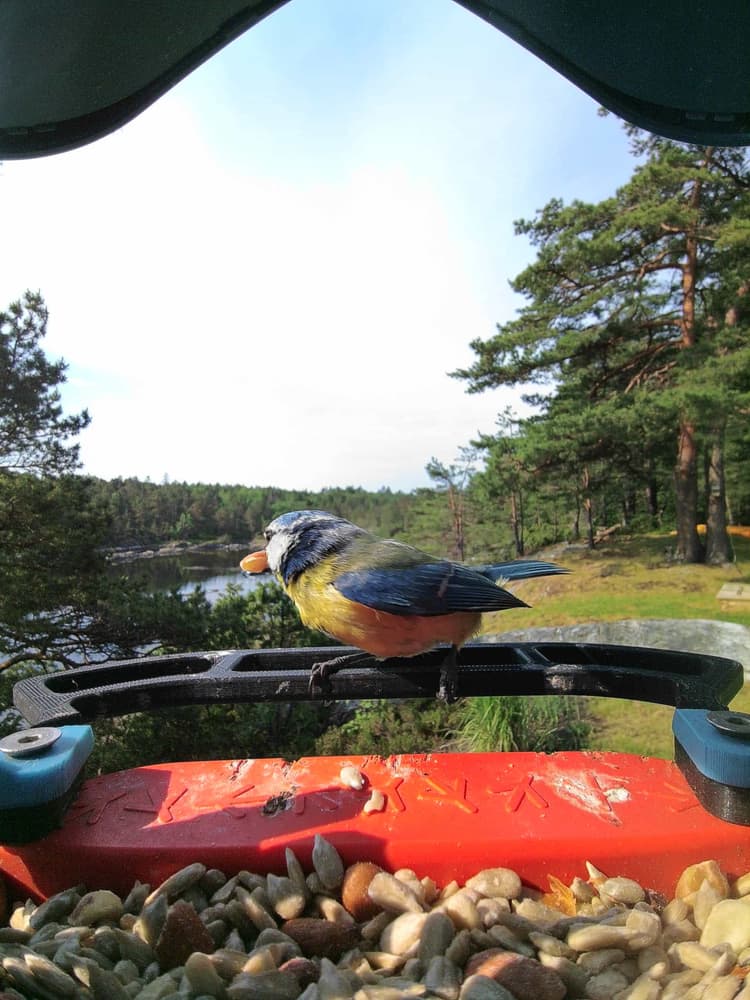
Male vs female
Males and females are similar in appearance, although males often display slightly more vibrant blue and yellow tones. This distinction is subtle and typically requires close observation to detect, making sexing in the field challenging.
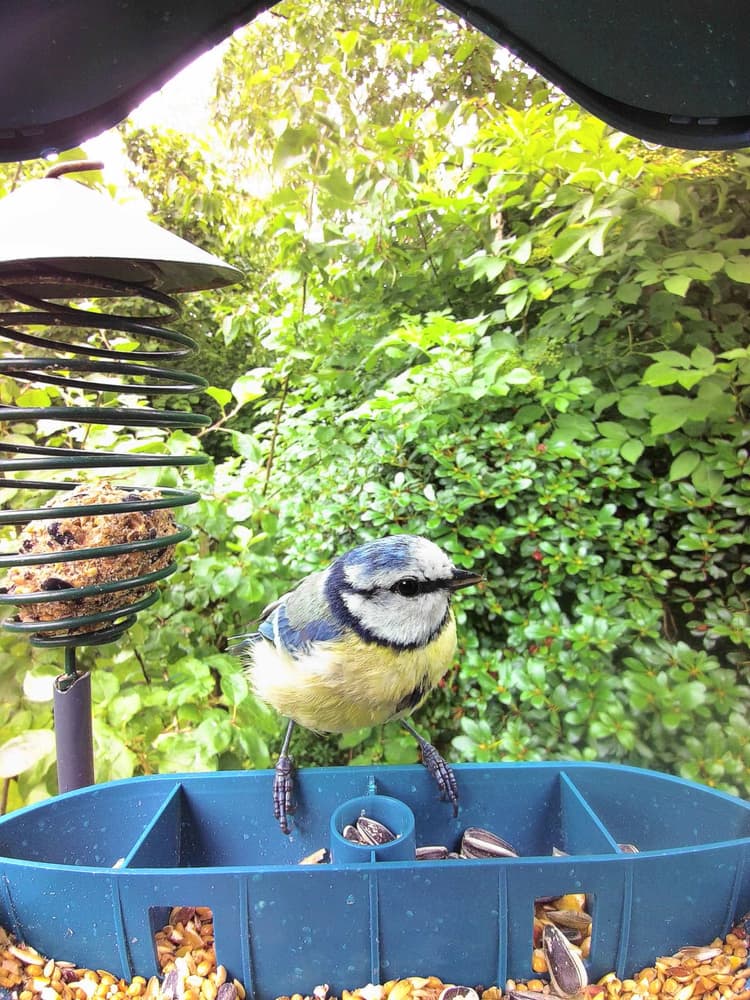
Male Eurasian Blue Tit
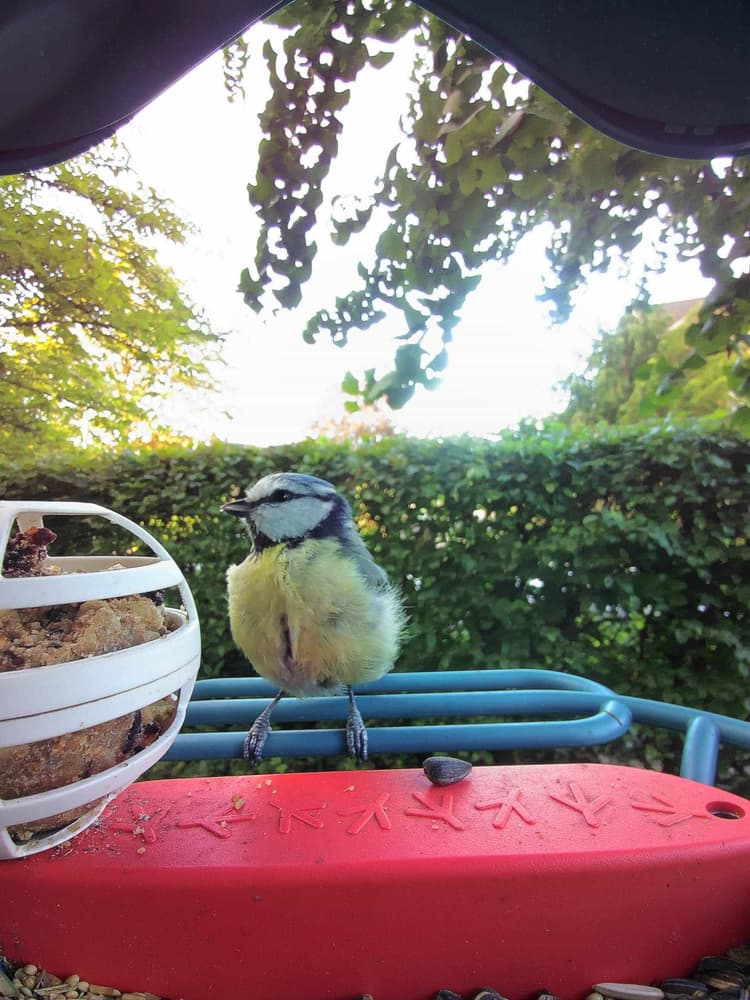
Female Eurasian Blue Tit
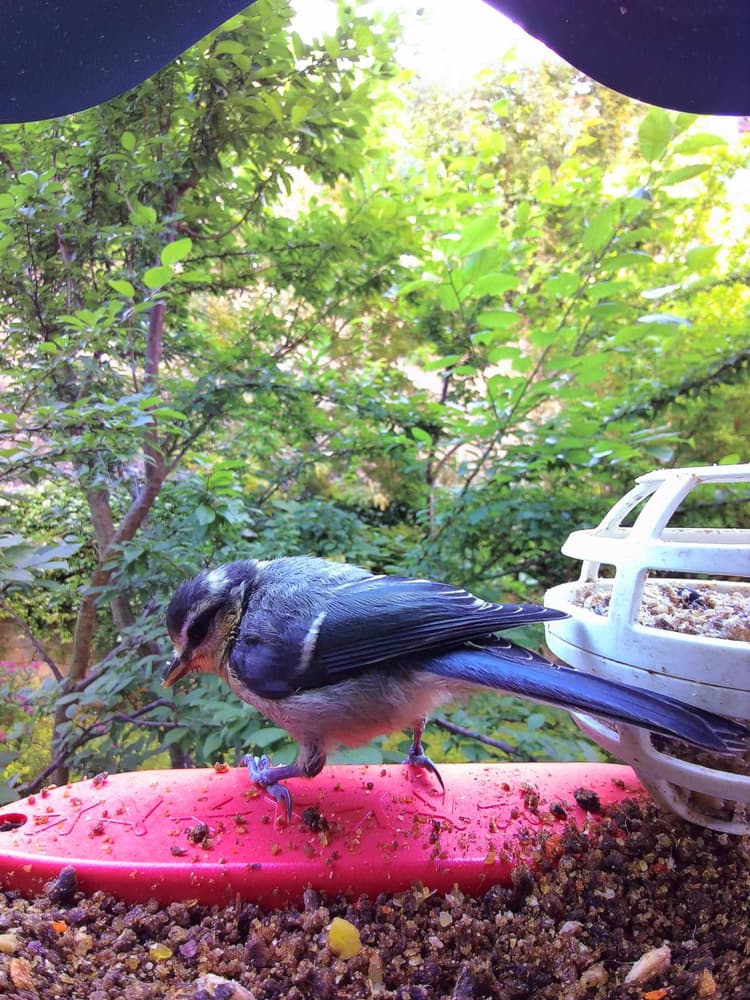
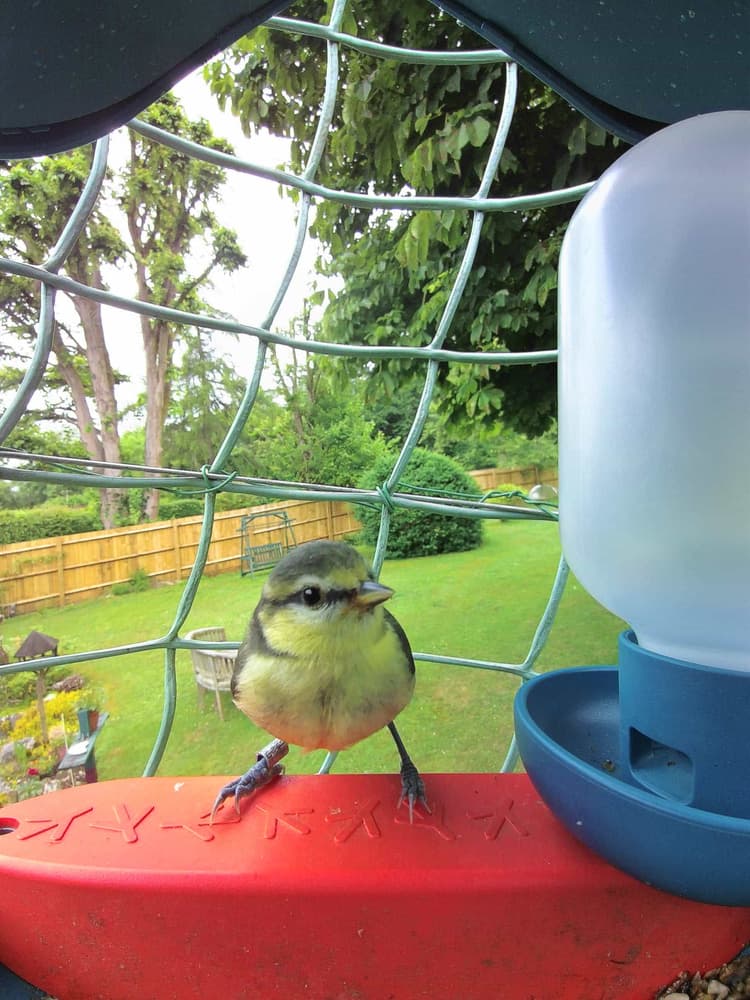
Juvenile
Juvenile Eurasian blue tits are generally duller in appearance than adults, with a more muted, greyish-blue plumage. Their cheeks are also yellowish, and the blue on their wings and tails is less vivid. As they mature, their coloration brightens to match adult birds.
Often mistaken for
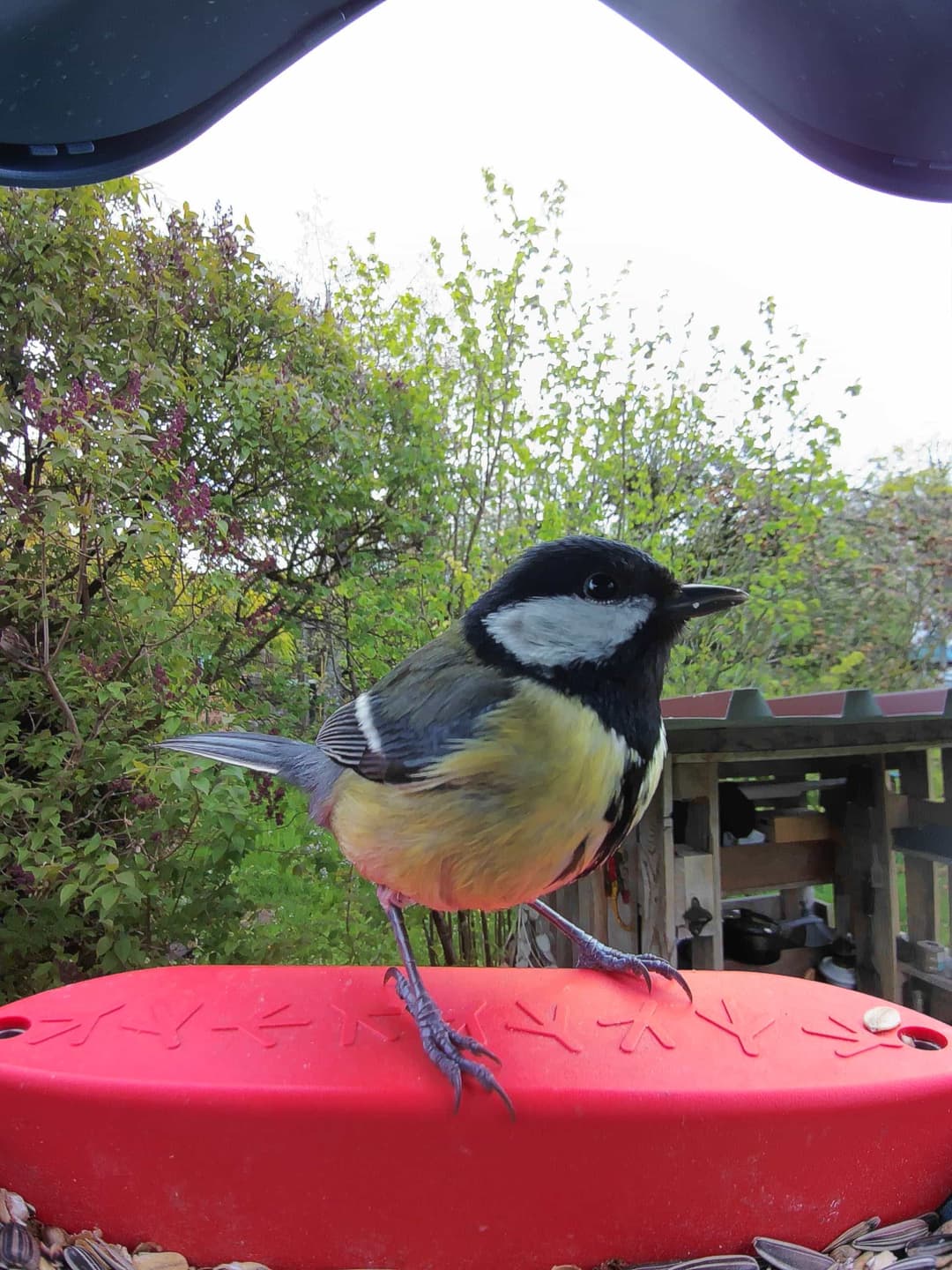
Great Tit vs Eurasian Blue Tit
The Great Tit is larger than the Eurasian Blue Tit and has a striking black head and white cheeks. The Blue Tit has a blue cap and the Great Tit has a black cap. The Great Tit's underparts are yellow with a bold black stripe running down the belly, while the Blue Tit has a blue tail and wings with yellow and greenish underparts. Look for the Blue Tit's distinctive black eye-stripe.
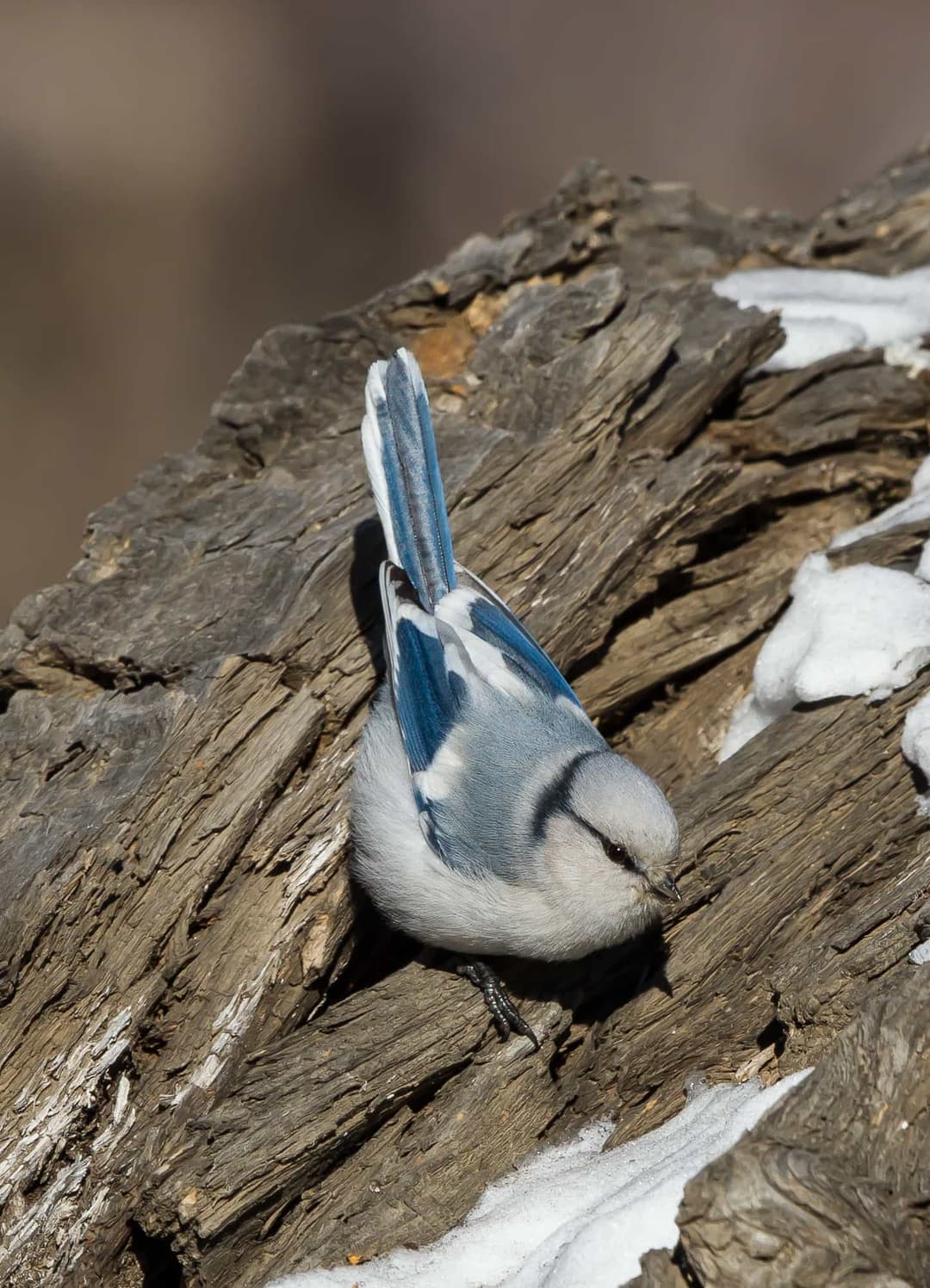
Azure Tit vs Eurasian Blue Tit
The Azure Tit has a generally paler plumage than the Eurasian Blue Tit, lacking the yellow underparts. It features crisp white and azure blue coloring. The Blue Tit has more green and yellow hues. Azure Tits are found further east, mainly in Central Asia and Russia, which can help distinguish them based on geographic location.
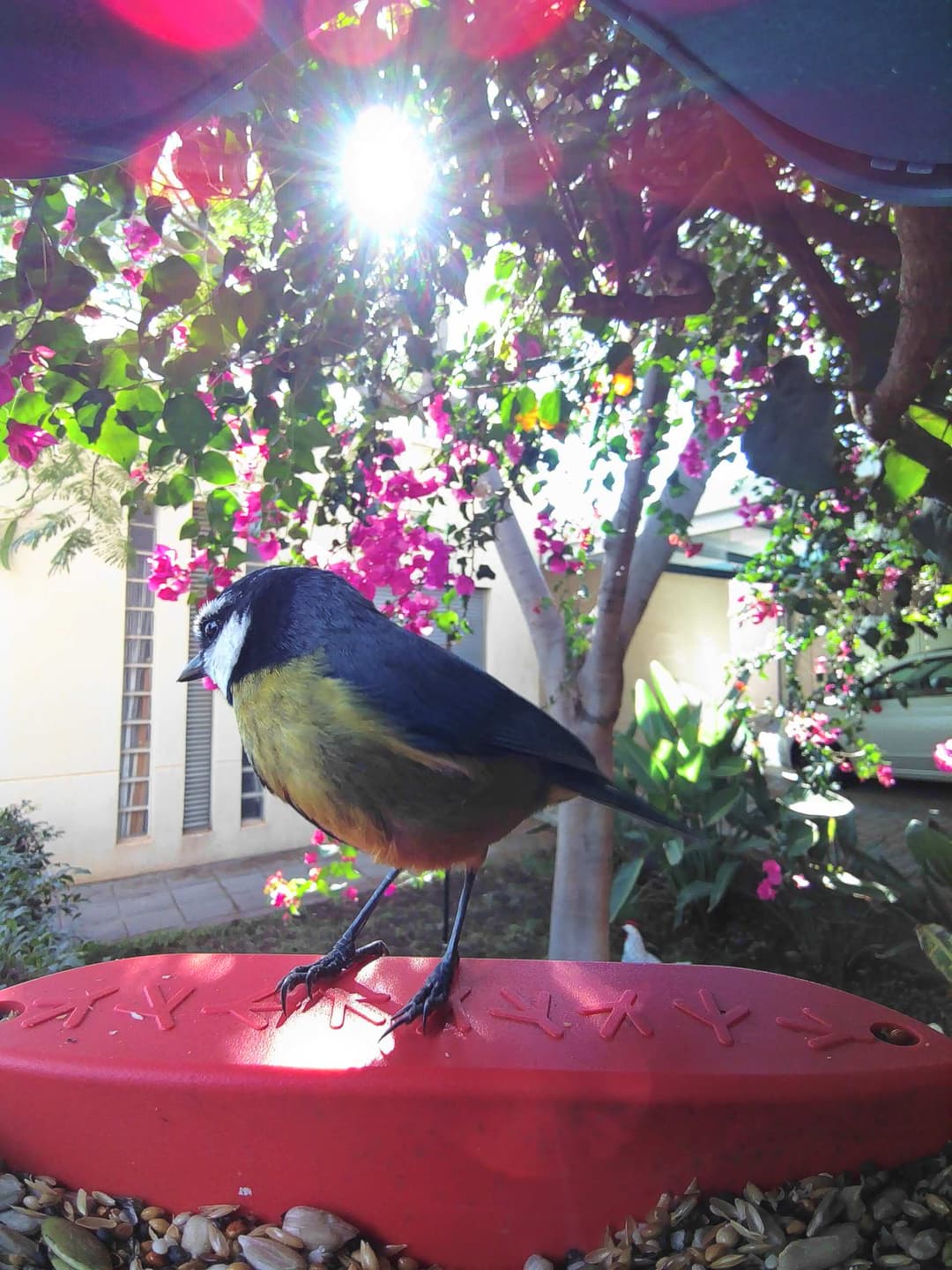
African Blue Tit vs Eurasian Blue Tit
The African Blue Tit, similar in appearance, has a brighter blue plumage and a darker face mask compared to the Eurasian Blue Tit. It’s primarily found in North Africa and exhibits regional variation. The Eurasian Blue Tit has a lighter blue cap and can have more pronounced yellow on its underparts.
Breeding and nesting habits of the Eurasian blue tit
Mating behaviors
Eurasian blue tits perform elaborate courtship displays, involving singing and flapping to attract mates. Males frequently demonstrate strength and resourcefulness by feeding potential mates and showing off nesting sites.
Nesting details
Nests are built in cavities like natural tree holes, nest boxes, or wall crevices. The nest is cup-shaped, built on a base of moss and dry grass or straw, lined with hair, grass, wool, and feathers. To attract blue tits to gardens, provide nest boxes with a small entrance hole and place them in quiet areas.
Eggs and chick-rearing
Female blue tits lay 7-12 eggs, incubating them for about two weeks. Chicks hatch altricial and are fed by both parents. They are primarily given caterpillars and insects for rapid growth. After about three weeks, fledglings leave the nest but continue to be fed by parents for a few more weeks.
What does a Eurasian blue tit like to eat?
Berries
Insects
Nectar
Nuts
Plants
Sap
Seeds
Snails
Spiders
Worms
Natural diet
Eurasian Blue Tits primarily feed on insects, spiders, and other invertebrates. They are particularly active foragers, spending considerable time in trees, where they meticulously search for food, often hanging upside down to access hard-to-reach areas. Their diet includes adult insects as well as larvae and pupae. In addition to invertebrates, they consume some seeds, berries, nectar, and pollen, especially in the spring when these resources become more abundant.
Bird feeders
Eurasian Blue Tits frequently visit bird feeders, where they commonly consume seeds and other food items provided by humans. This supplemental feeding plays an important role in their diet, especially during times when natural food sources might be scarce.
Attracting the eurasian blue tit: food
Offer the Eurasian Blue Tit its favorite treats. They love to feed on insects and caterpillars, but what they really enjoy are seeds. We recommend using Bird Buddy seeds as they are chosen by experts according to the season, ensuring optimal nutrition and appeal for these charming birds.
Feeder types
These small and delicate birds prefer feeders with a perch where they can rest while feasting. We recommend using either tube feeders or house-style feeders, both of which should have small openings to accommodate the tiny beak of the Eurasian Blue Tit. Place the feeder in an open but safe spot, such as on a branch or a dedicated stand, where the bird can watch for danger while eating.
Fun tricks to encourage their visit
A bird bath not only provides a water source but can also serve as a bird playground, giving the Eurasian Blue Tits a place to bath and interact. To further encourage their presence, consider attracting them with bird calls. There are many apps and tools available that can mimic their calls. This mimicking can coax them into visiting, and maybe even staying for a 'sing-along'!
Where can you find Eurasian blue tits?
Based on Birdbuddy sighting data. The heatmap shows where Birdbuddy users have spotted this species.
Embed this map
This map shows the full native range based on scientific range data.
Primary habitat
The Eurasian blue tit primarily inhabits deciduous and mixed woodlands across Europe and western Asia, preferring temperate climates with abundant tree cover.
Additional range
It can also occupy unexpected environments such as urban gardens, parks, and is known to adapt to different altitudes and climates beyond its typical range in harsh winters.
Do they migrate?
The Eurasian blue tit is primarily a resident bird, meaning it tends to stay in one place throughout the year. Most populations are sedentary and do not migrate, especially those in temperate regions of Europe, such as the UK and central parts of the continent. However, some populations in northern and eastern Europe may exhibit partial migratory behavior, particularly during harsh winters when food becomes scarce. In regions like Scandinavia and parts of Russia, some Eurasian blue tits may undertake short-distance migrations. These movements generally lead them southward to more hospitable areas in Central and Western Europe. The timing for these movements often coincides with the onset of colder temperatures and reduced food availability, typically during late autumn. During migration, Eurasian blue tits do not follow a specific route or stop at key locations in a manner similar to longer-distance migratory species. Instead, their movements are more localized and opportunistic, depending on environmental conditions, food supply, and habitat availability. By early spring, if they have moved, they usually return to their breeding territories.
What is the role of Eurasian blue tits in nature and how to protect them?
Conservation status
The Eurasian blue tit is listed as "Least Concern" by the International Union for Conservation of Nature due to its extensive range, growing population trend, and large population size. BirdLife International's 2020 assessment estimates 59.7–95.1 million mature individuals in Europe. This species is common and shows no immediate threat of becoming vulnerable or endangered. There are no significant conservation efforts required at present, as there are no major threats impacting its population. The stable numbers indicate a healthy and thriving species across its range.
Ecological role of Eurasian blue tits
Its role in the ecosystem
Eurasian Blue Tits play a significant role in their ecosystem. Being active birds, they contribute immensely to pest control by feeding on insects, thus keeping their population in check. Their nesting habits in walls or pipes can aid in aerating soil, consequently promoting healthy plant growth. The diverse display flights used during pair bonding contribute towards the maintenance of the mate-selection process and subsequently, the genetic diversity within their population. Additionally, their feeding routine and general behavior also aids in seed dispersal, which can help maintain the diversity of plant life in their habitat. Further, their social structure, which involves forming large groups and merging with mixed-species flocks, promotes species interaction and coexistence. Finally, the male bird's polygamous behavior and the shared responsibility between both sexes in feeding the nestlings, portray the existence and importance of varied mating and parental strategies within bird species. Thus, the Eurasian Blue Tits are crucial contributors to their ecosystem's stability and diversity.
How to help protect Eurasian blue tits
Preservation tips
Habitat preservation strategies
To conserve the Eurasian blue tit, prioritise the preservation of its natural habitats which are deciduous and mixed forests. Preserve old trees and mature forests as they provide nesting and breeding spaces. Resist deforestation and urbanization encroaching into these territories. Create wildlife corridors to connect fragmented landscapes, enabling tit populations to interact and maintain genetic diversity.
Community science initiatives
Raising community awareness and involvement are crucial. Organize workshops and seminars to educate locals about the importance of blue tit conservation. Encourage local communities to set up bird feeders and nest boxes to provide food and shelter during cold seasons. Collaborate with local schools for a 'Bird Watching Day' to spark children's interest. Citizen science projects can track bird sightings, providing useful data for scientists. Share these findings to garner more support for conservation efforts.