
African Blue Tit
African Blue Tit
Cyanistes teneriffae


Quick Identification guide
Quick Identification guide
Male
- •
vivid blue crown and nape contrasted with a black line through the eyes
- •
bright yellow underparts that are eye-catching and distinctive
- •
short, slender beak suited for insect foraging
Female
- •
Similar blue crown and nape though slightly duller than the male
- •
less vibrant yellow on the underparts compared to the male
- •
black eye line is present but less pronounced
What does an African blue tit sound like?
The African blue tit (Cyanistes teneriffae) is known for its diverse and melodious vocalizations. Its song consists of a series of high-pitched, rapid trills and twitters, often varied in tempo and pitch. Typical calls include short, sharp "tsit" notes used for communication among pairs and to signal alarm. These vocalizations serve both in territory defense and mate attraction. The African blue tit's vocal repertoire is complex, with individual variations allowing for unique identification among birds.


Description
Did you know African blue tits were scientifically important? It's true; they have been the subject of many a research study because of their relevance for proving certain evolutionary hypotheses! These agile fliers are tame and approachable and like to keep things in the family; you can typically find them alone, in a pair or with their family group.
The African blue tit can weigh between 10to11grams and be from11to12centimeters tall.
The African blue tit typically lives for around 3 years, but can live up to 10 years in the wild. Compared to other tit species such as the Great Tit, which has an average lifespan of 3-5 years, and the Long-tailed Tit, which usually lives around 2.5 years, the African blue tit's lifespan falls within a similar range. Factors such as predation and habitat may influence these averages.
Did you know?
Most popular questions about African blue tit
How to recognise an African blue tit?
General appearance
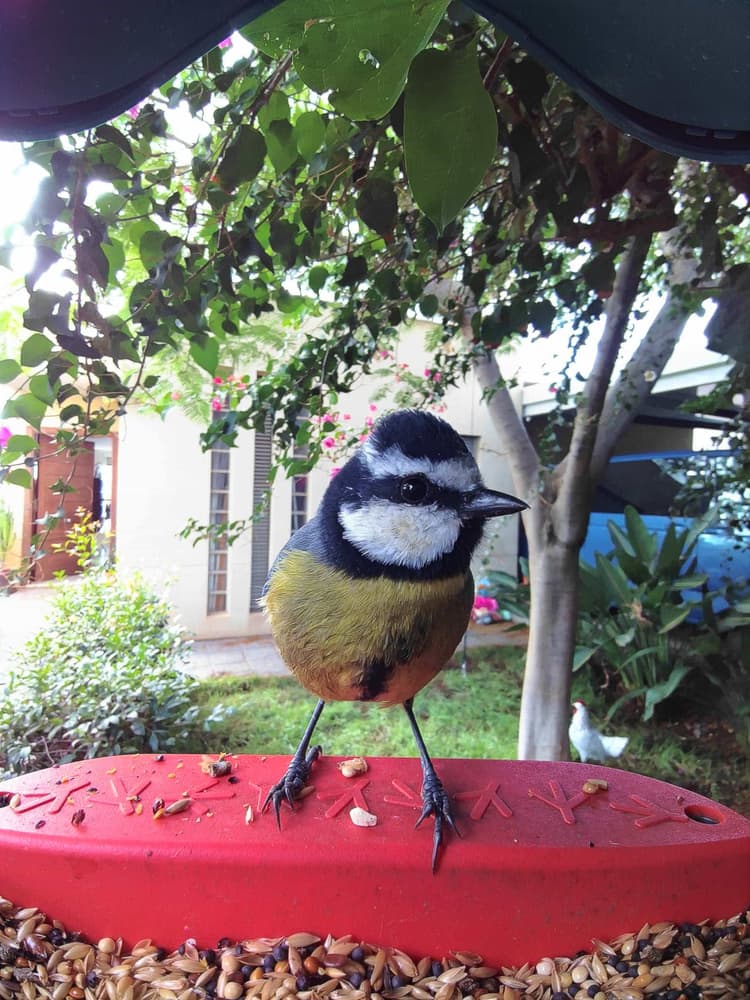
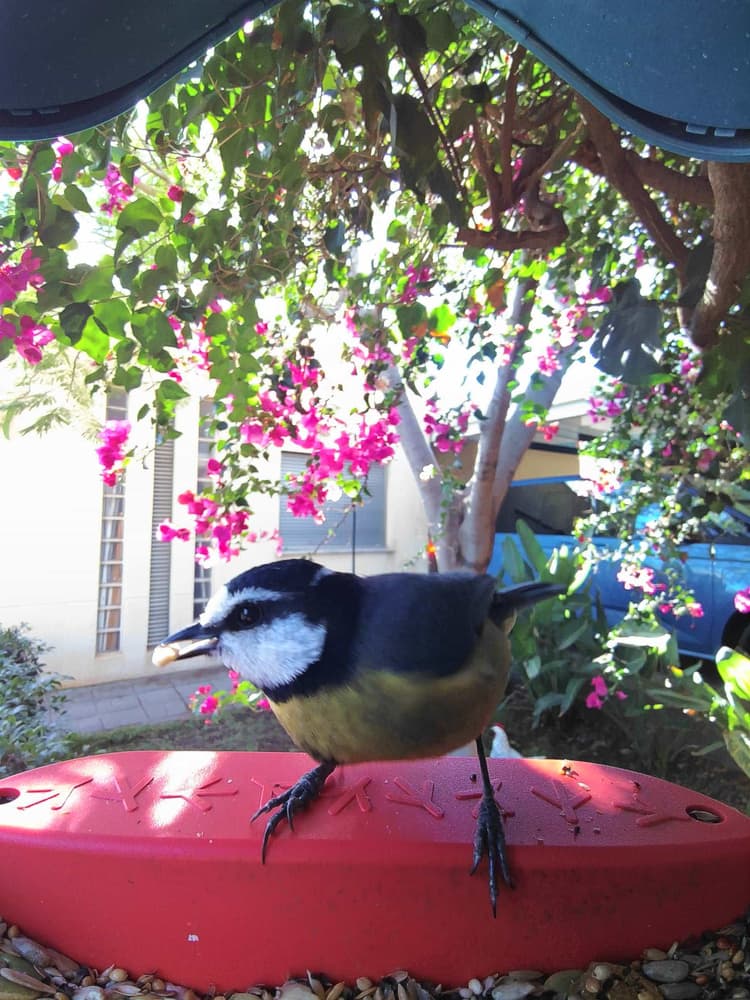
The African blue tit is a small passerine bird with a distinctive bright blue crown, wings, and tail. Its underparts are yellow, while the head features a combination of white cheeks and a black eye-stripe that gives it a masked appearance. Their back is primarily an olive green to yellowish tone.
Male vs female
Males and females are similar in appearance, though males may exhibit slightly more vivid coloration, especially the blue on the crown and wings. It can be challenging to differentiate the sexes based only on appearance.
Juvenile
Juvenile African blue tits are duller in color compared to adults. Their blue markings are less vibrant, and their underparts are a paler yellow. Juveniles also lack the distinctive black eye-stripe seen in adults. As they mature, their plumage becomes more defined.
Often mistaken for
Eurasian Blue Tit vs African Blue Tit
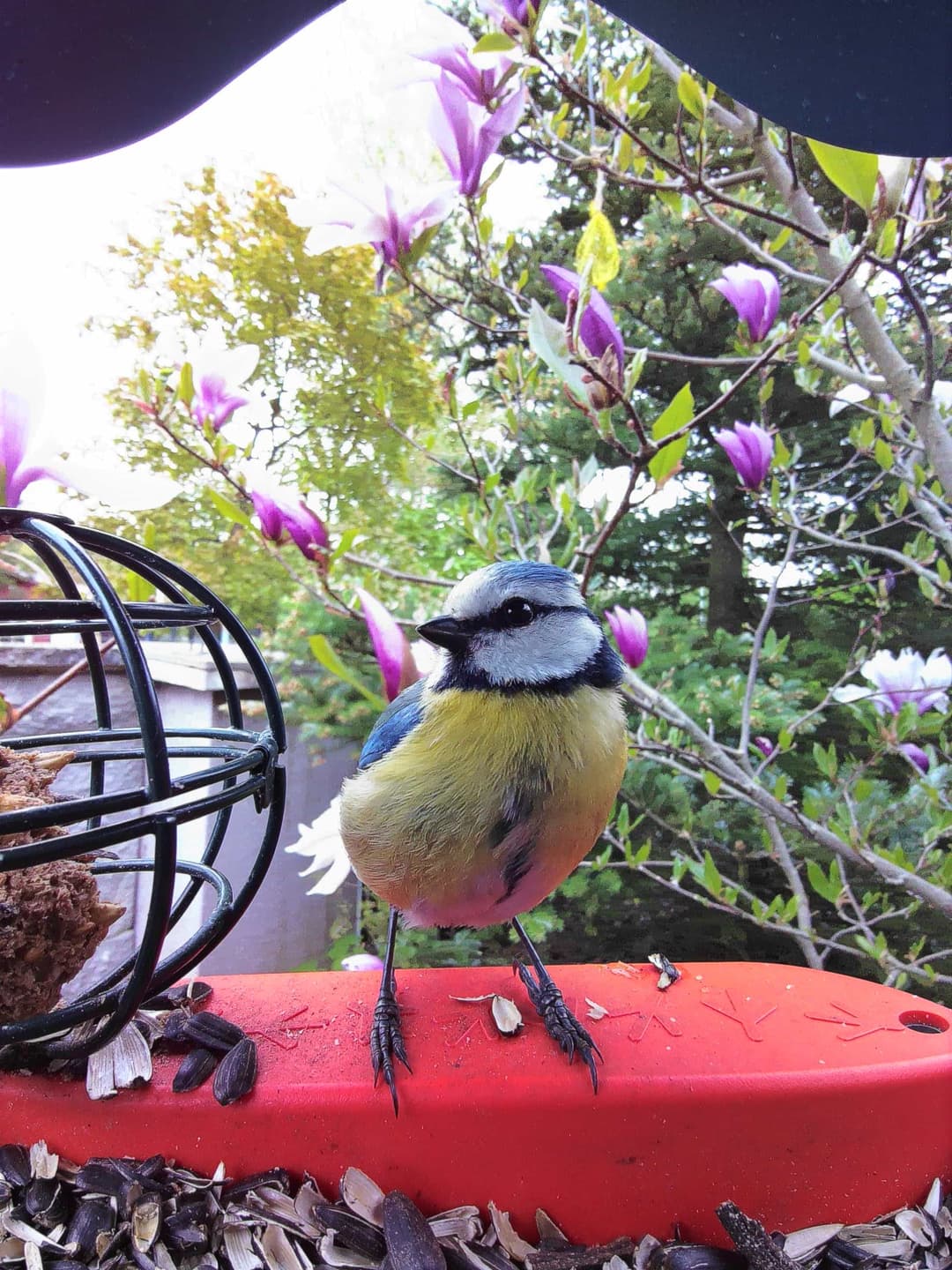
The Eurasian Blue Tit and the African Blue Tit are very similar in appearance. However, the African Blue Tit generally has a more extensive black stripe across the eyes and a slightly darker blue crown. Additionally, African Blue Tits are typically found in North Africa whereas Eurasian Blue Tits are native to Europe and parts of Asia.
Breeding and nesting habits of the African blue tit
Mating behaviors
African blue tits engage in vibrant courtship displays characterized by song duets and aerial acrobatics. Males perform intricate calls to attract females, and pair bonds are often formed during early spring.
Nesting details
These birds typically select cavities in trees or man-made structures for nesting. They construct nests with moss, feathers, and grass, often in gardens. To encourage nesting, gardeners can install nest boxes 2-4 meters above ground, with entrance holes of about 25mm diameter.
Eggs and chick-rearing
African blue tits lay 5-10 eggs, which are incubated by the female for approximately two weeks. Both parents participate in feeding the chicks, providing a diet primarily of insects. Chick-rearing takes around three weeks, during which the parents are highly attentive.
What does an African blue tit like to eat?
Berries
Fruits
Insects
Seeds
Spiders
Natural diet
The African blue tit primarily feeds on a variety of insects, including caterpillars, beetles, and spiders. It also consumes arthropods and larvae found in its habitat. During certain times of the year, it supplements its diet with seeds, nuts, and berries. This bird adapts its dietary habits based on seasonal availability of food sources, ensuring a balanced intake of proteins and nutrients.
Bird feeders
At bird feeders, the African blue tit commonly consumes sunflower seeds, peanuts, and suet. It is attracted to feeders offering mixed seeds and fat balls, which provide essential fats and energy. These birds are adept at accessing various feeding devices, often seen clinging to feeders to reach the desired foods. Their visits to feeders are more frequent during colder months when natural sources are limited.
Favorite snacks of african blue tit
To tempt African blue tits in your yard or feeder, regularly supply their favorite treats such as mealworms, suet balls, sunflower seeds, and peanuts. In particular, Bird Buddy seeds are highly recommended because they are chosen by experts for each season, ensuring that your feathered friends always have high-quality and seasonally appropriate snacks.
Ideal feeders for african blue titans
African blue tits prefer feeders with perches, where they can rest while dining. Opt for feeders with a protective dome to keep bigger birds out, as blue tits are rather small and might be bullied away. Mesh peanut feeders can also be a good option.
Fun tricks to attract african blue titans
Make your yard bird-friendly by adding bird baths, nesting boxes, and native plants. Play recorded blue tit calls or bird songs to simulate a welcoming environment. This will not only attract them but also encourage them to stay longer and even perform a sing-along!
Where can you find African blue tits?
Primary habitat
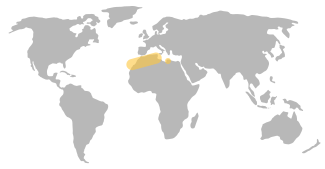
The African blue tit primarily inhabits forested areas and woodlands across Morocco, Algeria, and Tunisia. It favors Mediterranean climates with mild, wet winters and hot, dry summers.
Additional range
Unexpectedly, it may also occupy urban gardens and parks, adapting to environments altered by human presence, provided that food and nesting sites are available.
Do they migrate?
The African blue tit primarily resides in North Africa and the Canary Islands. Unlike many other tit species, the African blue tit is essentially a non-migratory bird. It tends to stay in one place throughout the year, particularly in its resident areas like Morocco, Algeria, Tunisia, and the Canary Islands. These birds are typically found in various habitats including woodlands, gardens, and scrub areas. They adapt well to different environments, which reduces the need for migration. Their consistent food sources, comprising mainly insects and seeds, are generally available year-round in their habitats, further diminishing the necessity for long-distance seasonal movements. In summary, the African blue tit maintains a sedentary lifestyle, largely inhabiting the same regions throughout the year without undertaking significant migratory journeys.
What is the role of African blue tits in nature and how to protect them?
Conservation status
The African blue tit is considered to be of least concern in terms of conservation status, indicating it is relatively common. Key conservation threats include habitat loss due to deforestation and climate change, which could impact its natural habitats. While no major species-specific conservation efforts are prominent, the protection of forests and climate mitigation strategies indirectly benefit its conservation. The bird adapts well to various environments, contributing to its current stable population. Conservationists emphasize the importance of continued monitoring to prevent future decline.
Ecological role of African blue tits
Its role in the ecosystem
The African blue tit (Cyanistes teneriffae) is a small songbird species that plays a crucial role in the ecosystem. A significant part of their diet consists of pests, including caterpillars and other harmful insects. By controlling these pest populations, the African blue tit helps to maintain a balanced ecosystem and protect the diversity of plant life. Additionally, they contribute to seed dispersal, another vital ecological process. When they forage and eat, they often move and drop seeds in the process, thereby assisting in the propagation of many plant species. This seed dispersal contributes to the overall biodiversity in their ecosystem by supporting a diverse range of plants. The African blue tit’s role in pest control and seed dispersal denotes their ecological importance, highlighting how even small creatures contribute significantly to maintaining the delicate balance of nature.
How to help protect African blue tits
Preservation tips
Habitat preservation
Conservation of the African blue tit involves protecting its habitat. Work with local environmental bodies to conserve natural sites, particularly woodland and scrub areas as these are key habitats for this species. Avoid harmful agricultural practices, encourage sustainable logging and prevent the destruction of native plants, all of which contribute to habitat loss.
Community science initiatives
Community involvement is key to conservation efforts. Set up or participate in local birdwatching groups to monitor local African blue tit populations. Create educational programs to spread knowledge about the bird's importance and how to protect it. Promoting citizen science initiatives can also help gather data for researchers and raise awareness for conservation efforts.