
Common Rosefinch
Common Rosefinch
Also known as: Scarlet Rosefinch
Carpodacus erythrinus
Quick Identification guide
Quick Identification guide
- •
Males boast a striking bright red head and breast contrasted with brown wings and back
- •
Females and young birds are more subdued with a brownish body, featuring faint streaking and no red coloring
- •
Both sexes have a stout, conical beak ideal for seed eating and a forked tail
What does a common rosefinch sound like?
The common rosefinch typically has a melodious and soft voice. Its call notes include a unique, sharp "pyit" or "tik", and a twittering "ti-ti-ti". The song is a swift mixture of slow whistles and quicker notes, often described as "pleasure-plea-sure". It begins with a few short notes, follows with a more complex middle part, and ends with lingering high notes. It may vary, still usually is sweet and pleasing to the ear.
Description
Scarlet rosefinches are also known as common rosefinches and are, as the name suggests, the most widespread species of rosefinch in Europe. These guys are about the size of a sparrow. Juvenile rosefinches start off brown and, like most youngsters, are then at their most adventurous and tend to wander the furthest. Regardless of their colour, if run into a group of these birds, then know that you're looking at a bouquet of rosefinches!
The common rosefinch can weigh between 19to33grams and be from13to15centimeters tall.
The common rosefinch typically lives for about 2 to 3 years. This lifespan is similar to that of other small passerine birds. However, compared to larger species of finches, like the Hawfinch with a lifespan of up to 12 years, the common rosefinch's lifespan is considerably shorter.
Did you know?
Most popular questions about common rosefinch
How to recognise a common rosefinch?
General appearance
The common rosefinch is a medium-sized bird with a robust build and a heavy, conical bill. The species typically measures between 15-17 centimeters in length. The bird has a short tail and rounded-wing tip. Its physical appearance varies seasonally; in summer, the plumage becomes faded while winter moulting renews some of its vibrancy.
Male vs female
Adult male rosefinches showcase a distinctive rosy-red coloration on the head, breast, and rump, which gives the species its name, with a brownish back. Their feathers may fade to brownish-pink after summer moulting. Females and older males are less vibrant, with a more subdued, brownish or grayish coloration throughout. Both genders have dark brown upperparts and paler underparts.
Juvenile
Juvenile common rosefinches possess a similar coloration to the females, but are distinguishable by their more mottled, streaked appearance. Their plumage is typically gray-brown with buff edges, giving them a scalloped appearance. As juveniles mature, males begin to develop the bright, rosy plumage characteristic of the species.
Often mistaken for
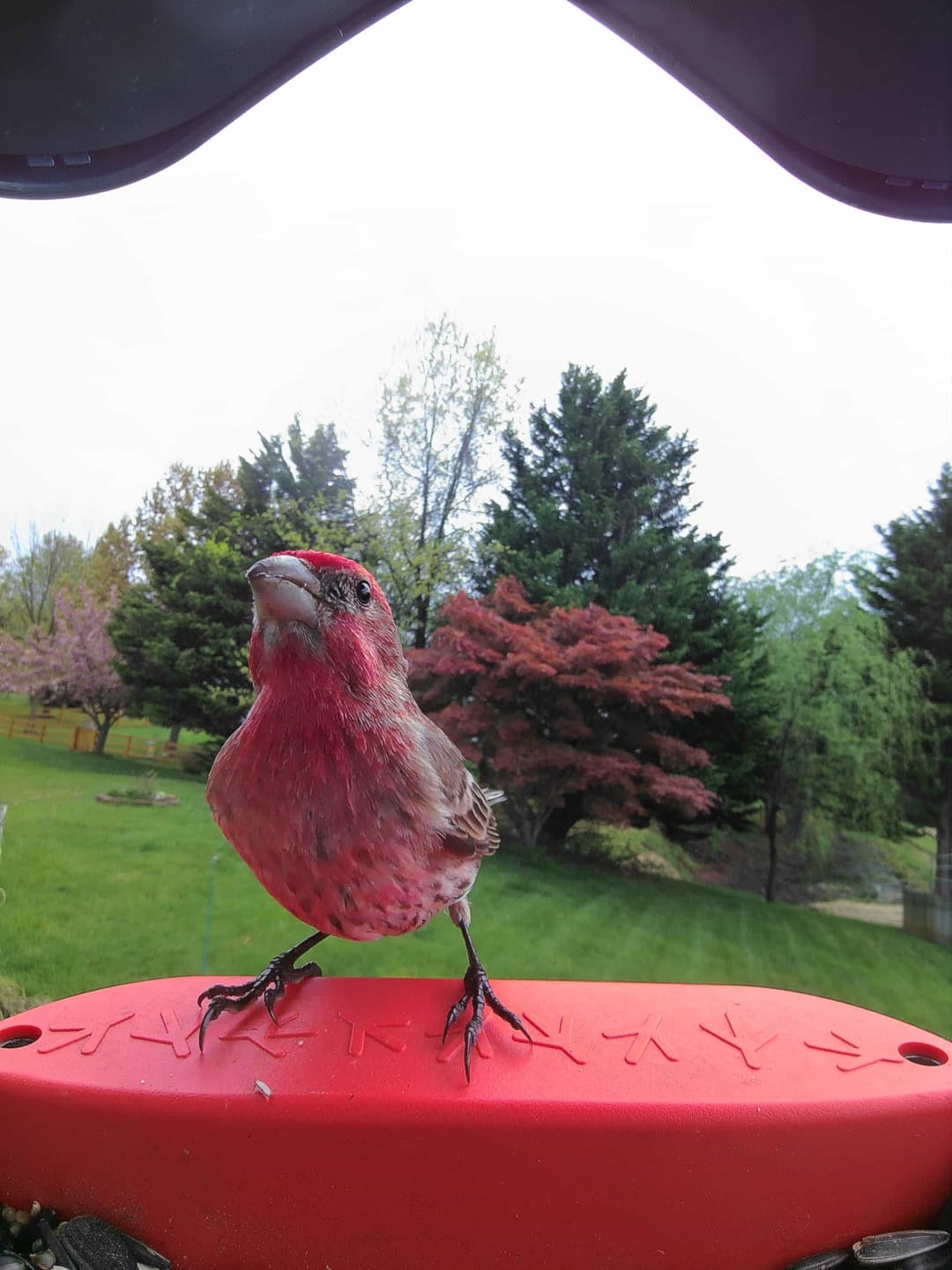
House Finch vs Common Rosefinch
The House Finch can be mistaken for the Common Rosefinch due to similar coloration. However, the House Finch generally has streaked underparts, whereas the Common Rosefinch has a more uniformly colored chest without streaks.
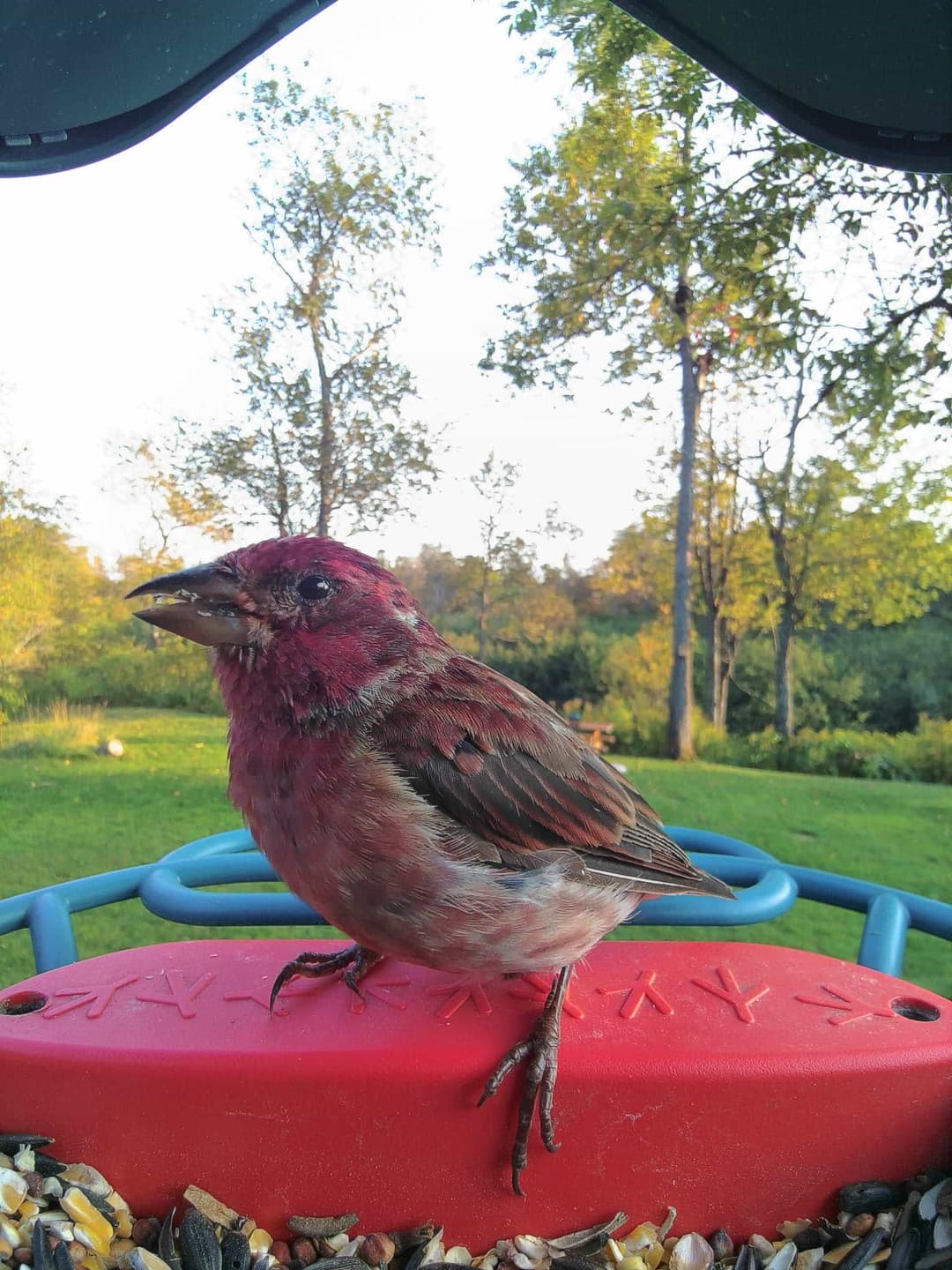
Purple Finch vs Common Rosefinch
The Purple Finch and Common Rosefinch both exhibit a reddish hue, but the Purple Finch tends to have a deeper, more raspberry shade and lacks the uniform rose-colored head and breast of the Common Rosefinch.
Breeding and nesting habits of the common rosefinch
Mating behaviors
The common rosefinch engages in courtship displays where males sing to attract females. These songs are often accompanied by flight displays and posturing to showcase their vibrant plumage.
Nesting details
The common rosefinch nests in bushes or low trees. They use twigs, grass, and roots to construct open cup-shaped nests. In gardens, providing dense shrubs and small trees can help create suitable nesting sites.
Eggs and chick-rearing
Females lay 3-5 eggs, which they incubate for about 12-14 days. Both parents participate in feeding the chicks, which fledge about two weeks after hatching. Providing a source of insects and seeds aids in chick nourishment.
What does a common rosefinch like to eat?
Berries
Insects
Plants
Seeds
Spiders
Natural diet
The common rosefinch primarily feeds on a variety of seeds and grains found in the wild. Its natural diet includes seeds from grasses, weeds, and shrubs, as well as buds and flowers during the spring season. In addition to seeds, it occasionally consumes insects, especially during the breeding season, to meet protein requirements.
Bird feeders
At bird feeders, the common rosefinch is attracted to a range of foods that mimic its natural diet. It commonly consumes sunflower seeds, millet, and cracked corn. The presence of fruit-based offerings like berries can also attract rosefinches, as they are sometimes part of their dietary intake in natural settings.
Attracting the common rosefinch: snacks and feeder types
The common rosefinch has a fondness for seeds, particularly sunflower and millet seeds. Bird Buddy seeds are recommended as they are curated by experts to fit the bird-feeding needs for each season. Besides seeds, rosefinches enjoy mealworms, which could be added to their menu occasionally. As for feeders, opt for tubular feeders which are easy for rosefinches to cling on. Placing a bird bath nearby could also be an added attraction!
Fun tricks to make rosefinches stay
Rosefinches enjoy a serene environment, so try to place feeders in quiet areas of your yard. They are social birds, attracting a crowd could encourage them to stay. Interestingly, they also enjoy sand baths–a shallow dish with fine sand can make for some particularly fun times. Finally, consider playing soft bird call sounds in your backyard. This could make the rosefinches feel more at home, and they might just stay for a sing-along!
Where can you find common rosefinches?
Primary habitat
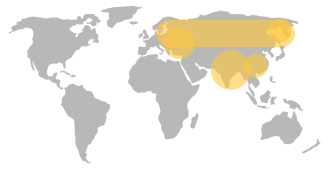
The common rosefinch typically inhabits dense deciduous and mixed forests with thick undergrowth, mainly across Eurasia.
Additional range
Particularly adaptable, the species is also found in gardens, farmlands, shrublands, and alpine meadows. They prefer cooler climates but can tolerate varying temperatures.
Do they migrate?
The common rosefinch is a migratory bird. It breeds across northern Europe and Asia, extending from Scandinavia and Eastern Europe to Siberia. Migration typically begins in late summer to early autumn. The primary migration route of the common rosefinch heads toward South Asia, where they spend the winter. Key wintering grounds include the Indian subcontinent, from northern India to Bangladesh, and parts of Southeast Asia. During the spring migration, the return journey to breeding grounds starts from late March to May. This migration may follow similar routes but is generally faster, as birds are in a hurry to establish territories and start breeding. Key stopover sites often include areas with suitable habitats along the way, such as river valleys and forested regions, where they can rest and feed. Timing and specific stopovers can vary based on environmental conditions and food availability. Monitoring the exact routes can be challenging due to the wide dispersal of individual birds, but ringing and recent tracking technologies provide ongoing insights. The common rosefinch is known for its adaptability, which aids in its widespread migration across diverse landscapes.
What is the role of common rosefinches in nature and how to protect them?
Conservation status
The common rosefinch is categorized as of "Least Concern" on the IUCN Red List, indicating it is relatively widespread and abundant. However, habitat loss and degradation, particularly from deforestation and agricultural expansion, pose threats to local populations. Conservation efforts mainly focus on habitat protection and monitoring population trends. While not currently vulnerable or endangered, continued environmental changes could impact its status, necessitating ongoing conservation vigilance to ensure the species remains prevalent in its natural habitat.
Ecological role of common rosefinches
Its role in the ecosystem
The common rosefinch plays a significant role within the ecosystem. Common Rosefinches act as agents of seed dispersal, thus contributing to botanical diversity, as they have varied diet that includes seeds from numerous plant species. By eating and subsequently excreting these seeds in different locations, they support plant propagation and range expansion. Moreover, their diet is also rich in small insects, larvae, and other pests, making them a natural means of pest control. Their ecological presence is integral to maintaining balanced insect populations and preventing overpopulation of pests that could negatively affect plant life. They also serve as prey to raptors, contributing to the food chain and biodiversity within their habitat. Their nests built on shrubs and trees can additionally provide a sheltered breeding ground for other birds or insects. Therefore, the common rosefinch serves as a significant ecological contributor in terms of seed dispersal, pest control, and providing biodiversity.
How to help protect common rosefinches
Preservation tips
Common rosefinch habitat preservation
Preserving the natural habitat of the common rosefinch is vital. This often means protecting areas of deciduous woodland and scrubland from deforestation. Implement sustainable land use methods, avoid overgrazing and excessive burning to promote flora and fauna growth. Protect fresh water resources and prevent pollution which can contaminate food supply of the common rosefinch.
Community science initiatives
Promote community science initiatives to involve the public in the conservation of the common rosefinch. Organize bird watching events to raise awareness, encourage reporting of bird sightings to monitor their population and distribution. Use mobile apps for easy recording and uploading of data. Provide educational programs about the importance of biodiversity and the role of common rosefinch in ecosystem.