
Abert’s Towhee
Abert’s Towhee
Melozone aberti


Quick Identification guide
Quick Identification guide
- •
Exhibits a uniform, warm brown plumage with subtle variations in shading across the body
- •
Features a large, round body with a relatively long tail often held slightly cocked
- •
Displays a conical, pale gray beak that contrasts slightly with the darker face
What does an Abert's towhee sound like?
The Abert's towhee communicates using a distinctive single, bell-like call. Typical calls resemble a rapid series of these notes, illustrating a pattern that is notably flat in nature. The call type can be categorized as a chirp or chip, hinting at its high-pitched, short, and sharp acoustic attributes. Its song retains the intrinsic characteristics of its call, densely layered in a swift succession mimicking a sped-up version of the core call notes.


Description
These little birds aren't big on long trips and are pretty tough to spot, because they spend most of their time rummaging around the undergrowth. They have, however, made a home for themselves on the campus of Arizona State University. Some can probably even sit in on a few classes, provided they don't tweet during the lecture!
The Abert's towhee can weigh between 39to54.9grams and be from21to23centimeters tall.
The typical lifespan of an Abert's towhee, a species of songbird native to the southwestern U.S. and Mexico, is around 11 years. Compared to its close relative, the California towhee, the Abert's towhee has a slightly longer lifespan, as California towhees usually live up to 9 years.
Did you know?
Most popular questions about Abert's towhee
How to recognise an Abert's towhee?
General appearance
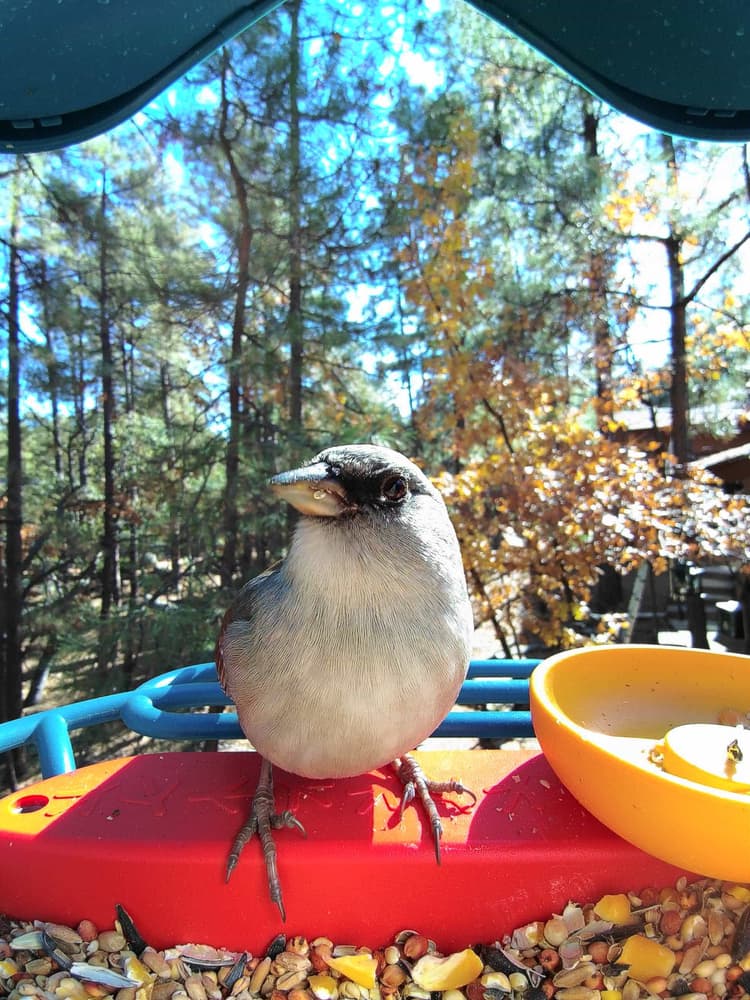
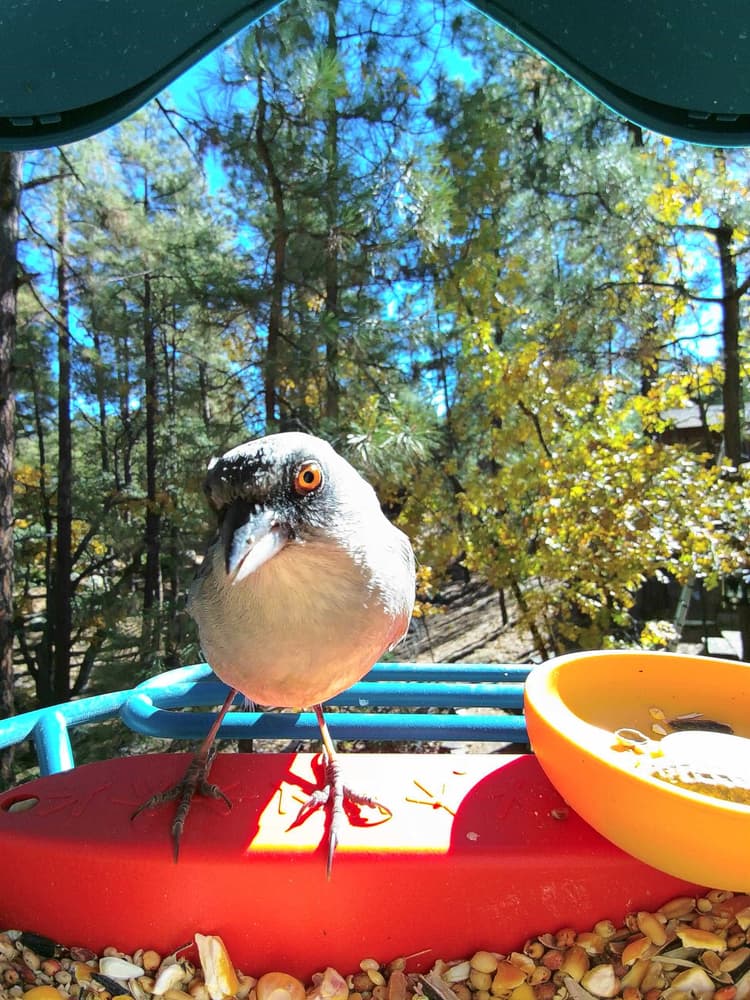
Abert's Towhee is a medium-sized bird with a robust body and long tail. Its plumage is mostly gray-brown with a distinctive black face and pale pinkish-brown underparts. The wings and tail are a slightly darker shade, offering a subtle contrast.
Male vs female
Males and females are similar in coloration and size. Both exhibit the same general color pattern, including the black facial mask and pinkish undertones. Any minor differences are typically not discernible in the field, making gender identification based on appearance challenging.
Juvenile
Juveniles resemble adults but lack the clear black facial pattern. Their overall color is duller, especially on the underparts, and they may show faint streaking. As they mature, their plumage gradually darkens and the black face markings develop.
Often mistaken for
Canyon Towhee vs Abert’s Towhee
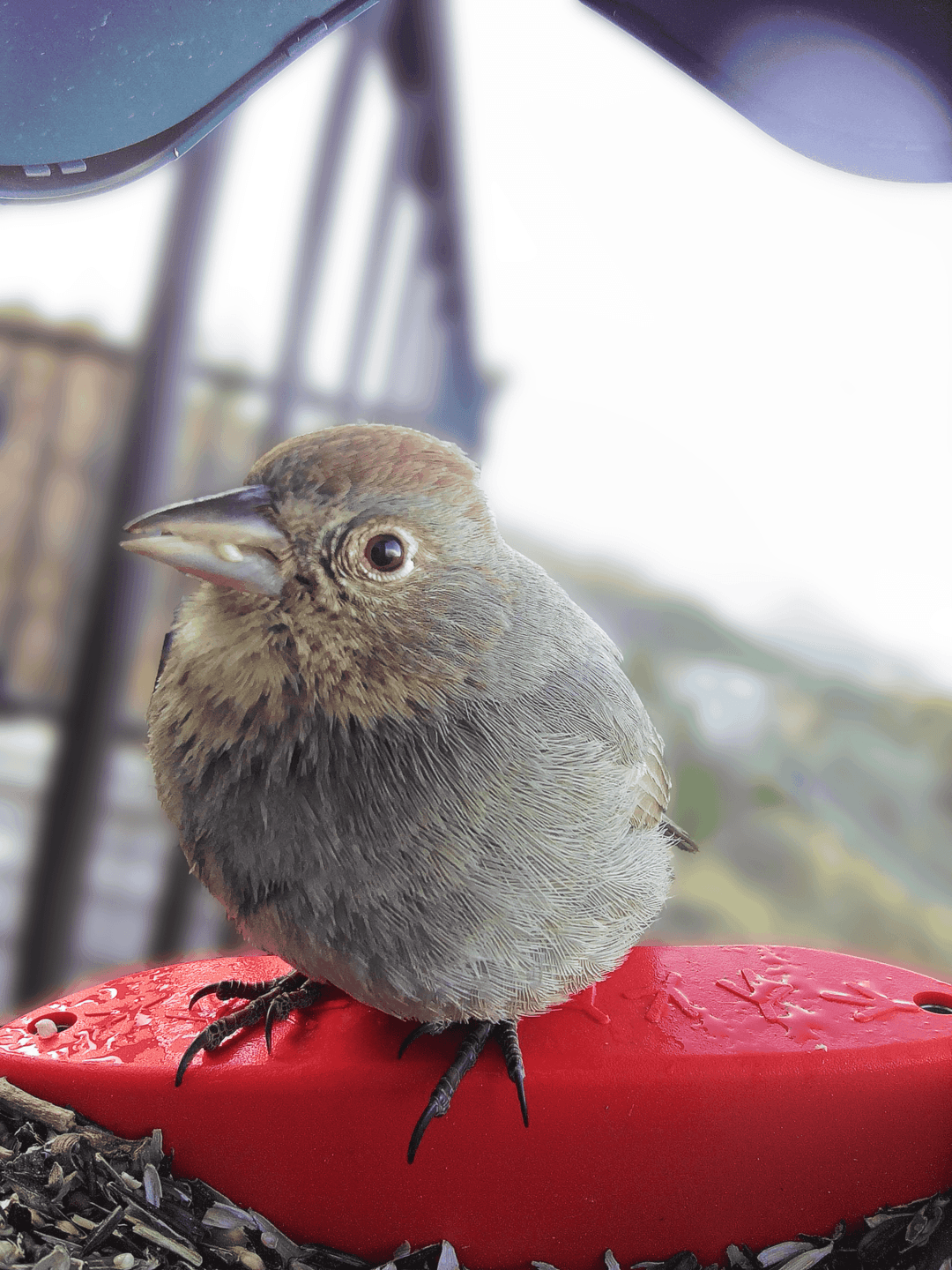
Canyon Towhees are generally browner with buff undersides compared to Abert’s Towhee, which has a richer brown body and a reddish undertail. Canyon Towhees also inhabit more arid, scrub-like areas while Abert’s prefer riparian zones. Pay attention to voice; Abert's has a more metallic call.
California Towhee vs Abert’s Towhee
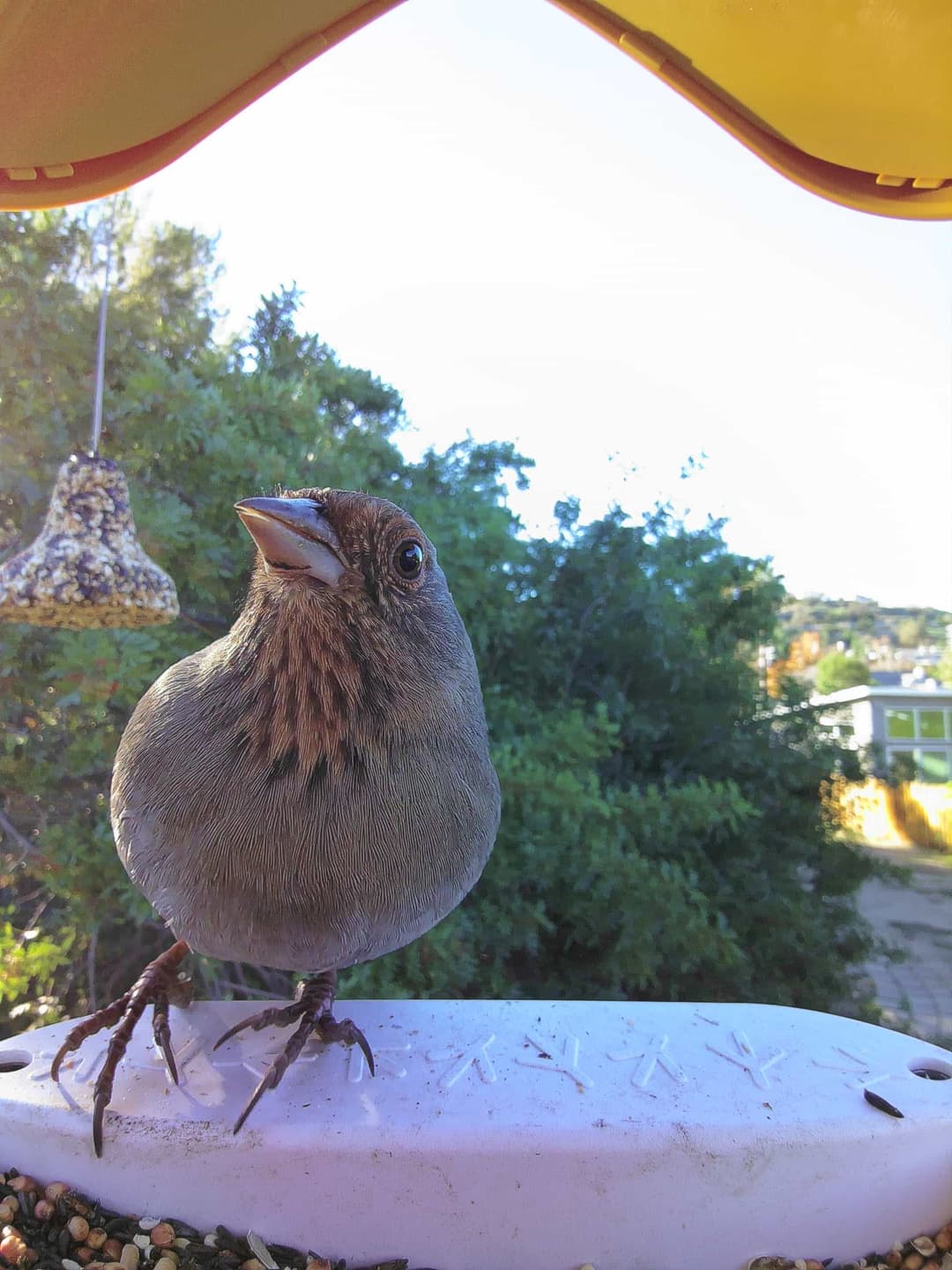
California Towhees are slightly larger with a more uniform brown color. Abert's Towhee features a distinct grayish to pinkish wash on the breast and a darker face, while California Towhees lack prominent facial markings. Habitat overlaps in some areas but listen for Abert's distinctive call.
Rufous-Crowned Sparrow vs Abert’s Towhee
Rufous-Crowned Sparrows are smaller with a striking rufous crown and a more slender appearance compared to the larger, stockier Abert’s Towhee. Abert’s lacks the pronounced facial stripes seen in the sparrow. Often seen foraging on the ground in different habitats.
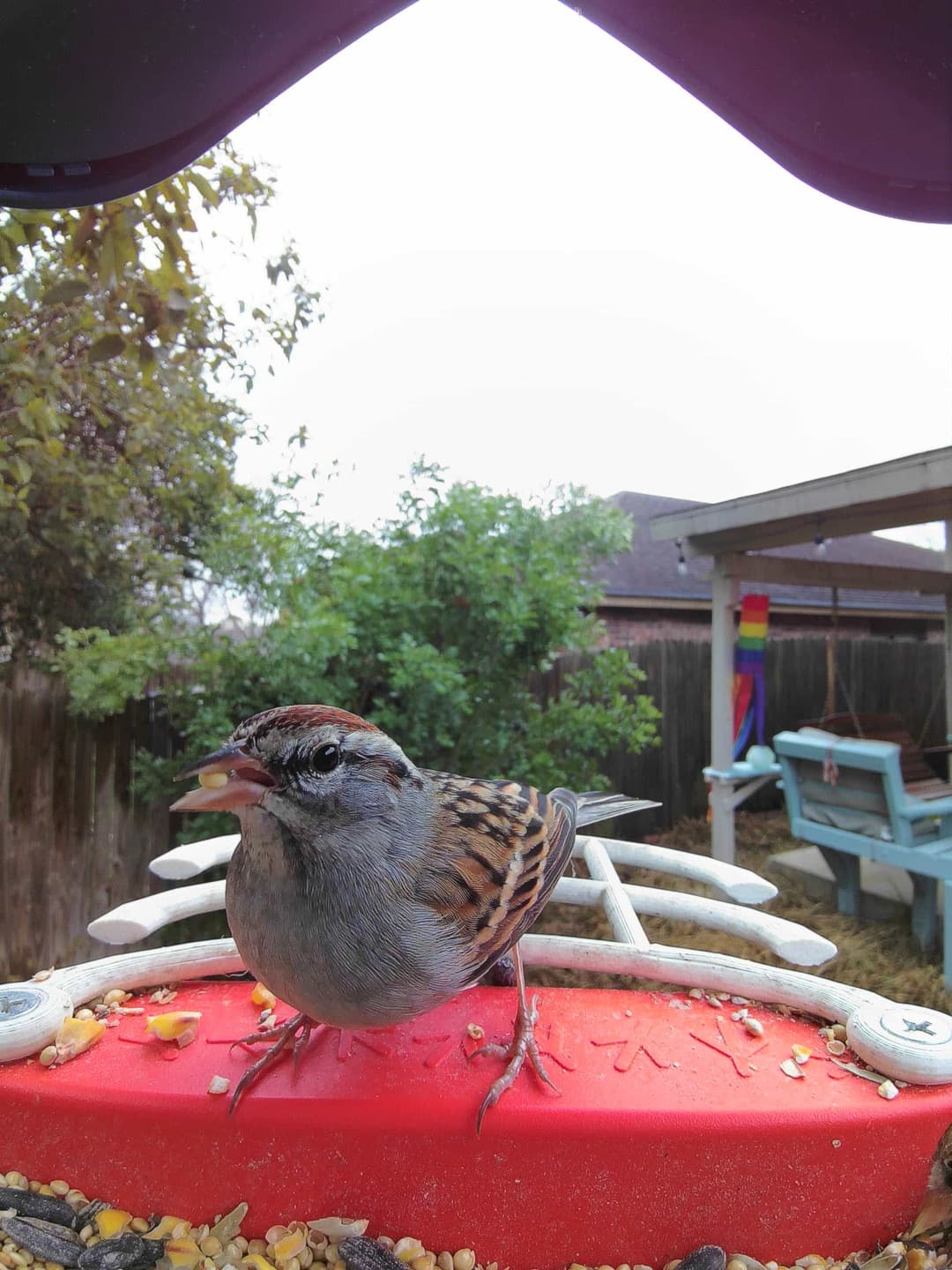
Breeding and nesting habits of the Abert's towhee
Mating behaviors
Abert's towhees form permanent pair bonds, remaining together on their territories year-round. Courtship and pair formation can occur at any time of the year, although nesting mostly takes place from March through July. Both partners participate in defending their nesting territory.
Nesting details
Nests are placed in dense shrubs or trees like mesquite, willow, baccharis, or elderberry, often concealed within mistletoe clumps. The nest is typically 5-8 feet above the ground but can be higher. The female constructs a bulky open cup nest with weeds, bark strips, grass, leaves, and vines, lining it with dry grass and occasionally hair.
Eggs and chick-rearing
The Abert's towhee lays eggs from March to July. Both parents are involved in defending the nest and feeding the chicks. Providing a garden habitat with suitable trees and shrubs, and maintaining a natural cover can support nesting by offering concealment and materials like dry grass for the nest's construction.
What does an Abert's towhee like to eat?
Insects
Seeds
Natural diet
The Abert's towhee primarily feeds on insects and seeds. Insects form the majority of its diet, especially during the summer months. Key insect prey includes beetles, ants, caterpillars, grasshoppers, and cicadas. Additionally, the Abert's towhee consumes many seeds, including those from saltbush, weeds, and grasses.
Bird feeders
At bird feeders, Abert’s towhees are less commonly observed but may sometimes visit to consume seeds and other available offerings.
Attracting abert's towhee: snacks and feeders
To get Abert’s towhee flocking to your yard, it's all about the food and feeder types. These birds particularly enjoy ground-feeding on seeds, insects, and berries. Therefore, scattering a mix of sunflower seeds, millet, and Bird Buddy seeds - expertly chosen for the season - can be just the temptation they need. Bird Buddy seeds have shown the best results due to their quality mix and suitability to the Towhee's diet. For feeder types, Towhee's prefer a ground or platform feeder mimicking their natural ground-feeding habits.
Did you know fun tricks to encourage towhee visits?
Beside tempting them with their favorite food, it's also possible to lure in these delightful birds with a bit of landscaping. Brush piles and ground covers can provide the safe and inviting habitat Towhee's prefer. A birdbath can also be an attractive feature for Abert’s towhee, as they love to bathe and preen. And if you're lucky, they may just hang around for longer, possibly even favoring you with their beautiful, unique melodies for a backyard sing-along.
Where can you find Abert’s towhees?

Primary habitat
The Abert’s towhee thrives in arid lowlands, notably in dense brush located near water sources such as streams, ponds, or ditches. Its primary habitat includes areas with mesquite, cottonwood-willow groves, and riverside marshes.
Additional range
Interestingly, it can also adapt to well-watered suburban environments, such as the yards around Phoenix. It overlaps with Canyon Towhee in some regions, but always stays closer to water and dense cover, avoiding dry, open hillsides.
Do they migrate?
The Abert's towhee is a permanent resident, meaning it stays in one place all year and does not migrate. This bird species is known for its sedentary lifestyle, rarely wandering even short distances away from its favored habitat. Abert's towhees are typically found in the dense, brushy areas of the southwestern United States, particularly in Arizona, southeastern California, southwestern New Mexico, and parts of Nevada, as well as across the border into northern Mexico. Their preferred habitats include riparian areas, desert washes, and areas near streams or rivers that provide the lush vegetation they thrive in. Given their strong fidelity to these habitats and lack of migratory behavior, there are no known migration routes, timing, or key locations associated with Abert's towhees. They remain in these regions year-round, adapting to the conditions and resources available in their specific local environment.
What is the role of Abert’s towhees in nature and how to protect them?
Conservation status
The Abert’s towhee remains common in parts of its limited range but is considered vulnerable due to potential loss of streamside habitat. While not classified as endangered, the species faces significant threats from habitat degradation, particularly the reduction of riparian zones. Conservation efforts should focus on preserving and restoring these critical habitats to ensure the bird's continued survival. Maintaining healthy ecosystems along water bodies is essential to safeguarding the Abert's towhee population.
Ecological role of Abert’s towhees
Its role in the ecosystem
The Abert’s towhee plays a significant role in maintaining ecological equilibrium through insect predation and seed dispersal. As a part of its diet, this bird consumes a variety of insects like beetles, ants, caterpillars, grasshoppers, and cicadas, particularly during the summer. This behavior can aid in natural pest control, helping manage insect populations, some of which might be harmful to crops or other vegetation. Additionally, the bird's consumption and excretion of seeds serve as an efficient mechanism for seed dispersal, aiding in the proliferation of certain plant species. This includes those of saltbush, weeds, and grasses that are essential to the ecosystem health. Moreover, the Abert’s Towhee's nesting behavior, including its preference for trees like mesquite, willow, baccharis, and elderberry, can be indicative of the overall health of the ecosystem. The towhee's presence might be used as a biodiversity indicator species, revealing important information about habitat quality, disturbance, and transformations within the ecosystem they inhabit. Further, by building its nest, the bird contributes to the structural complexity of habitats, positively influencing other fauna.
How to help protect Abert’s towhees
Preservation tips
Habitat preservation for abert’s towhee
Support the conservation of the Abert's towhee by preserving key habitats. Avoid activities that disrupt their habitat specifically river ecosystems. Organize cleanup drives to reduce pollutants. Encourage local community establishment of protected areas, contributing to the protection of the species.
Community science initiatives
Engage in community science projects that monitor the Abert’s towhee population. Record and report any sightings through an online platform. Citizen science can provide crucial data for understanding the towhee's local population trends and habitat needs. Educate the community about the importance of this bird species and the role each one can play in its conservation.