
California Thrasher
California Thrasher
Toxostoma redivivum


Quick Identification guide
Quick Identification guide
- •
Characterized by a slender, decurved bill that is distinctly long and downturned
- •
Features a grayish-brown body with a subtly paler underside, blending into its surroundings
- •
Possesses a long tail often held up, enhancing its lean and elongated profile
What does a California thrasher sound like?
The California Thrasher's song is reminiscent of a Northern Mockingbird's but with a harsher, more interrupted, and less recurring melody. This bird is proficient in mimicking others. The usual calls include a low, coarse chuck and a throaty quip. The call pattern can be categorized as falling, rising, and undulating. In terms of call type, it typically produces sounds similar to a chirp or chip, trill, and whistle.


Description
Singing is what California thrashers do best. Not just males but females sing too, while pairs will often duet. The largest of all the thrashers is also an expert mimic and frequently adds imitations of other birds to its repertoire. You know what they say: imitation is the sincerest form of flattery.
The California thrasher can weigh between 78to93grams and be from32to33centimeters tall.
The California thrasher typically lives up to 11 years, which is similar to life expectancies of other thrasher species. For instance, the Brown thrasher is known to live up to 12 years in the wild, while the Long-billed thrasher has a reported lifespan of around 10 years.
Did you know?
Most popular questions about California thrasher
How to recognise a California thrasher?
General appearance
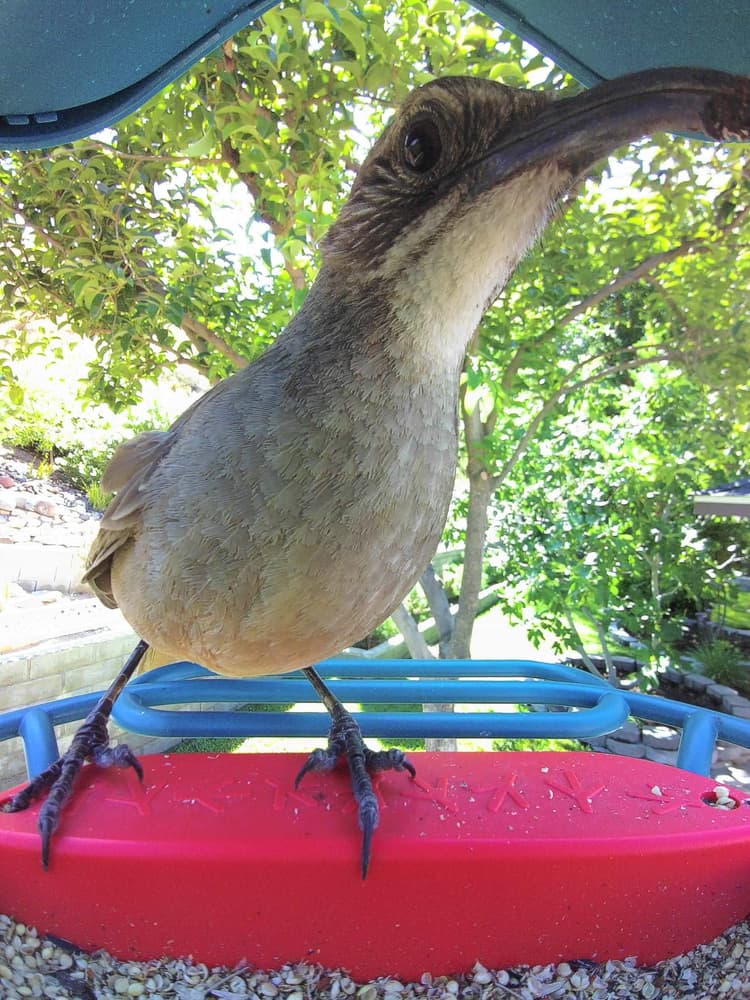
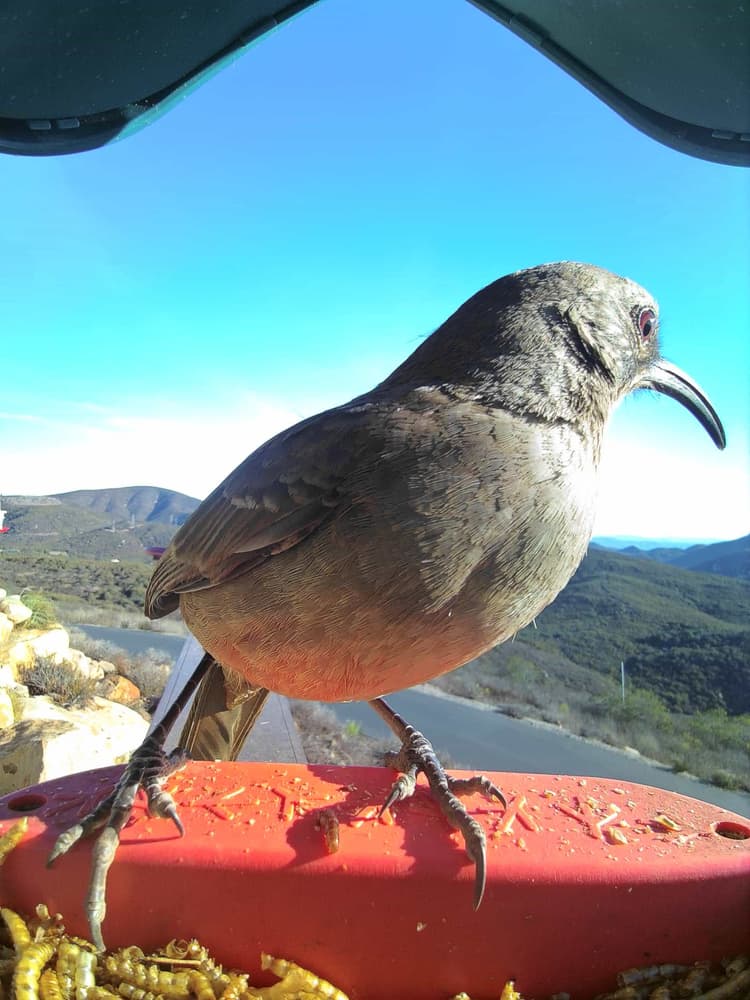
The California Thrasher averages 11-13 inches in length and flaunts a strongly curved bill, distinguishing it from other species. Its body is primarily plain, dark brown and an eyebrow is accentuated in a paler tone. Its dark eyes are noticable, supplemented by a buff wash on its belly. This bird is roughly the same size as a crow, sporting broad wings and a long tail that can be best described as rounded, or wedge-shaped.
Male vs female
Males and females of this species are similar in size and color; both are cloaked in the same shade of dark brown, and depict a similar face pattern with pale eyebrows and dark eyes. No sexual dimorphism is observed.
Juvenile
Juvenile California Thrashers resemble the adults but may display a faintly streaked chest, a belly with a buff wash, and their feathers can sometimes reflect a slightly grayer hue. As these birds mature, they acquire the solid, dark brown coloration that typifies the species.
Often mistaken for
Crissal Thrasher vs California Thrasher
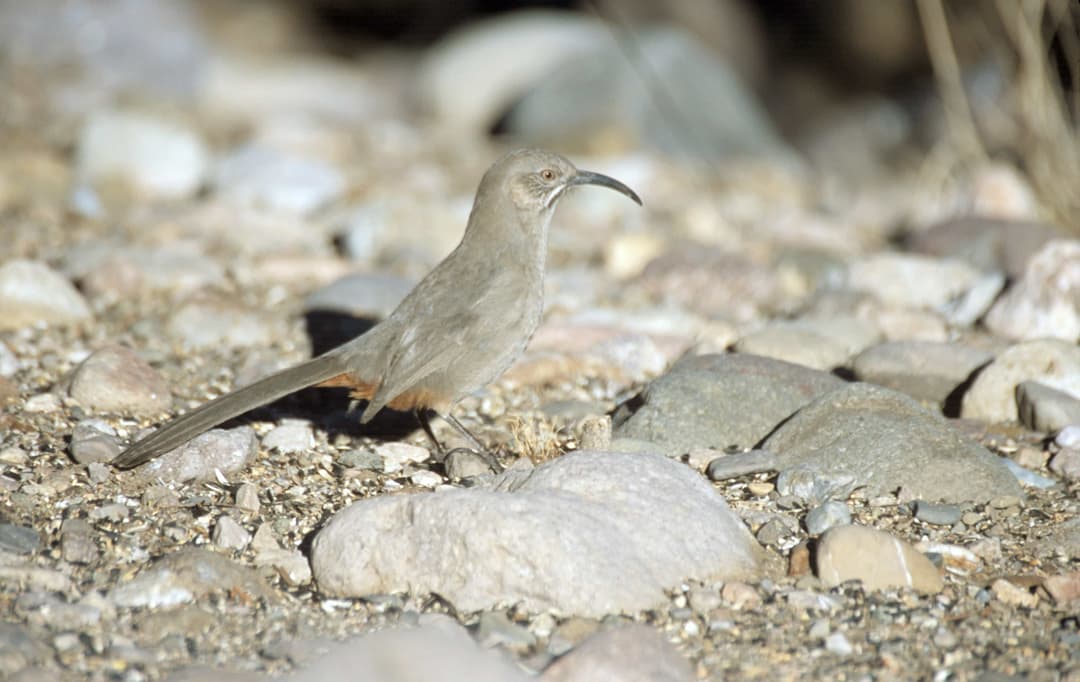
The California Thrasher has a more curved beak compared to the Crissal Thrasher. While both have similar body shapes and long tails, California Thrasher has a darker, more contrasted throat patch, whereas the Crissal has a uniform gray-brown color with a faint reddish undertail. Note the California Thrasher's song, which is a loud, musical series of phrases.
Curve-Billed Thrasher vs California Thrasher
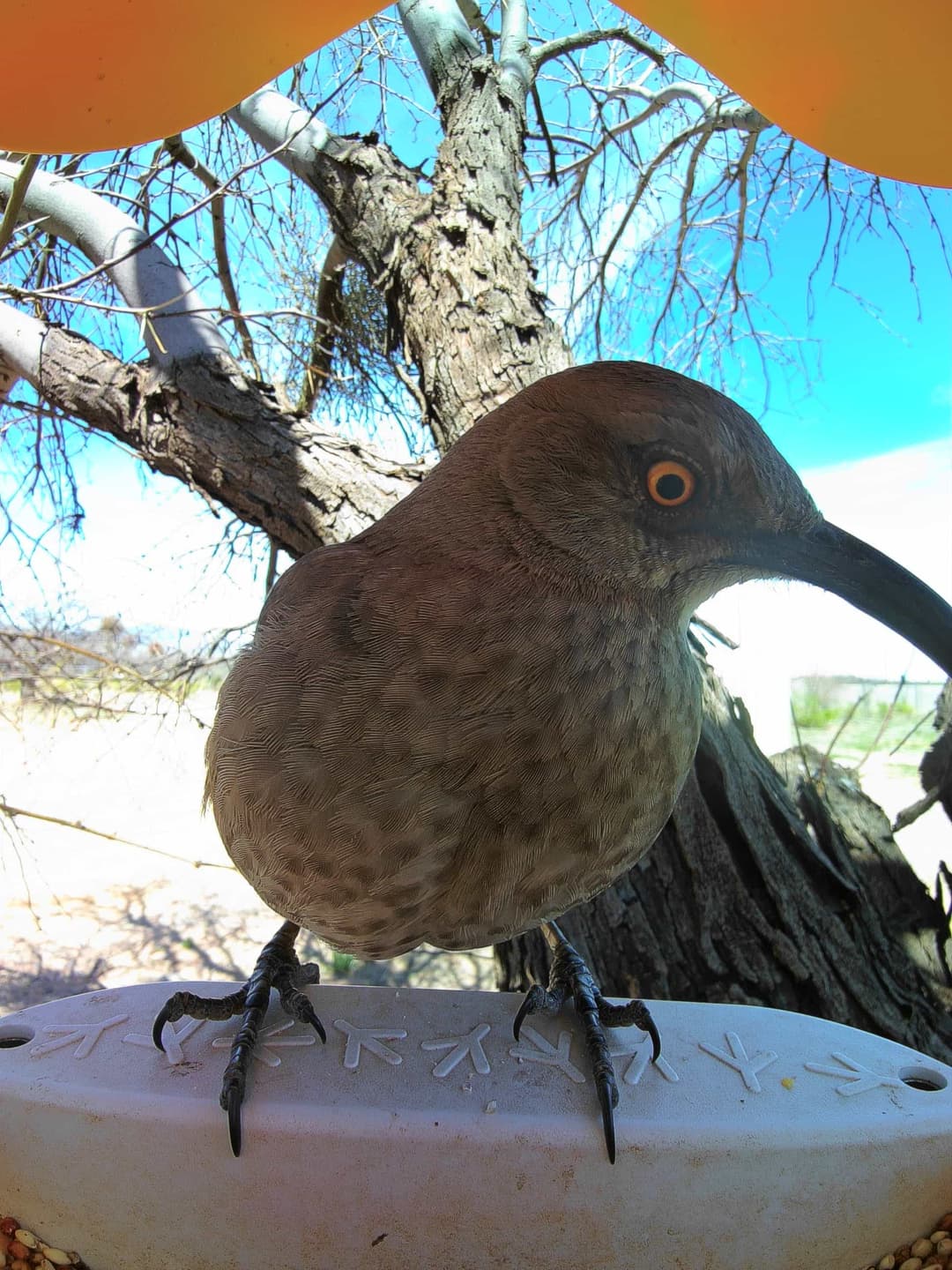
California Thrasher is larger and has a distinctly long, down-curved bill compared to the Curve-Billed Thrasher. The California Thrasher's plumage is browner with a more pronounced face pattern. Additionally, the Curve-Billed's tail is less rounded at the tip. Listen for the California Thrasher's richer, more varied vocalizations.
Breeding and nesting habits of the California thrasher
Mating behaviors
California thrashers may stay together within their territory year-round. The male defends the nesting territory by singing, often imitating other birds, from elevated positions like the top of shrubs or trees.
Nesting details
Nests are built by both sexes and are usually placed in dense shrubs or extensive thickets, typically 2-4 feet above the ground but less than 10 feet. The nests are bulky open cups made of sticks and twigs, lined with fine grass, weeds, rootlets, strips of bark, and other soft materials.
Eggs and chick-rearing
Although specific details about eggs and chick-rearing practices are not provided, pairs work together in nest construction, indicating cooperative parenting. For garden habitats, offer dense shrubs and thickets for nesting, avoiding disturbances to simulate a natural environment.
What does a California thrasher like to eat?
Berries
Fruits
Insects
Nuts
Plants
Scraps
Spiders
Natural diet
The California thrasher primarily relies on a diverse insect-based diet, consuming a variety of insects such as ants, wasps, bees, beetles, caterpillars, and moths. In addition, it also eats spiders and centipedes. Beyond insects, the thrasher's diet includes berries and small fruits, which form a crucial component of its nutrition. It also consumes seeds, acorns, and other types of plant material.
Bird feeders
At bird feeders, the California thrasher is known to accept a range of miscellaneous scraps, reflecting its adaptability in supplementing its natural diet with easily available food sources provided by humans.
Creating an inviting environment for california thrashers
California Thrashers are attracted to thick, dense shrubbery where they can nest and hide. Plant native shrubs and bushes like manzanita or toyon in your yard. Also maintaining a natural environment with leaf litter can encourage bugs, a delicious snack for the thrashers.
Perfect snacks to attract california thrashers
California Thrashers are omnivores with a wide-ranging diet. They love insects, spiders, small fruits, and seeds. Try supplying Bird Buddy seeds at your feeder, added by experts for the season ensures these seeds are irresistible to thrashers.
Choosing the right feeder
Thrashers are ground feeders, so a ground tray feeder is the best choice. Place it close to dense shrubs for easy escape routes. Regular cleaning is a must to keep the birds healthy.
Fun tricks to lure california thrashers
Thrashers are inquisitive and enjoy observing their surroundings, a bird bath or water feature can attract them. In addition, they're known for their melodious songs, playing bird calls or songs can tempt them to join in the song fest in your yard!
Where can you find California thrashers?

Primary habitat
The California thrasher is commonly found in lowland habitats with dense low brush such as chaparral, foothills, and valley thickets. It also frequents parks and gardens in suburban neighborhoods with sufficient vegetation.
Additional range
Its range extends to desert region edges and chaparral on mountains up to about 6,000' high, indicative of its adaptability to diverse environments.
Do they migrate?
The California thrasher does not migrate; it is strictly a permanent resident. It rarely wanders even a short distance from its breeding areas, indicating that it remains in one location throughout the year. This bird species is typically found in the chaparral, foothill, and coastal scrub habitats of California and Baja California. The behavior associated with its residency is indicative of a strong attachment to its home range, which provides the necessary resources such as food and nesting sites year-round. Due to its permanent residency, there is no established migratory route, timing, or key locations to describe as would be relevant for a migratory species. Its non-migratory nature is advantageous in maintaining a stable population within its specific ecological niche, where it adapts to seasonal changes in the local environment rather than relocating.
What is the role of California thrashers in nature and how to protect them?
Conservation status
The California thrasher is fairly widespread and common, though it has disappeared in many coastal areas due to increasing urbanization. While not currently classified as vulnerable or endangered, habitat loss remains a significant threat to its population. Key conservation efforts focus on preserving and restoring its natural habitats, particularly in urbanized regions. Continued monitoring and habitat protection are essential to ensure the species does not become at risk in the future.
Ecological role of California thrashers
Its role in the ecosystem
The California thrasher plays a significant role in its ecosystem. As an insectivore, it contributes to pest control by feeding on a variety of insects including bees, beetles, caterpillars, ants, wasps, and moths. With its robust, curved bill, the thrasher can flip leaf litter aside to search for insects. Its diet is not limited to insects, but also includes spiders, seeds, acorns, and centipedes. Berries and small fruits form a significant portion of the thrasher's diet, which implicates the bird in seed dispersal, contributing to the proliferation of plant species in its habitat. The bird's habit of scouring the ground in search of food may also aid in turning the soil, thereby enhancing conditions for seed germination and plant growth. Additionally, the species may contribute indirectly to floral diversity by considering a variety of tree species as their nesting sites. This could deter certain tree-feeding pests, giving other plant species a competitive edge.
How to help protect California thrashers
Preservation tips
Habitat preservation
Preserve the California Thrasher's habitat, which includes chaparral, coastal scrub, and riparian thickets, by preventing land development and deforestation in these areas. Promote the growth of native plants such as sagebrush and manzanita that provide food and cover for this species. Discourage pesticide use which can threaten their food sources.
Community science initiatives
Engage the public in community science projects to monitor California Thrasher populations. Encourage birdwatchers and enthusiasts to record sightings on platforms like eBird. Organize educational workshops and events to raise awareness about the thrasher's ecological role and conservation status. Advocate for laws and policies that protect the thrasher and its habitat.