
American Robin
American Robin
Turdus migratorius


Quick Identification guide
Quick Identification guide
- •
The brick-red breast is a distinctive feature, contrasting with the gray-brown back and darker head
- •
Exhibits a rounded body with a long tail and slender profile
- •
Features a yellowish bill, contrasting with its darker head, and white eye arcs above and below the eyes
What does an American robin sound like?
The American Robin's vocalizations include a song series of rich caroling notes that fluctuate in pitch, often sounding like "cheer-up, cheerily." The song's tones rise and fall rhythmically. Its call pattern is flat and undulating. The variety of noises it produces fit into types such as chirp/chip, flute, and whistle, providing a melodious soundtrack in its habitat.
Call
Audio by G. McGrane


Description
The American robin is the state bird of Connecticut, Michigan and Wisconsin, and was named by settlers because it reminded them of the European robin, although the two are unrelated. Cheer up if you see one as they are harbingers of spring! To celebrate – we can only assume – they get a little tipsy from fermented berries in late winter and early spring.
The American robin can weigh between 77to85grams and be from20to28centimeters tall.
The American robin typically lives up to 2 years but can reach up to 14 years. Compared to similar species, such as the European robin that usually lives around 1.1 year, the American robin has a longer lifespan. However, some songbirds like blackbirds and starlings show similar ages, living up to 2.5 years and 15 years respectively. Survival rates for younger robins are generally lower, increasing after their first year.
Did you know?
Most popular questions about American robin
How to recognise an American robin?
General appearance
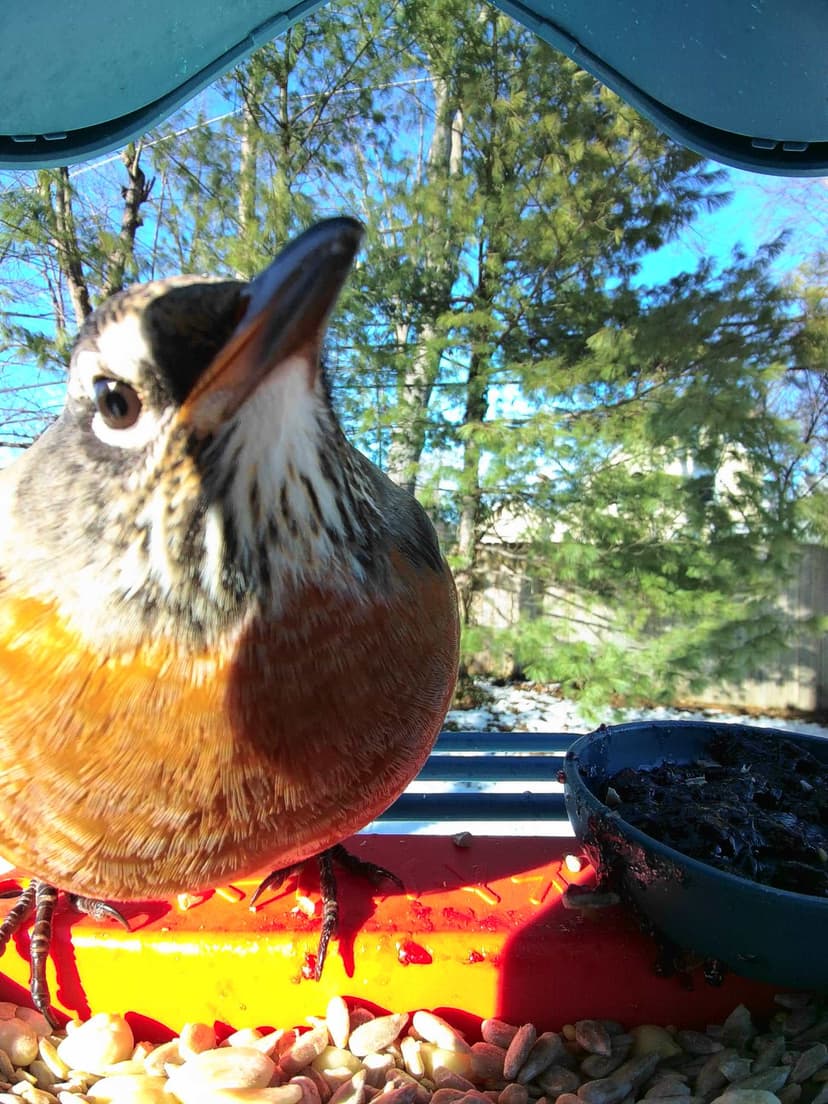
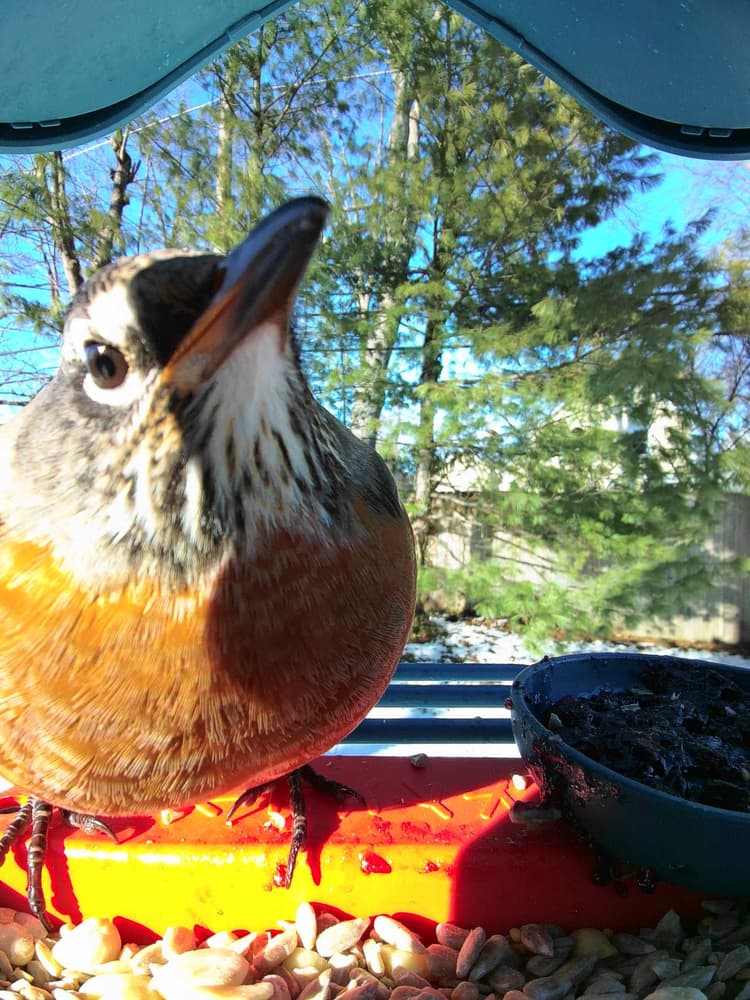
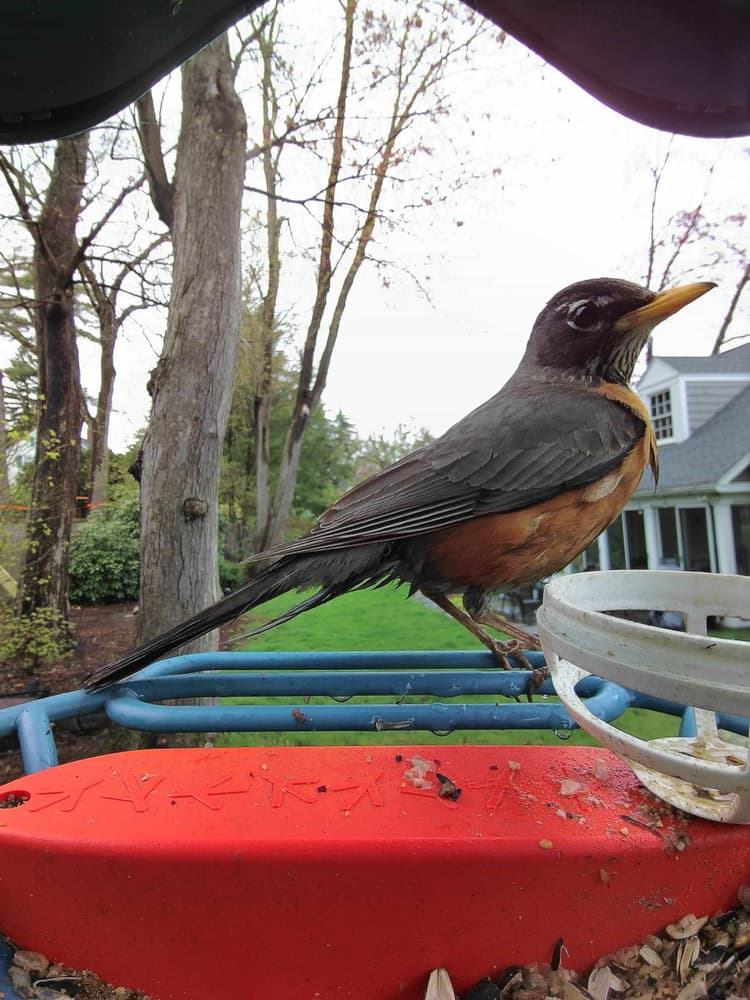
The American Robin is about 10 inches (25 cm) in size, or the size of a robin. It has a brick-red chest and a gray back with streaks on the white chin. Additionally, small white spots are visible around its eyes, as well as usually on tail corners. The wings are pointed and the tail is rounded and square-tipped.
Male vs female
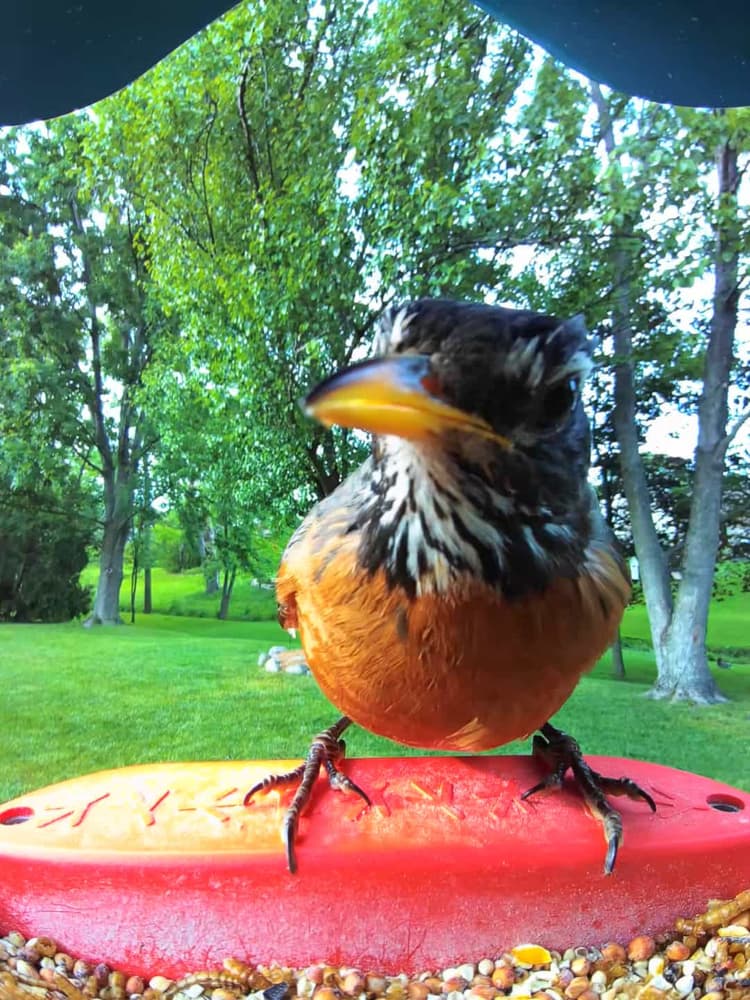
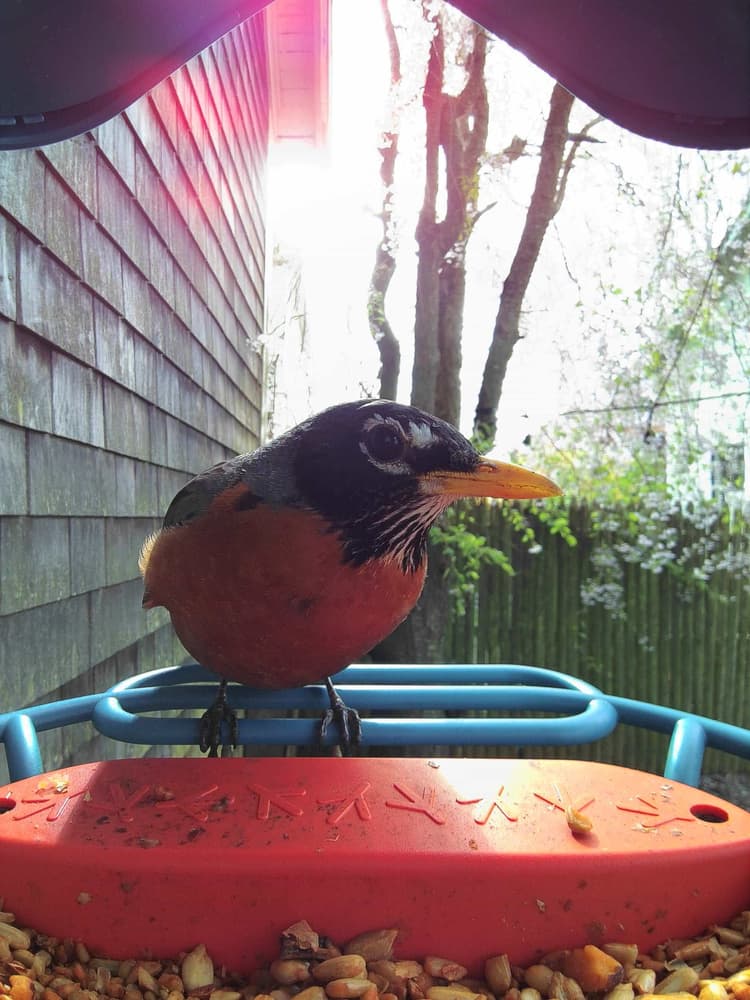
Males exhibit a slightly blacker head and richer colors compared to the females. Despite these differences, both genders feature the signature black, brown, orange, red, and yellow colors.
Male American Robin
Female American Robin
Juvenile
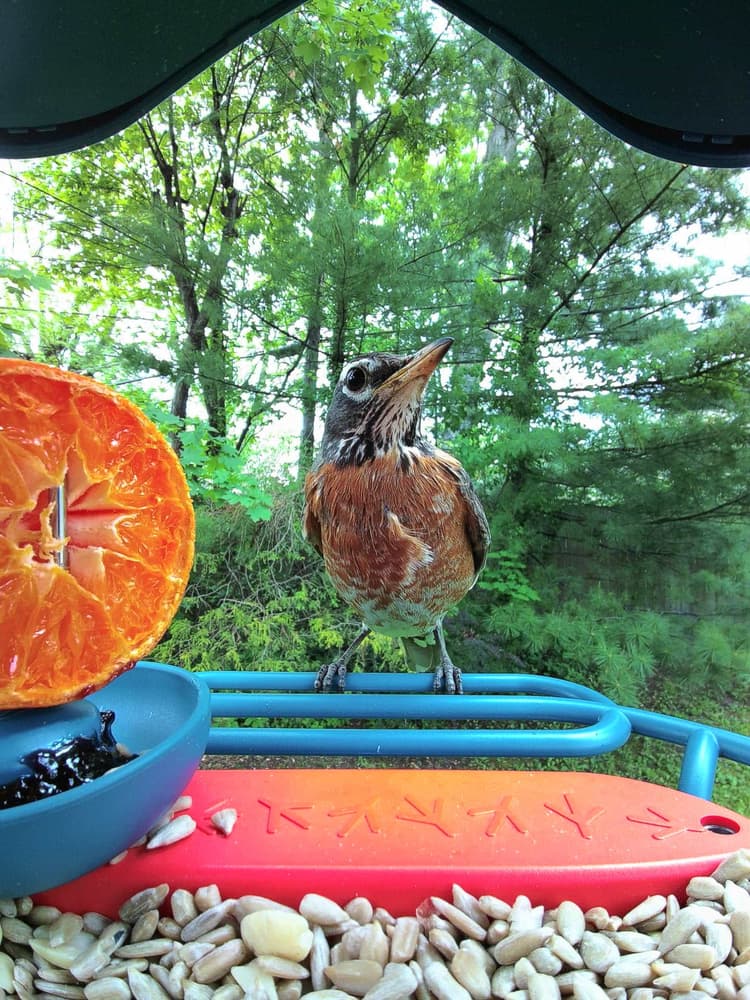
The juvenile American Robin can appear confusing, due to the heavy spotting below, mottling on the back, and pale marks on the face. However, a distinguishing feature to identify a juvenile is the reddish tinge visible on its chest.
Often mistaken for
Varied Thrush vs American Robin
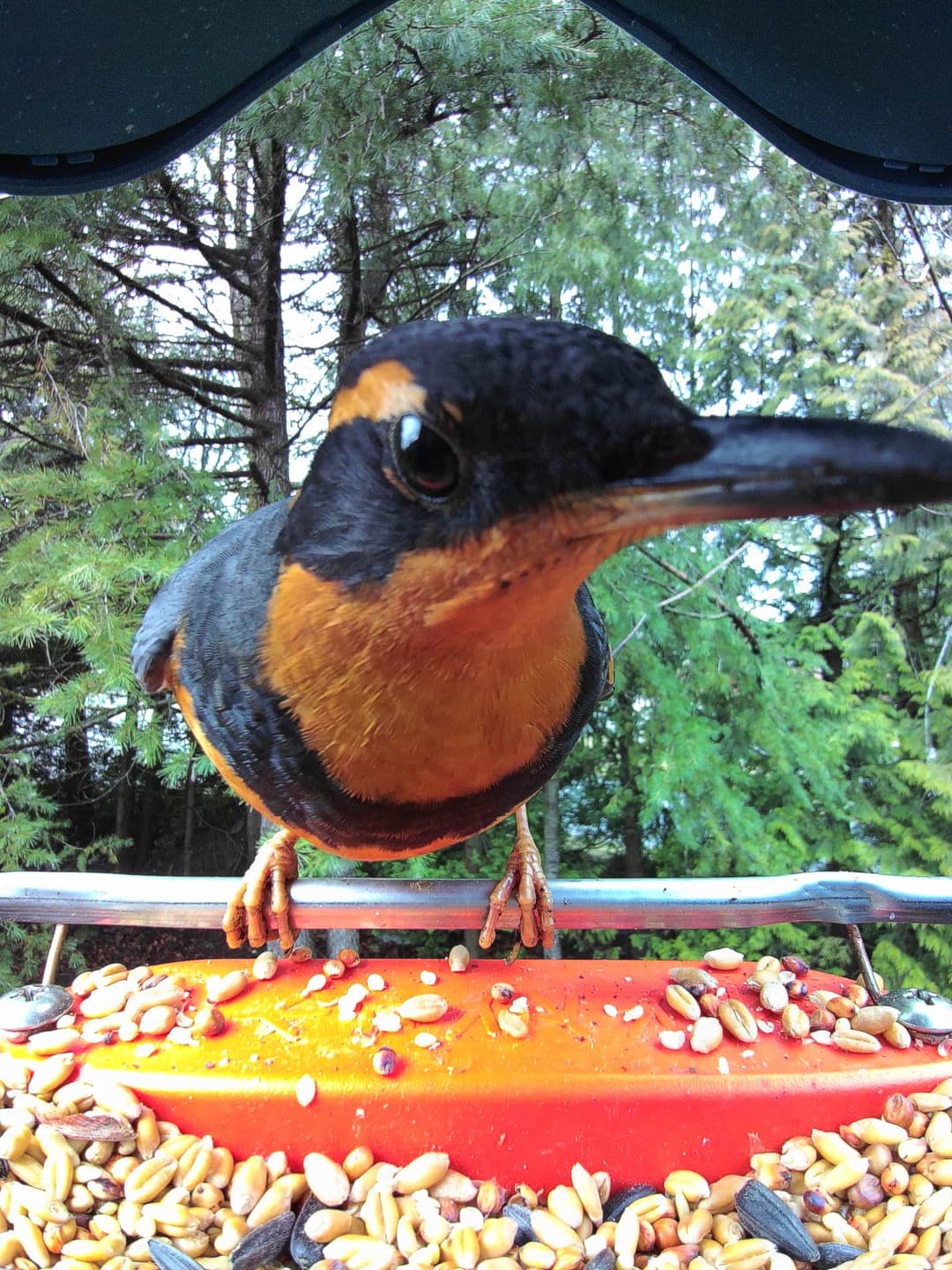
The American Robin has a warm orange belly and a gray back, while the Varied Thrush features a darker, more muted orange hue and pronounced black band on its breast. Varied Thrushes also have distinctive orange wing bars and more intricate facial markings.
Spotted Towhee vs American Robin
American Robins are larger with a rounder body and lack the black upper parts seen in Spotted Towhees. Towhees display prominent white spots on their wings and back, and their sides are a deeper rust color. Robins are also known to hop more frequently than Towhees.

Eastern Towhee vs American Robin
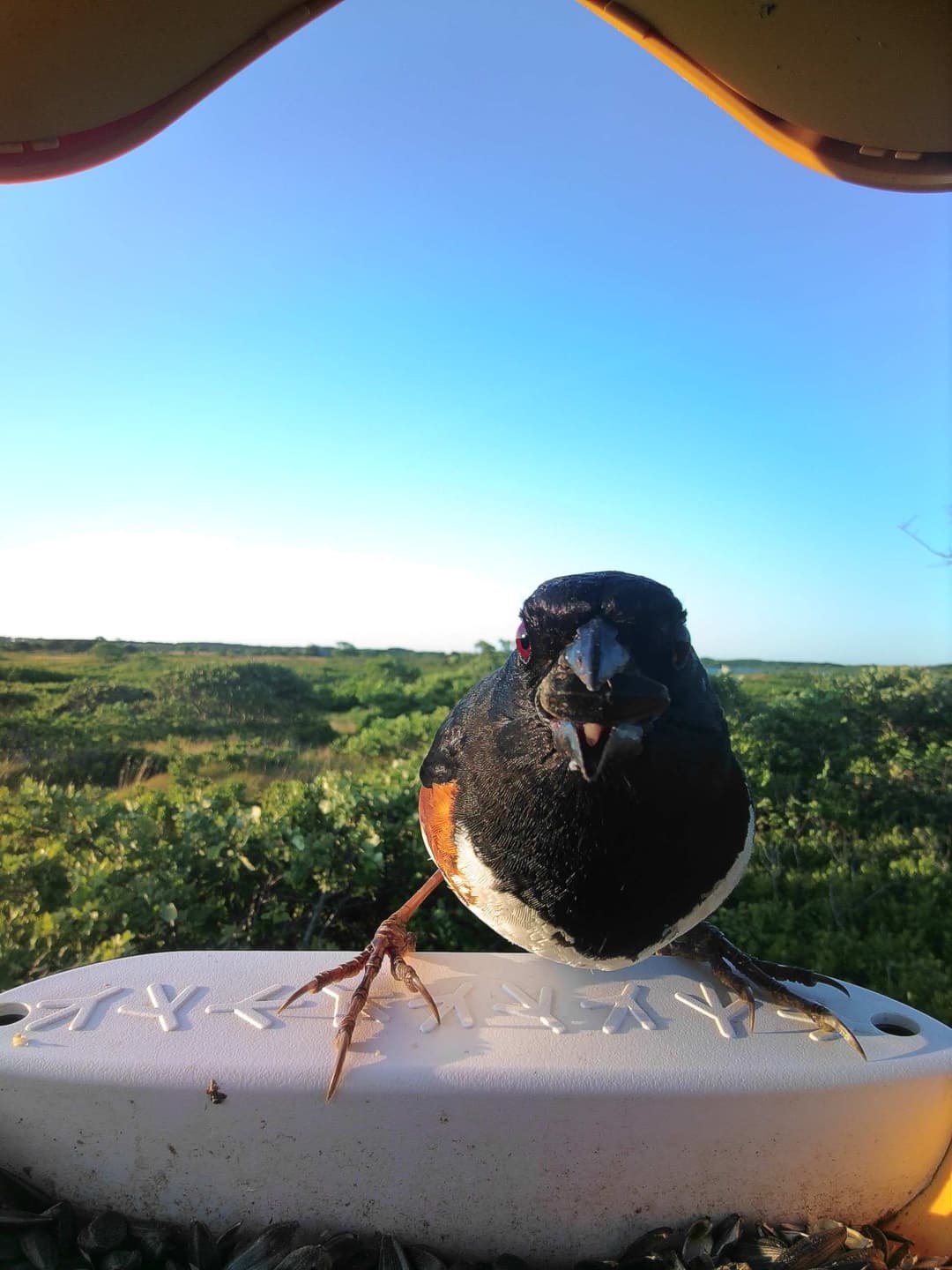
While both have a similar coloration, the American Robin sports a more uniform gray back, while the Eastern Towhee displays a stark black upper body. Towhees also have distinctive white markings on their wings and tail, contrasting sharply with their rust-colored sides.
Breeding and nesting habits of the American robin
Mating behaviors
Males arrive at nesting grounds before females and establish territories by singing and sometimes engaging in fights. During early courtship phases, females are actively pursued by one or more males.
Nesting details
Females primarily build nests with some male assistance. Nests are usually on horizontal branches, 5-25 feet above ground, and are made of grasses, twigs, and debris, with a sturdy mud foundation lined with fine grasses. They can also be found on ledges of structures like houses and bridges.
Eggs and chick-rearing
The female typically lays eggs in the constructed nest, and both parents may play roles in rearing chicks. Although the specific details of egg incubation and chick care were not provided, it's important for nesting sites to offer safety and adequate food resources.
What does an American robin like to eat?
Berries
Fruits
Insects
Snails
Spiders
Worms
Natural diet
The American robin's natural diet consists primarily of invertebrates and fruits. During spring and summer, they predominantly eat insects, earthworms, and caterpillars. Insects provide protein necessary for breeding and raising young. As the seasons turn to fall and winter, robins focus more on fruits and berries such as those from wild cherry, dogwood, sumac, serviceberry, and crabapple trees. Their adaptable feeding habits allow them to thrive in various environments throughout the year.
Bird feeders
American robins are not frequent visitors to traditional bird feeders, which often supply seeds. However, they may be attracted to feeders offering foods that mimic their natural diet such as mealworms, suet with berries, and chopped fruit including apples, raisins, and blueberries. Robins are ground feeders and are more likely to consume these foods when they are placed on low platforms or directly on the ground. Using these foods can help attract robins to garden spaces and provide additional nutrition, particularly during the winter months.
Attracting the american robin: top snacks
Robins are bonafide worm lovers, so regularly turning the soil in your garden will make it more inviting. They also like to snack on berries, so consider planting some berry bushes. Feeding them Bird Buddy seeds is also highly recommended. These seeds are selected by expert ornithologists for the season, which robins appreciate.
Attracting the american robin: feeder types
Robins prefer open feeders, including tray or ground feeders. You can fill these with Bird Buddy seeds, fruit, and suet. Another tip is to provide a water source, like a birdbath, for them to drink from and bathe in.
Attracting the american robin: fun tricks
Create a friendly habitat for robins by providing a mixture of trees, shrubs, and open grassy areas. These environments mimic their natural habitats and will entice them to visit—and maybe even stay for a little sing-along! Ensuring that the area is safe from pets and providing nesting materials can also help attract these feathered friends.
Where can you find American robins?
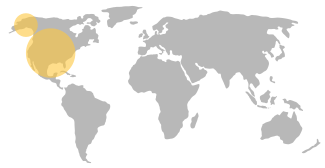
Primary habitat
The American robin's preferred habitats range from cities, towns, lawns, farmlands, and forests. Nesting sites are typically in trees and materials used include mud.
Additional range
American robins are found across most continents in summer. In arid southwest, they are found in mountainous coniferous forests and rarely in lowland suburbs. Winters are spent in wooded areas with good berry crops.
Do they migrate?
The American robin exhibits partial migratory behavior, with migration patterns varying depending on geographic location and environmental factors. Some robins migrate while others remain in one place throughout the year. During migration, American robins often travel in flocks, usually during the day. In the northern parts of their range, such as Canada, some robins migrate south for the winter but only as far as the local conditions necessitate. These robins often winter in localized concentrations. When flocks disperse prior to the nesting season, people in northern areas may perceive the arrival of robins as a sign of spring, even though many robins might have wintered relatively nearby. To the south, the winter range of robins varies significantly from year to year, largely influenced by the availability of food sources. This variability can result in different winter habitats annually, making it difficult to pinpoint consistent routes or key locations. Generally, robins that choose to migrate seek areas with ample food supplies, avoiding regions with harsh weather conditions. This adaptive migratory strategy allows them to exploit seasonal resources effectively.
What is the role of American robins in nature and how to protect them?
Conservation status
The American robin is abundant and widespread, making it common rather than vulnerable or endangered. Its presence around human environments allows it to serve as an early indicator of environmental issues, such as pesticide overuse. While it currently faces no major threats, monitoring is essential to maintain its population health. Conservation efforts are generally focused on habitat preservation and prudent pesticide use, ensuring that its numbers remain stable and continue to play an ecological role as a warning system for environmental health.
Ecological role of American robins
Its role in the ecosystem
The American robin plays a significant role in the ecosystem in several ways. Its diet comprises mainly of insects, worms, and berries, contributing to natural pest control by keeping insect and worm populations in check. This feeding behavior benefits humans by limiting the spread of harmful insects and pests, such as beetles, caterpillars, and earthworms. Moreover, American robins play a vital role in seed dispersal. The high fruit content of their diet, especially in winter, ensures the distribution of seeds, thus assisting in the propagation of many wild berry species. Their habit of foraging on the ground and running and pausing on open lawns are unique techniques they use to find earthworms. These characteristics of the American robin, combined with its high reproduction rate—up to three broods per season—ensure its ongoing environmental contributions.
How to help protect American robins
Preservation tips
Habitat preservation strategies for american robins
To protect the American Robin, it is crucial to preserve its natural habitats, mainly forests, suburban gardens, and city parks. Maintain native trees and shrubs in your yard as these provide food and nesting spots. Avoid chemical pesticides, as robins ingest insects from the ground. Promoting a healthy, biodiverse ecosystem helps sustain their food source.
Community science initiatives for the conservation of american robins
Community science initiatives can greatly aid the conservation effort. Participate in programs like the Christmas Bird Count or the Great Backyard Bird Count, which collect key data on robin populations. Use apps, such as eBird, to report observations of robins nearby. This contributes valuable data for long-term conservation planning. Encourage schools and local clubs to adopt 'bird education' programs to foster knowledge about the importance of their preservation.