Yellow-Rumped Warbler or Townsend’s Warbler?
Here's how to tell the difference


Yellow-Rumped Warbler


Townsend’s Warbler
Yellow-Rumped Warbler
Setophaga coronata
Also known as: Butterbutt
General appearance
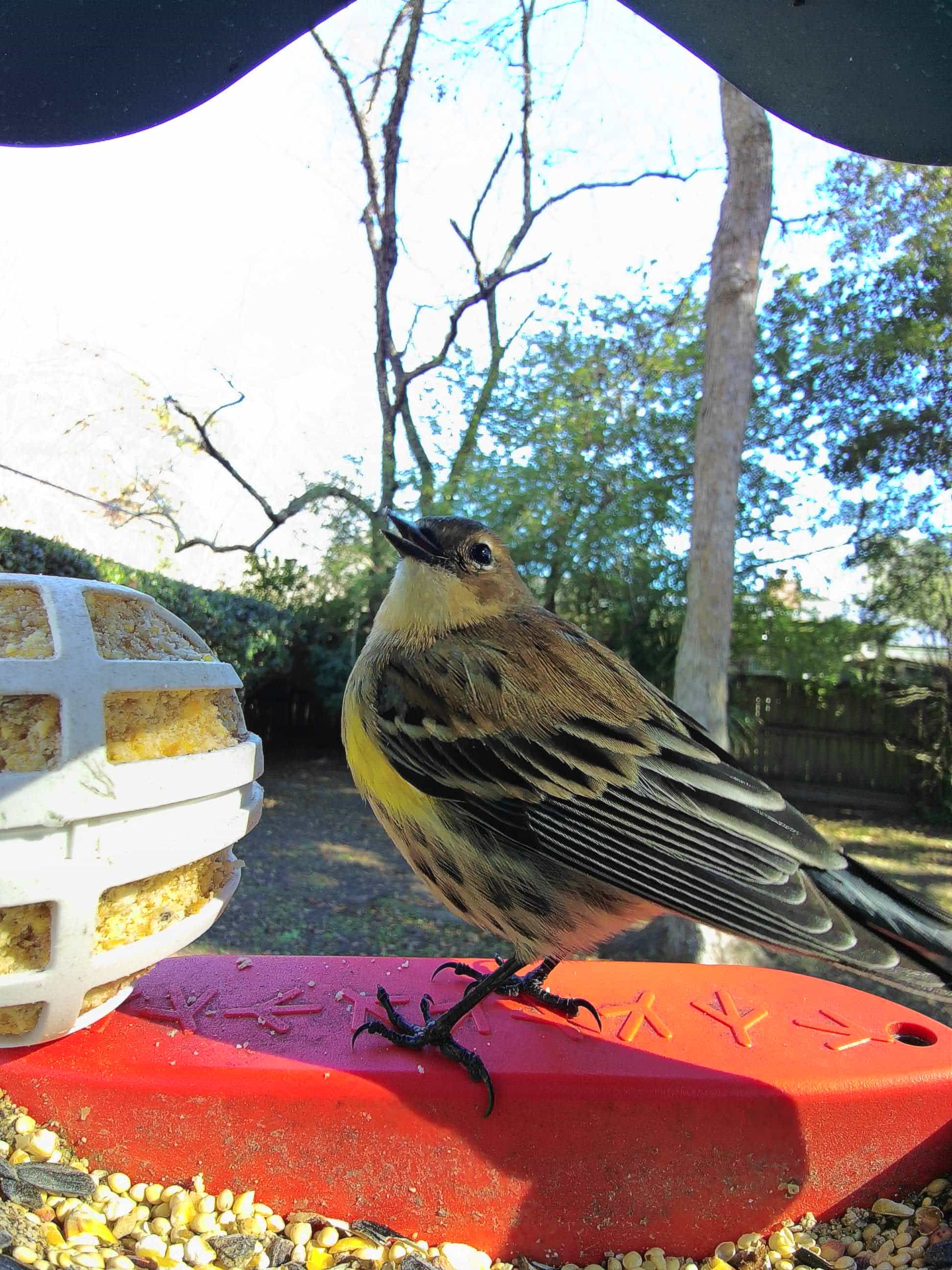
The Yellow-rumped Warbler is approximately the size of a Sparrow, clocking in at 5-6 inches (13-15 cm). The bird has a black, blue, brown, gray, white, and yellow plumage, and a distinctive bright yellow rump patch. Its tail features white spots, and there's a small yellow patch at the side of its chest. The face of the bird varies, with the 'Myrtle Warbler' having a white throat, and the 'Audubon's Warbler' boasting a yellow throat.
Male vs female
Males tend to have the brightest coloration, particularly in the spring. Females, particularly young ones in the fall and winter, exhibit a comparatively duller pattern. The 'Myrtle Warbler' variant possesses a well-defined dark cheek patch behind its white throat.
Juvenile
Juvenile Yellow-rumped Warblers may manifest a dull buff throat, particularly in some 'Myrtle Warbler' young ones. Juvenile females in the fall and winter present the dullest coloration.
Size
5.3 - 5.7 in/0.4 - 0.6 oz
There's more to learn about Yellow-Rumped Warbler
View full detailsTownsend’s Warbler
Setophaga townsendi
General appearance
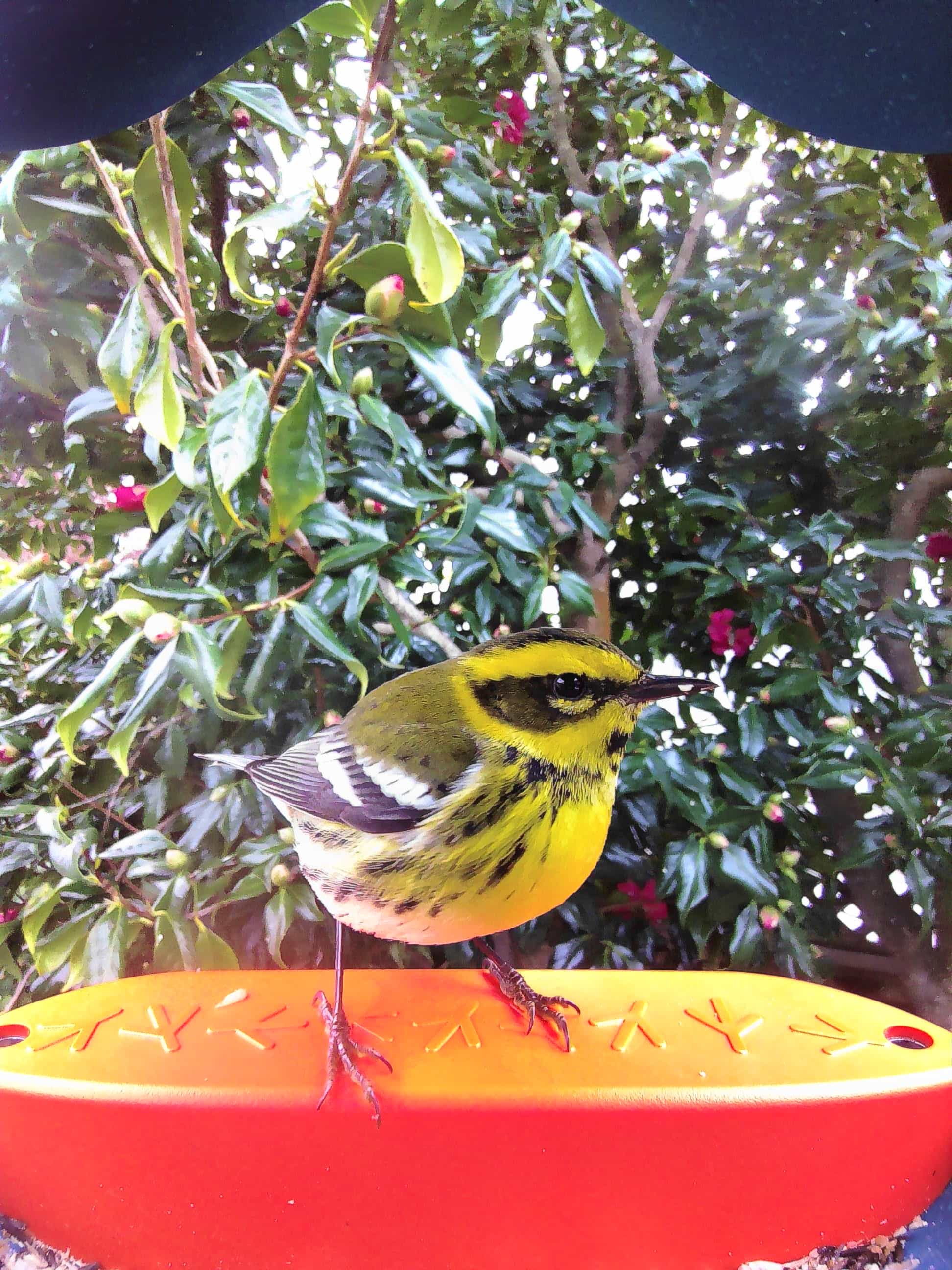
A Townsend’s warbler measures 4 1/4-5" or 11-13 cm, approximately the size of a Sparrow. This bird showcases a vibrant palette of Black, Green, White, and Yellow. It possesses a distinctive face pattern where bright yellow surrounds a dark cheek. Its back is green, while its chest is yellow, with white wing-bars and streaked sides. Its tail shape is notched and square-tipped.
Male vs female
In adults, there is a notable difference in the throat coloration between genders. Males sport a black throat, adding to their dynamic color pattern, whereas females have a predominantly yellow throat, ensuring differentiation in the wild.
Juvenile
Similar to females, young Townsend’s warblers also have a mostly yellow throat. This trait, paired with their size, may be helpful in distinguishing them from the black-throated adult males. As they grow and mature into adulthood, their features and colors will transform, giving them their distinctive adult appearance.
Size
4.3 - 5.1 in/0.3 - 0.4 oz
There's more to learn about Townsend’s Warbler
View full detailsHow to tell the Yellow-Rumped Warbler from the Townsend’s Warbler
Visual differences
The Yellow-Rumped Warbler (5-6 inches, 13-15 cm) exhibits a black, blue, brown, gray, white, and yellow plumage with a distinguishing bright yellow rump and white throat ('Myrtle Warbler') or yellow throat ('Audubon's Warbler'). Townsend's Warbler (4 1/4-5 inches, 11-13 cm) is slightly smaller, displaying black, green, yellow, and white plumage with vibrant yellow surrounded by a dark cheek. Males show a black throat, while females have a yellow throat. Yellow rump and distinct cheek/mask patterns are key differentiators. Both have white wing-bars; Townsend’s tail is notched, while Yellow-Rumped’s has white spots.
Key differences and behavior
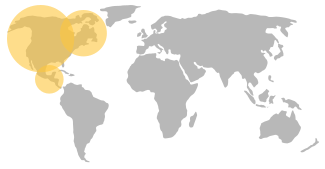
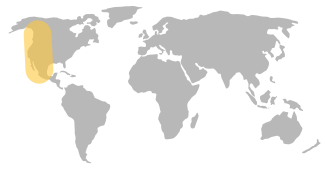
Yellow-Rumped Warblers and Townsend's Warblers exhibit distinct behaviors and preferences in their natural habitats. Yellow-Rumped Warblers, known for their flycatcher-like foraging, adapt to diverse environments, ranging from Northern coniferous forests to various lowland habitats in winter. They consume insects and berries, including uniquely digesting wax-covered berries. In contrast, Townsend's Warblers are territorial, safeguarding honeydew-rich trees and favor tall, dense conifers in the Pacific Northwest and mountain forests. Their diet centers largely on insects, with occasional reliance on feeders for seeds and suet. Both species demonstrate elaborate courtship displays, yet Yellow-Rumped Warblers engage in more extensive food flexibility and nesting habits across wider geographic ranges.
Still not sure? Here are more lookalikes!
Yellow-Rumped Warbler vs Yellow-Throated Warbler

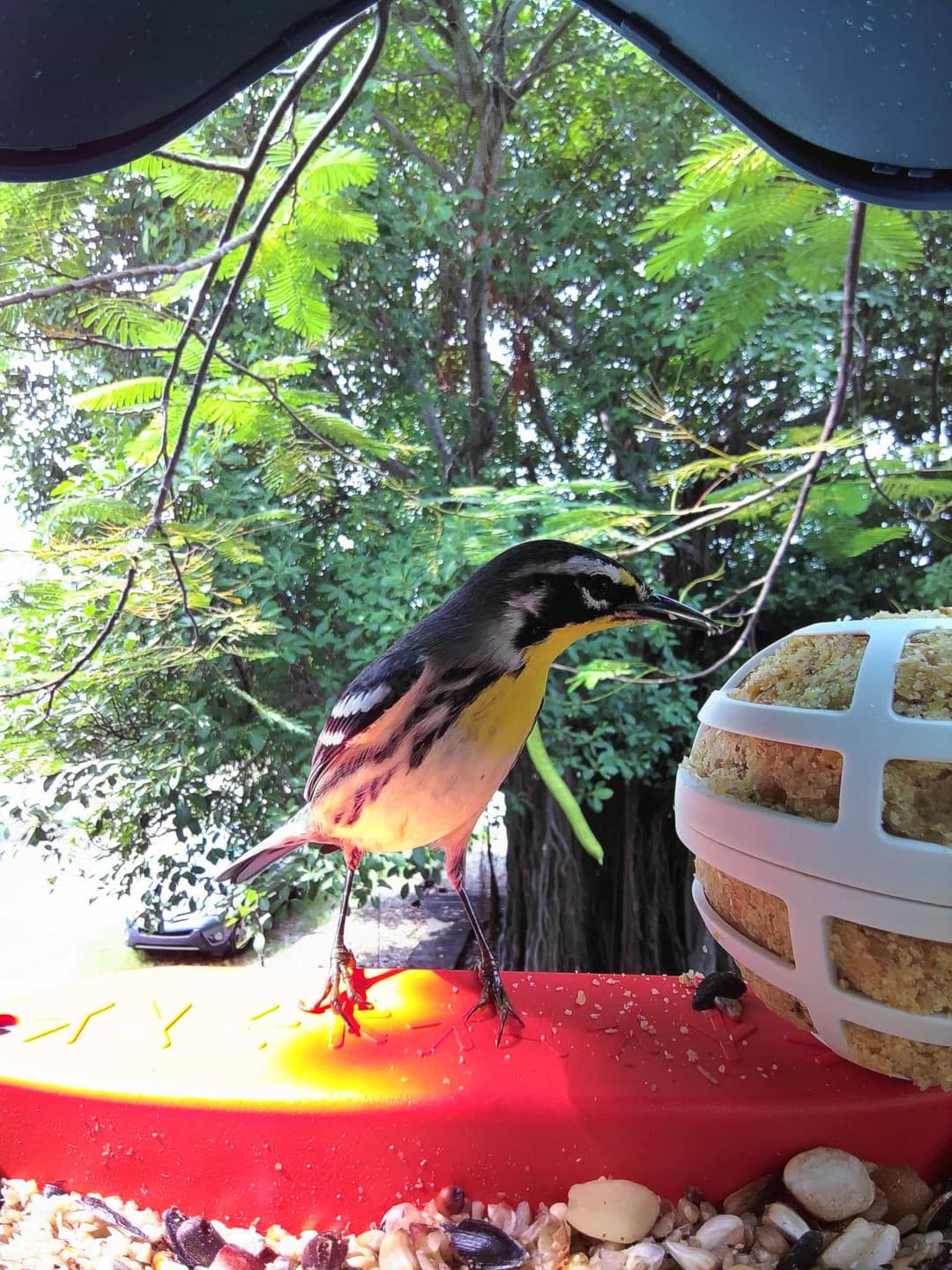
Yellow-Rumped Warbler vs [Select a bird]

[Select a bird]
Pick a bird to compare
Townsend’s Warbler vs [Select a bird]
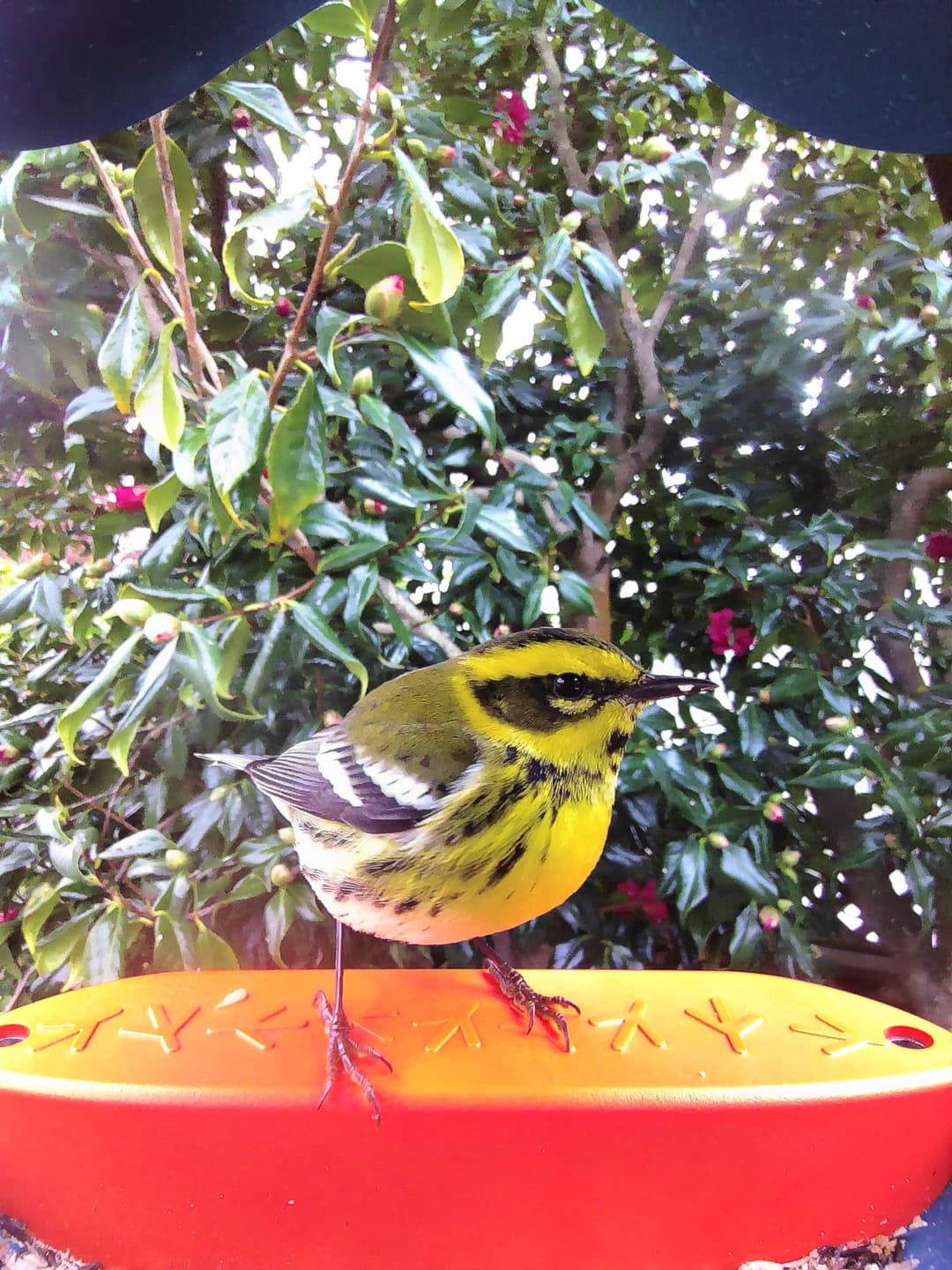
[Select a bird]
Pick a bird to compare