Lesson's Motmot or Rufous Motmot?
Here's how to tell the difference



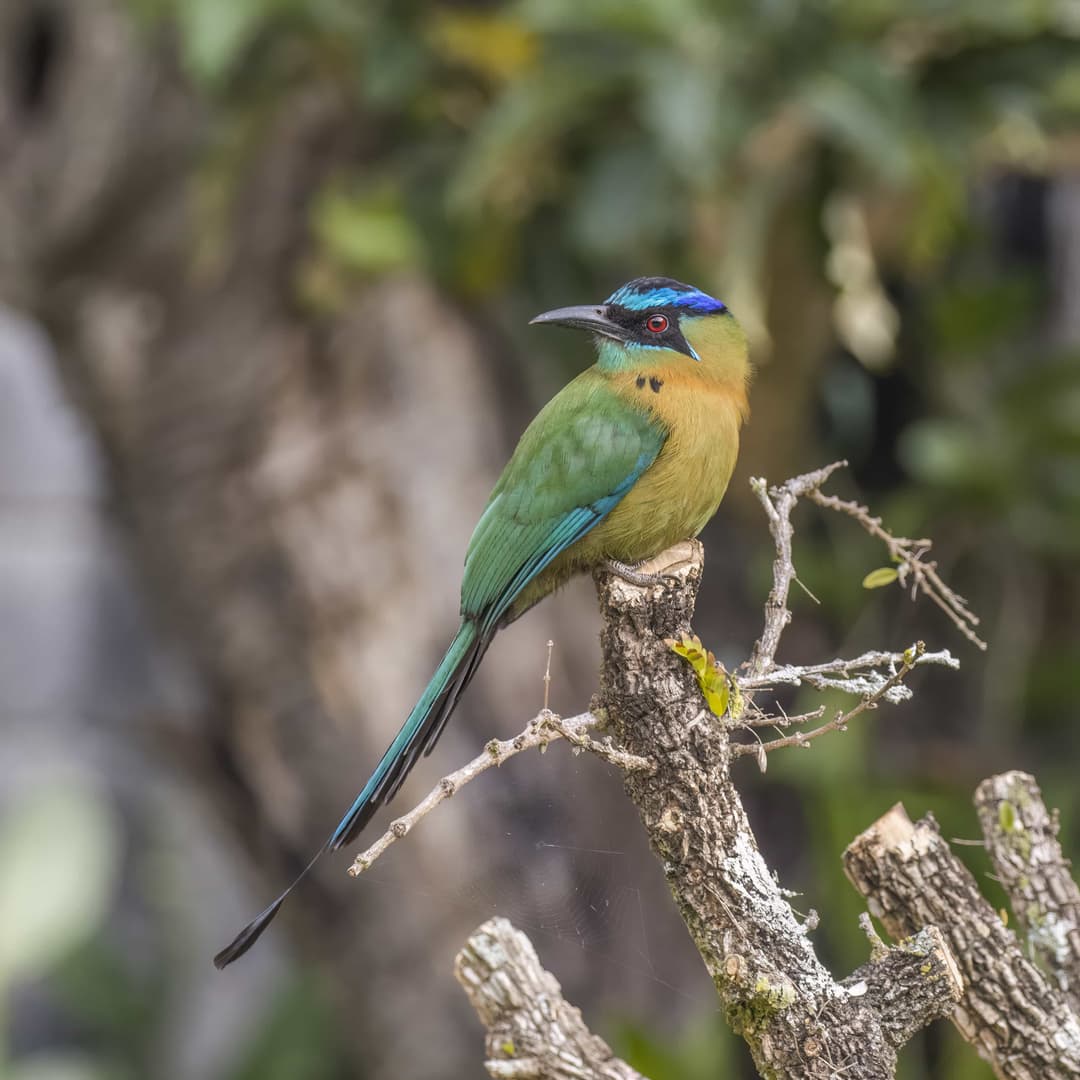
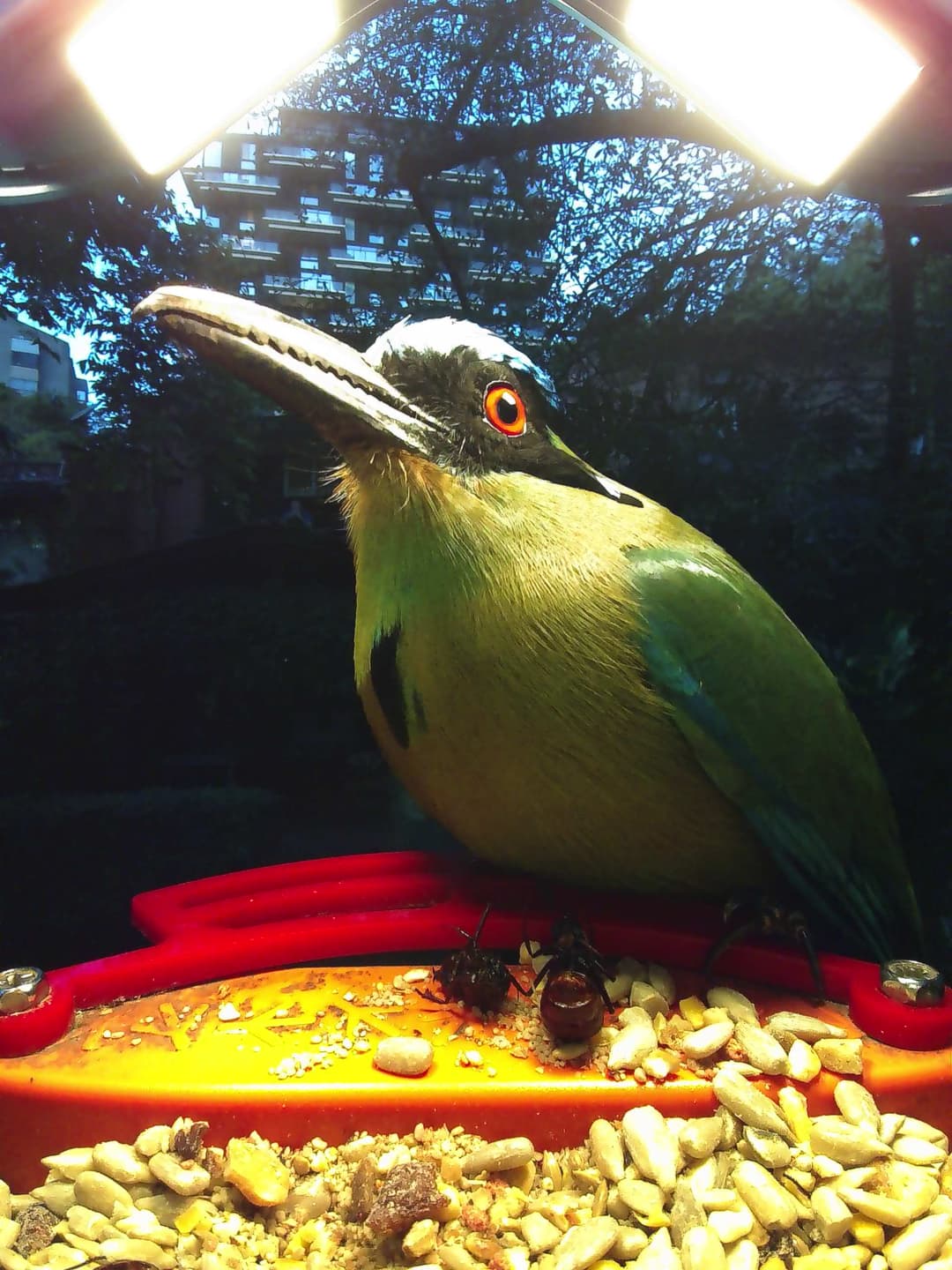
Lesson's Motmot

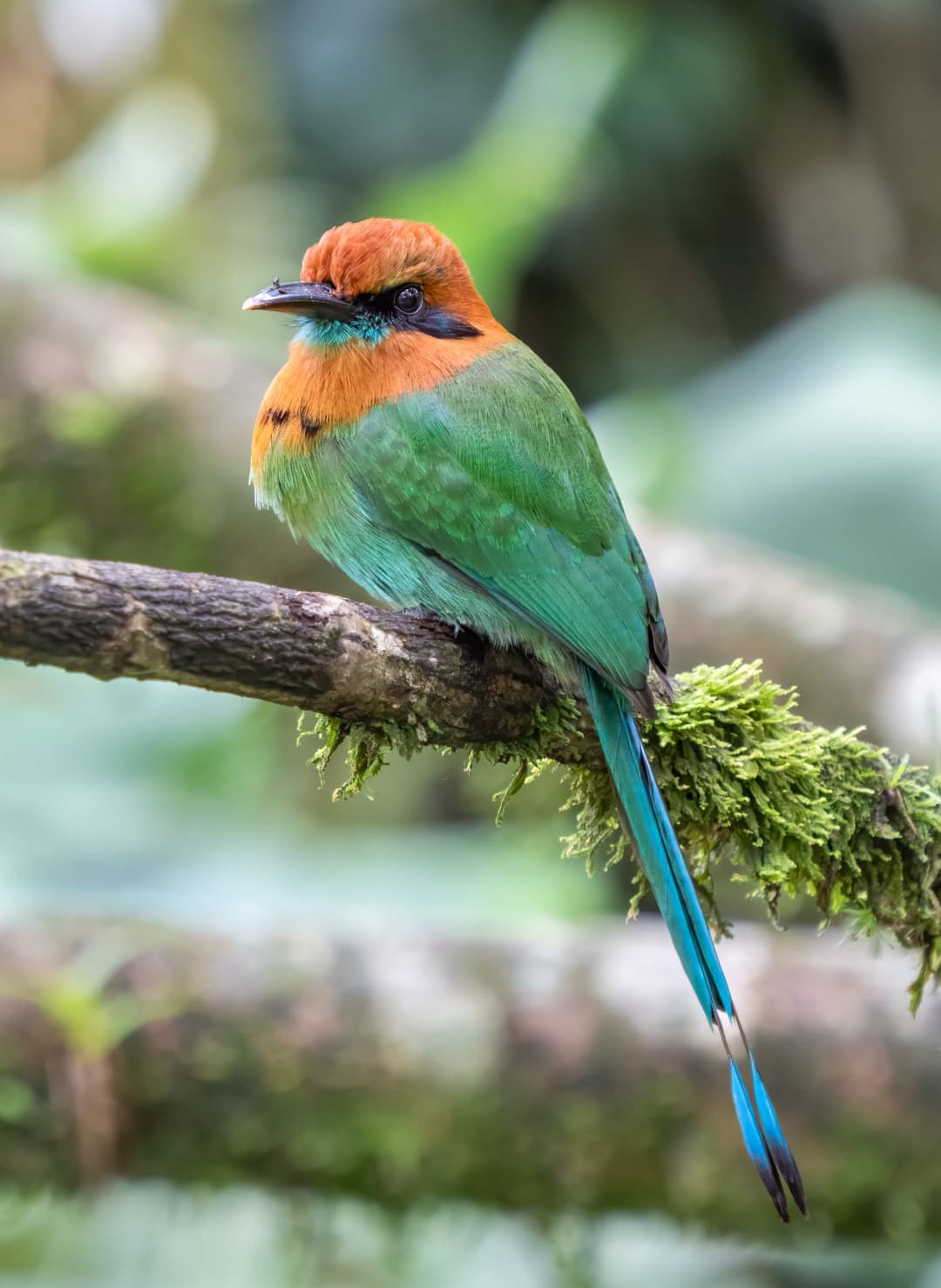
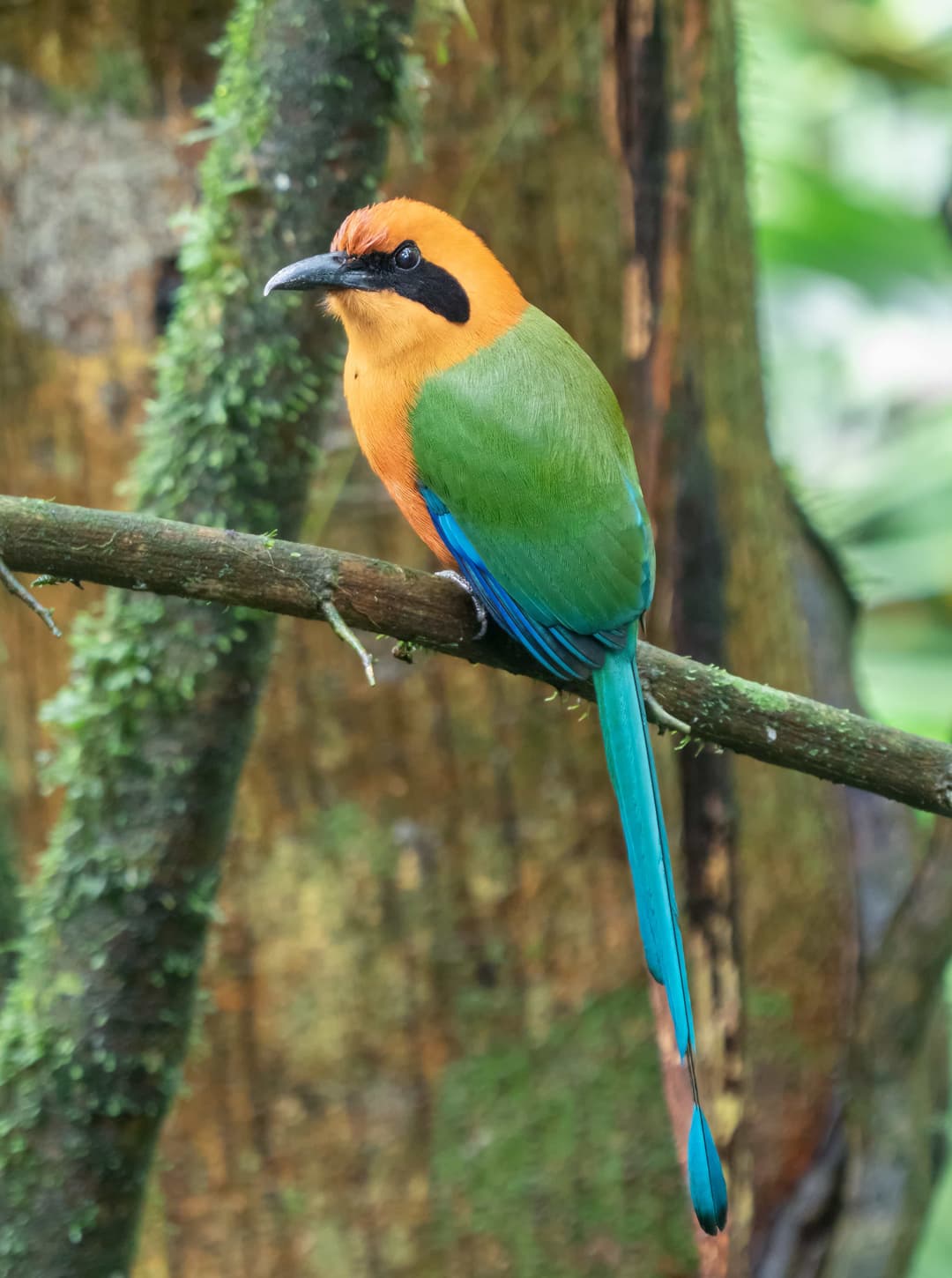
Rufous Motmot
Lesson's Motmot
Momotus lessonii
Also known as: Blue-Diademed Motmot
General appearance
The Lesson's motmot, also known as the Blue-diademed motmot, is a colorful bird species known for its azure blue and emerald green plumage. It notably exhibits a unique racket-tipped tail and dramatic red eyes. This bird is medium-sized, averaging a length of 41-46 centimeters, with a heavyset body, a robust, slightly downward curved bill, and zygodactyl feet (two toes forward, two backward).
Male vs female
Both male and female Lesson's motmots exhibit similar coloration and outer appearance. Distinguishing sexes can be challenging due to their nearly identical plumage, with both featuring a blue crown, green body, blue belly, and black mask. Their significant difference comes with the males' slightly larger size compared to the females.
Juvenile
Juvenile Lesson's motmots resemble adults but their coloration is less vibrant, their tails are shorter and lack the unique racket tip characteristic of adult motmots. As they reach adulthood, their coloration intensifies and their tail grows longer, eventually forming a racket-like shape at the tip.
Size
15.0 - 16.9 in/2.7 - 5.2 oz
There's more to learn about Lesson's Motmot
View full detailsRufous Motmot
Baryphthengus martii
General appearance
The Rufous Motmot, a medium-sized bird species endemic to Central and South America, stands out due to its bright, contrasting feathers. The primary color is a vivid rufous-orange on the belly and underside of the tail with a greenish-blue crest, wings, and upper tail. A distinctive large, rounded head and a long, graduated tail with distinctive, racket-like tips further define their appearance. These birds lack seasonal variation in appearance.
Male vs female
Interestingly, unlike many bird species, male and female Rufous Motmots have very similar plumage and therefore appear almost identical. Both sexes feature the trademark tail with racket-like tips. Therefore, sex determination in the field is predominantly based on observed behaviors rather than physical traits.
Juvenile
Young Rufous Motmots resemble adults but their colors are less vibrant, and they lack the ‘rackets’ at the end of their tails. As they grow into adulthood, their plumage becomes more colorful and the tail develops its iconic form.
Size
16.5 - 18.5 in/5.2 - 7.3 oz
There's more to learn about Rufous Motmot
View full detailsHow to tell the Lesson's Motmot from the Rufous Motmot
Visual differences
The Lesson's Motmot (15-17 inches, 2.7-5.2 ounces) features azure blue and emerald green plumage with red eyes and a distinctive racket-tipped tail. It has a black mask and a slightly curved bill. Both sexes have similar appearances. In contrast, the Rufous Motmot (16.5-18.5 inches, 5.1-7.3 ounces) exhibits a vivid rufous-orange belly with a greenish-blue crest and wings. It also has a racket-tipped tail but appears more robust with a rounded head. Their plumage is more contrasting, and sexes look alike.
Key differences and behavior
Lesson's Motmot and Rufous Motmot exhibit distinct behaviors and habitat preferences that aid in field identification. Lesson's Motmots, commonly found in Central America, are known for their stoic perching and tail-swinging behavior, often near forest edges or degraded areas. They have learned to forage around artificial lights for insects. In contrast, the larger Rufous Motmots, spread across Central and South America, tend to remain in shaded rainforest interiors. Both species nest in burrows, but Rufous Motmots are known for mutual displays and courtship feeding. When foraging, Lesson's prefers insects and fruits near feeders, benefiting from urban adaptation, while Rufous targets a wider range including small amphibians and fish. Despite similarities in sexual dimorphism display, Lesson's Motmot tends to be less secretive than Rufous Motmot foraging habits, often observed near human activity. Overall, Lesson's are impressive opportunists, whereas Rufous display selective feeding and nesting practices.
Still not sure? Here are more lookalikes!
Lesson's Motmot vs [Select a bird]

[Select a bird]
Pick a bird to compare
Rufous Motmot vs [Select a bird]
[Select a bird]
Pick a bird to compare