Rufous Motmot or Broad-Billed Motmot?
Here's how to tell the difference
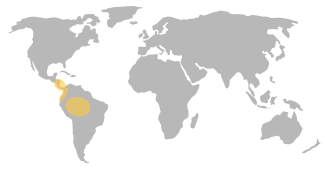

Rufous Motmot

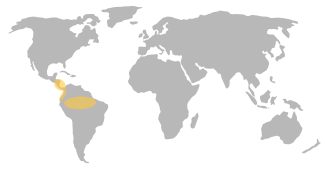
Broad-Billed Motmot
Rufous Motmot
Baryphthengus martii
General appearance
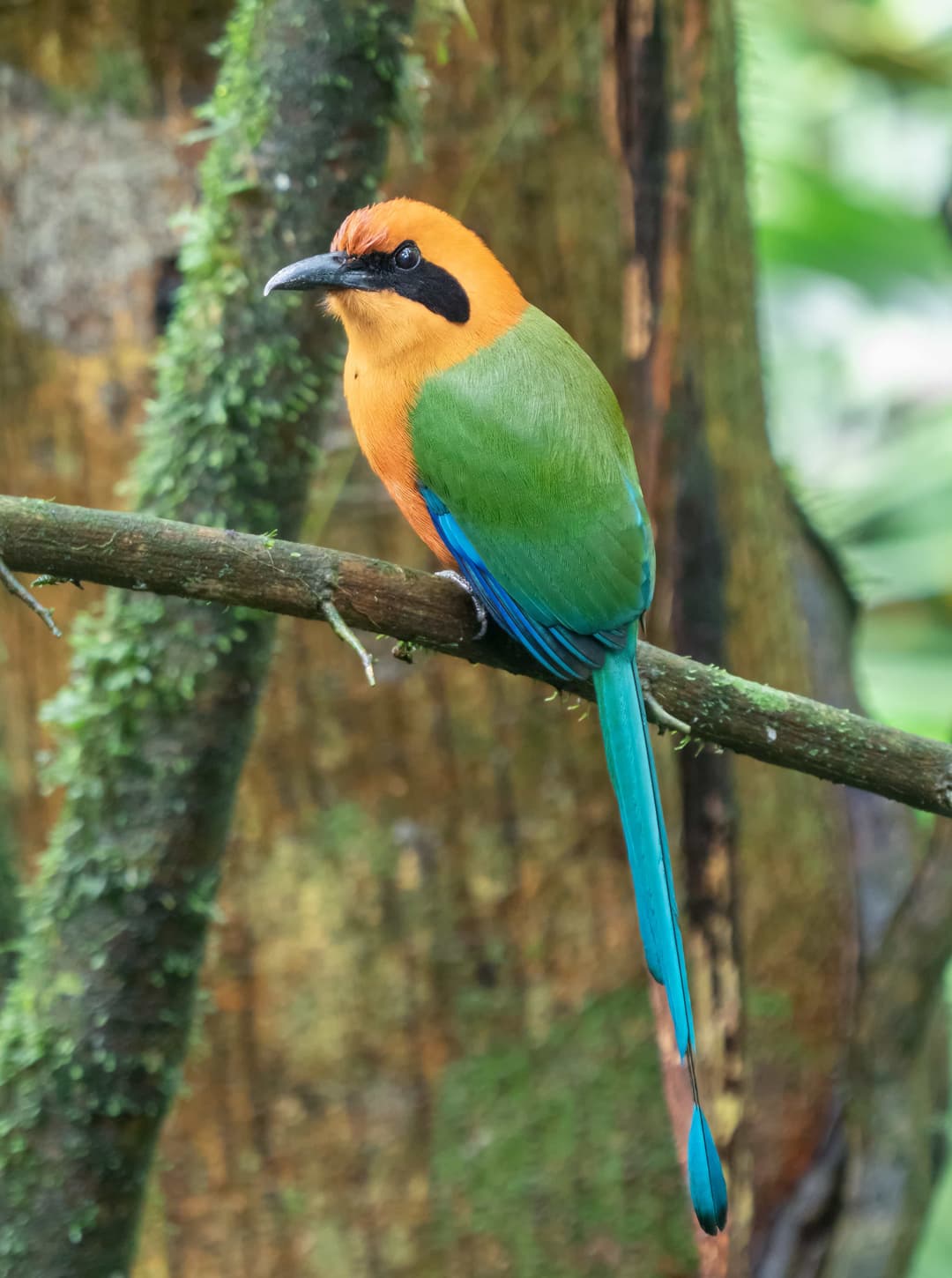
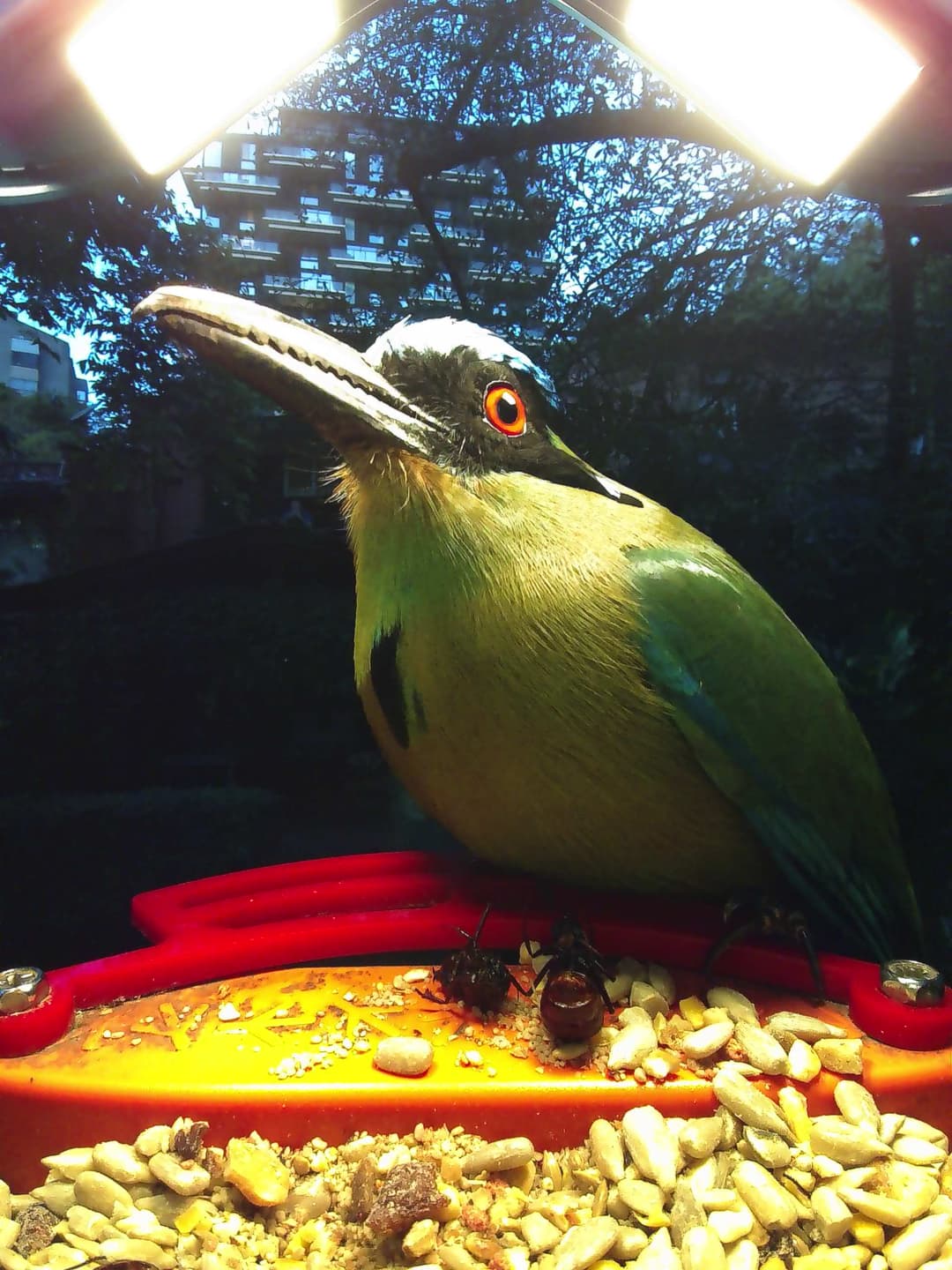
The Rufous Motmot, a medium-sized bird species endemic to Central and South America, stands out due to its bright, contrasting feathers. The primary color is a vivid rufous-orange on the belly and underside of the tail with a greenish-blue crest, wings, and upper tail. A distinctive large, rounded head and a long, graduated tail with distinctive, racket-like tips further define their appearance. These birds lack seasonal variation in appearance.
Male vs female
Interestingly, unlike many bird species, male and female Rufous Motmots have very similar plumage and therefore appear almost identical. Both sexes feature the trademark tail with racket-like tips. Therefore, sex determination in the field is predominantly based on observed behaviors rather than physical traits.
Juvenile
Young Rufous Motmots resemble adults but their colors are less vibrant, and they lack the ‘rackets’ at the end of their tails. As they grow into adulthood, their plumage becomes more colorful and the tail develops its iconic form.
Size
16.5 - 18.5 in/5.2 - 7.3 oz
There's more to learn about Rufous Motmot
View full detailsBroad-Billed Motmot
Electron platyrhynchum
General appearance
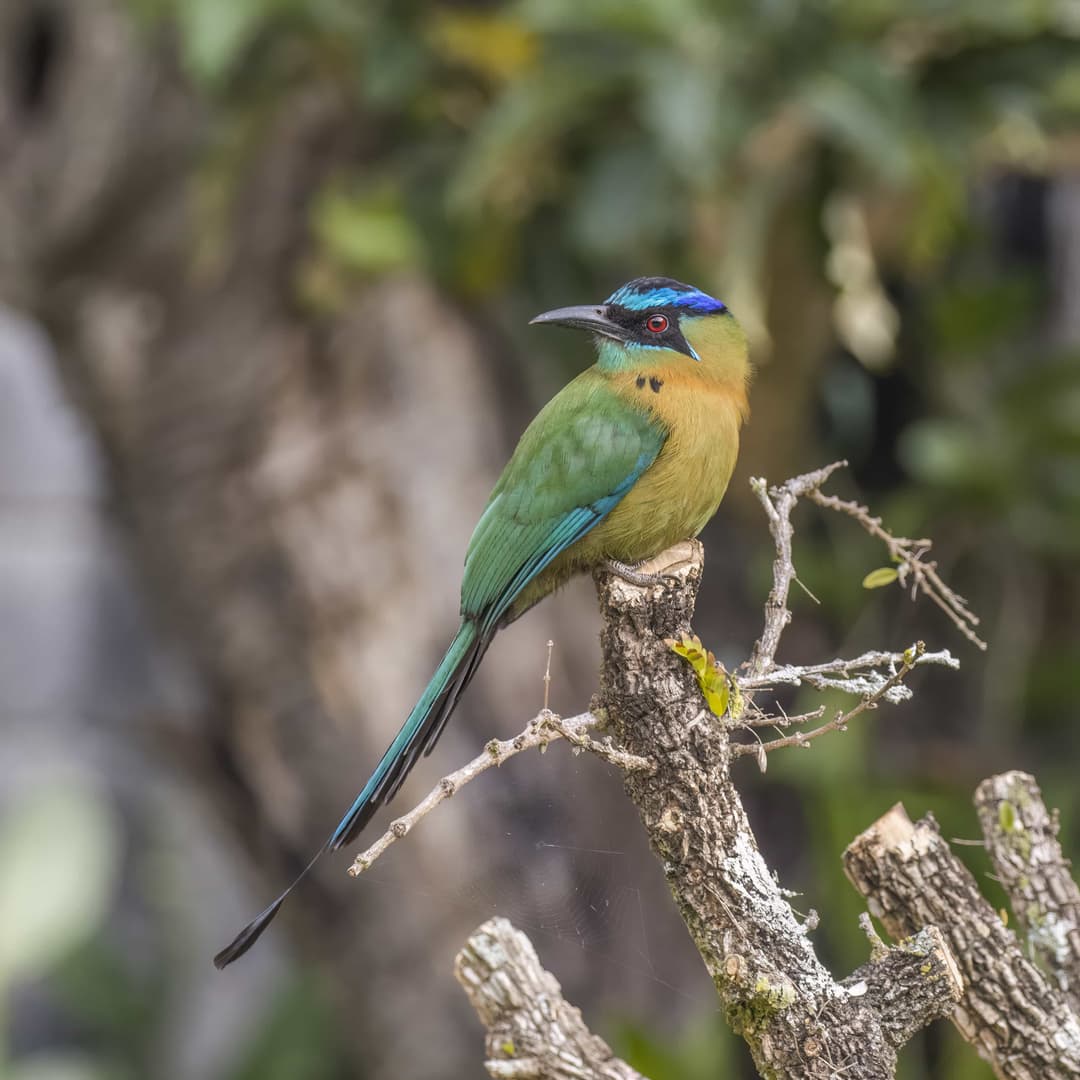
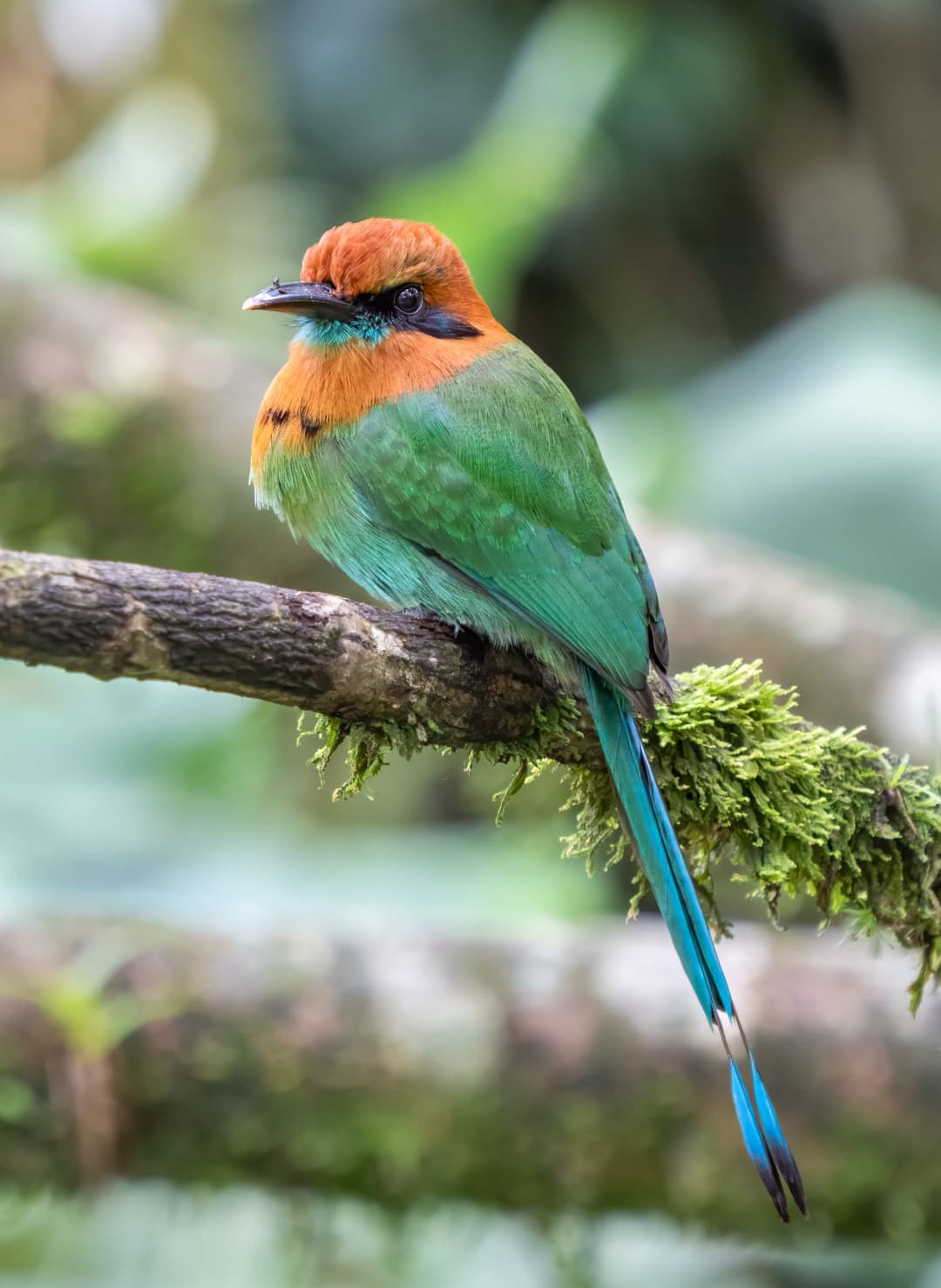
The broad-billed motmot is a colourful bird predominantly green in colour. They have a black mask around their eyes that contrasts sharply with their green plumage. Their lower belly is often light-blue or turquoise. The hallmark tail feathers, shaped like a racquetball racket at the end, have a black and turquoise pattern. The bird's bill is broad, strong, and has a reddish coloration.
Male vs female
In terms of coloration and physical traits, there are no significant differences between the male and female broad-billed motmot. Both sexes share the same vibrant colours and prominent tail feathers. This makes it challenging to differentiate gender in the field without behavioural observations.
Juvenile
Juvenile broad-billed motmots have a more dull colouration compared to the adults. The green is not as brilliant and the tail feathers are shorter and lacks the distinctive 'racquet' shape. As the young mature, their plumage becomes more vivid, and the tail feathers develop the unique shape.
Size
12.2 - 15.4 in/2.0 - 2.3 oz
There's more to learn about Broad-Billed Motmot
View full detailsHow to tell the Rufous Motmot from the Broad-Billed Motmot
Visual differences
The Rufous Motmot is larger, measuring 16.5-18.5 inches in length and weighing 5.1-7.3 ounces, compared to the Broad-Billed Motmot's 12.2-15.4 inches and 2-2.3 ounces. Rufous Motmots exhibit bright rufous-orange underparts and a greenish-blue crest, while Broad-Billed Motmots are predominantly green with a black eye mask and a red-tinged broad bill. Both species possess racket-tipped tails, though Rufous Motmots have longer tails. Despite similar stunning appearances, these distinct size, plumage, and beak differences aid in differentiating them visually.
Key differences and behavior
The Rufous Motmot and Broad-Billed Motmot exhibit distinct behavioral and ecological differences. Rufous Motmots (weighing 5.1-7.3 oz) are generally larger than Broad-Billed Motmots (weighing 2-2.3 oz) and prefer lowland rainforests, while the latter also occupies montane forests and degraded habitats. Rufous Motmots are more fruit-diverse in diet, including amphibians, while Broad-Bills focus on insects and arthropods. Notably, Rufous Motmots engage in fewer aerial displays compared to the Broad-Billed's elaborate courtship flights and wing flicks. Both species nest in burrows, but Rufous Motmots lay more eggs per clutch. In feeding, Rufous Motmots visit feeders less frequently, favoring natural fruits, unlike the Broad-Billed, which adapts more readily to garden feeders.
Still not sure? Here are more lookalikes!
Rufous Motmot vs [Select a bird]

[Select a bird]
Pick a bird to compare
Broad-Billed Motmot vs [Select a bird]
[Select a bird]
Pick a bird to compare