Lesson's Motmot or Andean Motmot?
Here's how to tell the difference
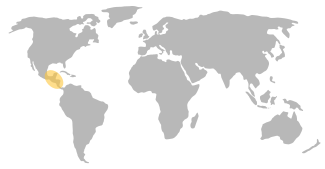


Lesson's Motmot


Andean Motmot
Lesson's Motmot
Momotus lessonii
Also known as: Blue-Diademed Motmot
General appearance
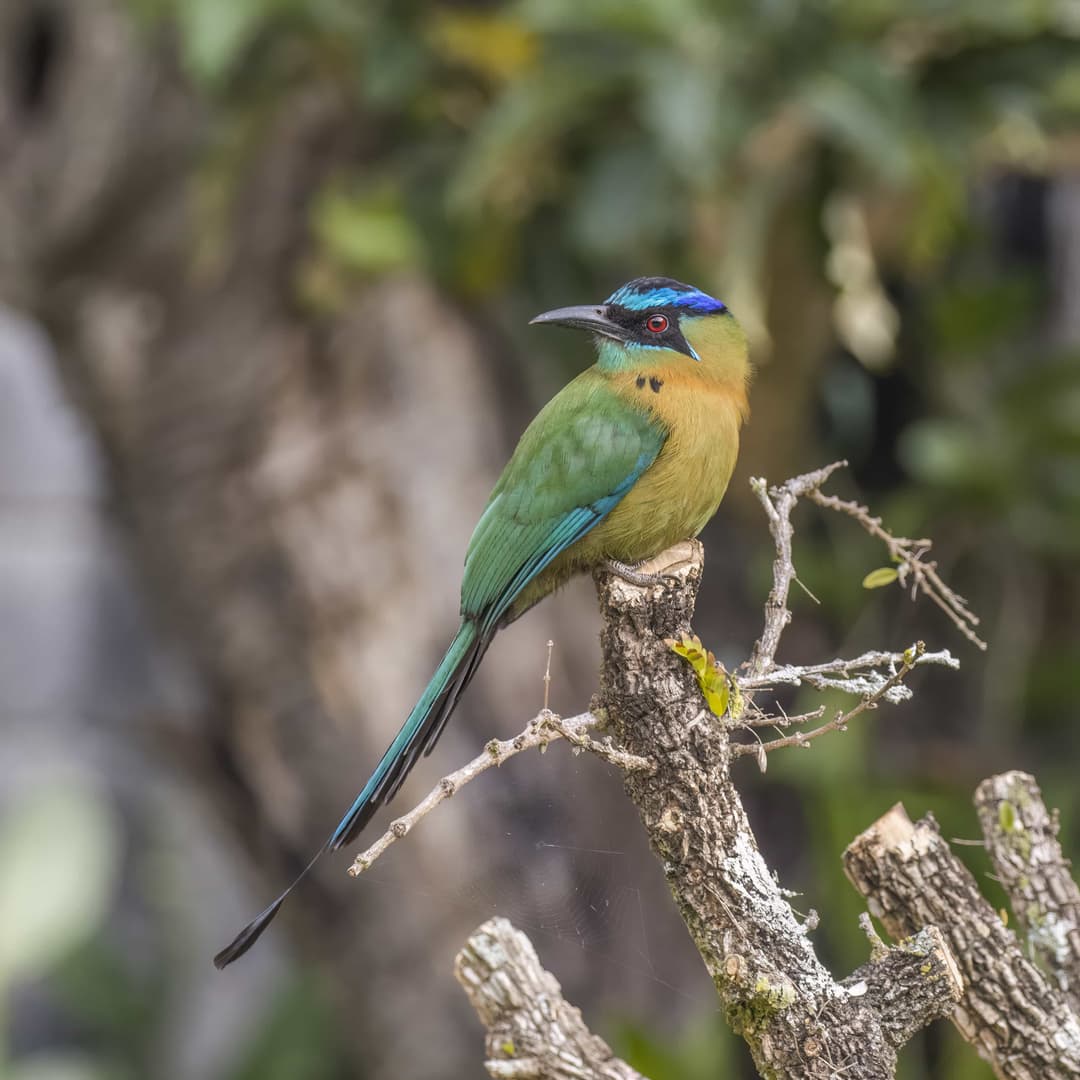
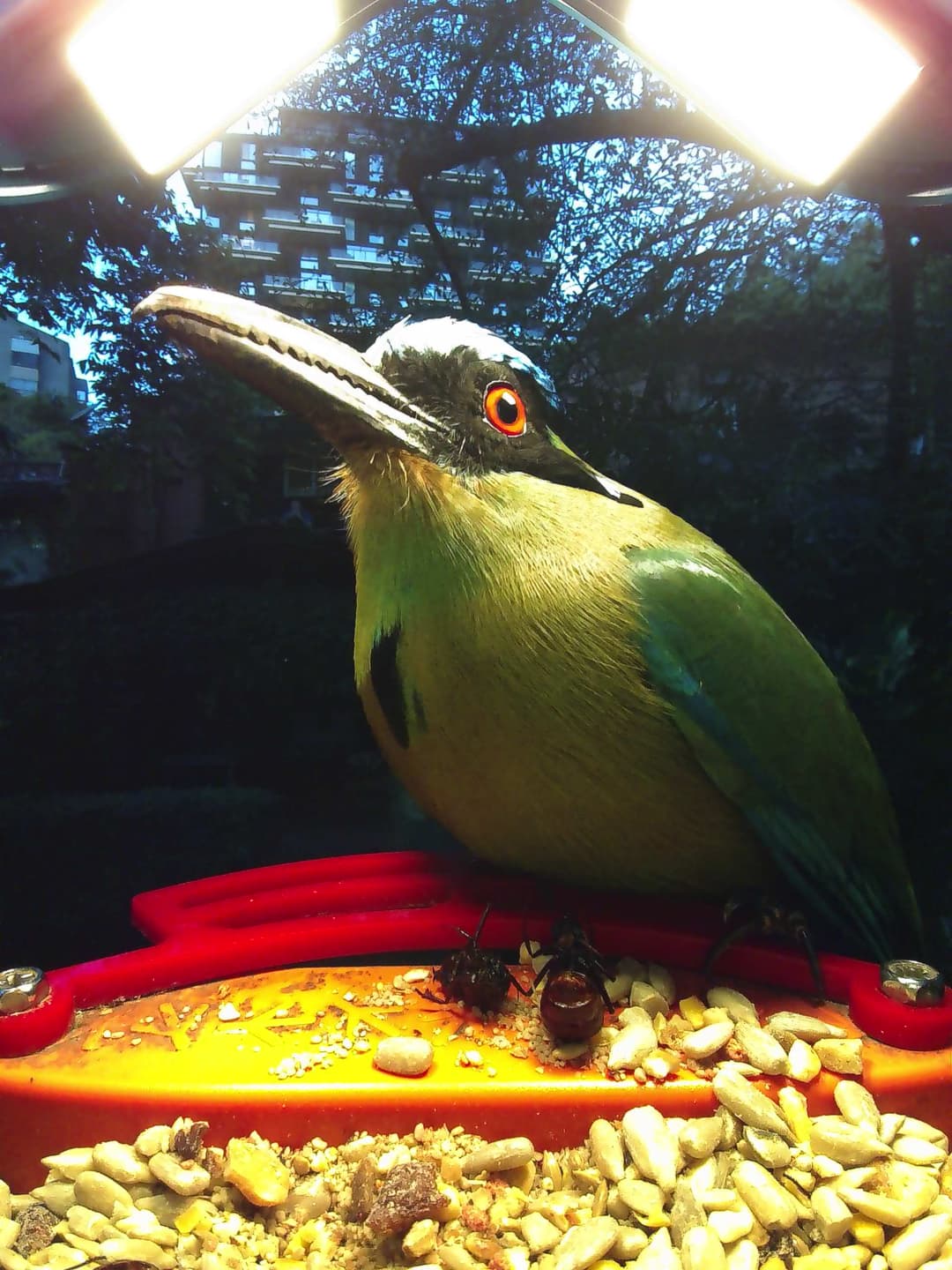
The Lesson's motmot, also known as the Blue-diademed motmot, is a colorful bird species known for its azure blue and emerald green plumage. It notably exhibits a unique racket-tipped tail and dramatic red eyes. This bird is medium-sized, averaging a length of 41-46 centimeters, with a heavyset body, a robust, slightly downward curved bill, and zygodactyl feet (two toes forward, two backward).
Male vs female
Both male and female Lesson's motmots exhibit similar coloration and outer appearance. Distinguishing sexes can be challenging due to their nearly identical plumage, with both featuring a blue crown, green body, blue belly, and black mask. Their significant difference comes with the males' slightly larger size compared to the females.
Juvenile
Juvenile Lesson's motmots resemble adults but their coloration is less vibrant, their tails are shorter and lack the unique racket tip characteristic of adult motmots. As they reach adulthood, their coloration intensifies and their tail grows longer, eventually forming a racket-like shape at the tip.
Size
15.0 - 16.9 in/2.7 - 5.2 oz
There's more to learn about Lesson's Motmot
View full detailsAndean Motmot
Momotus aequatorialis
Also known as: Highland Motmot
General appearance
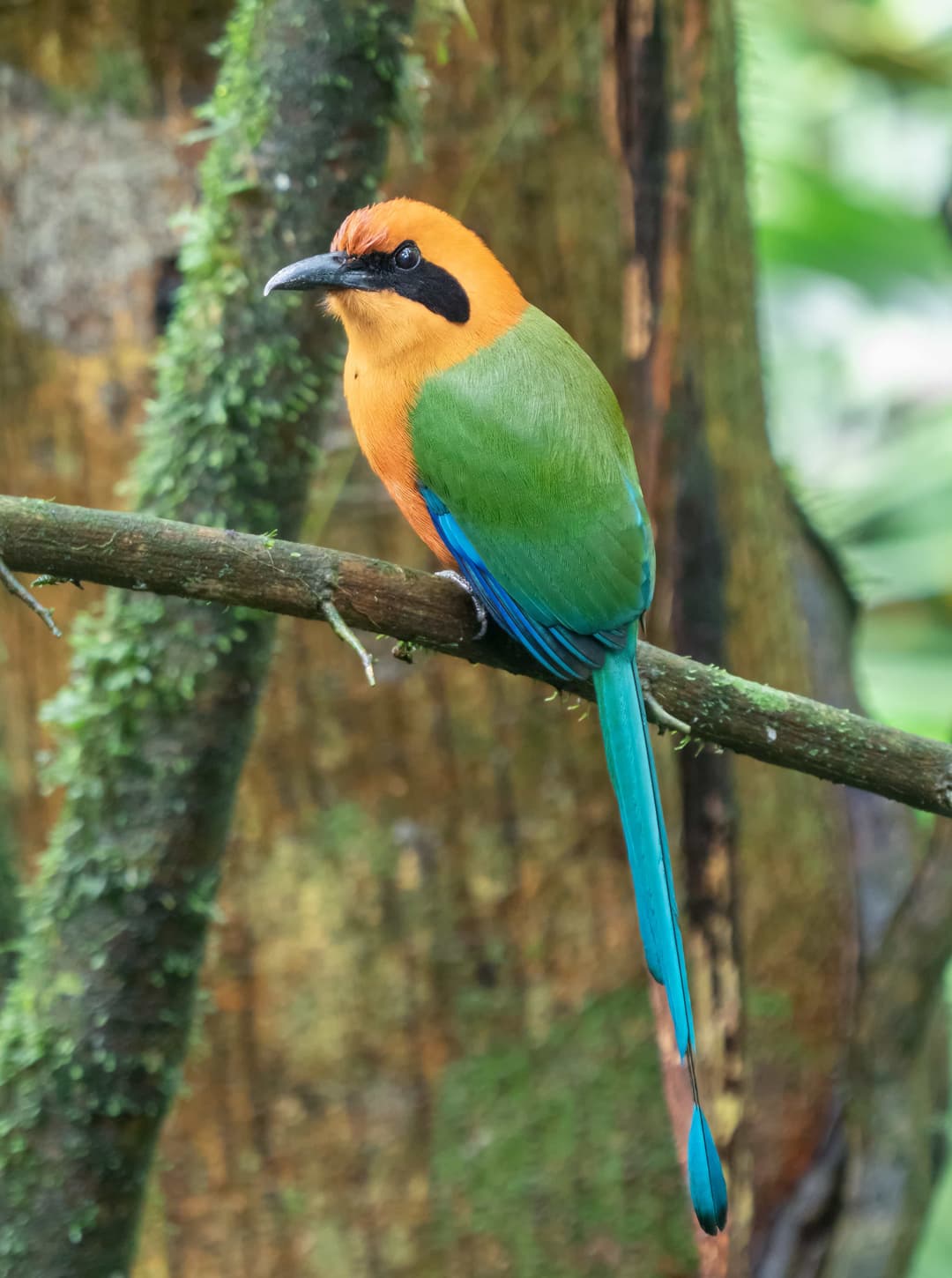
The Andean motmot is a medium-sized bird known for its vibrant plumage and distinctive tail. It exhibits a striking blend of green, blue, and orange colors with a long tail adorned with racket-shaped tips. The bird has a prominent black mask across its face and a blue crown that intensifies during the breeding season. Its stout body is complemented by strong, broad wings.
Male vs female
Males and females are similar in appearance, with little sexual dimorphism. Both possess the characteristic tail structure and vivid coloration. However, males can sometimes be distinguished by a slightly more elongated tail than females. During the breeding season, male motmots may display slightly more vibrant plumage.
Juvenile
Juvenile Andean motmots are generally less colorful than adults. They lack the fully developed racket-shaped tail feathers and have a more subdued plumage, which mainly appears in shades of dull green and brown. This less vibrant coloring helps them blend into their surroundings and avoid predators.
Size
18.1 - 18.9 in/5.0 - 7.1 oz
There's more to learn about Andean Motmot
View full detailsHow to tell the Lesson's Motmot from the Andean Motmot
Visual differences
Lesson's Motmot (15-17 inches) features azure blue and emerald green plumage with a blue crown, blue belly, and black mask. It has a racket-tipped tail, is smaller and lighter (3-5 ounces), with red eyes and a robust, slightly curved bill. The Andean Motmot (18-19 inches) displays vibrant green, blue, and orange colors, with a blue crown, black mask, and similar tail structure. It's larger and heavier (5-7 ounces). Males have slightly longer tails, with more intense color during breeding. Both species showcase distinctive racket-shaped tail tips and vivid plumage.
Key differences and behavior
Lesson's Motmot and Andean Motmot exhibit noteworthy behavioral differences. Lesson's Motmot, prevalent in Central America, often perches still, swinging its tail, and uses strategic sallying for insect capture, even visiting artificial lights. In contrast, the Andean Motmot inhabits the higher, humid forests of the Andes and displays more flight activity. While both species utilize burrow nests in earthen banks, the Andean Motmot may choose more unusual nesting sites like gardens. Both species have varied diets of insects and fruits, but the Andean Motmot is less attracted to feeders. The courtship of Lesson's includes vibrant visual displays, whereas the Andean uses sounds, tail wagging, and food offerings. The Andean Motmot is generally larger, weighing 5-7 oz and measuring 18-19 inches, compared to Lesson's Motmot at 2.7-5.2 oz and 15-17 inches. These behavioral traits aid in distinguishing them amidst different ecological niches.
Still not sure? Here are more lookalikes!
Lesson's Motmot vs [Select a bird]

[Select a bird]
Pick a bird to compare
Andean Motmot vs [Select a bird]
[Select a bird]
Pick a bird to compare