Inca Jay or Green Jay?
Here's how to tell the difference
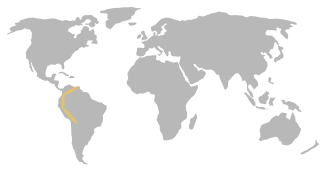
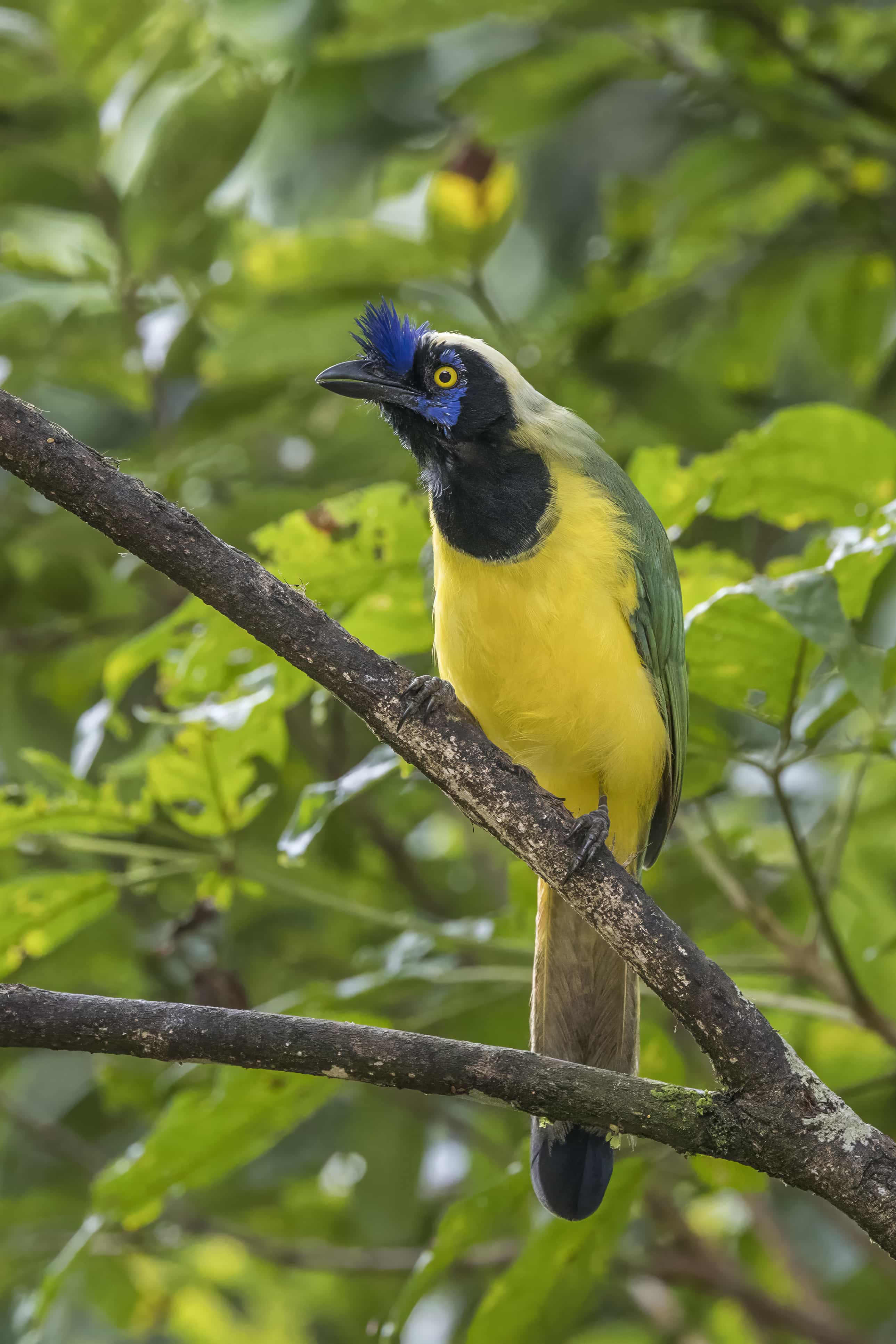
Inca Jay


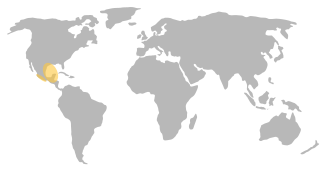
Green Jay
Inca Jay
Cyanocorax yncas
Also known as: Querrequerre
General appearance
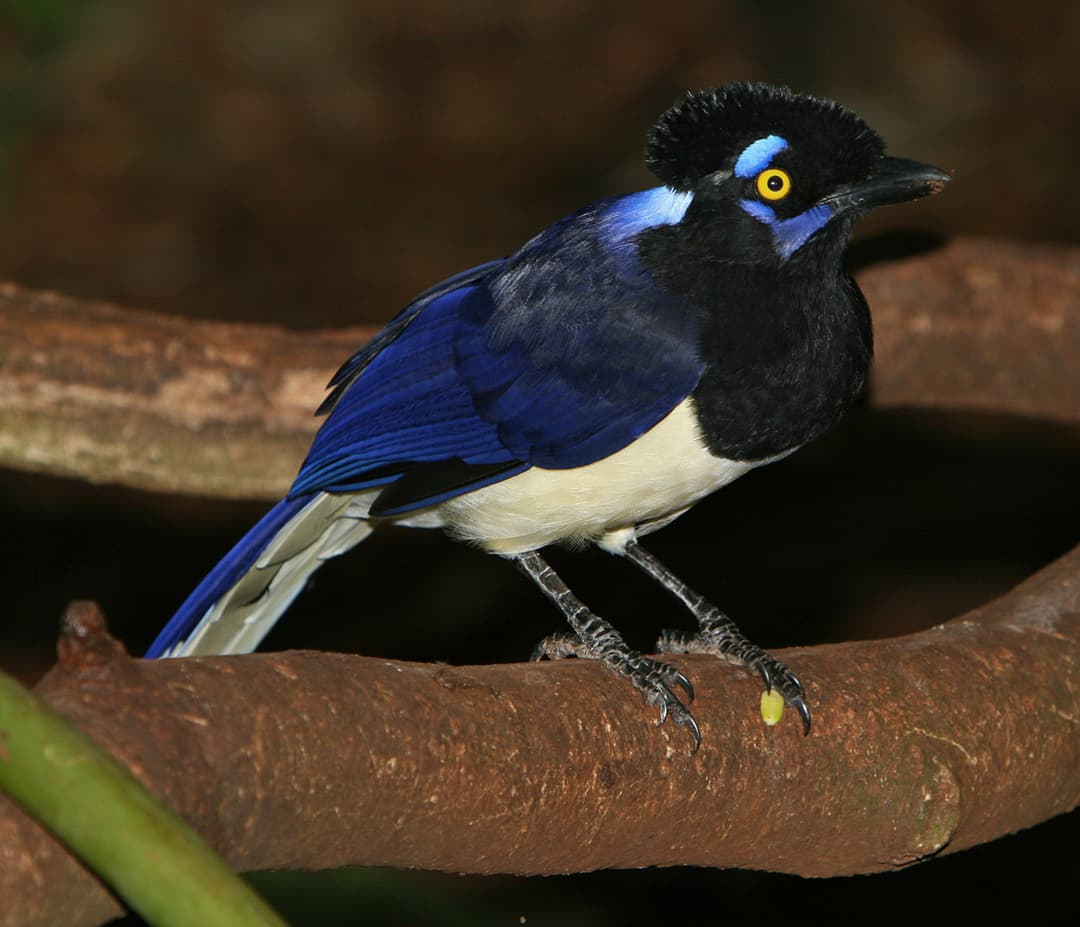
The Inca Jay is a large, vibrantly coloured bird. The upper parts showcase a rich, deep blue with a grey-blue crest. Their chest and abdomen are a warm, burnt orange. The beak and legs are black. They have a distinctive eye-ring which transitions from yellow at the front to a bright red at the back.
Male vs female
The Inca Jay is a monomorphic bird species which means the males and females look alike. There are no distinctive physical differences to discern gender. Thus, behaviour and song are the best ways to determine sex, with males being more vocal and bold.
Juvenile
In contrast to the adults, juvenile Inca Jays are not as brightly coloured. They have brownish-grey plumage instead of the blue and orange. Their eye-rings are dull yellow and lack the distinctive red coloration. They gradually develop their adult colouration as they mature.
Size
11.6 - 12.0 in/2.8 - 3.9 oz
There's more to learn about Inca Jay
View full detailsGreen Jay
Cyanocorax luxuosus
General appearance
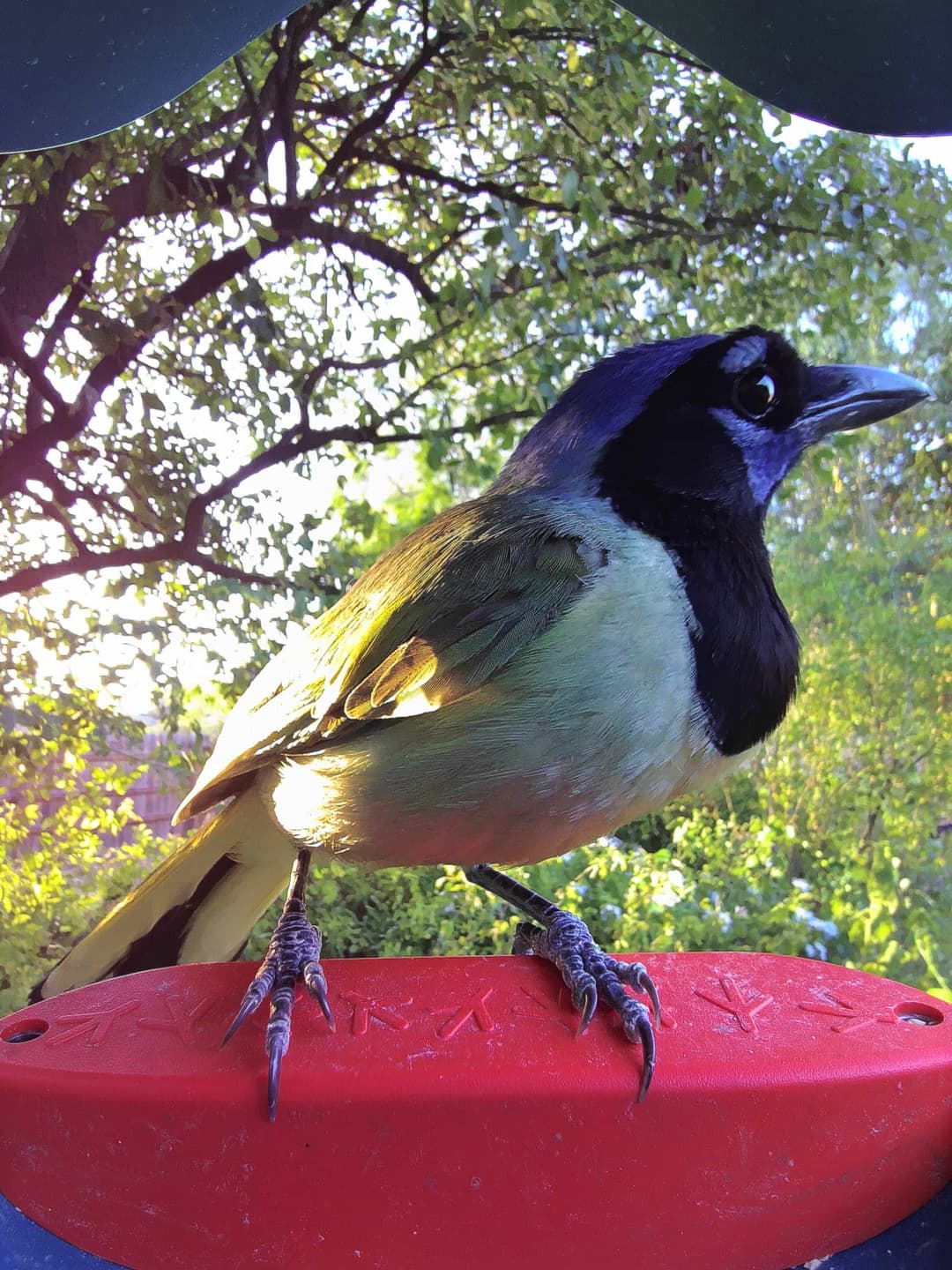
The Green Jay is a vibrant bird, predominantly displaying a blend of electric green, blue, and yellow hues. It sports a striking blue head and crest, contrasting with a yellowish-green back and bright yellow underparts. The wings are blue-turquoise and the tail is long, boasting blue-black and green-yellowish bands. One distinctive feature is their black bill and eyes circled with yellowish skin.
Male vs female
Males and females possess similar plumage, making it difficult to differentiate based on coloration alone. Both genders boast the distinctive green, blue, and yellow coloration. However, males are generally larger and can display more distinctive courtship behaviors.
Juvenile
Juvenile Green Jays exhibit duller colors compared to adults, with more dispersed blue tones and less distinct body patterns. Their iris is brownish instead of the adult's white. The change gradually occurs during their growth into adult plumage.
Size
9.8 - 11.4 in/2.3 - 3.9 oz
There's more to learn about Green Jay
View full detailsHow to tell the Inca Jay from the Green Jay
Visual differences
The Inca Jay is slightly larger (11.6-12 inches) than the Green Jay (9.8-11.4 inches). The Inca Jay has rich, deep blue upper parts with a grey-blue crest and warm burnt orange chest and abdomen. In contrast, the Green Jay displays electric green, blue, and yellow hues, with a striking blue head and crest, yellowish-green back, and bright yellow underparts. Both birds have black beaks, but the Inca Jay's eye-ring transitions from yellow to bright red, while the Green Jay features yellowish skin around black eyes.
Key differences and behavior
The Inca Jay and Green Jay exhibit distinct behaviors and habitats. Inca Jays thrive in both South/Central American woodlands and suburban areas, while Green Jays inhabit tropical forests in the Americas, sometimes found in south Texas. Inca Jays foraging in groups, using contact calls, contrasts with Green Jays navigating family units employing tool use. Both engage in elaborate courtship with food exchanges, but Green Jays are notable mimics. In breeding, Inca Jays lay 3-4 eggs and fledge at 3 weeks; Green Jays lay 3-5 eggs with a 24-day fledge. Their diets include fruits, seeds, and insects; at feeders, Inca Jays prefer berries, while Green Jays are attracted by nuts and suet. Both species are adaptable to human-altered landscapes.
Still not sure? Here are more lookalikes!
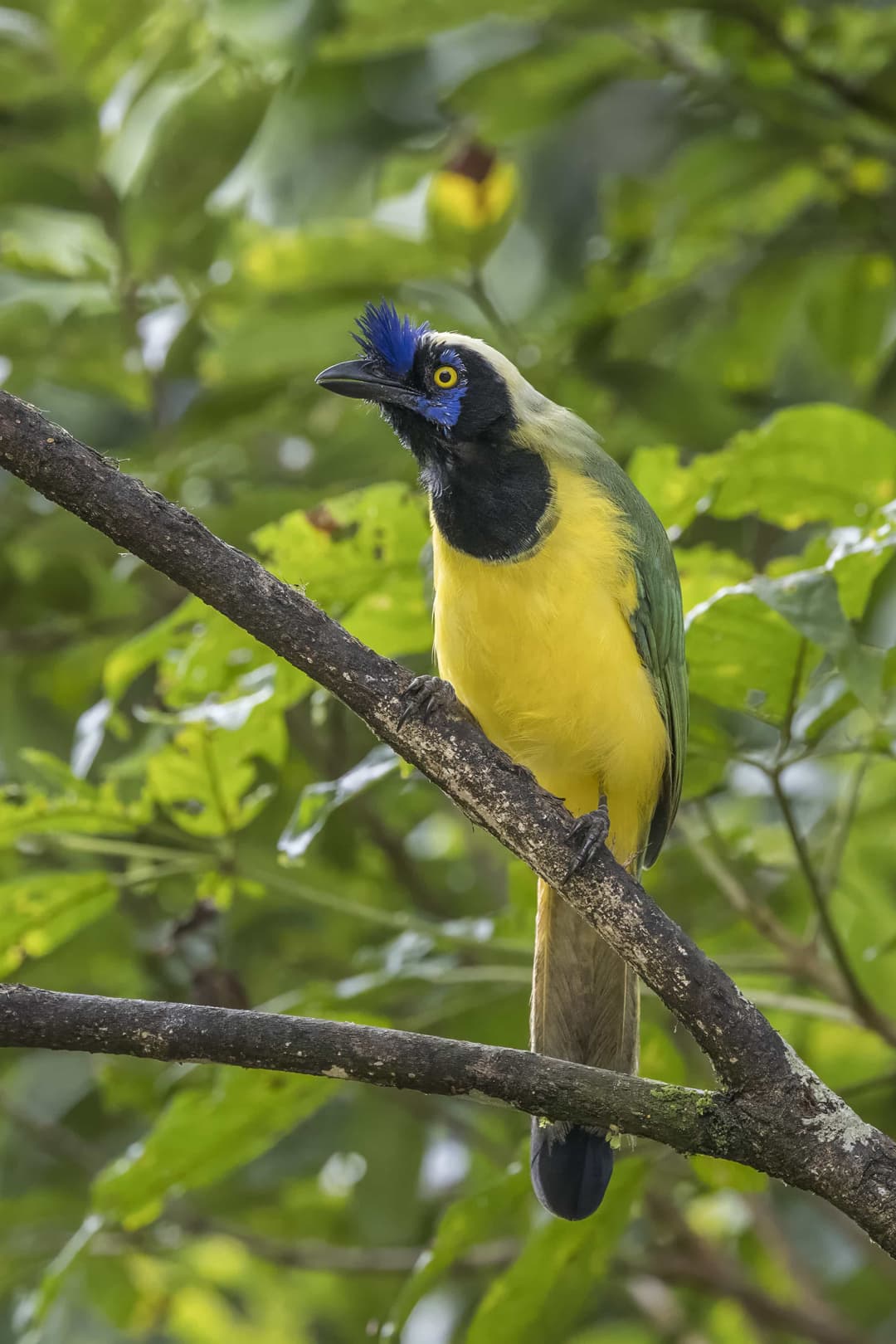
Inca Jay vs [Select a bird]

[Select a bird]
Pick a bird to compare
Green Jay vs [Select a bird]
[Select a bird]
Pick a bird to compare