
Inca Jay
Inca Jay
Also known as: Querrequerre
Cyanocorax yncas
Quick Identification guide
Quick Identification guide
- •
Features a dazzling blue crown and vibrant green back that contrasts sharply with its surroundings
- •
Boasts a distinctive bright yellow throat and chest, adding to its striking appearance
- •
Notice its sturdy black beak and a prominent white band across its eye, adding to its distinctive facial pattern
Description
These beauties are loud: both in their plumage colours and literally. Blending in when you look like that is probably difficult anyway, so why bother? They like to search for food in loose groups, keeping in touch with the rest of their buddies through repeated contact calls. During breeding season, couples often treat themselves to a midday preening session! Who says romance is dead?
The Inca jay can weigh between 80to110grams and be from29.5to30.5centimeters tall.
The Inca Jay typically lives up to 20 years. Compared to other jay species, such as the Blue Jay which lives an average of 7 years, and the Steller's Jay with a lifespan of about 16 years, the Inca Jay has a relatively long life. The longevity can be attributed to its minimized predation risks and abundant food sources in its natural habitat.
Did you know?
Most popular questions about Inca jay
How to recognise an Inca jay?
General appearance
The Inca Jay is a large, vibrantly coloured bird. The upper parts showcase a rich, deep blue with a grey-blue crest. Their chest and abdomen are a warm, burnt orange. The beak and legs are black. They have a distinctive eye-ring which transitions from yellow at the front to a bright red at the back.
Male vs female
The Inca Jay is a monomorphic bird species which means the males and females look alike. There are no distinctive physical differences to discern gender. Thus, behaviour and song are the best ways to determine sex, with males being more vocal and bold.
Juvenile
In contrast to the adults, juvenile Inca Jays are not as brightly coloured. They have brownish-grey plumage instead of the blue and orange. Their eye-rings are dull yellow and lack the distinctive red coloration. They gradually develop their adult colouration as they mature.
Often mistaken for
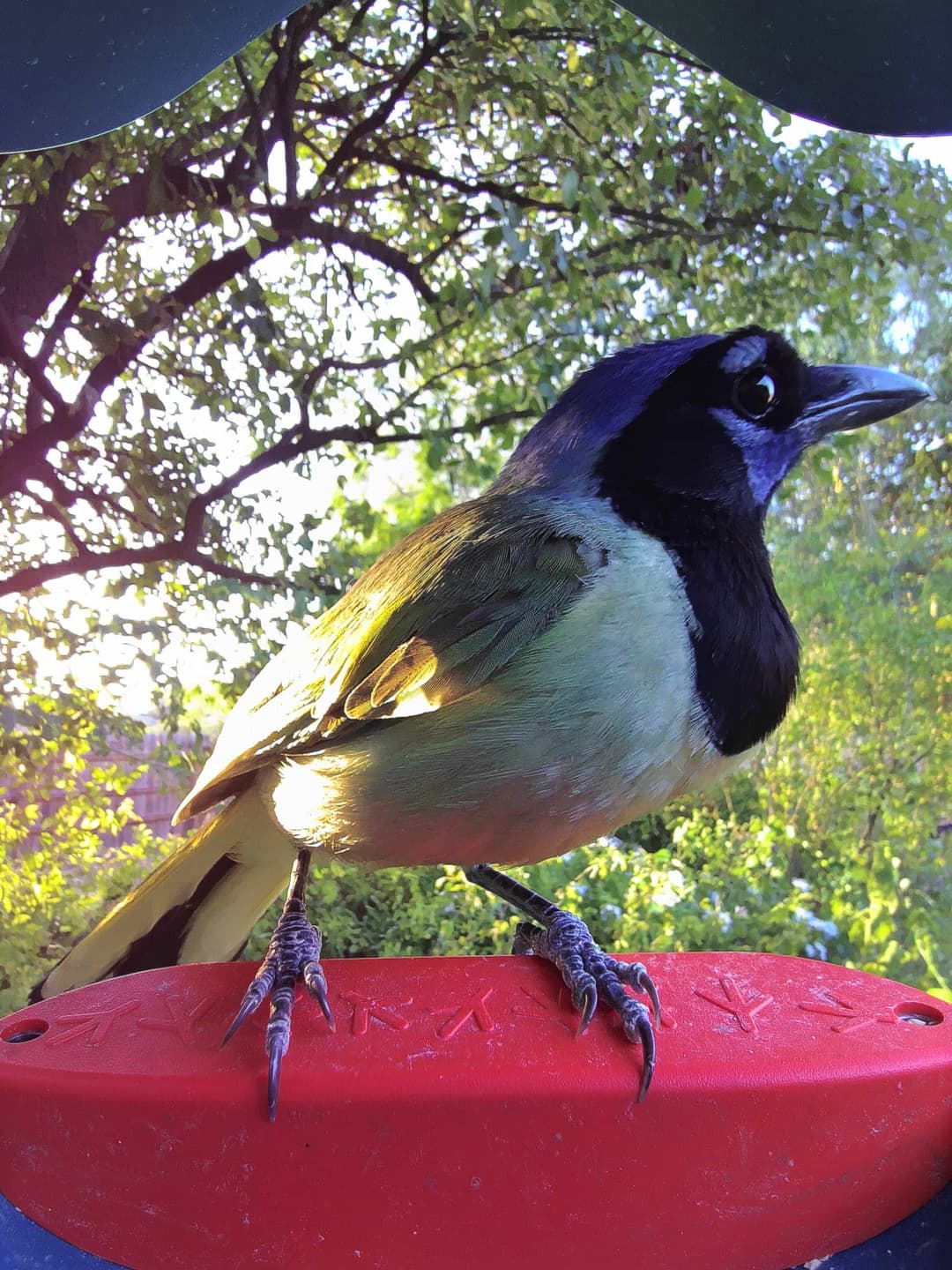
Green Jay vs Inca Jay
The Green Jay shares a similar vibrant coloration with the Inca Jay, predominantly green body with blue facial markings. However, the Inca Jay has a more pronounced and distinct black crown and nape that the Green Jay lacks. The Inca Jay's tail is also more vibrant and longer compared to the Green Jay.
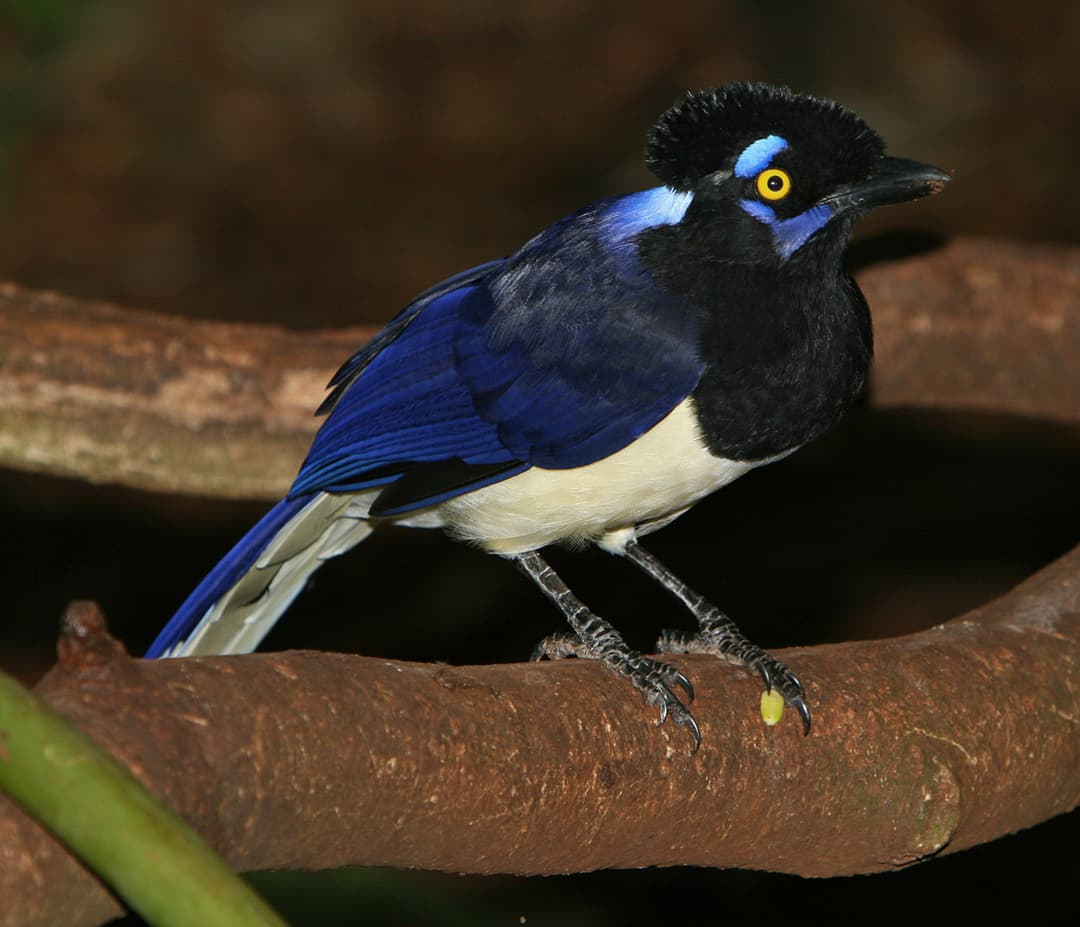
Plush-Crested Jay vs Inca Jay
Similar to the Inca Jay, the Plush-Crested Jay has bright blue and green plumage but can be distinguished by its unique plush-like crest and less pronounced contrast between its black head and neck compared to the Inca Jay.
Breeding and nesting habits of the Inca jay
Mating behaviors
Inca jays engage in elaborate courtship rituals involving vocalizations and display flights. Males often present food to females as a courtship gesture.
Nesting details
Nests are typically located in dense trees or shrubs, constructed from twigs, grass, and feathers. They prefer secluded spots to protect against predators.
Eggs and chick-rearing
The female lays 3-4 eggs, incubating them for about 18 days. Both parents participate in feeding and protecting the chicks, which fledge after 3 weeks. If nesting in gardens, provide dense shrubbery and maintain a quiet environment.
What does an Inca jay like to eat?
Berries
Bird eggs
Fruits
Insects
Nuts
Seeds
Small animals
Spiders
Natural diet
The Inca jay primarily feeds on a diverse range of natural food sources. It consumes a variety of fruits, seeds, and insects found in its natural habitat. Berries, nuts, and small invertebrates also form significant portions of its diet.
Bird feeders
At bird feeders, the Inca jay is commonly attracted to mixtures that include seeds and suet. It may also consume fruits offered at feeders, such as berries and slices of apple or banana. These supplementary foods augment its natural dietary habits.
Inca jay attraction guide
To attract the Inca Jay, you must first set up your yard as a cosy haven for these vibrant birds. Place bird feeders in a quiet and safe place away from the reach of predators. Equipping your yard with bird baths or small fontains can also invite Inca Jays as these birds are attracted to the sounds of moving water.
Favorite snacks and feeder types
Inca Jays are omnivorous; they love both meat and veggies, which make their diet more versatile. They go for fruits, seeds, invertebrates, small vertebrates and even eggs. For feeders, choose the ones that can accommodate their size. Platform or tray feeders are great. Also present Bird Buddy seeds in your feeders. These are chosen by bird experts and perfectly suited for the season, ensuring best results.
Fun tricks to keep them coming
To make your yard more enticing to Inca Jays, plant native species that bear fruits or seeds these Jays love. Not only does this provide a natural feeding source, it also gives them a safe habitat. Finally, get them used to your presence slowly. Gradually extend your watch times, and they will learn to see you as less of a threat. Their musical voices may soon regale you with their sing-along, adding a lively symphony to your garden.
Where can you find Inca jays?

Primary habitat
The Inca jay's primary habitat is the forests and woodland areas of South and Central America; it thrives in both humid and dry climates.
Additional range
Unexpectedly, this bird species is also found in suburban and agricultural environments, adapting well to human-altered landscapes.
Do they migrate?
The Inca jay, a vibrant bird found primarily in the Andes, is a non-migratory species. It typically resides in the montane forests of South America, particularly in countries like Colombia, Ecuador, Peru, Venezuela, and Bolivia. Unlike many bird species that undertake seasonal migrations, the Inca jay remains within its local habitat year-round. These birds are highly adaptable to the diverse ecosystems within their range, from cloud forests to subtropical and tropical moist forests. Their non-migratory behavior is supported by the relatively stable climate and consistent food availability in these regions throughout the year. Inca jays are known for their social structure, often seen in groups, which aids in their survival and resource acquisition within a stable territory. Key locations include the Andean foothills and various national parks and reserves where they can be observed engaging in their social and foraging behaviors. Overall, their permanence in one locale highlights the Inca jay's strong adaptation to its environment and the ecological niches it occupies.
What is the role of Inca jays in nature and how to protect them?
Conservation status
The Inca jay is classified as "Least Concern" by the IUCN, indicating it is relatively common and not currently at risk of extinction. It inhabits a wide range throughout the Andes in South America. While specific threats to this species are not prominent, habitat destruction due to deforestation and human encroachment could pose future risks. Conservation efforts focus on preserving its natural habitats through protected areas and sustainable land-use practices. Maintaining these efforts is crucial to ensure the jay's continued abundance and health across its range.
Ecological role of Inca jays
Its role in the ecosystem
The Inca Jay, native to South America, plays a significant role in the ecological stability of its habitat. As an omnivorous bird, it maintains balance in the food chain by controlling the population of small invertebrates, insects, and amphibians, functioning as a form of natural pest control. Moreover, the predation pressure exerted by Inca Jays can affect the behavior and distribution of their prey, contributing to the overall biodiversity of the ecosystem. Besides its role as a predator, the Inca Jay is also an effective seed disperser. By feeding on a variety of fruits, it aids in the dissemination of seeds from one location to another through its droppings. The uneaten seeds in the droppings germinate, fostering the growth of a diverse range of plant life in different areas. This seed dispersal activity has a profound effect on the vegetation structure. Hence, the Inca Jay is integral not only to the control of pest species but also to the propagation of plant life, functioning as a crucial component in the maintenance of ecosystem diversity and health.
How to help protect Inca jays
Preservation tips
Habitat preservation strategies
Promote the protection of Andean cloud forests and areas rich in fruiting trees, primary habitats of Inca jay. Discourage deforestation and fragmentation of these ecosystems. Encourage reforestation projects with native plant species to restore and expand their habitats. Support policies that secure the protection of these natural areas.
Community science initiatives
Involve the community in citizen science initiatives to monitor Inca jay populations and report sightings. This can help track their population trends and understand impacts of environmental changes. Conduct educational programmes for locals and tourists about the importance of preserving the Inca jay and its habitat. Encourage community-lead ecotourism, emphasizing bird-watching experiences that foster appreciation and conservation actions.