Carolina Wren or Bewick’s Wren?
Here's how to tell the difference


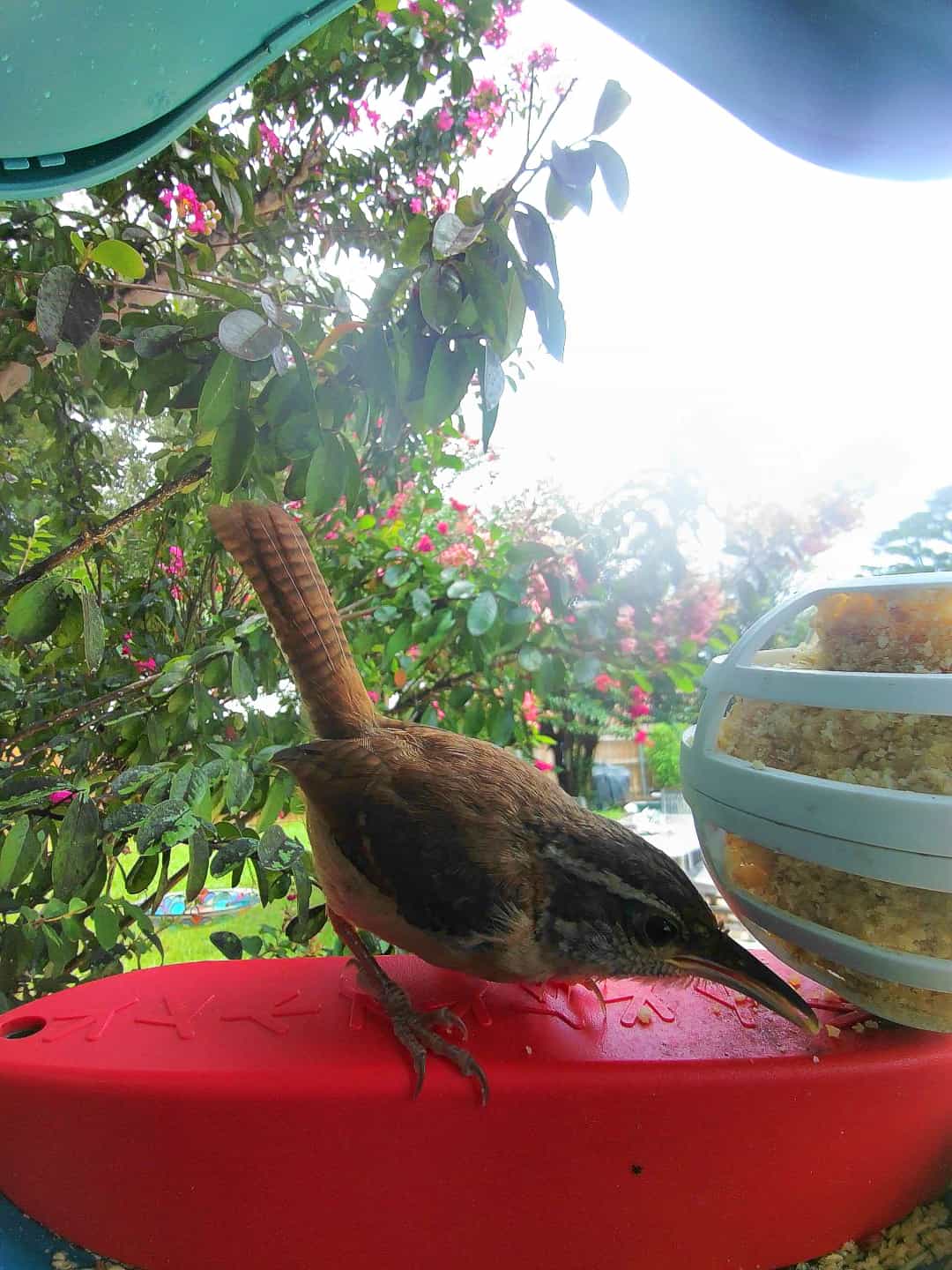


Carolina Wren
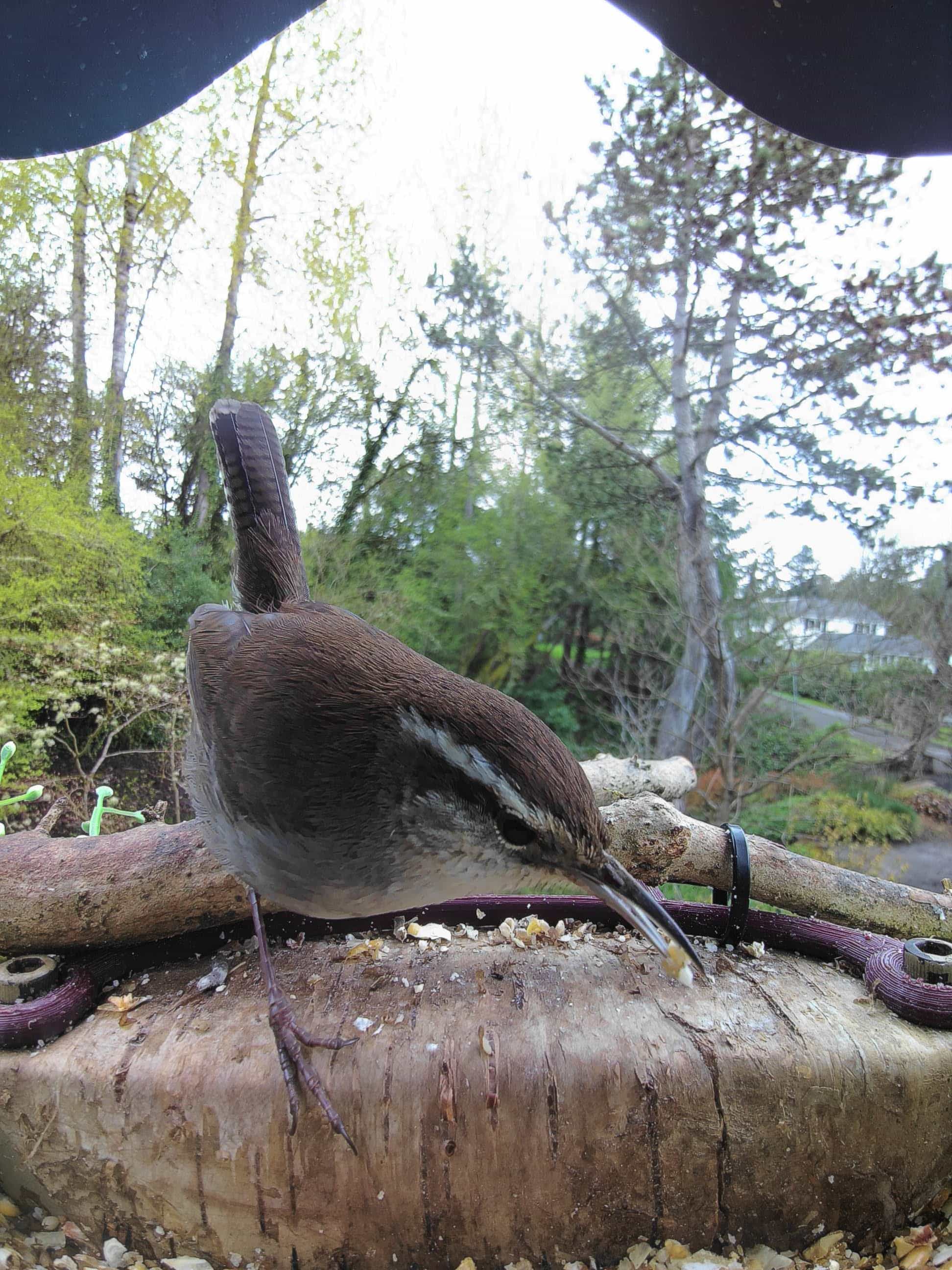


Bewick’s Wren
Carolina Wren
Thryothorus ludovicianus
General appearance
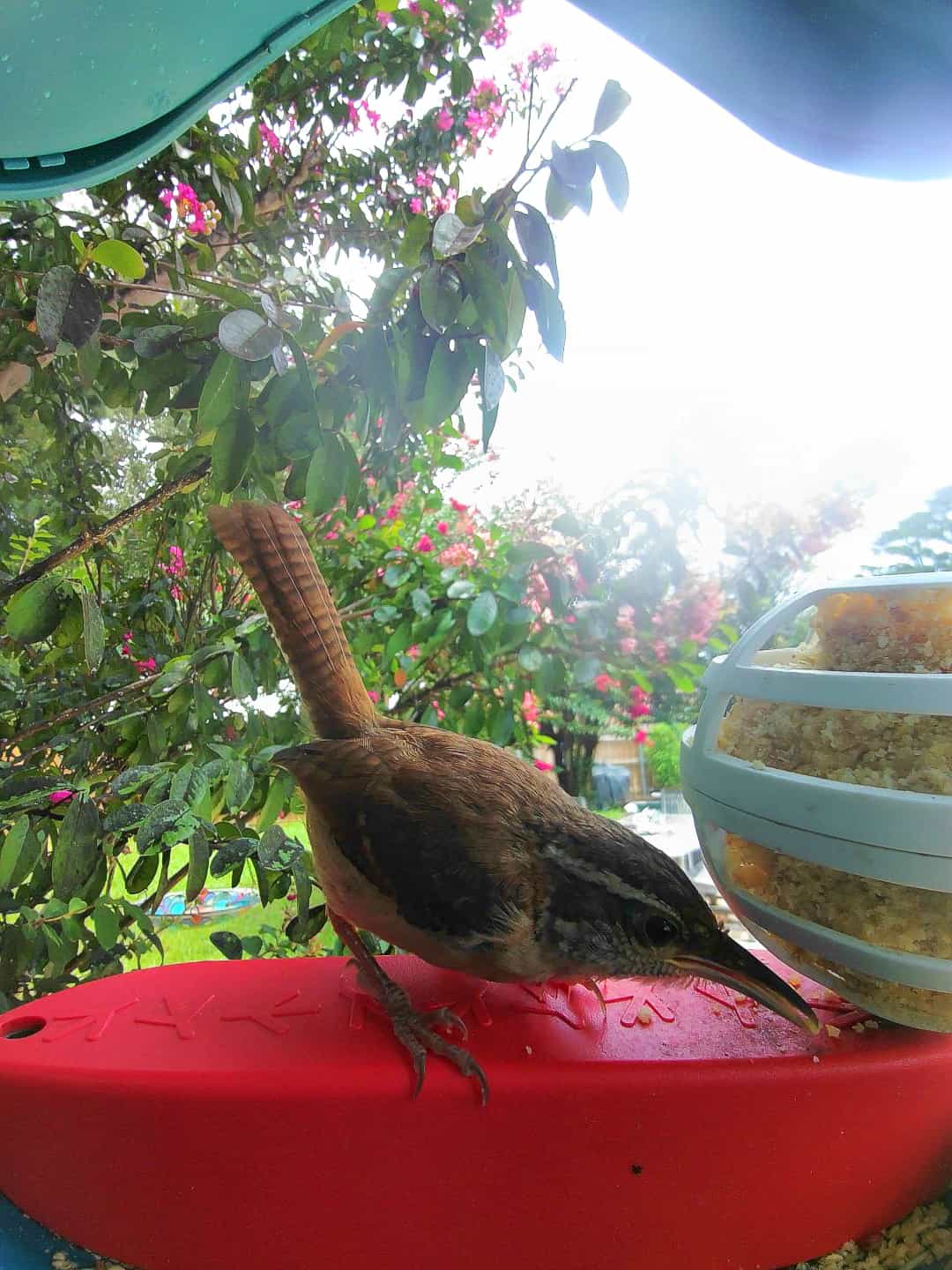
The Carolina wren comes richly colored. Above, it features a chestnut color while below, it bears a butterscotch shading. The bird has a distinct white eyebrow, making its appearance more unique. Its size is almost that of a sparrow, with its rounded wings and square-tipped tail. Unlike Bewick's Wren, the Carolina wren does not have white corners on its tail.
Male vs female
Identifying a male from a female Carolina Wren is typically challenging as both sexes display similar coloration and physical traits. They both share the chestnut, butterscotch, tan, and white colors. Their wings carry the same rounded shape, and tails are also square-tipped and rounded.
Juvenile
Juvenile Carolina wrens share many physical characteristics with adults, although they may be slightly duller in color. Like adults, they have similar wing and tail shapes. Any seasonal variations in appearance among Carolina wrens are minimal and do not considerably distinguish juveniles from adults.
Size
4.9 - 5.5 in/0.6 - 0.8 oz
There's more to learn about Carolina Wren
View full detailsBewick’s Wren
Thryomanes bewickii
General appearance
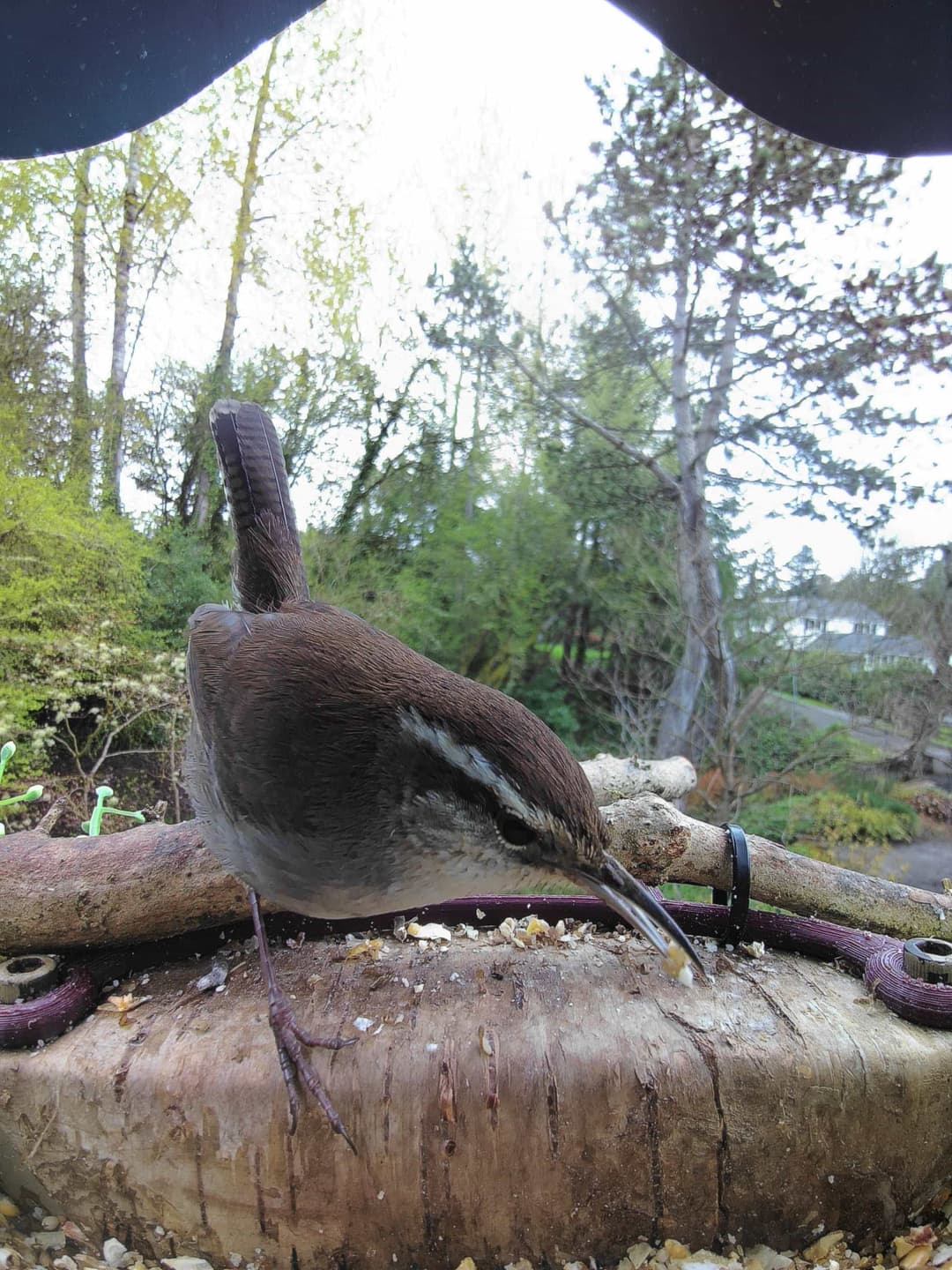
The Bewick's wren is a small bird that measures approximately 5 1/2 inches or 14cm in size. It is characterized by its white eyebrow and its long tail, which it often flips back and forth. The bird's back displays a dull brown color, while its underparts are of a pale gray hue. Notable features include white corners of the tail and eastern birds which are known to be more rich in color. The wren's overall size is akin to a Sparrow.
Male vs female
There are no significant differences in the outward physical appearance between male and female Bewick's wrens. Both the sexes exhibit the same coloration and size. However, the meticulous listener can distinguish between a male and female by their song, as vocalization in Bewick's wrens differs by gender.
Juvenile
Juvenile Bewick's wrens resemble adults but are somewhat paler in coloration. The white eyebrow characteristic of adults may not be prominently seen in young birds. As with many other bird species, juveniles mature over time and gradually acquire the definitive adult plumage.
Size
5.1 - 5.5 in/0.3 - 0.4 oz
There's more to learn about Bewick’s Wren
View full detailsHow to tell the Carolina Wren from the Bewick’s Wren
Visual differences
Carolina Wrens are slightly heavier (0.6-0.8 oz) with a richer chestnut upper and butterscotch underparts, round wings, and a square-tipped tail, compared to Bewick's Wrens, which weigh less (0.3-0.4 oz) with dull brown backs and pale gray underparts. Both have distinct white eyebrows, but Bewick's Wrens have white tail corners and a slender, longer tail. Carolina Wrens lack these tail features and have a more compact overall appearance. Both species are similar in sparrow-like size, about 5-5.5 inches long.
Key differences and behavior
Carolina and Bewick's Wrens both thrive in brushy habitats but show distinctive behavioral traits. Carolina Wrens, found in the eastern U.S., are monogamous year-round, often singing in duets, while Bewick's Wrens, located mainly in the West, have males that learn songs from neighbors to establish territories. Carolina Wrens are more robust singers, potentially singing up to 3,000 times a day, while Bewick's males sing variably to secure mates. Carolina Wrens prefer low nesting sites, building bulky nests with snakeskin, while Bewick's build nests up to 20 feet high, with females finishing nests. Carolina Wrens consume a broader diet, including small vertebrates, whereas Bewick's strictly eat insects and occasionally visit feeders for suet. With Carolina Wrens weighing 0.63-0.81 oz., they are heftier than Bewick's Wrens, which weigh 0.28-0.42 oz. Both species rely on insects but exhibit unique adaptations for habitat and mating strategies.
Still not sure? Here are more lookalikes!
Carolina Wren vs [Select a bird]

[Select a bird]
Pick a bird to compare
Bewick’s Wren vs [Select a bird]
[Select a bird]
Pick a bird to compare