
Bewick’s Wren
Bewick’s Wren
Thryomanes bewickii


Quick Identification guide
Quick Identification guide
- •
Features a slender body with a long, slightly rounded tail often held upright
- •
Displays a brown back and a distinctive white eyebrow stripe above the eye
- •
Possesses a thin, slightly curved beak used for probing and gleaning
What does a Bewick's wren sound like?
The Bewick's wren produces a loud and melodious song that is similar to the warbles of typical wrens, and it also has a reminiscence of Song Sparrow. The bird's call can be characterized as falling, flat, and undulating in pattern. The types of calls it makes include a buzz, chirp or chip, flute-like sounds, trills, and whistles, all contributing to its unique vocal repertoire.


Description
Male Bewick's wrens learn their songs by listening to neighbouring males! They better learn quick, because whatever songs they learn before their first winter will pretty much constitute their entire repertoire. These birds were named after the English naturalist Thomas Bewick. The collective noun for them is a chime, a light, a flock or a herd of wrens.
The Bewick's wren can weigh between 8to12grams and be from13to14centimeters tall.
The Bewick’s wren typically lives up to 8 years. This lifespan is comparable with other wrens, such as the Carolina wren with a similar lifespan of about 6 years. Minimal information presents of longevity in other wren species, indicating the Bewick’s as relatively long-lived in its family. Despite human interference and habitat loss, these resilient birds can survive if provided with appropriate protective measures.
Did you know?
Most popular questions about Bewick's wren
How to recognise a Bewick's wren?
General appearance
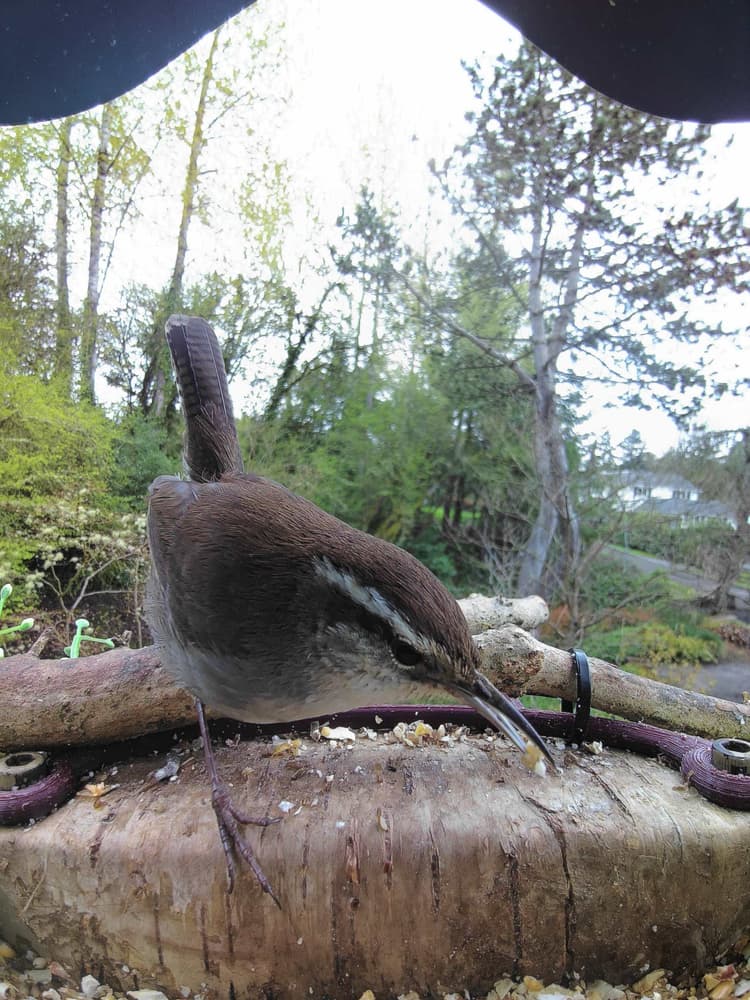
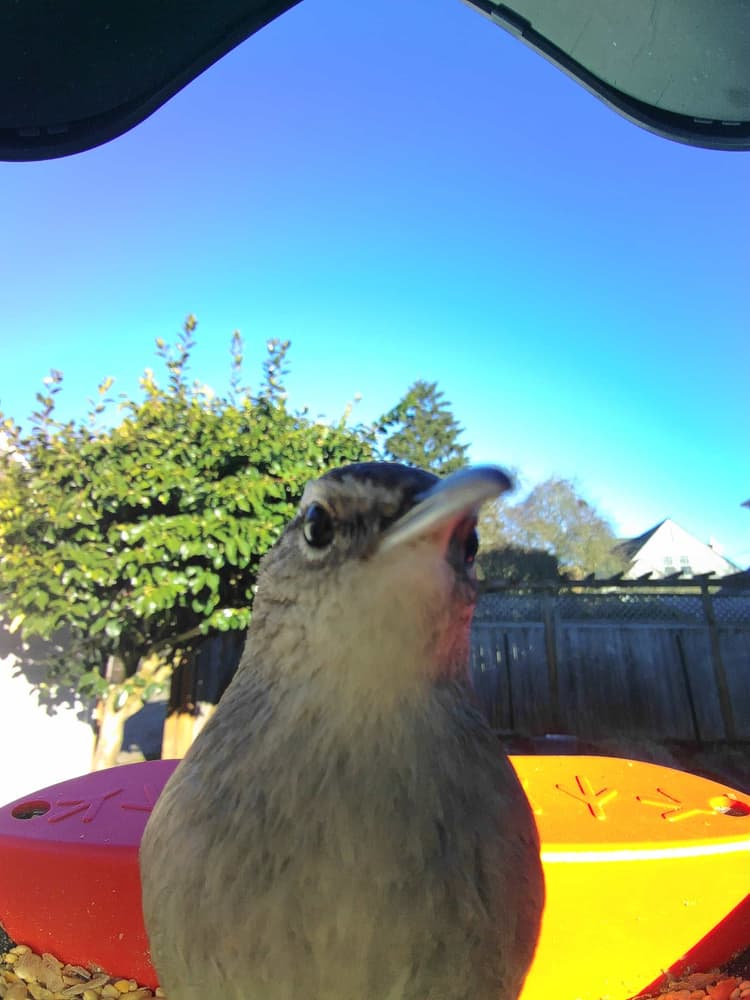
The Bewick's wren is a small bird that measures approximately 5 1/2 inches or 14cm in size. It is characterized by its white eyebrow and its long tail, which it often flips back and forth. The bird's back displays a dull brown color, while its underparts are of a pale gray hue. Notable features include white corners of the tail and eastern birds which are known to be more rich in color. The wren's overall size is akin to a Sparrow.
Male vs female
There are no significant differences in the outward physical appearance between male and female Bewick's wrens. Both the sexes exhibit the same coloration and size. However, the meticulous listener can distinguish between a male and female by their song, as vocalization in Bewick's wrens differs by gender.
Juvenile
Juvenile Bewick's wrens resemble adults but are somewhat paler in coloration. The white eyebrow characteristic of adults may not be prominently seen in young birds. As with many other bird species, juveniles mature over time and gradually acquire the definitive adult plumage.
Often mistaken for
Carolina Wren vs Bewick’s Wren
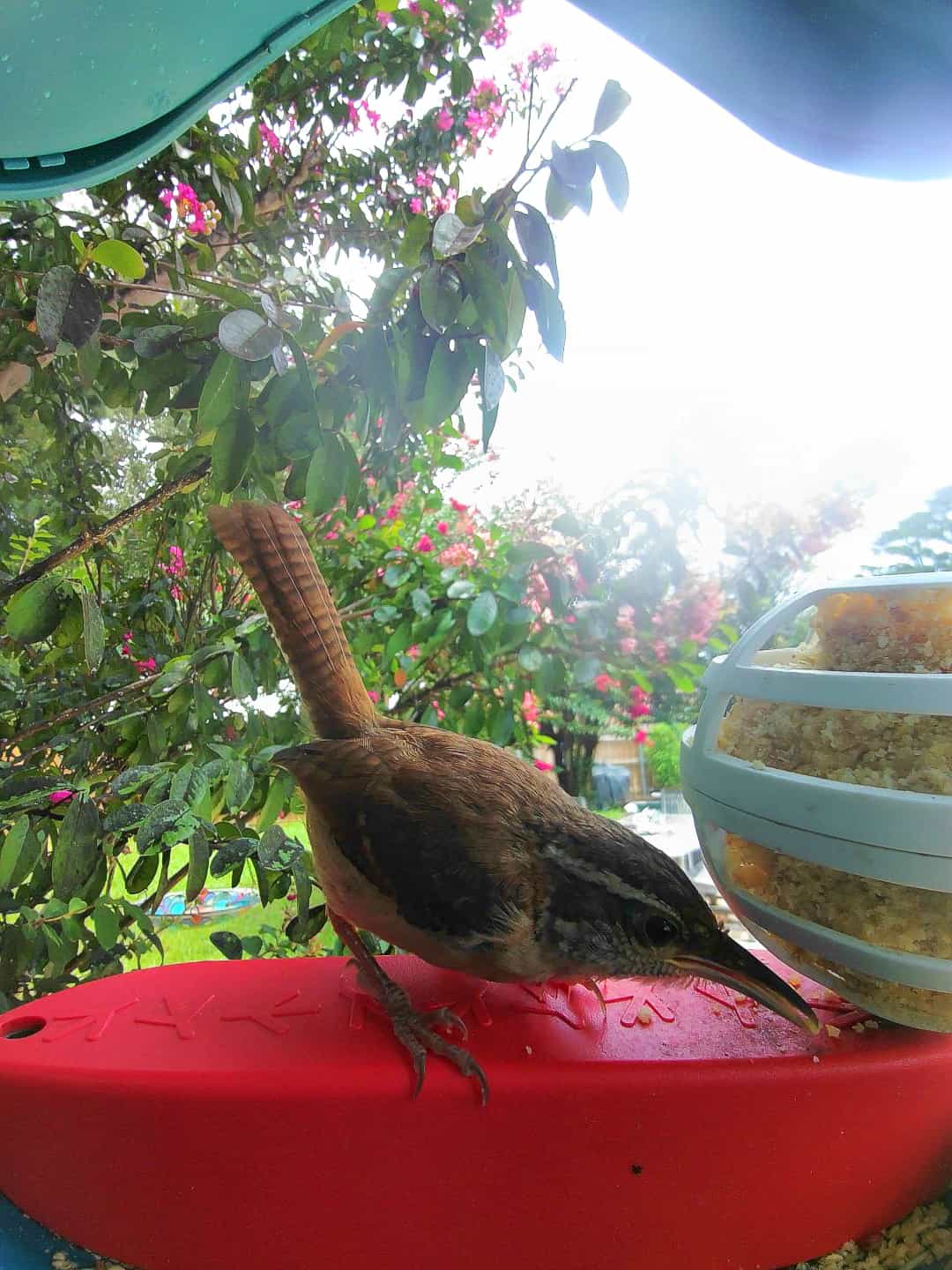
Bewick's Wren is slimmer with a longer tail often flicked upwards. It has a distinct white eyebrow, unlike the bolder, rounder Carolina Wren. The Bewick’s song is more melodic and less repetitive.
Wrentit vs Bewick’s Wren
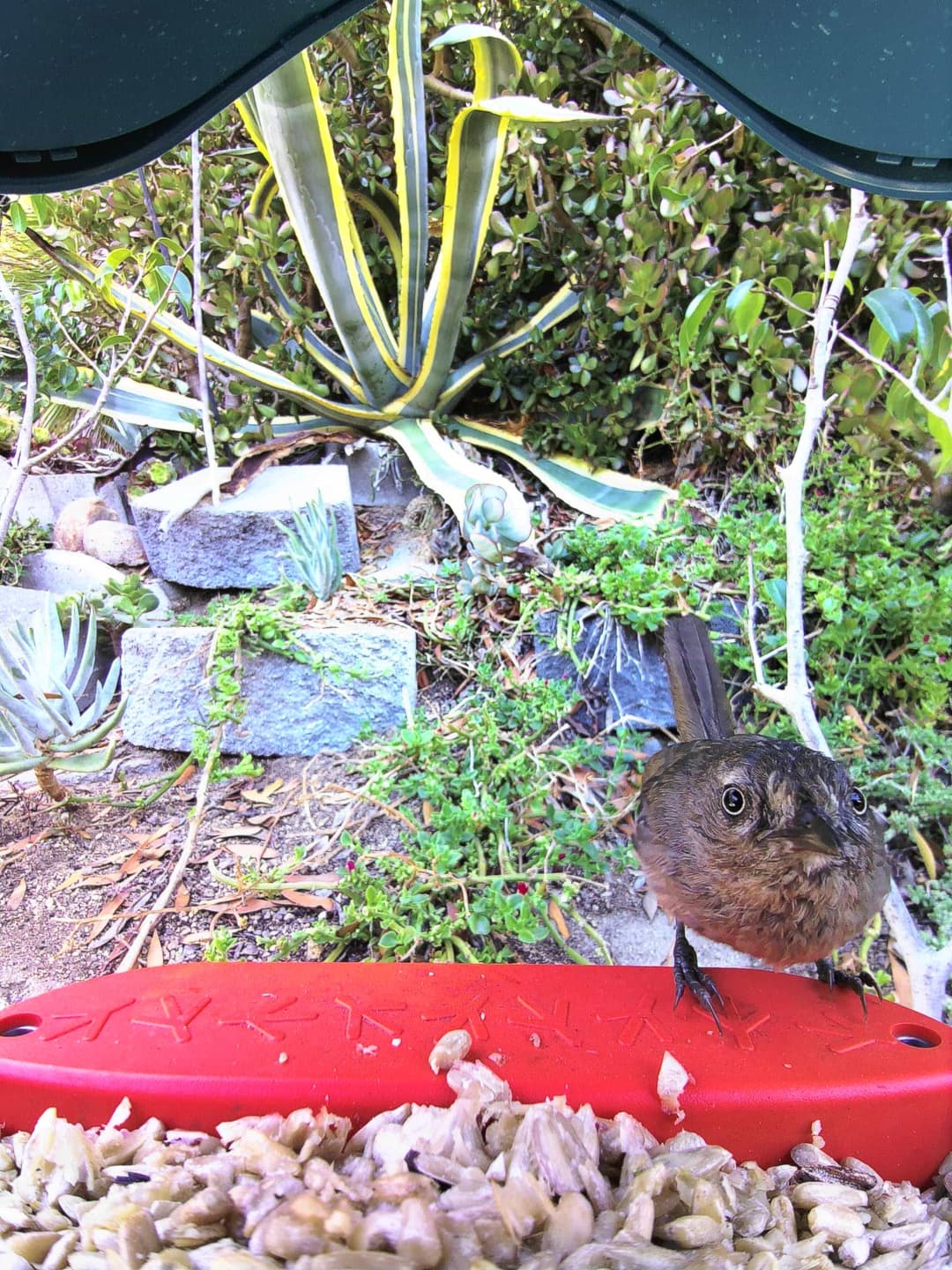
The Bewick's Wren is more slender with a longer, more active tail. Its eyebrow stripe is prominent compared to the subtle facial markings of the Wrentit. The Wrentit lacks the Wren’s sharp call notes.
Bushtit vs Bewick’s Wren
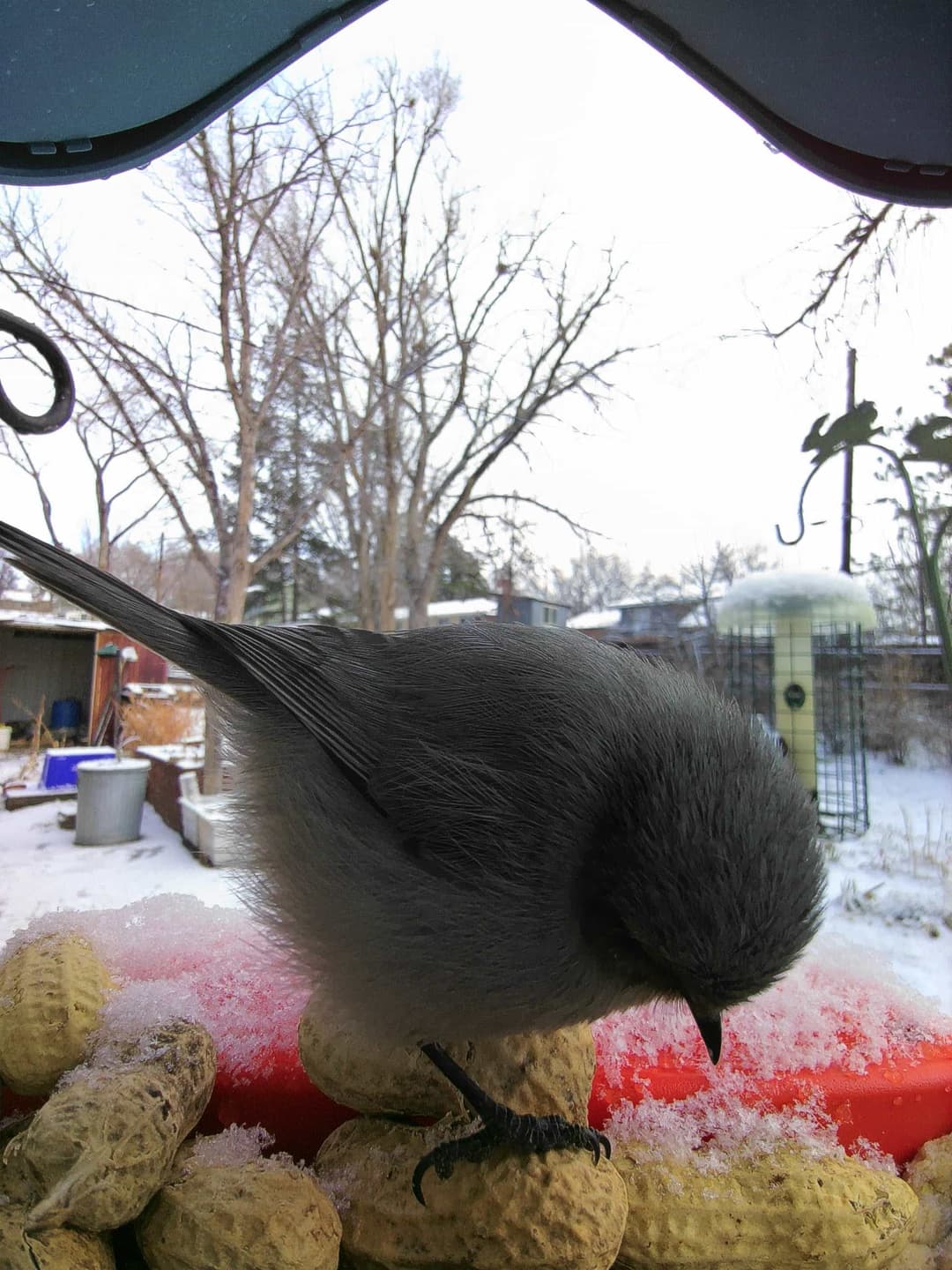
Bewick's Wren is larger, with a more pronounced white eyebrow than the tiny, plain-colored Bushtit. Bushtits travel in flocks, while Bewick’s is more solitary. Bushtits emit softer, high-pitched calls.
Breeding and nesting habits of the Bewick's wren
Mating behaviors
The male Bewick’s wren secures its nesting territory by singing distinctive songs, which vary between eastern and western populations. This behavior serves to attract a mate and defend the territory from rivals.
Nesting details
Nests are constructed in various cavities such as natural tree hollows, abandoned woodpecker holes, and artificial structures like nest boxes and mailboxes, typically less than 20 feet high. The male may build incomplete 'dummy' nests, while the female selects the site and completes the nest using materials like twigs and moss, sometimes incorporating unique elements like snakeskin.
Eggs and chick-rearing
Bewick’s wrens sometimes puncture nearby eggs, likely as a competitive tactic. Once the female selects a site and completes the nest, she lays eggs, which are incubated and eventually hatch into chicks. The nest's soft linings provide a secure environment for rearing the young, although specific rearing practices are not detailed.
What does a Bewick's wren like to eat?
Fruits
Insects
Seeds
Spiders
Natural diet
Bewick’s wrens primarily feed on insects. They consume a wide variety of insects, including beetles, ants, wasps, true bugs, caterpillars, and grasshoppers, among others. Additionally, they eat many spiders and occasionally supplement their diet with berries or seeds.
Bird feeders
While Bewick’s wrens primarily eat insects and spiders, they may visit bird feeders on occasion. At bird feeders, they might consume suet, peanut butter, or mealworms, which can supplement their natural diet, especially during colder months when insects are less abundant.
How to attract the bewick’s wren to your yard
Bewick's wrens are known for their intriguing personality and enchanting songs. They are true entertainers in the bird world. These feathered beauties are attracted to yards that provide an ideal environment and a consistent food source. Start by setting up a birdhouse that fits their preference—a cavity nest that is low to the ground will do. A thick shrubbery where they can hide and play will also be beneficial.
Feeder types and snacks
When it comes to feeders, wrens prefer those with small opening, like tube feeders, to keep larger birds at bay. They love feasting on a variety of insects and spiders. However, during winter when these natural sources are scarce, they won't mind helpings of suet, breadcrumbs or Bird Buddy seeds. These seeds are specially chosen by experts for the season and yield best results.
Encourage them to stay
Apart from providing food and shelter, give these wrens reasons to stay by offering nesting materials like dry grass, twigs and bark strips. These birds are known to have a soft spot for music. Who knows, playing some soft tunes may even entice them into a sing-along. Remember to keep your distance and observe them quietly so as not to scare them away.
Where can you find Bewick’s wrens?

Primary habitat
The Bewick’s wren predominantly prefers thickets, underbrush, gardens, and brushy or wooded habitats at lower elevations, including woodlands of oak and pine, and streamside groves.
Additional range
It is found in western regions in varied environments such as chaparral, suburban areas and desert washes. In eastern regions, where it is now scarce, it can be detected mainly around the edges of forests in brushy areas.
Do they migrate?
Bewick's wren exhibits partial migratory behavior. While some individuals remain in their breeding range year-round, particularly in milder climates, many migrate from northern areas and higher elevations during winter. This migration tendency is generally more pronounced in the eastern part of its range compared to the west. In their migratory behavior, Bewick’s wrens tend to withdraw from areas with harsher winter conditions. In the northern parts of their range, like parts of the Pacific Northwest and the Great Plains, they move southward as temperatures drop. Although specific migratory routes and timing can vary, generally, these birds migrate to more southerly or lower elevation locales in search of milder climates and better food availability during the coldest months. Key locations that retain year-round populations are often within the more temperate and moderate areas of their range, including parts of California and the southern U.S. Where migration occurs, it typically involves short to moderate distances, rather than extensive cross-continental journeys. By spring, as conditions improve, these birds return to their breeding grounds to take advantage of more favorable conditions for nesting and raising their young.
What is the role of Bewick’s wrens in nature and how to protect them?
Conservation status
The Bewick's wren is widespread and common in the west, with an expanding range northward. However, it is uncommon and localized east of the Great Plains, facing a significant decline. Once common east to the Appalachians, it has largely disappeared from areas east of the Mississippi River in recent decades. The reasons for this decline are not well understood, and no significant conservation efforts are currently highlighted. Based on this information, the bird is not classified as endangered but may be considered vulnerable in eastern regions due to its reduced presence.
Ecological role of Bewick’s wrens
Its role in the ecosystem
The Bewick's wren plays a significant role in the ecosystem by actively foraging for a variety of insects, which includes harmful pests like beetles, ants, wasps, and caterpillars, providing a natural form of pest control. Moreover, their method of feeding, which involves probing into bark crevices and flipping over leaves, can also aid in the aeration of soil and distribution of seedlings, indirectly promoting plant growth. Additionally, the wide range of nests they use, in natural cavities or manmade sites, demonstrates their versatility and important contribution to maintaining certain population dynamics within the ecosystem. Lastly, their occasional consumption of berries and seeds might also contribute to seed dispersal, further enhancing plant biodiversity in their habitat.
How to help protect Bewick’s wrens
Preservation tips
Habitat preservation strategies for bewick’s wren
Promoting habitat preservation for Bewick’s wren involves various measures. Mitigating habitat destruction by advocating for responsible land use, preventing deforestation and promoting reforestation should be prioritized. Protecting existing habitats especially low vegetative growth containing brushy cover and scattered trees along streams is crucial as wrens prefer hidden and secure nesting sites. Implementing strict land protection laws is also essential.
Community science initiatives for bewick’s wren conservation
Effective community science initiatives for the Bewick’s wren involve community education and participation. Increasing public awareness about the importance of the Bewick’s wren to the ecosystem, and the threats it faces, can drive support for conservation. Involving locals in reforestation programs, bird monitoring, and habitat preservation initiatives can make efforts more effective. Encouraging people to maintain bird-friendly gardens that offer secluded nest sites could provide additional habitats for the wrens.