
Carolina Wren
Carolina Wren
Thryothorus ludovicianus


Quick Identification guide
Quick Identification guide
- •
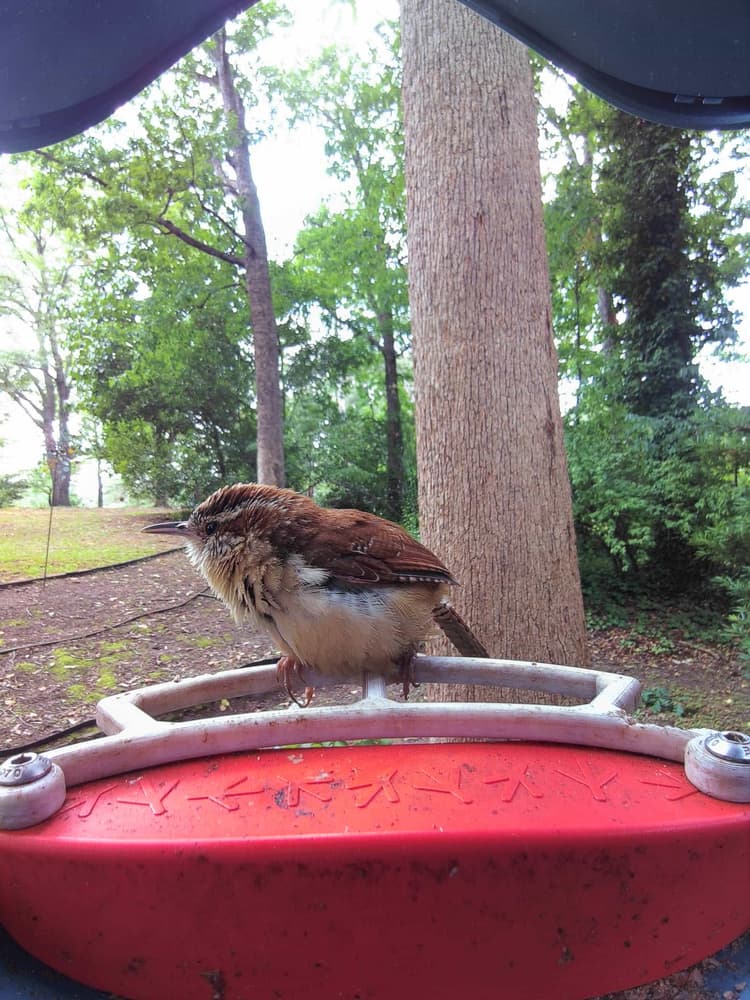
Features a rich, reddish-brown back with a distinctive, buffy-orange belly
- •
Prominent white eyebrow stripe contrasts with its dark, slightly curved bill
- •
Has a compact, stout body with short wings and a relatively long tail often held upright
What does a Carolina wren sound like?
The Carolina wren expresses itself through a loud, whistled "tweedle-tweedle-tweedle" or "tea-kettle, tea-kettle, tea-kettle tea," sung incessantly throughout the day and across all seasons. Typically, its calls exhibit a falling, flat, or undulating pattern. The bird's vocalizations can be characterized as a buzz, chirp, or flute-like trill.


Description
Carolina wrens may be small but they sure have a set of pipes on them! A single wren has been recorded to have sung an incredible 3,000 times in one day! Their song sounds like teakettle-teakettle, which is exactly what these adorable birds sometimes look like! Where there's one, the other is likely not far behind; these monogamous birds are found in pairs, and breeding pairs have been known to stay together for years!
The Carolina wren can weigh between 18to23grams and be from12.5to14centimeters tall.
The Carolina Wren typically lives up to six years, though the oldest recorded living up to nearly 9 years. In comparison, related species like the House Wren have similar lifespans, generally reaching up to 7 years. Like other wrens, lifespan can fluctuate based on factors like environment, predation, and disease.
Did you know?
Most popular questions about Carolina wren
How to recognise a Carolina wren?
General appearance
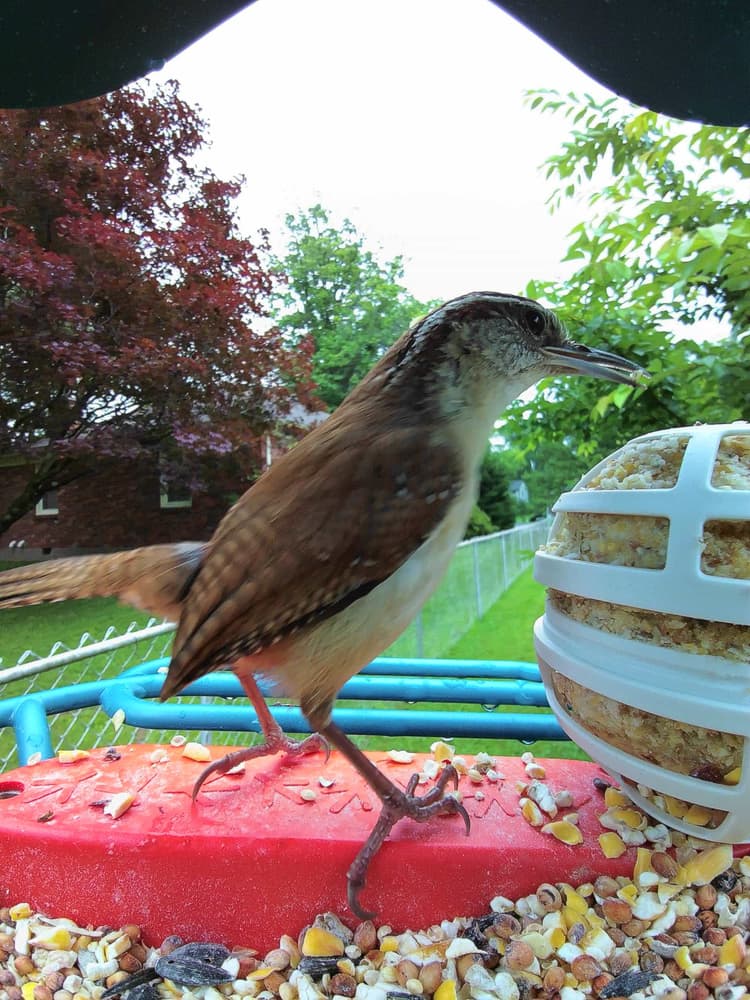
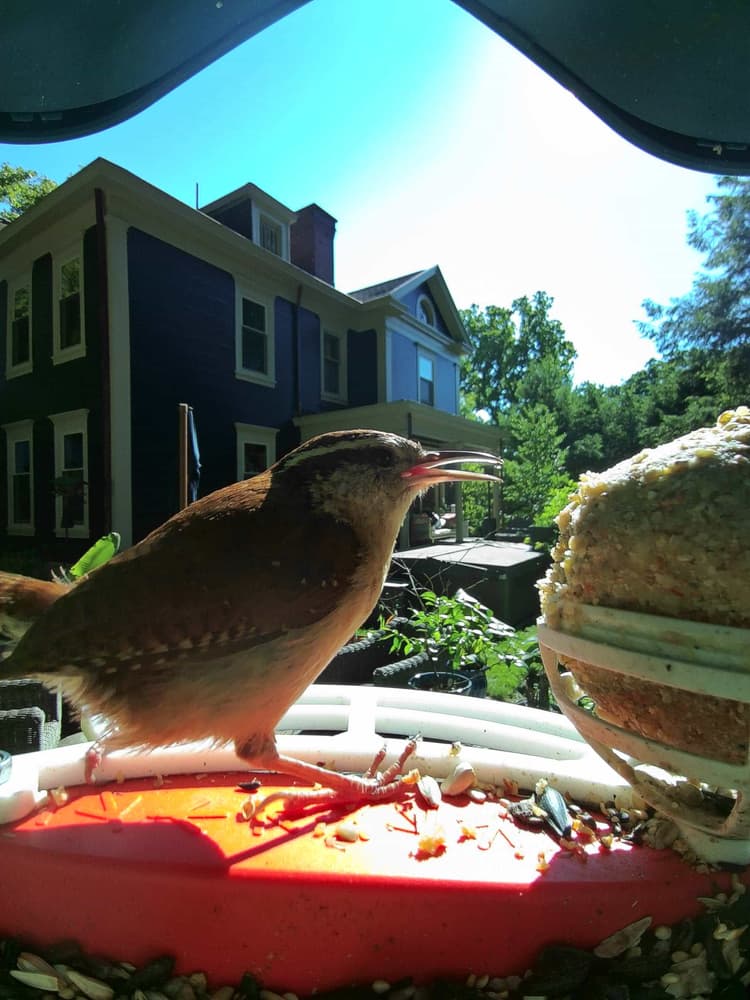
The Carolina wren comes richly colored. Above, it features a chestnut color while below, it bears a butterscotch shading. The bird has a distinct white eyebrow, making its appearance more unique. Its size is almost that of a sparrow, with its rounded wings and square-tipped tail. Unlike Bewick's Wren, the Carolina wren does not have white corners on its tail.
Male vs female
Identifying a male from a female Carolina Wren is typically challenging as both sexes display similar coloration and physical traits. They both share the chestnut, butterscotch, tan, and white colors. Their wings carry the same rounded shape, and tails are also square-tipped and rounded.
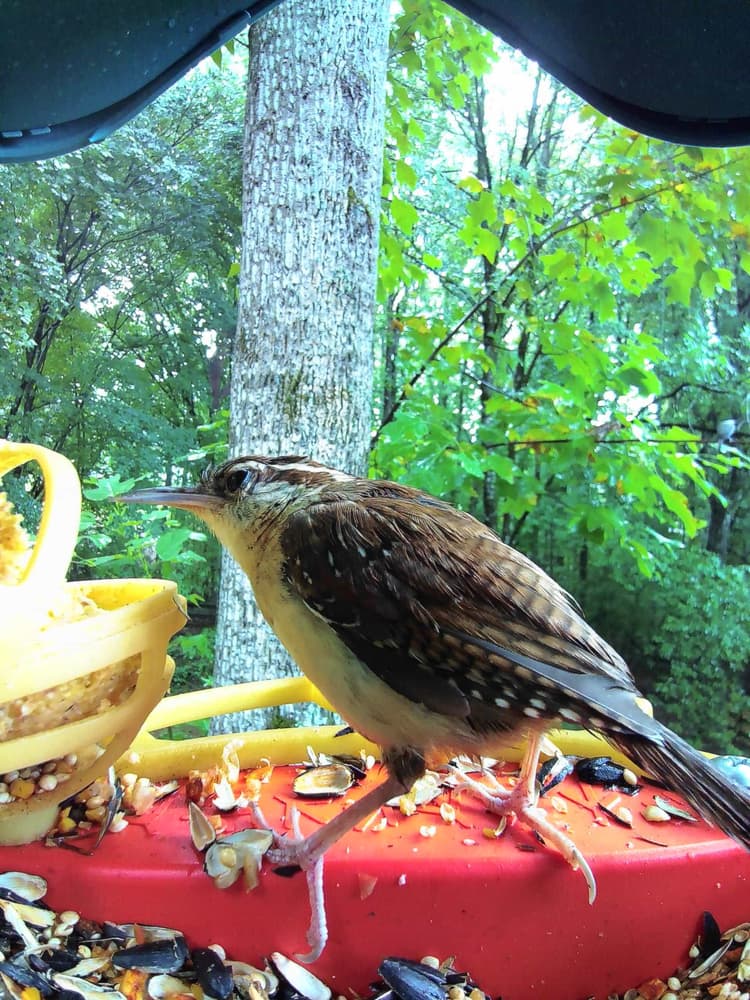
Male Carolina Wren
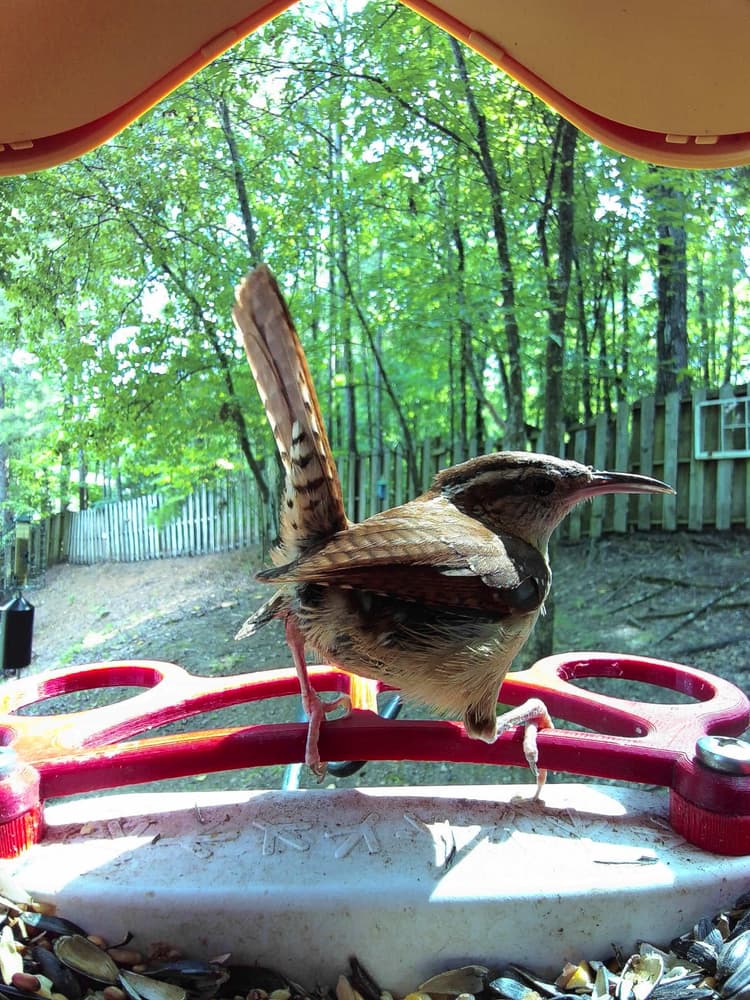
Female Carolina Wren
Juvenile
Juvenile Carolina wrens share many physical characteristics with adults, although they may be slightly duller in color. Like adults, they have similar wing and tail shapes. Any seasonal variations in appearance among Carolina wrens are minimal and do not considerably distinguish juveniles from adults.
Often mistaken for
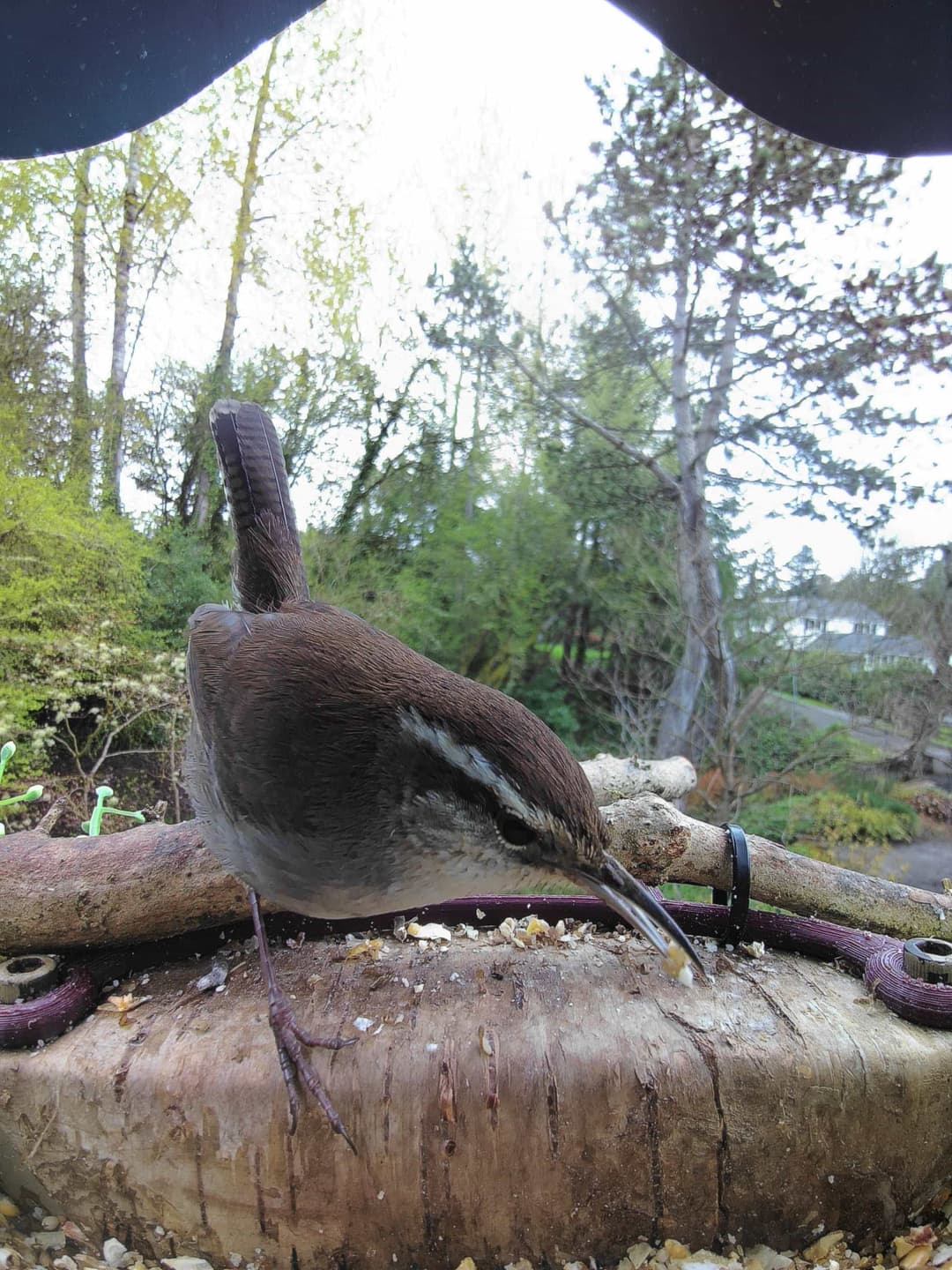
Bewick’s Wren vs Carolina Wren
The Carolina Wren is generally larger and more robust than Bewick’s Wren. Carolina Wrens have a warm, reddish-brown upper body, contrasting with their bright white underparts, while Bewick’s Wrens display a grayer and more muted coloration. Carolina Wrens possess a distinctive bold white eye stripe, which Bewick’s Wrens share but to a lesser extent. Additionally, Carolina Wrens have a rounder appearance, especially noticeable in their larger, more rounded tails, compared to the slender, long tails of Bewick’s Wrens. Their songs also differ; Carolina Wrens have a loud, melodious song, while Bewick’s Wrens deliver a softer, less musical song.
Breeding and nesting habits of the Carolina wren
Mating behaviors
Carolina wrens often mate for life, with pairs maintaining their bond year-round. They defend permanent territories together, with both male and female frequently singing duets as part of their communication and bonding process.
Nesting details
Carolina wrens choose nest sites in various cavities like tree hollows, old woodpecker holes, and crevices in buildings. The nests, typically under 10 feet from the ground, are bulky structures of twigs and leaves, lined with softer materials such as moss or feathers. A unique characteristic is the inclusion of snakeskin. Both parents contribute to building the nest, though the female adds the majority of the lining.
Eggs and chick-rearing
The female Carolina wren lays eggs inside the secure, dome-shaped nest with a side entrance. Both parents participate in rearing the chicks, providing warmth and food until the fledglings are ready to leave the nest. To attract Carolina wrens, gardeners can install nest boxes or maintain natural brush piles to provide potential nesting sites.
What does a Carolina wren like to eat?
Berries
Insects
Nuts
Seeds
Small animals
Snails
Spiders
Natural diet
Carolina wrens primarily feed on a variety of insects, particularly caterpillars, beetles, true bugs, grasshoppers, and crickets. They also consume spiders, some millipedes, snails, and occasionally small lizards or tree frogs. In winter, they often eat berries and small fruits, supplemented with some seeds.
Bird feeders
At bird feeders, Carolina wrens may eat suet, peanut hearts, and sunflower seeds. They are less likely to consume grains but may be attracted by fruits and insect-based offerings.
Attracting carolina wren with favorite snacks
Carolina Wrens are especially fond of insects and spiders, but they also enjoy fruit and seeds. For bird feeders, we recommend Bird Buddy Seeds. Chosen by experts to suit the season, these seeds have consistently delivered the best results in attracting Carolina Wrens.
Choosing the right feeder
Carolina Wrens are not big fans of traditional bird feeders, often preferring to forage on the ground or in vegetation. However, you can tempt them with a platform or a suet feeder. The latter can be particularly endearing in winter when nature's menu is a bit scarce.
Tips and tricks for house guest wrens
Apart from nesting boxes, planting native shrubs and trees can also provide a hospitable environment to the Carolina wrens. Dual-purpose plants that both provide cover and produce berries can also serve as a food source. Water features can be a big hit too! Whether it's a bird bath or a mister, having a source of water can definitely bring in Carolina Wrens – they love a nice bath and drink!
Sing-along with wrens
One of the distinctive traits of Carolina Wrens is their beautiful song. Having a quiet and serene environment will encourage these songbirds to stay. Create a friendly space free of predators where they feel safe enough to serenade you with their hearty melodies.
Where can you find Carolina wrens?
Based on Birdbuddy sighting data. The heatmap shows where Birdbuddy users have spotted this species.
Embed this map
This map shows the full native range based on scientific range data.
Primary habitat
The Carolina wren typically resides in the undergrowth of deciduous or mixed woods, and in thickets along forest edges.
Additional range
This bird also inhabit suburban areas, especially where dense low growth and tangles have been left undisturbed, and can be found in places like gardens and towns.
Do they migrate?
The Carolina Wren is primarily a permanent resident, meaning it typically stays in the same area throughout the year. However, it may exhibit some movement, particularly northward of its breeding range, under certain conditions, especially in the fall. This behavior is not considered true migration; rather, it's more of a dispersal or wandering tendency. This northward wandering occurs mainly in response to environmental factors such as food availability and weather conditions. During harsh winters, Carolina Wrens may retreat southward, but they generally do not follow a specific migratory route as seen with true migratory birds. Their typical year-round territories include the southeastern United States, extending from the eastern parts of Texas through the Gulf Coast states and up to the mid-Atlantic region. When they do wander north, they may be observed beyond their usual range in areas such as the northeastern United States and into parts of southern Canada. Thus, while Carolina Wrens do not engage in long-distance migrations, their local movements beyond their breeding range are minimal and primarily influenced by external factors rather than a structured migratory pattern.
What is the role of Carolina wrens in nature and how to protect them?
Conservation status
The Carolina wren is generally considered common and possibly even expanding its range. Population fluctuations occur in the northern parts due to harsh winters, but overall, the population is stable. Key conservation efforts focus on maintaining suitable habitats and minimizing impacts from severe weather, as well as encouraging practices that support diverse ecosystems. Significant threats include habitat loss and fragmentation, but their adaptability helps mitigate some risks. Overall, there is no immediate indication that the species is vulnerable or endangered, though ongoing habitat protection remains essential for their continued stability.
Ecological role of Carolina wrens
Its role in the ecosystem
The Carolina Wren plays a significant role in the ecosystem. Its diet, primarily consisting of insects such as caterpillars, beetles, true bugs, grasshoppers, and crickets, helps to control insect populations and keeps them in check. Therefore, Carolina Wrens provide an essential service in pest control. They also feed on many spiders, millipedes, and snails, assisting in the balance of these species. Moreover, their consumption of small fruits and seeds plays a role in seed dispersal, aiding in the proliferation of various plants. Occasionally, they catch and eat small lizards or tree frogs, contributing to the balance of these animal populations. During winter seasons, relying on berries and small fruits for food, they aid in spreading these plant seeds over broader areas. Their tendency to build nests in any cavity also plays an environmental role as it potentially fosters the reuse and cycling of materials within the ecosystem. Therefore, the Carolina Wren significantly contributes to maintaining biodiversity and the health of its ecosystem.
How to help protect Carolina wrens
Preservation tips
Habitat preservation strategies
Protect and restore Carolina wren habitats that includes woodland edges, thickets, and overgrown farmlands. Implement controlled burns to maintain the quality of their habitats. Prohibit any form of deforestation or urban development on these areas.
Community science initiatives
Involve the community in science initiatives such as bird watching clubs to monitor the Carolina wren population. Encourage citizen scientists to submit their data to local environmental organizations. Promote educational programs on the importance of the Carolina wren and its ecosystem.