
Scaly-Breasted Munia
Scaly-Breasted Munia
Also known as: Spotted Munia, Nutmeg Mannikin, Spice Finch
Lonchura punctulata


Quick Identification guide
Quick Identification guide
Male
- •
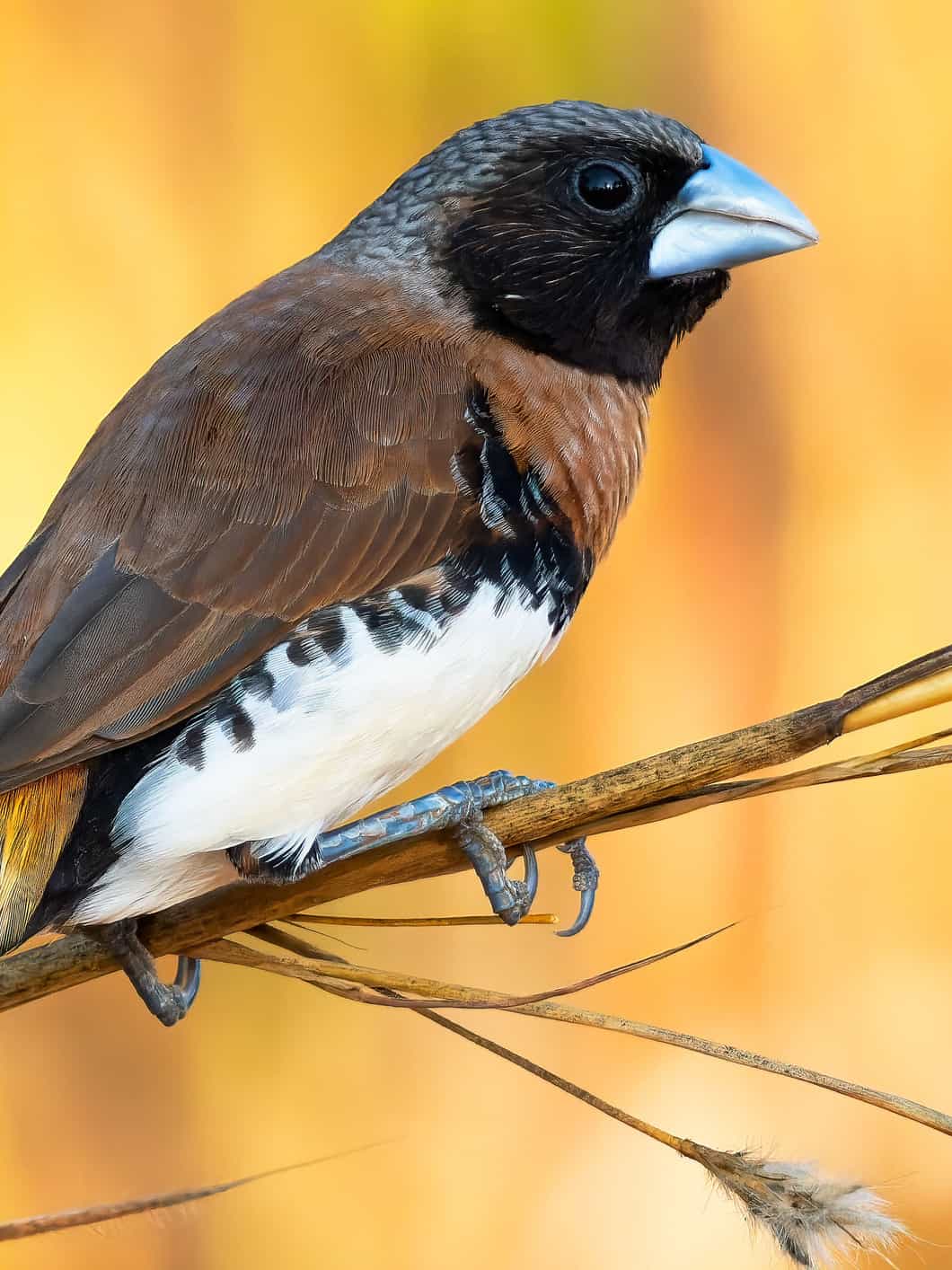
rich brown upperparts and finely scaled underparts
- •
chestnut-colored face with a slight contrast to the body
- •
short, stout black beak suitable for seed-eating
Female
- •
light brown upperparts with a similar scaly pattern on the underparts
- •
paler face compared to the male, without the chestnut hue
- •
short, stout black beak, consistent with the male
What does a scaly-breasted munia sound like?
The Scaly-breasted Munia, known for its unique vocalization, typically produces high whistles and twitters. Its call type can be distinguished by a high-pitched chirp or chip. The bird also commonly uses twittering and whistling sounds. Its song is characterized by a combination of these sounds, creating a distinct and recognizable melody within its habitat. This expressive vocal trait makes the Scaly-breasted Munia noticeable and appealing to bird enthusiasts.


Description
Personal space? Scaly-breasted munias are not familiar with the concept. These incredibly sociable birds roost feather-to-feather, sometimes even with other species of munias. When hopping about they flick their tail. This is thought to mean they are about to take off and is a way of keeping the flock together by keeping everybody up to speed!
The scaly-breasted munia can weigh between 12to16grams and be from10to13centimeters tall.
The scaly-breasted munia, also known as the spice finch, typically lives between 5-8 years in the wild. Compared to related species, this is slightly shorter. For instance, the zebra finch and the society finch live an average of 5-9 years and 6-9 years respectively.
Did you know?
Most popular questions about scaly-breasted munia
How to recognise a scaly-breasted munia?
General appearance
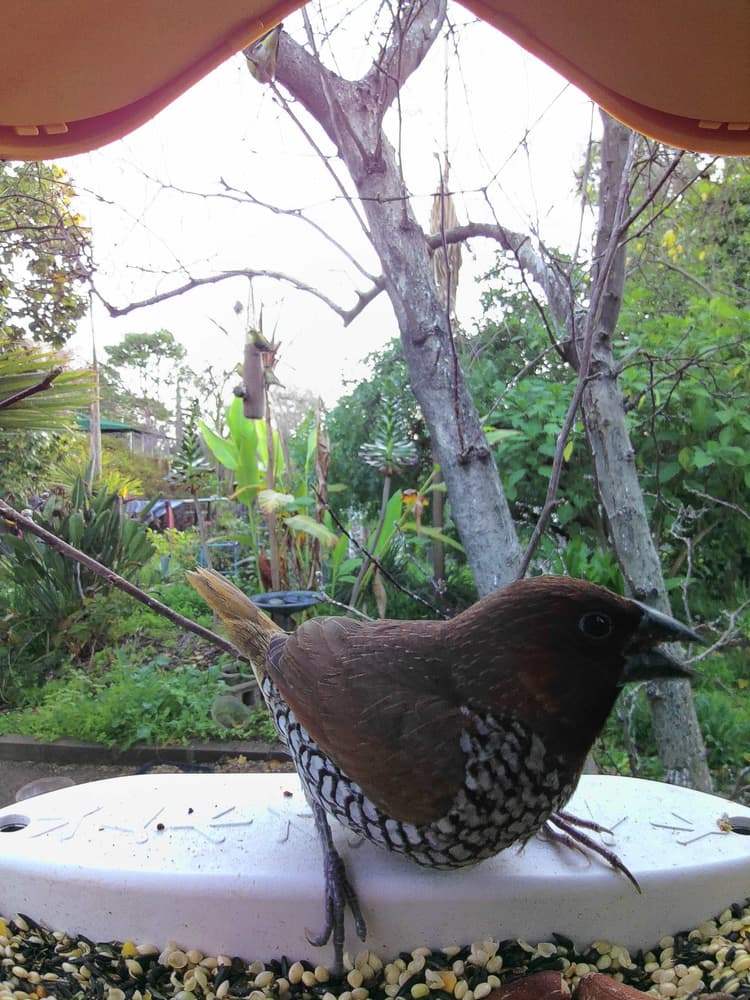
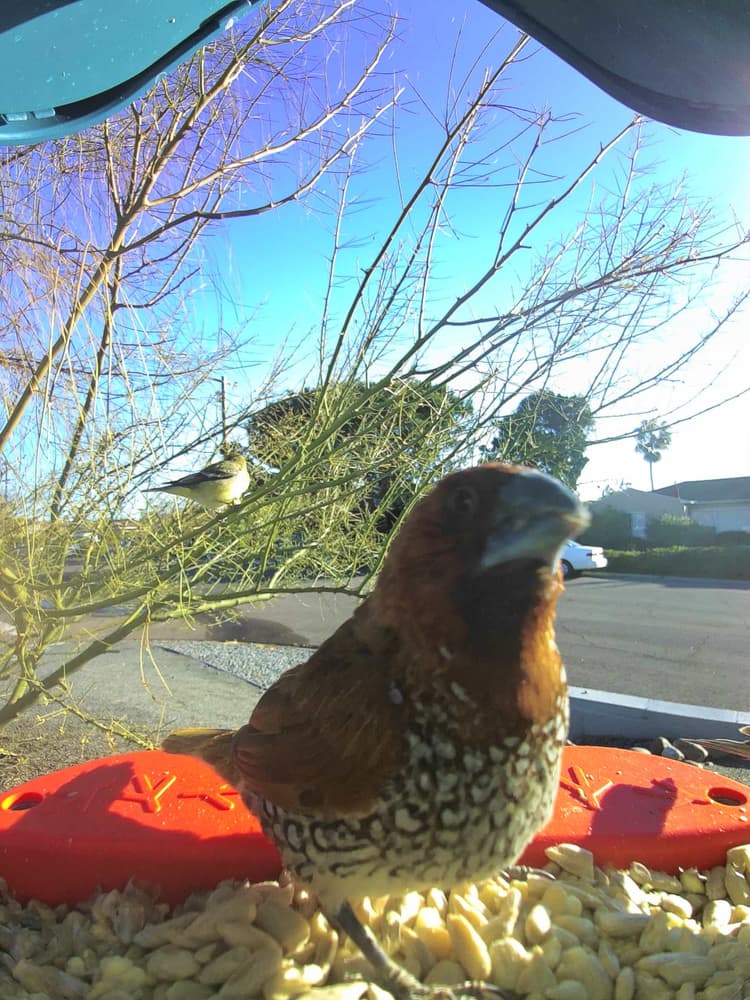
The scaly-breasted munia is a small passerine bird featuring a distinctive scale-like pattern on its breast and underparts. Its feathers are generally brown, with darker brown or black scaling. The wings and back have a warm chestnut hue, and the tail is short and pointed. The beak is stout and conical, ideal for seed-eating.
Male vs female
There is minimal sexual dimorphism in scaly-breasted munias. Both males and females have similar coloration and patterns, making them challenging to differentiate visually. However, during the breeding season, males may exhibit slightly more vibrant feathering and engage in courtship behaviors such as singing.
Juvenile
Juvenile scaly-breasted munias lack the distinct scale pattern of adults. Their plumage is primarily plain brown with lighter underparts, providing camouflage from predators. Over time, as they mature, the distinctive scaled pattern emerges. Identification in the wild involves listening for their soft calls and observing their social behavior in flocks, usually in grasslands and wetlands.
Often mistaken for
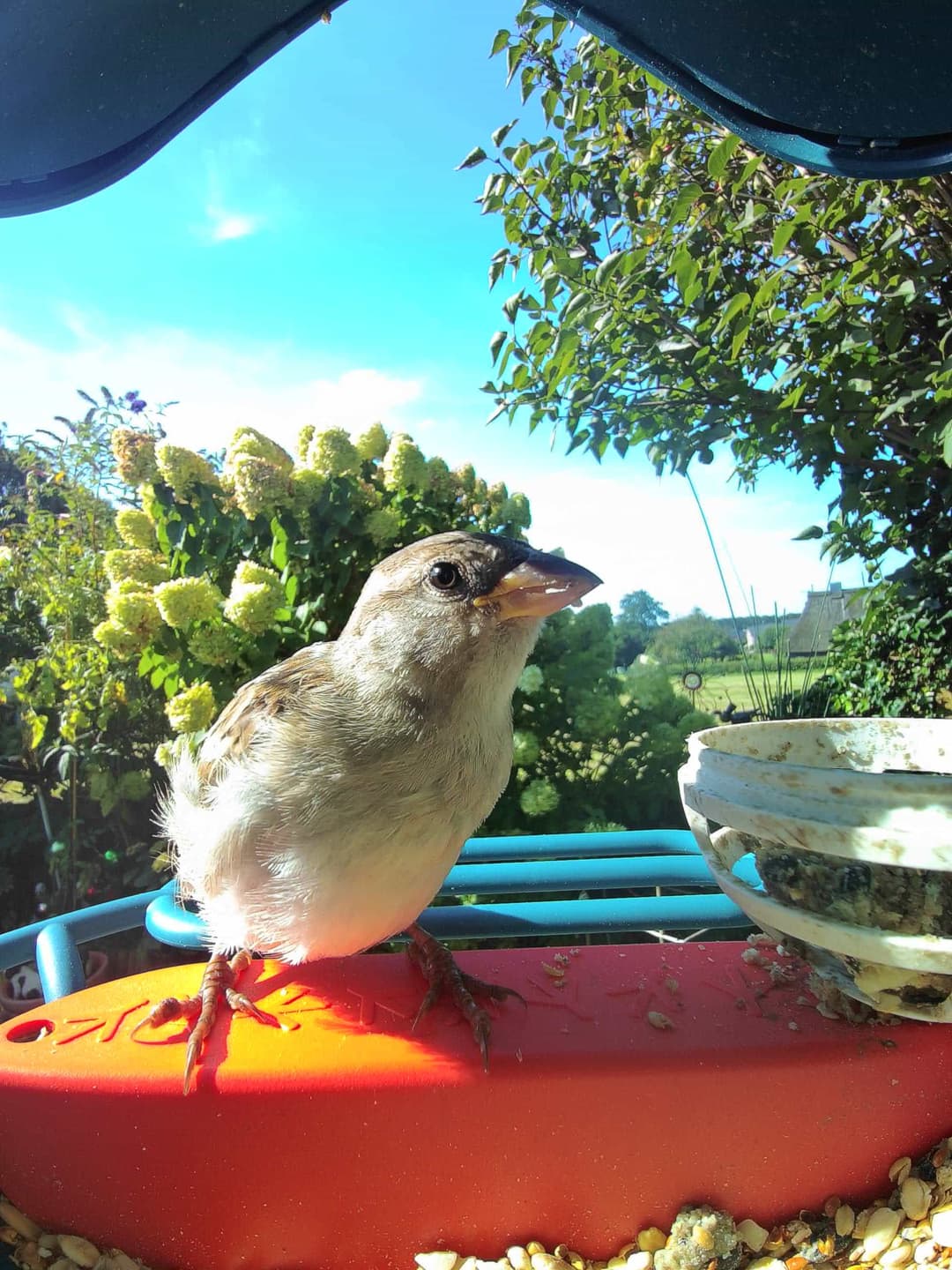
House Sparrow vs Scaly-Breasted Munia
The House Sparrow is similar in size to the Scaly-Breasted Munia but lacks the distinctive scaly breast pattern and has a more uniform brown color with a gray underbelly.
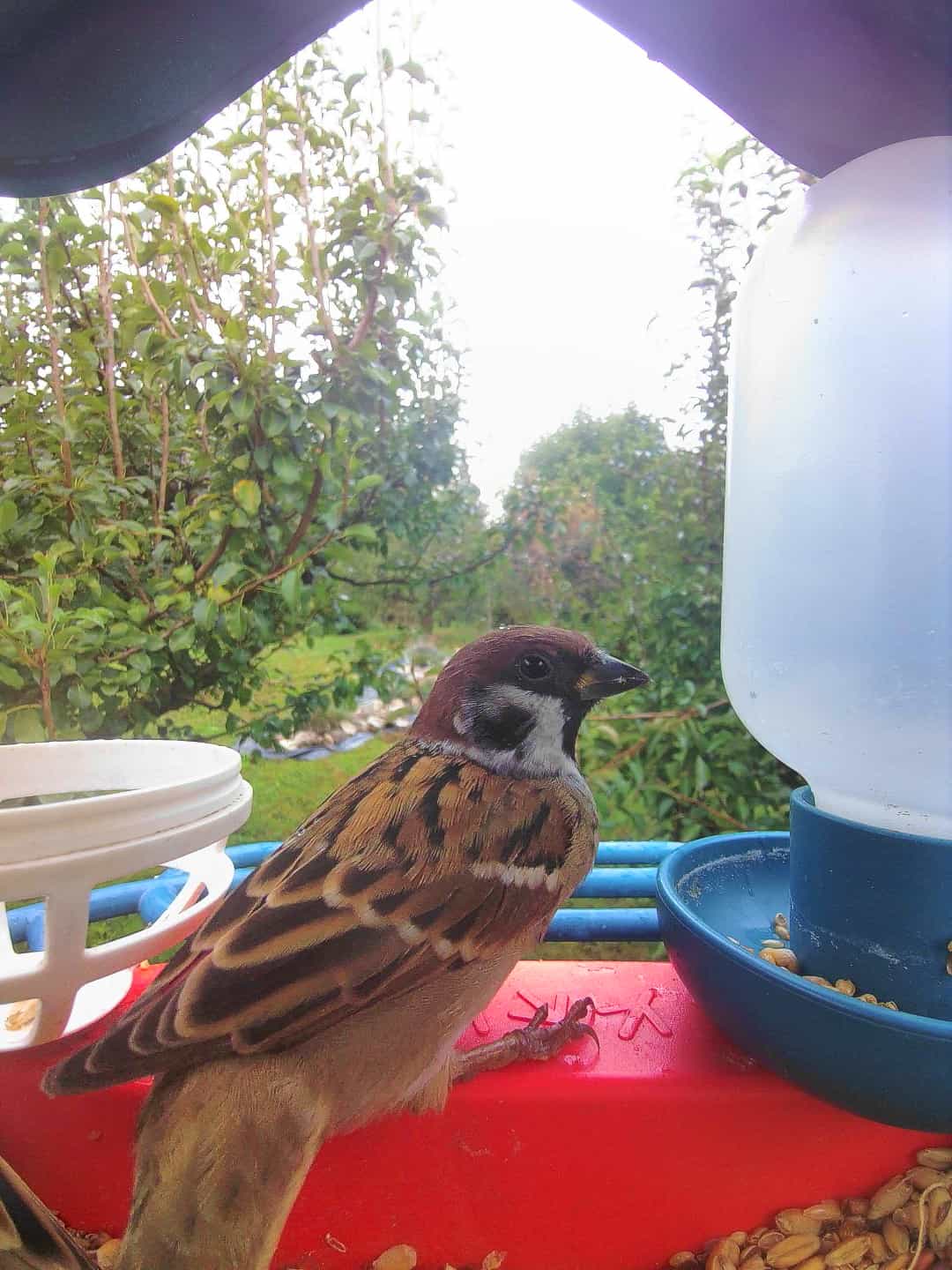
Eurasian Tree Sparrow vs Scaly-Breasted Munia
The Eurasian Tree Sparrow shares a similar habitat and general sparrow body shape but has a brown cap and lacks the scaly breast pattern seen in Scaly-Breasted Munias.
Zebra Finch vs Scaly-Breasted Munia
Though visually resembling in size, Zebra Finches have distinctive orange cheeks and lack the scaly breast pattern unique to Scaly-Breasted Munias.

Chestnut-Breasted Munia vs Scaly-Breasted Munia
The Chestnut-Breasted Munia is similar to the Scaly-Breasted Munia but features a rich chestnut color across the breast instead of the scaly pattern.
Breeding and nesting habits of the scaly-breasted munia
Mating behaviors
Scaly-breasted munias engage in courtship displays that include singing and wing flicking. Both sexes participate equally in these activities to strengthen pair bonds and ensure successful mating.
Nesting details
These birds primarily use grass, leaves, and feathers to build their nests, often creating spherical structures within dense foliage. Scaly-breasted munias frequently select garden shrubs or small trees for nesting, providing a level of protection and camouflage for their offspring.
Eggs and chick-rearing
The female lays 3-5 white, unmarked eggs, which are incubated by both parents for about 14 days. After hatching, both parents continue to feed and care for the chicks, fostering their growth and development until they fledge and become independent.
What does a scaly-breasted munia like to eat?
Berries
Fruits
Insects
Seeds
Natural diet
The scaly-breasted munia primarily consumes seeds, which are a significant component of its natural diet. Additionally, it supplements its diet with berries and insects, ensuring a varied intake of nutrients necessary for its health and wellbeing.
Bird feeders
At bird feeders, the scaly-breasted munia is likely to be attracted to seeds offered in traditional mixes. While seeds remain the dominant element of its diet, the availability of various seed types in feeders can support its feeding habits.
Attracting scaly-breasted munia
Scaly-breasted Munias, also known as Spice Finches, are beautiful little birds that can add vibrancy to your yard or feeder. They're fond of visiting places where they can find their favorite foods. This includes small seeds, particularly millet and rice. Offer these in your bird feeder and chances are you'll see these charming birds popping by.
Ideal feeder type
For the Spice Finch, tube or platform feeders are ideal. They offer an easy perch and space for these social birds to feed in a group. Make sure the feeders are clean and the food is fresh to further entice them.
Fun tricks
Place the feeders near shrubs or trees. This encourages these timid birds to venture closer, as they have a quick escape route if they sense danger. And munias love bathing, so including a bird bath could make your yard a one-stop shop for them.
Bird buddy seed recommendation
When filling your feeders, consider Bird Buddy seeds. Expertly chosen for the season, these seeds are particularly effective at attracting scaly-breasted munias. So, fill up your feeders, sit back, and enjoy the delightful presence and sing-along of these lovely birds.
Where can you find scaly-breasted munias?

Primary habitat
The scaly-breasted munia primarily favors brushy, overgrown fields, and woodland edges, often found near aquatic areas.
Additional range
The species also adapts to other dense low-growth environments, making it quite versatile in its habitat preferences.
Do they migrate?
The scaly-breasted munia, also known as the spotted munia or nutmeg mannikin, is generally considered a non-migratory bird species. It tends to stay in one place throughout the year. This species is native to tropical Asia, ranging from India and Sri Lanka to the Southeast Asian countries, including Thailand, Indonesia, and the Philippines. Although the scaly-breasted munia primarily resides in one area, local movements may occur, mainly driven by food availability and habitat conditions. These birds can be found in a variety of habitats, such as grasslands, agricultural fields, gardens, and secondary forests, where they can find their main diet consisting of grass seeds and small grains. Occasionally, the species may expand its range due to human introductions in non-native regions. For example, the scaly-breasted munia has established populations in places like Puerto Rico, Hawaii, and California. However, in these new regions, they tend to settle rather than migrate. In summary, the scaly-breasted munia is largely sedentary, with movements largely localized and dictated by environmental factors rather than long-distance migration.
What is the role of scaly-breasted munias in nature and how to protect them?
Conservation status
The scaly-breasted munia is classified as a species of "Least Concern" by the IUCN. It is common and widespread across its native range in South and Southeast Asia. Key threats include habitat loss due to agricultural expansion and urbanization. Despite this, the species is highly adaptable and can thrive in a variety of environments, including urban areas. Currently, there are no significant conservation efforts specifically targeting this bird, as its populations remain stable. However, maintaining natural habitats benefits its ecosystems and biodiversity, indirectly supporting the scaly-breasted munia.
Ecological role of scaly-breasted munias
Its role in the ecosystem
The Scaly-breasted Munia, known for its unique breeding and feeding behaviors, plays a crucial role in sustaining the biodiversity of an ecosystem. They consume a diet primarily composed of seeds, along with some berries and insects. Their diet aids in pest control as they help mitigate insect populations that would otherwise be detrimental to plant life. The rich content of seeds in their diet also furthers the distribution of plant species as they forage in flocks, usually in dense low growth or on the ground. This is because the seeds are not digested fully and get scattered through their droppings, facilitating the growth of new plants. Moreover, they often clip grass stems to access seed heads, ensuring a balanced plant community by preventing overgrowth of certain species. Finally, their nurturing behavior of co-parenting amongst both sexes aids their proliferation despite prevalent ecological challenges.
How to help protect scaly-breasted munias
Preservation tips
Habitat preservation strategies
Promote the conservation of scaly-breasted munia by preserving and restoring their natural habitats, including grasslands, wetlands and farmlands. Limit or regulate activities that lead to habitat destruction like deforestation and overdevelopment. Strictly enforce these environmental protection laws. Where possible, create protected areas or reserves.
Community science initiatives
Engage local communities in monitoring and research efforts, as well as in education and awareness campaigns about the scaly-breasted munia and its importance. Initiate birdwatching events and citizen science projects, where people can report sightings, and contribute to its habitat mapping and population tracking. Regular community clean-ups can also reduce pollution, benefiting their habitats.