
Blue-Gray Tanager
Blue-Gray Tanager
Thraupis episcopus
Quick Identification guide
Quick Identification guide
- •
Exhibits a soft blue-gray plumage covering most of its body, creating a subtle but distinct appearance
- •
Features paler underparts that contrast with the darker wing and tail feathers
- •
Possesses a short, pointed beak that complements its small to medium-sized, round body
What does a blue-gray tanager sound like?
The vocalizations of the blue-gray tanager are complex, usually consisting of short and high-pitched chirping notes. This bird's typical calls are a sharp "tsit" or "tsip", and its songs are musical whistles, often repeated in succession. The calls and songs vary widely among individuals, with different regional dialects present across its distribution range. They often sing from exposed locations or while in flight, especially at dawn. This species' vocalizations are most frequent during the breeding season.
Description
Did you know blue-grey tanagers' nickname on Trinidad and Tobago is blue jean? Their is nothing blue about their behaviour, though! These beauties are noisy and conspicuous birds that you absolutely cannot miss. Sometimes quite literally, as they will often pay a visit to urban parks and gardens. Yay!
The blue-gray tanager can weigh between 27to45grams and be from15to17centimeters tall.
Blue-gray tanagers typically live for 11-16 years in the wild. Compared to related species, the scarlet-rumped tanager has a similar lifespan of 13 years, while the silver-beaked tanager lives shorter with an average of 8 years. Therefore, blue-gray tanagers possess a relatively lengthy lifespan within their family.
Did you know?
Most popular questions about blue-gray tanager
How to recognise a blue-gray tanager?
General appearance
The blue-gray tanager is a bird species known for its distinctive hue. Mostly, it features a variation of blue-gray across the body, with a lighter underbelly. The wings are brighter colors, usually shades of azure or cobalt. They are medium-sized birds, with a length of around 6.5-7 inches, and have a distinctive forked tail.
Male vs female
In terms of physical appearance, males and females are almost identical. Both sexes share the same blue-gray coloration, and size. There are no significant seasonal variations in their appearance. In certain subspecies, the male may exhibit a slightly brighter plumage than the female.
Juvenile
Young blue-gray tanagers, or juveniles, share similar general characteristics with adults. They also have blue-gray plumage, but it is generally duller and less vibrant than that of adults. Additionally, their beaks and legs are bredworth-brown, gradually turning black as they mature.
Often mistaken for
Scrub Tanager vs Blue-Gray Tanager
While the Scrub Tanager and Blue-Gray Tanager are both primarily blue and gray, the Scrub Tanager has olive or yellowish tones on the flanks and back, distinguishing it from the more uniformly blue-gray appearance of the Blue-Gray Tanager.
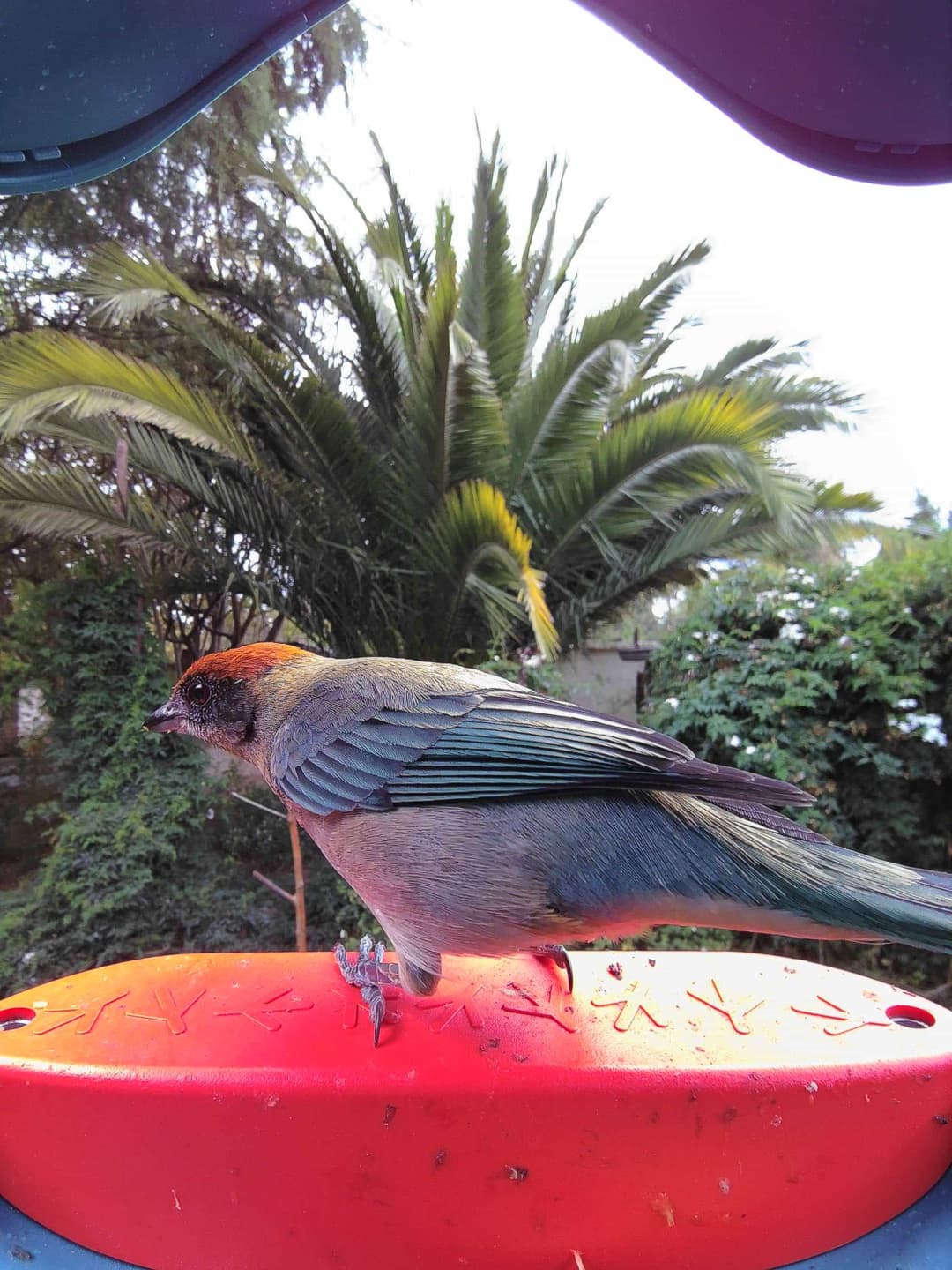
Sayaca Tanager vs Blue-Gray Tanager
The Sayaca Tanager shares a similar blue-gray color with the Blue-Gray Tanager, but it typically has a more muted and slightly duller blue hue. Additionally, the Sayaca Tanager may show a slight greenish tinge on its underparts.
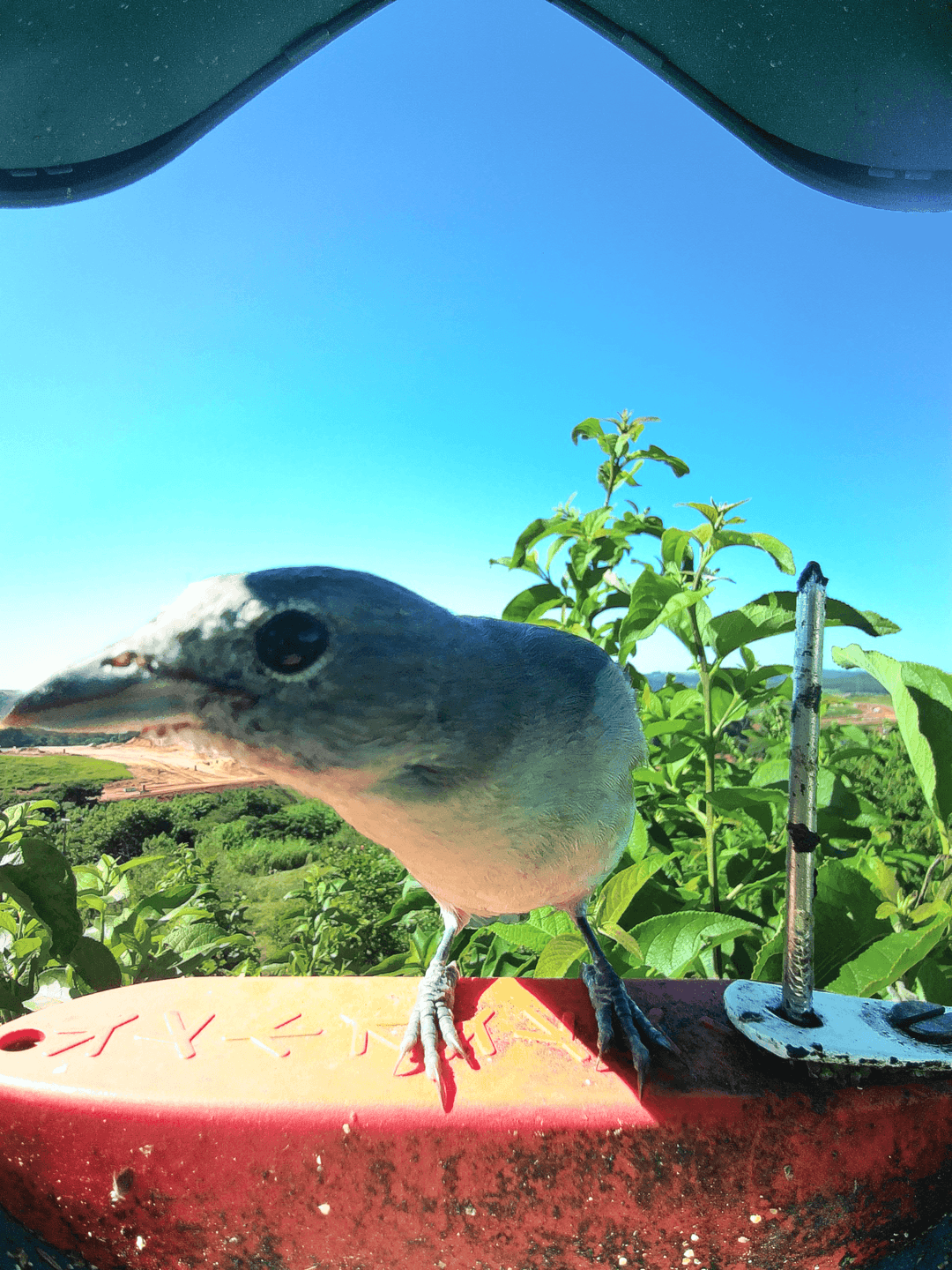
Breeding and nesting habits of the blue-gray tanager
Mating behaviors
The blue-gray tanager engages in courtship displays that include fluttering flights and soft calls. Pairs form monogamous bonds and often perform mutual preening to strengthen their pair bond.
Nesting details
The species builds cup-shaped nests using twigs, grass, and leaves, typically in trees or shrubs. Blue-gray tanagers readily adapt to gardens, where they may nest in foliage or man-made structures. To attract them, provide dense shrubs and leave brush piles for nesting materials.
Eggs and chick-rearing
Females lay 2-3 eggs, which are incubated for about 14 days. Both parents participate in feeding the chicks, which fledge two weeks after hatching. They continue to care for the fledglings for several weeks, teaching them to forage.
What does a blue-gray tanager like to eat?
Berries
Fruits
Insects
Nectar
Spiders
Natural diet
The blue-gray tanager predominantly feeds on a variety of fruits, especially those found in tropical environments. It often consumes small berries, such as those from the Melastomataceae family. Additionally, it supplements its diet with insects, including caterpillars, beetles, and spiders, which provide necessary proteins. These birds typically forage in the mid-levels to upper canopy of forests, exploiting ample resources available in their diverse habitats.
Bird feeders
At bird feeders, blue-gray tanagers are known to enjoy offerings of fruits, including slices of bananas, oranges, and papayas, which replicate their natural food preferences. They are also attracted to jelly and fruit-based suet mixes, which provide an energy-rich food source. Occasionally, they may sample from mixtures of seeds, but they primarily seek out softer, fruit-based options that align more closely with their natural diet.
Entice them with their favorite treats
Blue-gray tanagers are especially fond of fruits. Consider putting out oranges, apples, and bananas in your bird feeder to attract them. For best results, use Bird Buddy seeds. Bird Buddy chooses the seeds that are most appealing to blue-gray tanagers during each season.
Get the right feeder
With their relatively large size, blue-gray tanagers need a sturdy feeder where they can perch and eat comfortably. Opt for platform feeders with enough space for them to spread their wings.
Create a tanager-friendly environment
Planting native plants, shrubs, and trees that bear fruits and seeds will make your yard more inviting to these birds. Don't forget to provide a clean water source for them to drink and bathe in.
Entertain them
Blue-gray tanagers are known for being social and fun-loving. Hang a shiny object near the feeder to pique their curiosity or play some gentle, bird-friendly music to keep them entertained and encourage a fun sing-along.
Be patient
Remember, attracting these beautiful birds can take some time. But with patience, the right food and habitat, and a little entertainment, the blue-gray tanager will soon consider your yard a friendly place to visit.
Where can you find blue-gray tanagers?

Primary habitat
The blue-gray tanager primarily inhabits tropical and subtropical forests from southern Mexico to northern Bolivia and Brazil.
Additional range
This bird species can also accommodate to open woodland and cultivated areas, making it a versatile species capable of adapting to different environments.
Do they migrate?
The blue-gray tanager is generally a resident bird, meaning it does not migrate and tends to stay in one place year-round. This species inhabits a wide range across the Neotropics, including areas from Mexico to Brazil, as well as Trinidad and Tobago. It thrives in various environments, such as open woodlands, gardens, and urban areas. While the blue-gray tanager is not migratory, some local movements may occur in response to changes in food availability or habitat conditions, but these are not long-distance migrations. Its adaptability to different types of habitats allows it to remain in its established territories without the need for seasonal migration. Therefore, there is no specific migratory route, timing, or key locations often associated with traditional migratory birds when discussing the blue-gray tanager. The species' ability to exploit diverse habitats throughout its range ensures its presence across various regions throughout the year.
What is the role of blue-gray tanagers in nature and how to protect them?
Conservation status
The blue-gray tanager is currently classified as "Least Concern" and is relatively common across its range, which includes regions from Mexico to southeastern Brazil. This species has a stable population trend, benefiting from its adaptability to different habitats, including urban and rural areas. While it faces some localized threats, such as habitat destruction due to deforestation and agricultural expansion, these do not currently pose significant risks to its overall population. Conservation efforts focus mainly on preserving natural habitats and promoting biodiversity-friendly practices to ensure the species remains abundant and thrive across its diverse range.
Ecological role of blue-gray tanagers
Its role in the ecosystem
The blue-gray tanager, a vibrant bird native to Central and South America, is essential for ecological balance due to its diet and behaviors. Firstly, this bird actively contributes to pest control as it feast on various insects, including destructive species harmful to plant life. Thereby, it controls their populations and reduces damage to vegetation. Moreover, the blue-gray tanager plays a key role in seed dispersal. Consuming a variety of fruits, it effectively disperses seeds in its droppings as it travels across different areas. This process aids in plant reproduction and genetic variation, increasing biodiversity and ecological robustness. Furthermore, this species makes its nests in different types of habitats, which helps in the ecological cycle's overall functioning. Thus, the blue-gray tanager is not just a vibrant spectacle but also a significant ecological component.
How to help protect blue-gray tanagers
Preservation tips
Habitat preservation strategies
Enhance and preserve the blue-gray tanager's native habitats, including tropical rainforests, gardens, and plantation edges. Establish reforestation initiatives to avoid fragmentation of their habitats. Implement regulations against habitat destruction, such as deforestation and land conversion. Strive for sustainable agriculture that complements bird conservation, as the tanager relies significantly on fruit plants often found in agroecosystems.
Community science initiatives
Promote citizen science programs to document tanager sightings and behavior, which will aid research and conservation strategies. Encourage local communities, especially in Central and South America, to take part in bird-watching and count surveys. Conduct workshops on the importance of biodiversity and how to make backyard habitats more bird-friendly, such as planting native plants. Collaborate with local schools to incorporate conservation education in their curriculum.