
Red-Tailed Hawk
Red-Tailed Hawk
Buteo jamaicensis
Quick Identification guide
Quick Identification guide
- •
Identified by its broad, rounded wings and a short, wide tail with a distinctive reddish hue
- •
Features a light underbelly with a contrasting band of dark streaks across the belly
- •
Its hooked beak is strong and ideal for tearing prey, accentuating its robust, stocky appearance
What does a red-tailed hawk sound like?
The red-tailed hawk primarily vocalizes a high-pitched descending scream, characterized by a hoarse quality, known phonetically as "keeeeer." This call is distinguished by its simple and falling pattern. Essentially, the hawk's vocalization is typified by a shriek or scream, demonstrating a straightforward and declining tonal progression.
Description
Ever watch a Hollywood movie and hear a raptor screeching? No matter the species, chances are the sound they used was a red-tailed hawk! It turns out they epitomise what we think raptors sound like. It's a pretty majestic scream alright. And they are majestic birds! Especially when courting, when pairs will sometimes clasp talons and soar through the air in an impressive display.
The red-tailed hawk can weigh between 690to1600grams and be from45to65centimeters tall.
The Red-tailed Hawk typically lives up to 20 years in the wild, though some can live up to 29 years. It is one of the longest-lived hawks, outliving smaller hawk species such as the Sharp-shinned Hawk and Cooper's Hawk. However, It falls short of Swainson's Hawk, which can live up to 24 years. Overall, captivity can extend their lifespan due to regular meals and absence of predators.
Did you know?
Most popular questions about red-tailed hawk
How to recognise a red-tailed hawk?
General appearance
Red-tailed hawks are large birds of prey with broad, rounded wings and a short, wide tail. The most distinctive feature is their rich, brick-red tail, visible in adults. The body exhibits a mix of brown with a pale, streaked belly and underneath. When observed in flight, the tail is often fanned and the wings show a distinct dark bar at the leading edge.
Male vs female
Although similar in coloration, females are typically larger than males, measuring about 25% more in weight. Both sexes display the same general color patterns with no significant differences in plumage. Observing size is key for differentiation in the field, as plumage features remain consistent between sexes.
Juvenile
Juvenile red-tailed hawks differ from adults, having a brown tail with horizontal bars and a more mottled brown appearance overall, lacking the red tail until maturity. Their underside is less streaked, and they showcase paler eyes compared to adults. With age, the eye and plumage color gradually deepen, and the red tail emerges after the first molt.
Often mistaken for
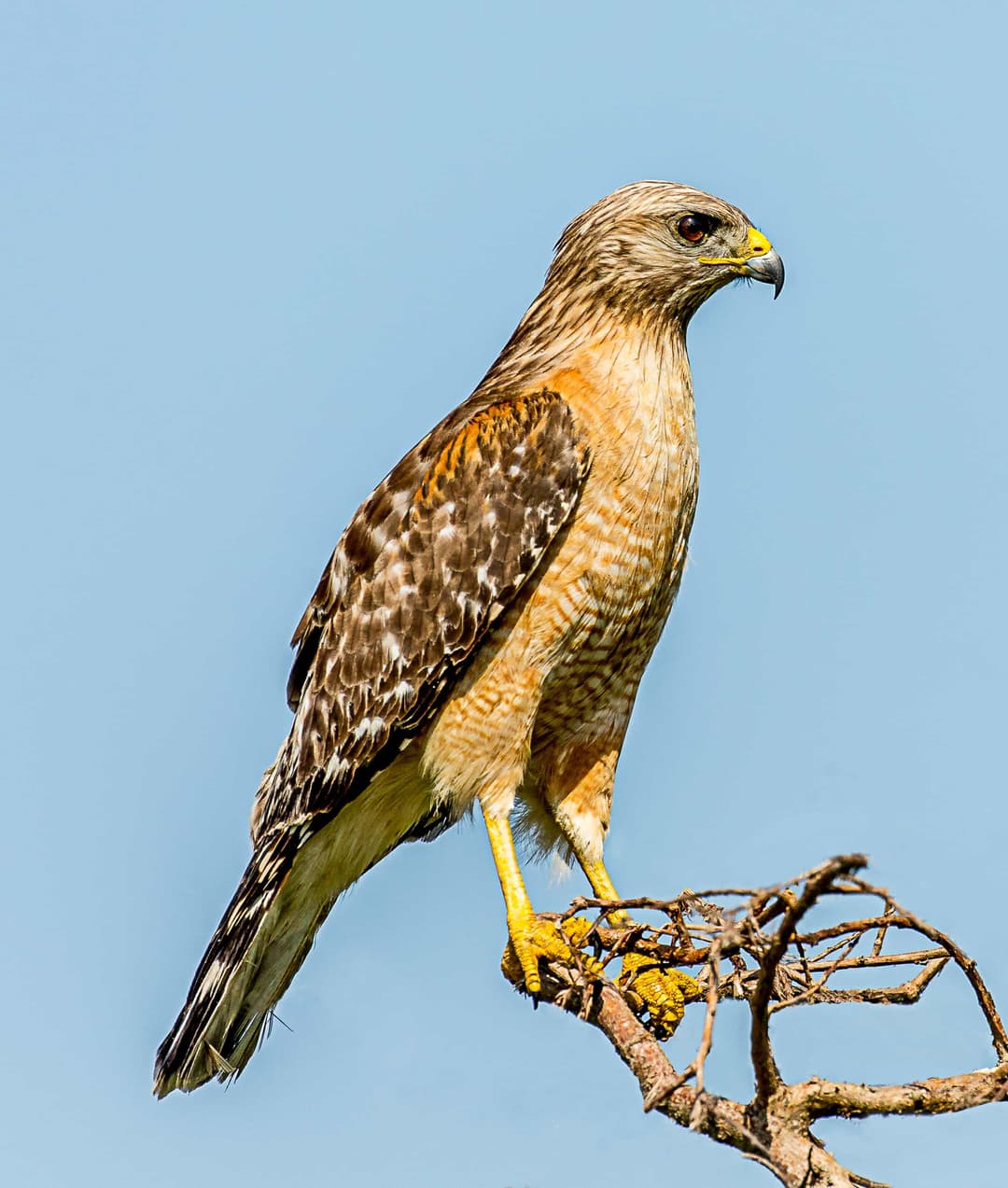
Red-Shouldered Hawk vs Red-Tailed Hawk
The Red-Tailed Hawk and Red-Shouldered Hawk can be distinguished by coloration and habitat. Red-Tailed Hawks have broader wings and a brick-red tail, while Red-Shouldered Hawks showcase black and white checkered wings and rusty, red shoulders. Listen for different calls: the Red-Tailed emits a hoarse screech, while the Red-Shouldered has a higher-pitched, repeated whistle. Red-Shouldered Hawks prefer woods near water.
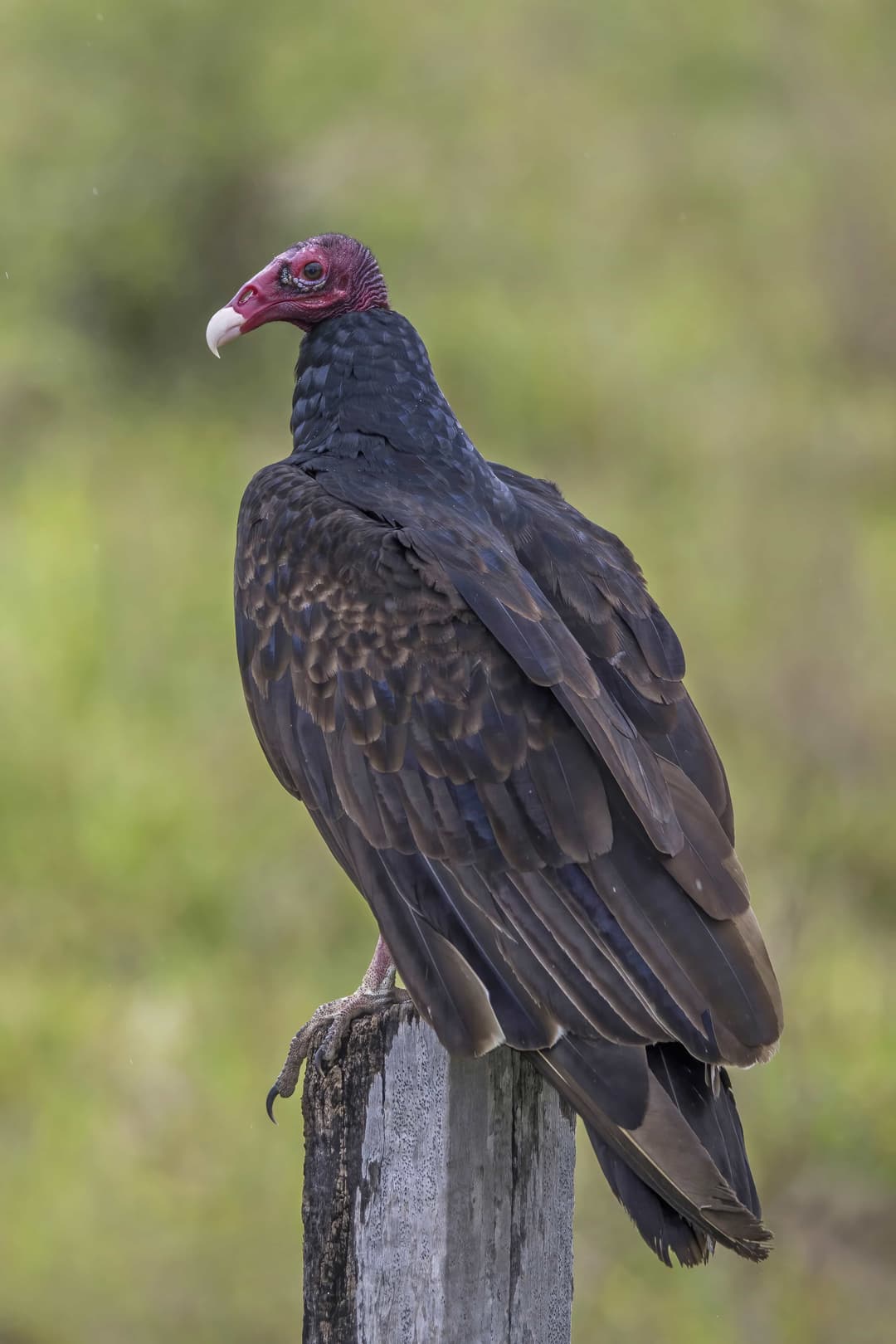
Turkey Vulture vs Red-Tailed Hawk
The Red-Tailed Hawk differs from the Turkey Vulture in appearance and behavior. Hawks possess a shorter tail and a brown body with a red tail, while vultures have a bald red head and longer wings with a two-toned, black and gray pattern. Turkey Vultures soar with wings in a V-shape and teeter in flight, contrasting the steady soaring of Red-Tailed Hawks. Hawks are hunters, while vultures are scavengers.
Breeding and nesting habits of the red-tailed hawk
Mating behaviors
In courtship, red-tailed hawks engage in aerial displays with both male and female soaring in high circles while emitting shrill cries. The male may perform spectacular maneuvers by flying high and diving repeatedly. It is not uncommon for the male to catch prey and pass it to the female while in flight.
Nesting details
Red-tailed hawks select varied nest sites, typically preferring tall trees up to 120 feet high, often taller than surrounding trees. They may also nest on cliff ledges, among giant cactus arms, or on artificial structures such as towers or buildings. Nests are bulky bowls of sticks built by both sexes, lined with finer materials and leafy branches.
Eggs and chick-rearing
Eggs are typically laid in the well-constructed nest, with both parents involved in rearing duties. Incubation and feeding are shared responsibilities. The young remain in the nest where they are fed and protected by both parents until they are ready to fledge.
What does a red-tailed hawk like to eat?
Birds
Small animals
Natural diet
Red-tailed hawks have a varied diet that includes small mammals, birds, and reptiles. Their diet changes depending on the location and season. They frequently prey on mammals such as voles, rats, rabbits, and ground squirrels. Additionally, they consume many birds, up to the size of pheasants, and reptiles, particularly snakes. Occasionally, they eat bats, frogs, toads, insects, and various other creatures. They may also scavenge and feed on carrion.
Bird feeders
Red-tailed hawks typically do not gather at bird feeders because their natural prey is not commonly found there. They require larger prey, which is not provided by the seeds or smaller birds usually attracted to bird feeders.
Favorite snacks of red-tailed hawks
Red-tailed hawks appreciate natural food the most, such as small mammals, insects, and reptiles. Offering bird-friendly landscaping that attracts these animals can tempt the hawk to your yard. Bird Buddy seeds are highly recommended, as these seeds have been selected by experts for each season to attract a diverse range of birdlife.
Feeder types
Red-Tailed Hawks prefer elevated feeders like platform feeders, as they typically perch on high points to scout out their prey. Adding a water source, such as a birdbath or a small pond, will also entice them to visit your garden.
Fun tricks to lure red-tailed hawks
Placing feeders near large windows or open spaces can offer these birds a sense of security. Additionally, preventing other predatory animals, such as domestic cats or dogs, from accessing your yard can make hawks feel safer and more likely to visit. Maintain a tranquil environment with little human interruption to keep these regal visitors in your yard longer.
Where can you find red-tailed hawks?
Primary habitat
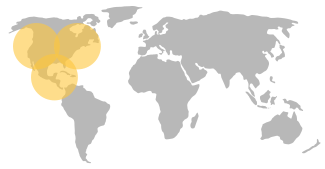
Red-tailed hawks prefer habitats such as open country, woodlands, prairie groves, mountains, and plains. These habitats provide ample open spaces for hunting and high perches.
Additional range
They are adaptable to a variety of terrains including roadsides, woodland clearings, grasslands or deserts, often seen at utility poles or trees.
Do they migrate?
The red-tailed hawk exhibits varied migratory behaviors depending on its geographic location. Northern populations tend to migrate south during the winter months, whereas many red-tailed hawks residing in central or southern latitudes, particularly adults, are often permanent residents and do not migrate. Migration for northern red-tails usually begins late in the fall and they return northward early in the spring. The migratory journey may take these hawks to central and southern regions of the United States, with some reaching northern parts of Central America. Key migratory corridors include the ridgelines of mountain ranges, such as the Appalachian Mountains in the eastern United States, where they take advantage of thermal currents for gliding. Notable gathering spots include locations like Hawk Mountain in Pennsylvania, where significant numbers of migrating hawks can be observed. In contrast, those residing in milder or southern climates, including parts of California and the southeastern United States, often stay year-round due to favorable weather and consistent food availability. This variation allows the species to adapt to a wide range of environmental conditions across North America, ensuring the survival and continuance of the population.
What is the role of red-tailed hawks in nature and how to protect them?
Conservation status
The red-tailed hawk is widespread and common, having increased in some areas since the 1960s, with current populations stable or still increasing. It is not considered vulnerable or endangered. In several North American regions, these hawks are adapting to urban environments by nesting in cities. Key conservation efforts are not urgently needed due to their stable status, though continued monitoring is essential to detect any future threats. Urbanization may introduce new challenges, but currently, the species successfully coexists with human environments.
Ecological role of red-tailed hawks
Its role in the ecosystem
The red-tailed hawk, an apex predator, has a significant impact on the ecosystem by controlling the population of small mammals, birds, and reptiles. Its varied diet includes voles, rats, rabbits, squirrels, and even bats - many of which can be considered pests. By hunting these species, the hawk helps mitigate potential overpopulation and disease spread. Moreover, by managing the rodent population, it indirectly contributes to seed dispersal as fewer rodents mean more seeds escape being eaten and are able to sprout. Hence, their role aids in maintaining biodiversity within environments by keeping prey numbers in check, allowing plant species to flourish. Furthermore, they also eliminate carrion, thus aiding in the decomposition process and nutrient cycling in nature. Their nesting habits have minor effects on vegetation structure, as they often use leafy green branches to construct their nests. The removal of these branches can indirectly open up plant canopy, allowing more light penetration that benefits undergrowth.
How to help protect red-tailed hawks
Preservation tips
Habitat preservation strategies
Avoid altering landscapes such as standing trees or deadwood that serve as breeding and hunting grounds for red-tailed hawks. Advocacy for preservation of open space in urban development can maintain suitable habitats. Work with local land trusts or conservation organizations to ensure areas rich in small mammals, the hawk's primary food source, are safeguarded.
Community science initiatives
Participate in local birdwatching groups or citizen science projects like the Audubon Society’s Christmas Bird Count. Such initiatives contribute valuable data on red-tailed hawk populations and their behaviors. Report sightings of red-tailed hawks to local wildlife organizations to assist in tracking and conservation efforts. Foster educational opportunities in schools and local communities about the importance of these birds for maintaining ecological balance.