
Red-Shouldered Hawk
Red-Shouldered Hawk
Buteo lineatus
Quick Identification guide
Quick Identification guide
- •
Features reddish shoulders and barred reddish underside, providing a distinctive look
- •
Displays a medium-sized, broad-winged build often with a pale or white underwing lining
- •
Presents a dark tail with narrow white bands, complementing its overall pattern
What does a red-Shouldered Hawk sound like?
The red-shouldered hawk has a unique vocalization, characterized by a shrill, intense scream with a specific 'kee-yeeear' pattern that has a downward inflection. This call is known for its simplicity and falling rhythm. The primary type of calls include chatter and screams that stand out due to their distinctive sound properties.
Description
Red-shouldered hawks and American crows have a somewhat love-hate relationship. Though crows will often mob them, they ocassionally chase each other and steal each other's food, but put aside all differences when they need to go up against a great horned owl. Did you know? Lucky for mom and siblings, but unlucky for any unsuspecting passers-by, red-shouldered hawk nestlings are able to shoot their poop out of the nest from the tender age of five days.
The red-Shouldered Hawk can weigh between 486to774grams and be from43to61centimeters tall.
The red-shouldered hawk typically lives up to 20 years in the wild, however, some recorded cases show a lifespan up to 25 years. This species' longevity is comparable to other hawk species. Some related species, like the red-tailed hawk, can also live up to 20 years, while others such as the Cooper hawk live shorter lives, generally up to 12 years.
Did you know?
Most popular questions about red-Shouldered Hawk
How to recognise a red-Shouldered Hawk?
General appearance
The red-shouldered hawk, Buteo lineatus, is a medium-sized bird of prey with a distinctive appearance. It features reddish-brown shoulders, a barred rufous chest, and dark brown plumage streaked with white. The black and white checkered wings and tail are visible in flight, along with a transparent, crescent-shaped window near the wingtips. Adult eyes are dark, and legs are yellow.
Male vs female
Red-shouldered hawks exhibit slight sexual dimorphism, with females larger than males, though their plumage is similar. The size difference is a more reliable indicator than coloration when differentiating between sexes. Both males and females possess the species' characteristic red shoulder patch and barred underparts.
Juvenile
Juveniles appear more muted, with brown, streaked plumage instead of the reddish tones. Their underparts are pale with vertically streaked brown. Juvenile eye color is yellowish, darkening with age. Over time, they develop the adult's checkered wings and red shoulders.
Often mistaken for
Red-Tailed Hawk vs Red-Shouldered Hawk
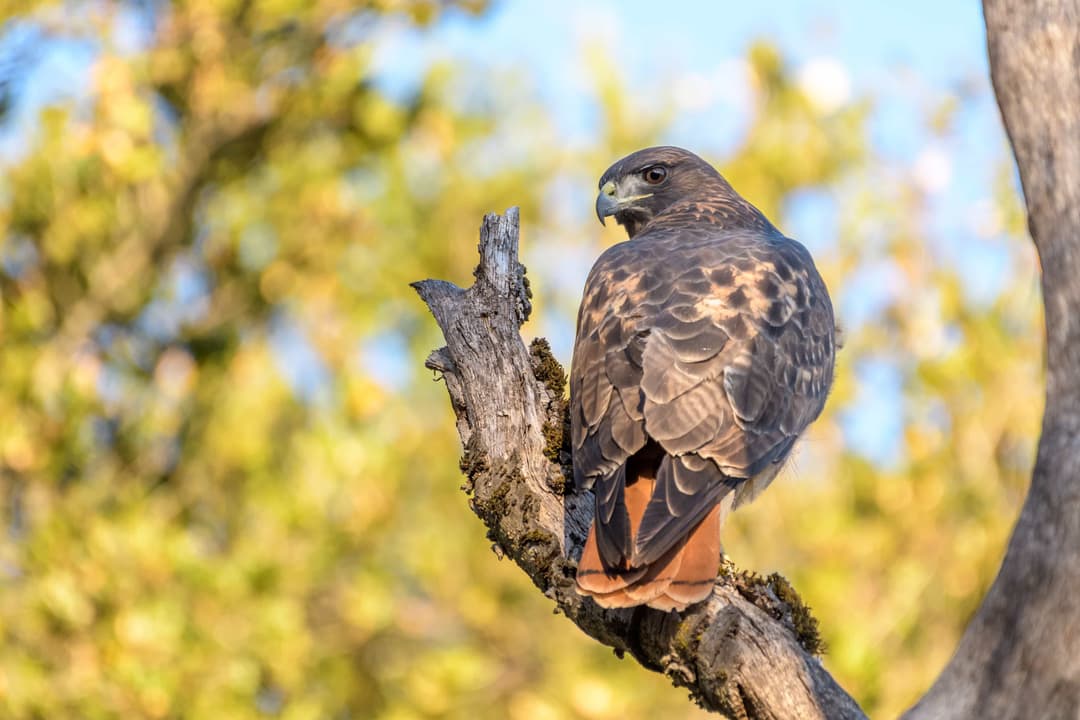
Red-Tailed Hawks are larger with stockier builds and broader wings. They have distinctive red tails, while Red-Shouldered Hawks exhibit a black and white checkered pattern on their wings and reddish bars on their breasts. Listen for the Red-Shouldered's loud, repetitive "kee-aah" call, differing from the Red-Tailed's raspy scream.
Cooper’s Hawk vs Red-Shouldered Hawk
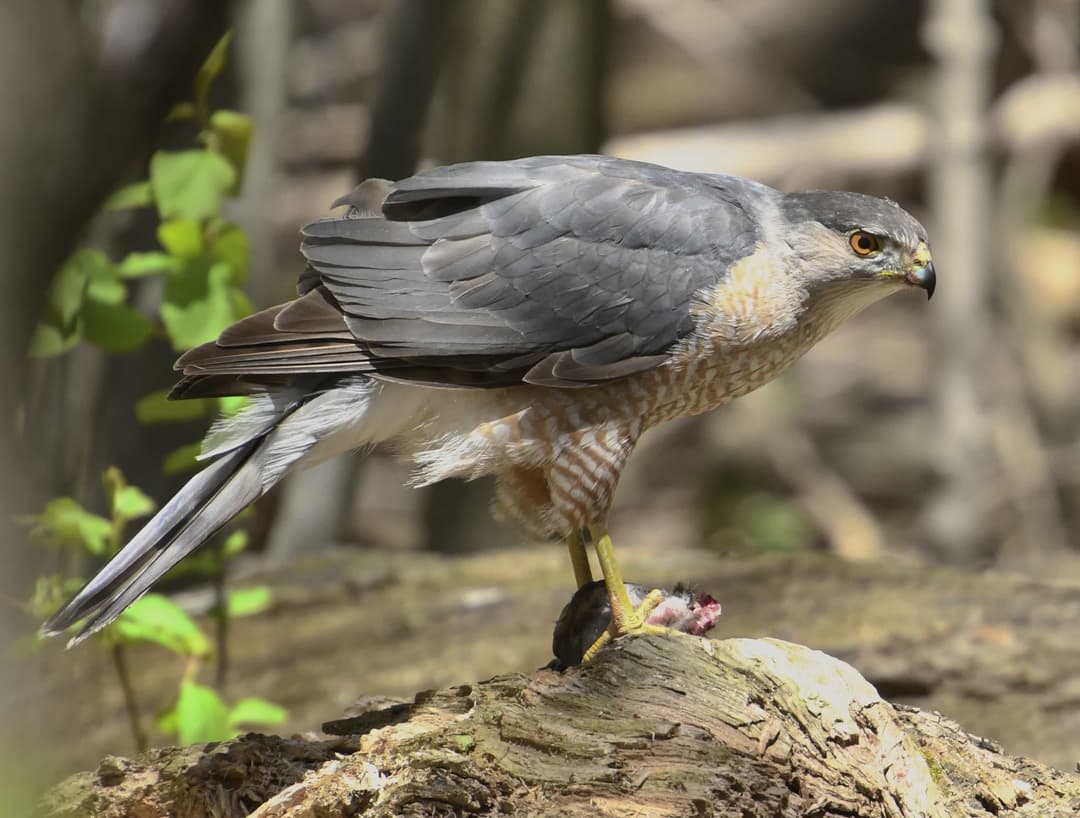
Cooper’s Hawks are smaller with a more compact body and shorter, rounded wings. They have steely blue-gray upperparts versus the Red-Shouldered’s rufous plumage. Cooper’s have a long, rounded tail with wide, dark bands, while the Red-Shouldered's tail displays narrow, white bands. Spot the Red-Shouldered by its pale, translucent crescents visible on wingtips in flight.
Sharp-Shinned Hawk vs Red-Shouldered Hawk
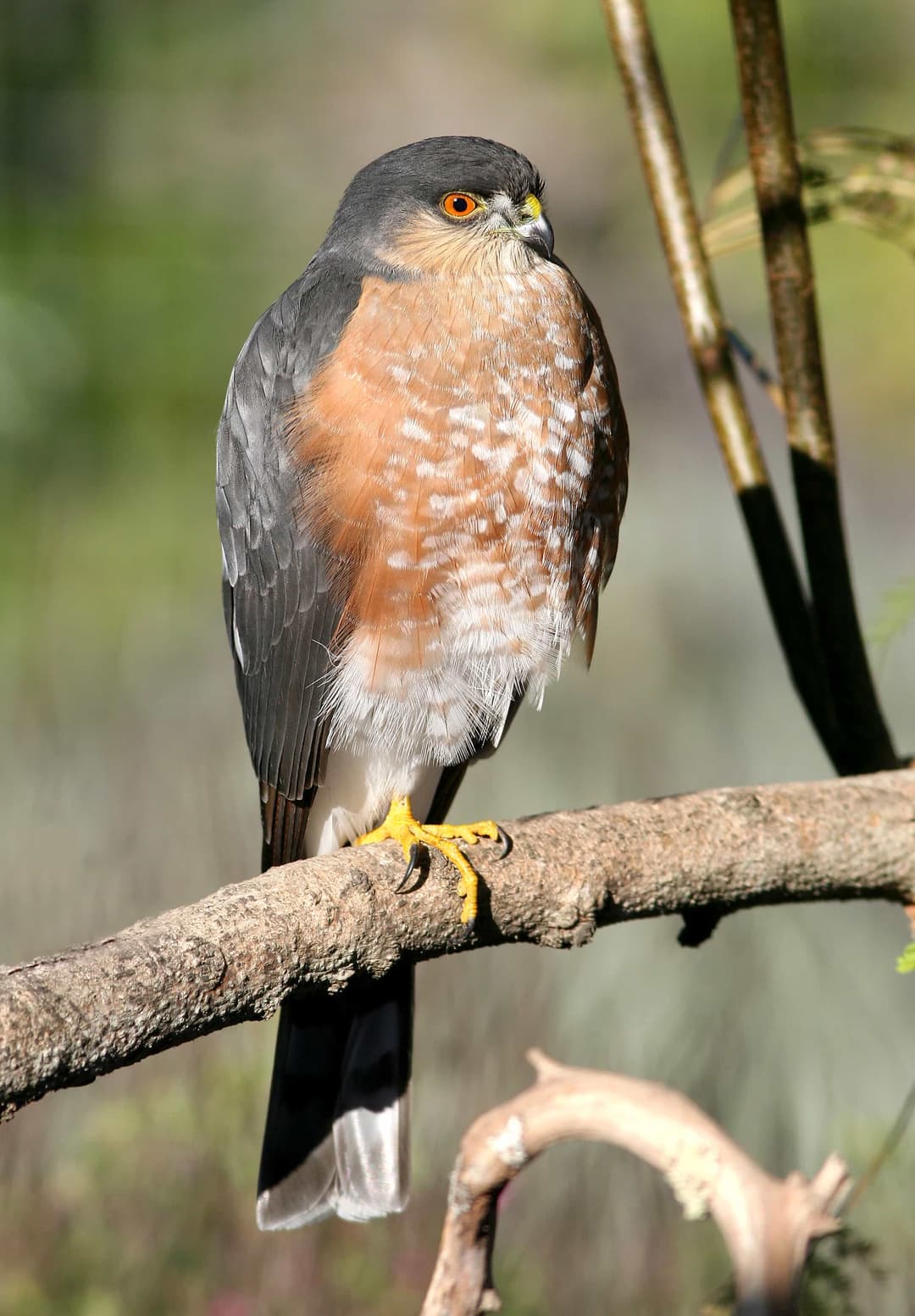
Sharp-Shinned Hawks are notably smaller with proportionally larger heads and square-tipped tails. Their plumage is gray above with rusty barring below, compared to the bright reddish shoulders and bold wing patterns of the Red-Shouldered Hawk. Observe the Red-Shouldered’s upturned wingtips, a feature not shared by the quick, agile Sharp-Shinned.
Breeding and nesting habits of the red-Shouldered Hawk
Mating behaviors
Red-shouldered hawks engage in elaborate courtship displays, including soaring, circling, and calling. Pairs often perform a duet of loud calls. They may engage in aerial displays where the male presents food to the female, reinforcing their bond.
Nesting details
These hawks prefer nesting in deciduous or mixed woodlands, typically near water. Nests are large and constructed in the forks of tall trees. Materials include sticks, bark, and leaves, often reused from previous years and lined with softer vegetation.
Eggs and chick-rearing
Females lay 2-5 eggs, incubated for 33-40 days. Both parents participate in feeding and protecting chicks. Young fledge around 5-6 weeks but remain dependent, learning to hunt for several more weeks. To attract hawks, preserve mature trees, ensure plant diversity, and avoid pesticides.
What does a red-Shouldered Hawk like to eat?
Birds
Carrion
Crustaceans
Insects
Small animals
Worms
Natural diet
The red-shouldered hawk's diet includes small mammals, amphibians, reptiles, and birds. It varies by region and season. Main foods often include mammals such as voles and chipmunks, and at other times, frogs and toads. In some areas, they consume many crayfish. They also eat snakes, small birds, mice, large insects, occasionally fish, and rarely carrion.
Bird feeders
Red-shouldered hawks generally do not visit bird feeders, as their diet primarily consists of live prey like small mammals, amphibians, and reptiles, which are not typically available at feeders.
Setup the right environment
Provide a yard with tall trees for red-shouldered hawks to perch and monitor their surroundings. They prefer forests near water bodies where they can hunt easily. Keeping your yard clean and pesticide-free will help ensure a rich number of insects, which are a primary source of their diet.
Perfect feeders and food
Though hawks are predators, they are seen visiting bird feeders to hunt small birds and mammals that these attract. You don’t have to specifically feed a hawk as they prey upon other visitors. Bird Buddy has expertly chosen seeds that attract a variety of birds, increasing the odds of a red-shouldered hawk visit.
Natural wood platforms and nest boxes
Install natural wood platforms high up in the trees for hawks to rest and nest. You can also use nest boxes. These provide them a safe space for nesting and will increase their stay duration.
The play of sounds
Sounds and calls can attract birds. Red-shouldered hawks use distinct call patterns in their communication. These can be found online. However, use these judiciously to avoid confusing or stressing the birds.
Water sources
Creating a water source like a bird bath or a small pond will also be attractive. The sound of water is particularly enticing to many birds, including the red-shouldered hawk.
Keeping predators away
Keeping pets and potential troublemakers away from these areas will create a peaceful environment more conducive for the hawks to stay longer.
Where can you find red-shouldered hawks?
Primary habitat
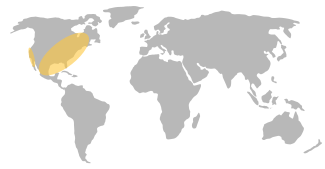
The red-shouldered hawk primarily nests in deciduous and mixed forests with tall trees and an open understory. Typical locations include bottomland woods, wooded streamsides, and swamps.
Additional range
In the west, it favors riverside forests, oak woodlands, and sometimes eucalyptus groves. During winter, it may migrate to more open habitats. In Florida, additional locations include pine woods and mangroves.
Do they migrate?
The red-shouldered hawk exhibits both permanent residency and migratory behaviors, depending on its geographic location. In the western and southern parts of its range, these hawks are mostly permanent residents, staying in the same area throughout the year. However, the northern populations do migrate, although they tend not to travel over long distances. During the winter, red-shouldered hawks from northern regions move southward. This migration is usually not extensive, often just a shift to nearby locales, but some individuals may travel as far south as central Mexico. The migration timing typically aligns with seasonal changes, beginning in late fall when temperatures drop and continuing through early winter. Key locations for the red-shouldered hawk during migration include riparian woodlands, mixed forests, and wooded stream corridors. These types of habitats provide ample hunting opportunities and roosting sites. As a general pattern, migratory movements are more common and pronounced in the northeast and Midwest United States, while the hawks in California, the Pacific Northwest, and southern regions tend to maintain year-round territories.
What is the role of red-shouldered hawks in nature and how to protect them?
Conservation status
The red-shouldered hawk is not considered endangered or vulnerable but is less numerous than historically in some regions, such as the upper Midwest and parts of the Atlantic Coast. Despite these localized declines, the species is generally stable across most areas. Conservation efforts focus on habitat preservation, as deforestation and urban development pose significant threats to their population. Maintaining healthy forest ecosystems is crucial for their nesting and hunting needs, helping ensure stable populations. Overall, while specific areas may see reduced numbers, the species remains relatively common with ongoing conservation support.
Ecological role of red-shouldered hawks
Its role in the ecosystem
The Red-shouldered Hawk plays a significant role in ecosystem balance and health. As an apex predator, it helps manage the population of small mammals such as voles and chipmunks, amphibians, reptiles, birds, and large insects, many of which can be agricultural pests. By controlling these populations, the hawks indirectly assist in controlling the spread of certain diseases prevalent in these pest species. The hawks' consumption of carrion aids decomposition processes and nutrient cycling in the ecosystem. Furthermore, during their hunting activities, they might inadvertently aid in seed dispersal by dropping seeds caught in their prey’s fur or feathers, contributing to tree and plant propagation. Their nests, located high above ground, attract particular insects and other small creatures, fostering biodiversity in their habitats. They also impact the structure and function of ecosystems indirectly though their interactions with other predators and scavengers. In conclusion, the ecological significance of Red-shouldered Hawks extends beyond their function as a predator, influencing multiple aspects of the ecosystem health and balance.
How to help protect red-shouldered hawks
Preservation tips
Habitat preservation
Preserve red-shouldered hawk habitats by establishing protected areas in wooded territories with fresh water sources. Focus on preserving large old trees that are crucial for the hawk's nesting. Advocate for sustainable forestry practices and implement policies to restrict land development in these areas.
Community science initiatives
Organize local bird-watching events to monitor red-shouldered hawk population dynamics. Use community science platforms, like eBird, to report sightings and engage people in hawk conservation. Educate the community about importance of these birds to the ecosystem, and motivate them to participate in habitat restoration activities.