
Turkey Vulture
Turkey Vulture
Cathartes aura
Quick Identification guide
Quick Identification guide
- •
Features a red, bald head with a contrasting pale beak, making the face distinctive
- •
Has dark brown to black feathers covering the body, providing a uniform and somber appearance
- •
Exhibits broad wings with a noticeable two-toned pattern: dark leading edges and lighter trailing edges
Description
Turkey vultures' scientific name roughly translates to "purifying breeze", but that's far from what you'll find if you get too close for comfort. Instead, they are likely to defend themselves by upchucking all over you; and that's not the only way these big birds repurpose bodily fluids: doing a number two on your feet is a good way to cool off during a hot day. Maybe don't try that one at home.
The turkey vulture can weigh between 1400to2300grams and be from64to81centimeters tall.
The turkey vulture typically lives for about 20 years, but can reach up to 30 years in captivity. This is relatively long compared to some related species. For example, the black vulture, a smaller species, has a lifespan of only about 10 years, while the larger Andean condor can live more than 70 years. These lifespan differences correspond generally with size differences among species.
Did you know?
Most popular questions about turkey vulture
How to recognise a turkey vulture?
General appearance
The turkey vulture is a very large bird, roughly the size of a heron, with a wingspan of 64-81 cm. It is characterized by long wings, a long tail, and a small head. Its overall color is black, and it has a red head. It's worth noting the distinct two-toned appearance of its underwing, which is caused by black wing-linings against the grey flight feathers. The wing shape is broad and fingered, while the tail shape is long, rounded, square-tipped, and wedge-shaped.
Male vs female
The source does not provide any explicit differences in appearance or size between male and female turkey vultures. As is common in birds of prey, there may be size differentiation but this is not confirmed for turkey vultures. Further research would be necessary to determine any potential differences.
Juvenile
Juvenile turkey vultures differ from adults mainly in the coloration of their heads. While adults sport a red head, the heads of juveniles are grey. This is a key difference to look for when trying to identify the age of a turkey vulture in the wild.
Often mistaken for
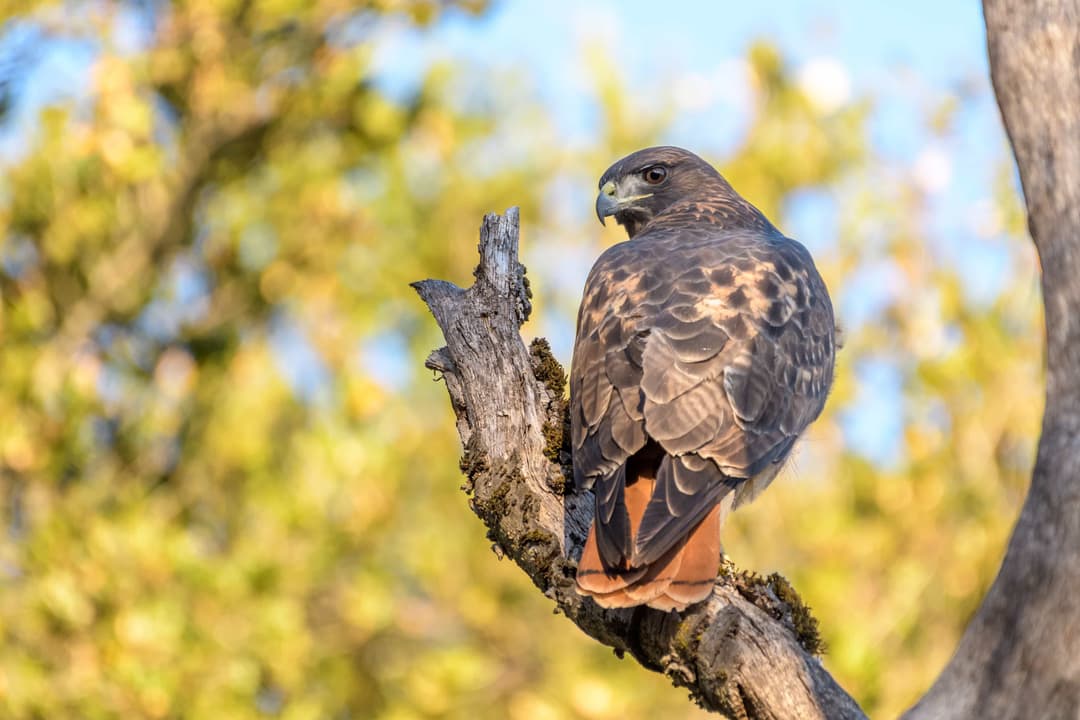
Red-Tailed Hawk vs Turkey Vulture
Turkey Vultures have a distinctive bald red head and larger size compared to Red-Tailed Hawks. While flying, Turkey Vultures hold their wings in a V-shape and teeter side to side, whereas Red-Tailed Hawks glide with wings flat. The Vulture's flight style can appear unstable, unlike the stable glide of the Hawk. Vultures show a two-toned wing underside with lighter flight feathers and dark leading edges, while Hawks have a broad, reddish tail. Listen for differences: Vultures are generally quiet, while Red-Tailed Hawks emit a loud, recognizable scream.
Breeding and nesting habits of the turkey vulture
Mating behaviors
A part of pair formation, several birds gather in a circle on the ground and perform ritualized hopping movements with wings partly spread. In the air, one bird may closely follow another with flapping and diving displays.
Nesting details
Nest sites are in sheltered areas like hollow trees, logs, crevices in cliffs, under rocks, caves, dense thickets, or old buildings. Nests are minimally built; eggs are laid on debris or on the flat bottom of the site.
Eggs and chick-rearing
Turkey vultures lay their eggs directly on the substrate with little or no nesting materials. The degree of parental care involved in chick-rearing is unknown but often includes site protection and food provision.
What does a turkey vulture like to eat?
Carrion
Scraps
Natural diet
Turkey vultures have a diet primarily consisting of carrion, favoring animals that are recently deceased to ensure freshness. They are known for their efficient scavenging of dead animals. On occasion, turkey vultures may consume decaying vegetable matter, live insects, or live fish found in ponds that are drying up.
Bird feeders
Turkey vultures are not common visitors at bird feeders. They are predominantly scavengers and tend to rely on natural sources of carrion rather than seeds or other typical bird feeder offerings.
Attracting turkey vultures with food
Though not everyone's typical garden visitor, Turkey Vultures are fascinating to watch. They are primarily scavengers, prefer fresh roadkill or fish. However, in the absence of this, they can also be drawn to compost piles or spoiled meat. Always remember not to leave out food that could potentially harm them or spread disease.
Creating the ideal feeder
Unlike many birds, Turkey Vultures are not typically interested in traditional bird feeders. Instead, they're more likely to be drawn to areas where they can find decaying organic matter. If you have a large property, an open compost pile can attract these unique birds, but always check your local regulations before attempting to do this.
Bird buddy seeds
While Turkey Vultures aren't typically seed eaters, if you're also trying to attract a variety of birds, Bird Buddy seeds are a fantastic option. They are selected by experts for the seasons, ensuring the nutritional needs of your feathered friends are met all year round.
Additional tricks
To further attract Turkey Vultures, keep the area open. They are more likely to be noticed in open, exposed places rather than wooded or covered ones. You might also consider playing recorded vulture calls to pique their interest. Be respectful and considerate of your vulture visitors, and they could become regulars in your yard!
Where can you find turkey vultures?
Primary habitat
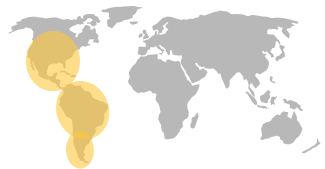
The turkey vulture thrives in open or semi-open country, often within proximity to rocky or wooded areas for nesting. It commonly avoids dense forests.
Additional range
These birds inhabit various regions like open country, woods, deserts, and foothills. They are versatile, even foraging over small offshore islands, something not typical for the Black Vulture.
Do they migrate?
The turkey vulture exhibits a mix of migratory and resident behaviors depending on its geographical location. In the southern United States, these birds are generally non-migratory and remain year-round. However, turkey vultures that reside in the northern parts of the United States undertake long-distance migrations. These migrations can extend as far as South America. During migration, turkey vultures typically travel in flocks and are known for their ability to soar on thermals, allowing them to cover vast distances efficiently without frequent feeding. The migration pattern is generally north to south, with northern populations moving southward in the fall as temperatures drop and food becomes scarcer. This southward journey can begin as early as mid-September, peaking in October, and concluding by November. Key stopover locations during migration include regions in Central America, including Mexico, where they gather in large numbers at specific roosting sites before continuing further south. The return migration occurs in the spring, usually from March to May, when these vultures head back north to their breeding grounds as temperatures rise and food availability increases. This remarkable migration showcases the adaptability and resilience of the turkey vulture across diverse environments.
What is the role of turkey vultures in nature and how to protect them?
Conservation status
The turkey vulture is considered common, with currently stable populations in North America despite past declines in the 20th century. Key conservation efforts focus on habitat protection and monitoring populations to ensure stability. Significant threats include habitat destruction and human-related disturbances, but these have not significantly impacted their overall numbers. Due to their adaptability and wide geographical range, turkey vultures are not classified as vulnerable or endangered. Ongoing conservation initiatives aim to maintain their habitats and mitigate any emerging threats to preserve their current stable status.
Ecological role of turkey vultures
Its role in the ecosystem
The turkey vulture plays a significant role in maintaining ecological balance by acting as nature's clean-up crew. These birds seek out and feed on carrion or dead animals. This vital job significantly contributes to pest control and the prevention of disease spread that could be caused by decaying organic matter. In the absence of vultures, the decomposing carcasses could have led to a surge in scavenger populations such as rats or feral dogs with an increase in associated diseases. Additionally, their feeding behavior can also contribute indirectly to nutrient cycling, helping to enrich our ecosystems. Although it's not explicitly mentioned, it's plausible that by consuming decomposing vegetable matter, they might partake in seed dispersal to some degree. This predatory role, combined with their nesting habits—using naturally sheltered sites—emphasizes their contribution to maintaining a balance in the ecosystem, delivering a form of natural pest control, and possibly assisting in vegetation proliferation.
How to help protect turkey vultures
Preservation tips
Habitat preservation strategies
Protection of nesting and roosting sites are crucial for turkey vulture conservation. Advocacy for laws that safeguard these areas from urban development and logging can prove beneficial. Vultures prefer a diverse habitat - an environment to foster this diversity should be promoted. Implementing recycling programs to reduce environmental pollution, which potentially harms their food source, also aids conservation.
Community science initiatives
Involve local communities in vulture counting and monitoring activities. Educating communities about vulture behavior and their importance in the ecosystem can foster a positive attitude and help prevent vulture persecution. Reporting sightings to local birding groups or conservation authorities can also assist in keeping track of their population. Participation in initiatives like the 'Vulture Safe Zones' can make a profound impact on vulture conservation.