
Pigeon
Pigeon
Columbidae
Quick Identification guide
Quick Identification guide
- •
Characterized by a plump body and short neck, giving it a compact appearance
- •
Displays a broad variety of colors, ranging from bluish-grey to iridescent greens and purples, with some sporting distinct speckled patterns
- •
Features a small, slender bill that is ideal for picking up seeds and grains
Description
The Columbidae family is made up of some 344 species of pigeons and doves, master nest-builders... Okay, not really. Pigeons are actually known for their very flimsy nests that are basically just a bunch of twigs and other stuff piled together on the ground or other surface. Hey, did you know that an unfledged baby pigeon is called a squab?
The pigeon can weigh between 35to2400grams and be from14to79centimeters tall.
Pigeons typically live for 3-5 years in the wild but can live up to 15 years in captivity. Their life is relatively shorter when compared to related species like doves that can live up to 20 years in captivity. Factors such as predation, disease, and harsh living conditions contribute to their shorter lifespan in the wild.
Did you know?
Most popular questions about pigeon
How to recognise a pigeon?
General appearance
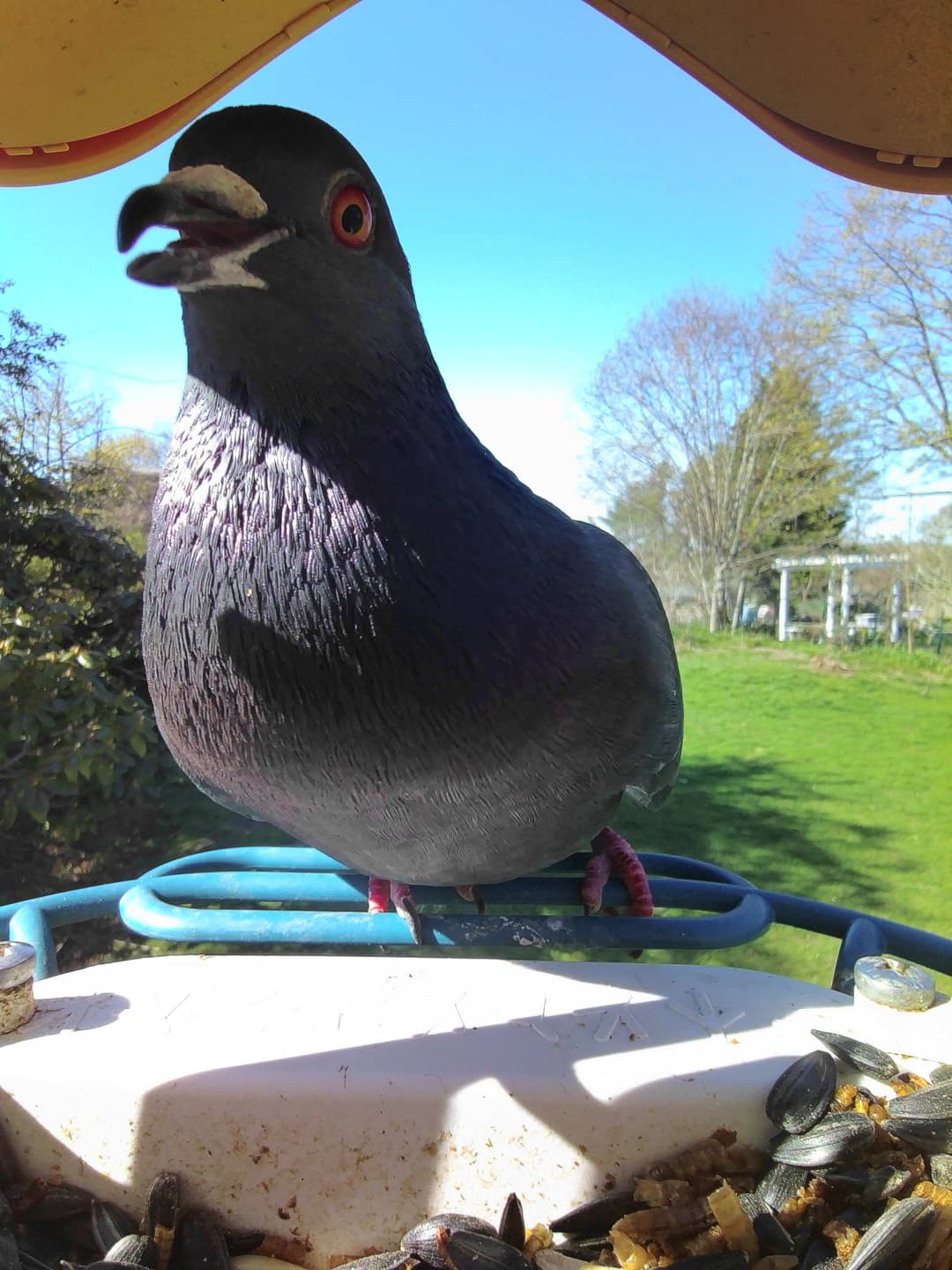
Pigeons are recognized globally for their distinctive grayish-blue bodies, round heads, small beaks with a slight downward curve, and short necks. They typically have a shiny, metallic-green patch on the neck and a white rump. These birds also have red-orange to pale-gray eyes, and their bodies often display bands of contrasting colors on the wings and tail.
Male vs female
Male and female pigeons display sexual dimorphism, although it is not very distinct. Males are generally larger and more brightly colored. Their iridescent neck feathers are more vibrant than females'. Their cooing is also louder and more persistent. Unlike males, females display consistent bowing movements during mating displays.
Juvenile
Juvenile pigeons resemble adults but with less luster and uniform greyish-brown plumage. They lack the shiny neck patch and their eyes might lack the red-orange tint typical of adults. Their feather edges are white, giving them a slightly scaled appearance which disappears with age.
Often mistaken for
Mourning Dove vs Pigeon
The Mourning Dove is similar in size and shape to a pigeon but is characterized by its soft cooing and slender, pointed tail. It typically has a more streamlined profile compared to a pigeon.
Eurasian Collared Dove vs Pigeon
Eurasian Collared Doves are similar in size to pigeons but can be distinguished by their distinctive black 'collar' on the nape of their neck. They also have a more uniform pale color compared to the mottled appearance of many pigeons.
Common Wood Pigeon vs Pigeon
Common Wood Pigeons are similar in size and shape to pigeons but can be identified by their white neck patch and pink chest. They are generally more robust than urban pigeons, with a distinctive flight call.
White-Winged Dove vs Pigeon
White-Winged Doves are similar in size and shape to pigeons but feature a distinctive white edging on their wings, which is most visible during flight. They also have a unique cooing song.
Band-Tailed Pigeon vs Pigeon
Band-Tailed Pigeons closely resemble the common pigeon in appearance but have a characteristic white collar at the nape and a yellow bill with a black tip. They are also larger and have a purplish gray coloration.
Breeding and nesting habits of the pigeon
Mating behaviors
Pigeons perform a variety of courtship behaviors such as cooing, puffing up feathers, and bowing to attract mates. Males often engage in aerial displays and dance around females to gain their interest.
Nesting details
Pigeons typically build simple nests using twigs, leaves, and grasses. They prefer ledges, balconies, and trees, often in urban areas including gardens. To create suitable habitats, provide a calm area with minimal disturbances, flat surfaces, and materials like twigs and grass.
Eggs and chick-rearing
Pigeons lay one or two eggs per clutch. Both parents incubate the eggs for about 17 to 19 days. Once hatched, chicks are fed crop milk produced by both parents. Chicks fledge the nest around 4 to 6 weeks after hatching.
What does a pigeon like to eat?
Berries
Flowers
Fruits
Insects
Seeds
Snails
Natural diet
Pigeons are granivorous birds, primarily consuming seeds and grains. They feed on wild seeds from grasses, cereals, and other plants. Pigeons also eat small invertebrates like insects, fruits, and occasionally green leafy vegetation for supplementary nutrients. In urban areas, they adapt by feeding on human leftovers and scraps, such as bread, popcorn, and other processed food items available in their environment.
Bird feeders
At bird feeders, pigeons consume a variety of seeds commonly offered, including sunflower seeds, millet, and cracked corn. They are not particularly picky and will eat commercial birdseed mixes. Pigeons also enjoy larger items if available, such as peanuts and pieces of nuts. Due to their adaptable nature, they are frequent visitors at feeders that provide mixtures aimed at generalist bird species.
Entice pigeons with their favorite foods
Pigeons love a variety of grains and seeds, but they have some favorites. Try filling your feeders with Bird Buddy seeds as these are expertly chosen for the season, ensuring top-notch quality and freshness that pigeons find irresistible. These favorites include corn, millet, sunflower seeds, and peanuts. Offering a wide variety can increase your chances of tempting these birds to your yard.
Choose the suitable feeder type
Pigeons aren't picky about the type of feeder they use, but they do prefer one that's sturdy with plenty of room for them to perch. Tray or platform feeders tend to work best as they closely mimic the natural feeding behaviors of pigeons. Make sure your feeder is set up in a quiet and secure environment, ideally, a place with a nearby tree or shrub where the pigeons can easily escape to if they feel threatened.
Can you teach a pigeon to sing along?
Pigeons are not renowned for their singing abilities, but they can get familiar with sounds and routines. Keeping a consistent feeding schedule can help the pigeons recognize when food is available and make them more likely to visit your yard or feeder. Using a specific sound to announce feeding time, like a bell or a whistle, could become a fun 'sing-along' that encourages pigeons to visit even more!
Where can you find pigeons?

Primary habitat
Pigeons are adaptable birds, often found in urban or suburban areas, notably around human settlements. They prefer climates with moderate temperatures.
Additional range
In spite of their preference, pigeons are globally spread and can tolerate a wide range of climates, even showing resilience in harsher environments such as deserts or high altitudes.
Do they migrate?
Pigeons, specifically the rock pigeon, generally do not migrate. They are highly adaptable and can thrive in a wide range of environments across the globe. Rock pigeons are often found in urban areas, where food and shelter are abundant, allowing them to remain in one place throughout the year. These birds are characterized by their sedentary nature, meaning they typically live in the same location year-round. However, some pigeon species or individual flocks might exhibit limited seasonal movements if environmental conditions such as food availability or weather necessitate it. These movements are not considered traditional migration but rather local dispersal or short-distance travel. In contrast, some related species, like the migratory pigeon known as the passenger pigeon, undertook large-scale migrations in North America. The rock pigeon's consistent presence in their chosen habitats throughout the year eliminates the need for migratory routes or key locations typically associated with migratory birds. Their adaptability and ability to coexist with human habitation have made them one of the most widespread bird species worldwide.
What is the role of pigeons in nature and how to protect them?
Conservation status
Pigeons, particularly the common city-dwelling species, are widespread and not considered endangered, often classified as of "Least Concern." However, some species, like the pink and Mariana fruit pigeons, face threats and are labeled "vulnerable" or "endangered" due to habitat loss, hunting, and predation by invasive species. Conservation efforts focus on habitat protection, breeding programs, and controlling invasive predators. Key threats include deforestation and urbanization, which reduce natural habitats, making targeted efforts crucial for the survival of vulnerable and endangered pigeon species.
Ecological role of pigeons
Its role in the ecosystem
Pigeons, often overlooked, play crucial roles in urban ecosystems. They primarily function as scavengers, aiding in the breakdown and decomposition of organic matter, hence contributing to nutrient cycling. This process helps maintain cleanliness in urban areas by consuming food scraps, decreasing waste and potential disease risks. Pigeons also serve as an essential part of the diet for many urban-adapted predators such as falcons, thereby supporting local biodiversity. In terms of seed dispersal, pigeons consume various seeds which are later excreted at different locations, contributing to the dispersal and germination of plant species. They are also known to control the population of numerous pest species by consuming them. Lastly, their droppings play a vital role in maintaining the health of the environment by adding essential nutrients back to the soil. Despite negative perceptions, pigeons contribute significantly to both urban and natural ecosystems.
How to help protect pigeons
Preservation tips
Habitat preservation strategies
Preserving pigeon habitats involves maintaining and protecting their natural nesting sites. Usage of eco-friendly materials and sustainable methods in urban development can reduce disruption of their habitats. Avoid trimming trees that have pigeon nests. Implementing city-wide regulations for bird-friendly buildings can also help. Finally, promoting or sponsoring the creation of public bird sanctuaries can provide safe spaces for pigeons.
Community science initiatives
Engage the community in citizen science projects that promote pigeon conservation. Projects can include pigeon count initiatives, which can help track pigeon populations and their health status. Support educational programs in schools and local communities on the importance of birds and their roles in ecosystems. Encourage community participation in local bird watches and bird ID workshops. Public workshops on creating bird-friendly backyards can also be beneficial.