
Oak Titmouse
Oak Titmouse
Baeolophus inornatus


Quick Identification guide
Quick Identification guide
- •
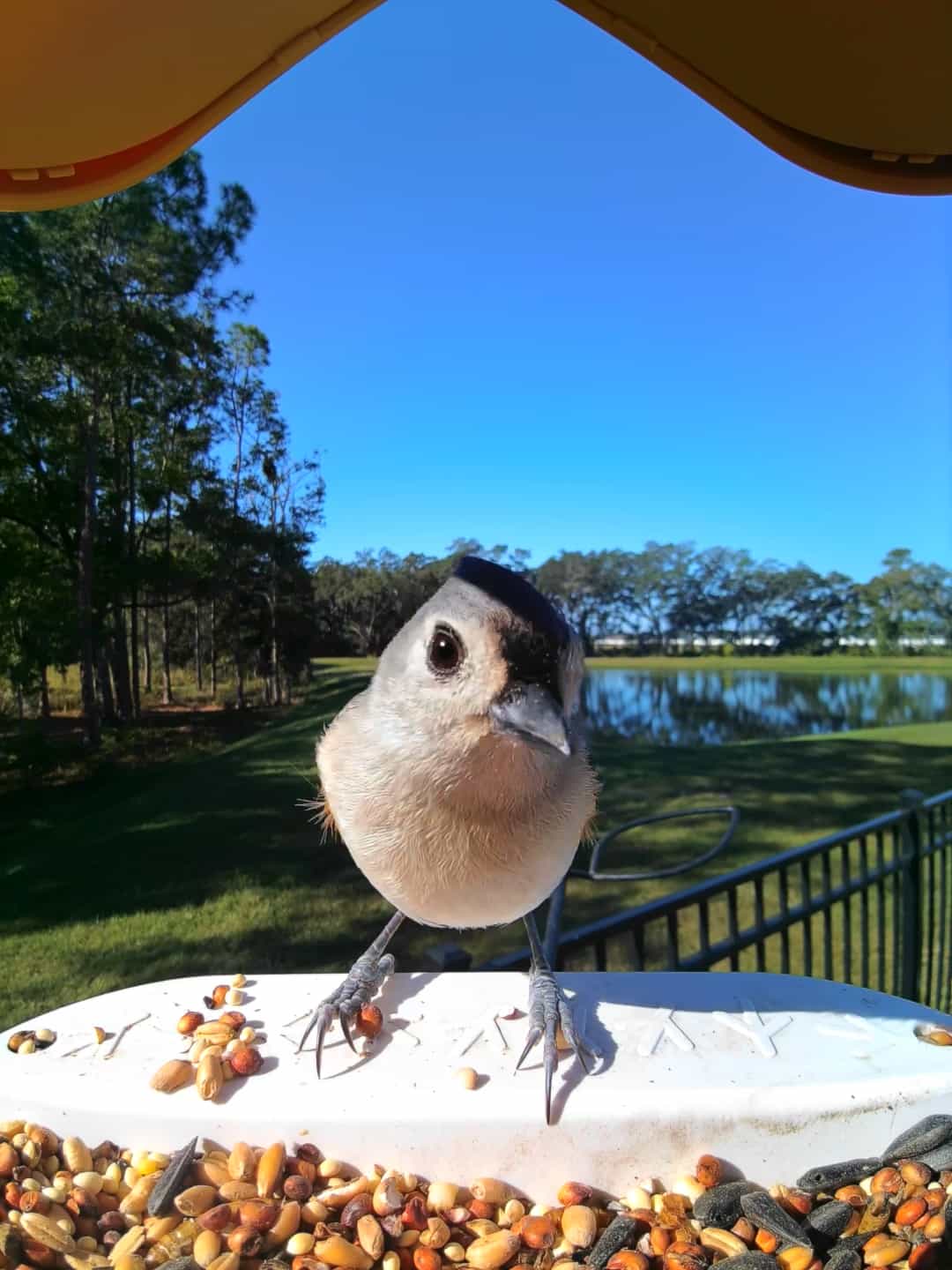
The plain gray-brown plumage with subtle shading makes it an unassuming sight
- •
Features a short, stubby crest atop its head, which is less pronounced compared to other titmice
- •
Possesses a small, pointed beak and a compact, rounded body typical of its family
What does an oak titmouse sound like?
The oak titmouse has a distinctive vocalization that often appears harsh and fussy. Its primary calls include a 'see-dee-dee' or 'chick-a-dee-dee' that typically falls in pitch. The bird has been known to produce a variety of call types including a buzz, chirp or chip, a casual 'hi' sound, and a whistle. The vocalization of this bird can be rather complex but highly indicative of its presence.


Description
Chirp, chirp, chirp, that must be the sound of a family of oak titmice flitting about from bush to bush! These birds don't form flocks in winter. They do, however, find that one special bird and stay together for life. How sweet! When it's time to expand the family, both mum and dad feed the kids.
The oak titmouse can weigh between 11to21grams and be from15to16centimeters tall.
The oak titmouse typically lives up to 13 years. Relative to other related bird species, such as the tufted titmouse that lives up to 13.1 years, its lifespan is comparable. The oak titmouse lifespan is longer than that of the juniper titmouse, which averages around 8 years.
Did you know?
Most popular questions about oak titmouse
How to recognise an oak titmouse?
General appearance
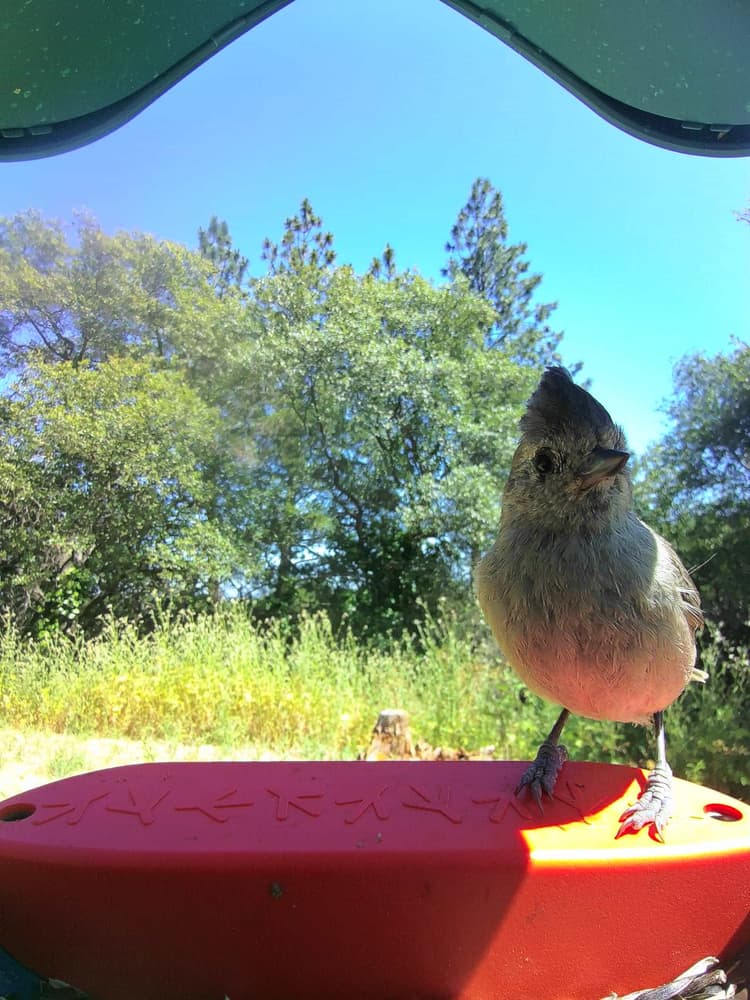
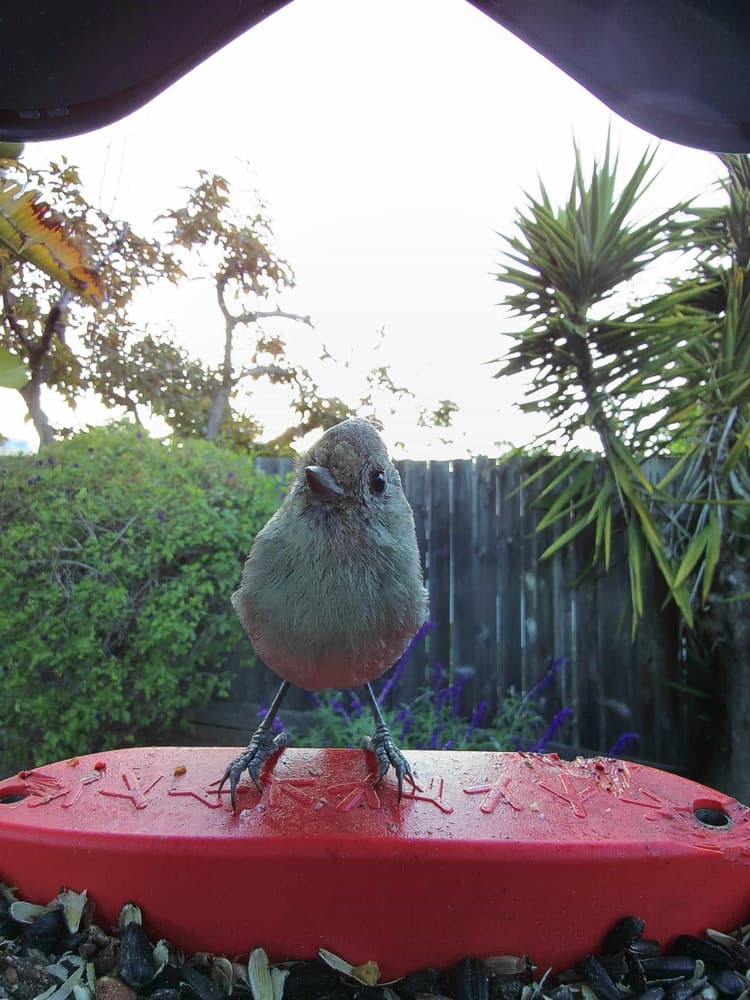
The oak titmouse has a size of 5-5 1/2'' (13-14 cm), similar to a sparrow. It sports a gray or brownish-gray hue with a slightly paler underpart. This bird possesses a short crest that may be raised or almost flattened against its head. The face is very plain, and the bird's wing and tail shapes are rounded.
Male vs female
No significant visual difference is present between male and female oak titmice, as both genders share the same coloration and physical traits. This phenomenon is called sexual monomorphism. To differentiate between males and females, one must observe behavioral differences or have a professional perform a closer examination.
Juvenile
Juvenile oak titmice are similar in appearance to adults. However, they might be slightly duller in coloration. As they mature, they will develop the distinctive gray or brownish-gray hues that characterize adult oak titmice, along with the possible short crest.
Often mistaken for
Juniper Titmouse vs Oak Titmouse
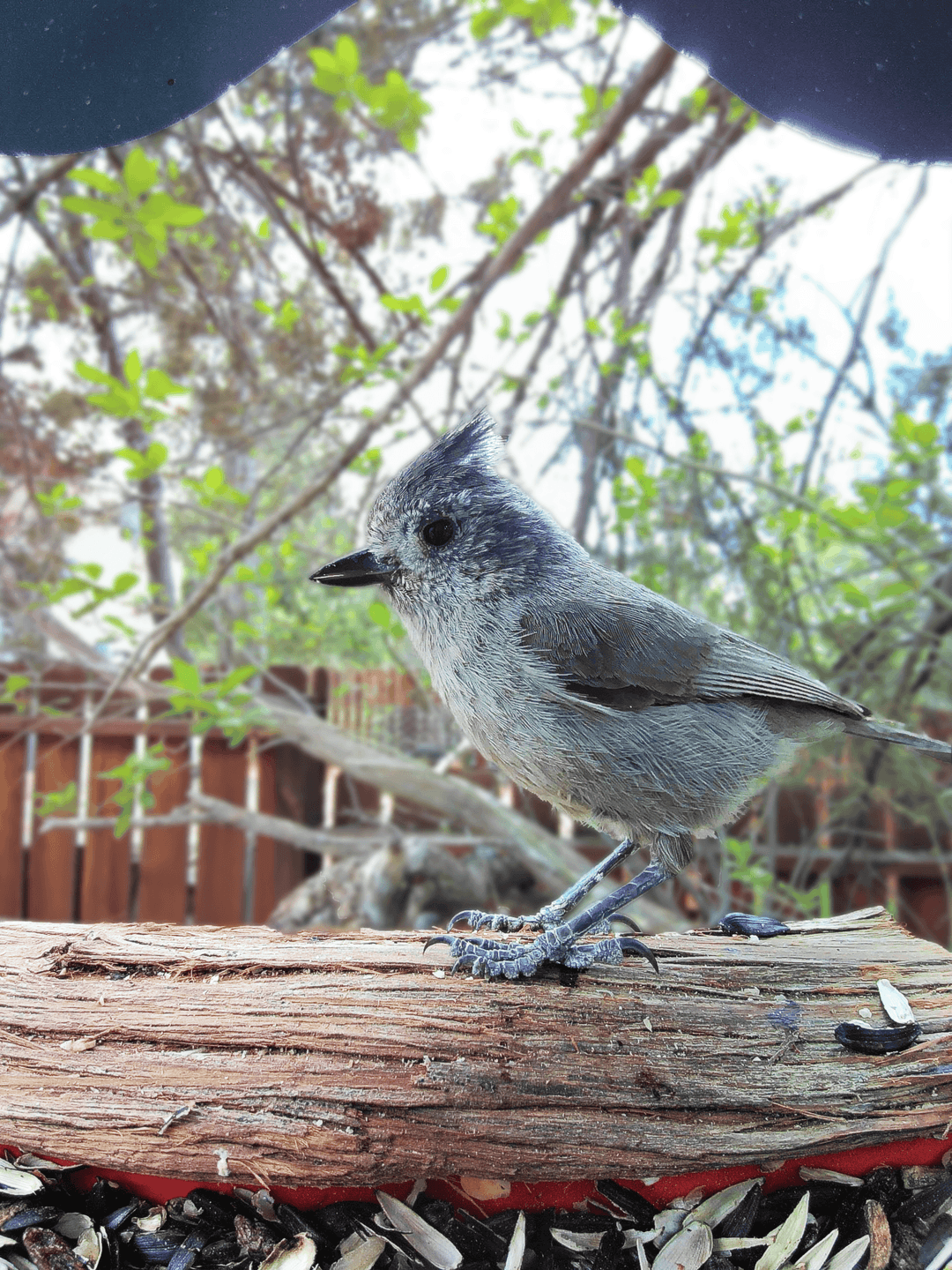
Oak Titmouse and Juniper Titmouse look very similar, with the main difference being their range. Oak Titmice reside in oak woodlands of California, whereas Juniper Titmice are found in pinyon-juniper forests of the Great Basin. Their calls are also distinct: Oak Titmouse has a raspy, repetitive call, while Juniper Titmouse's call is more varied and complex.
Bushtit vs Oak Titmouse
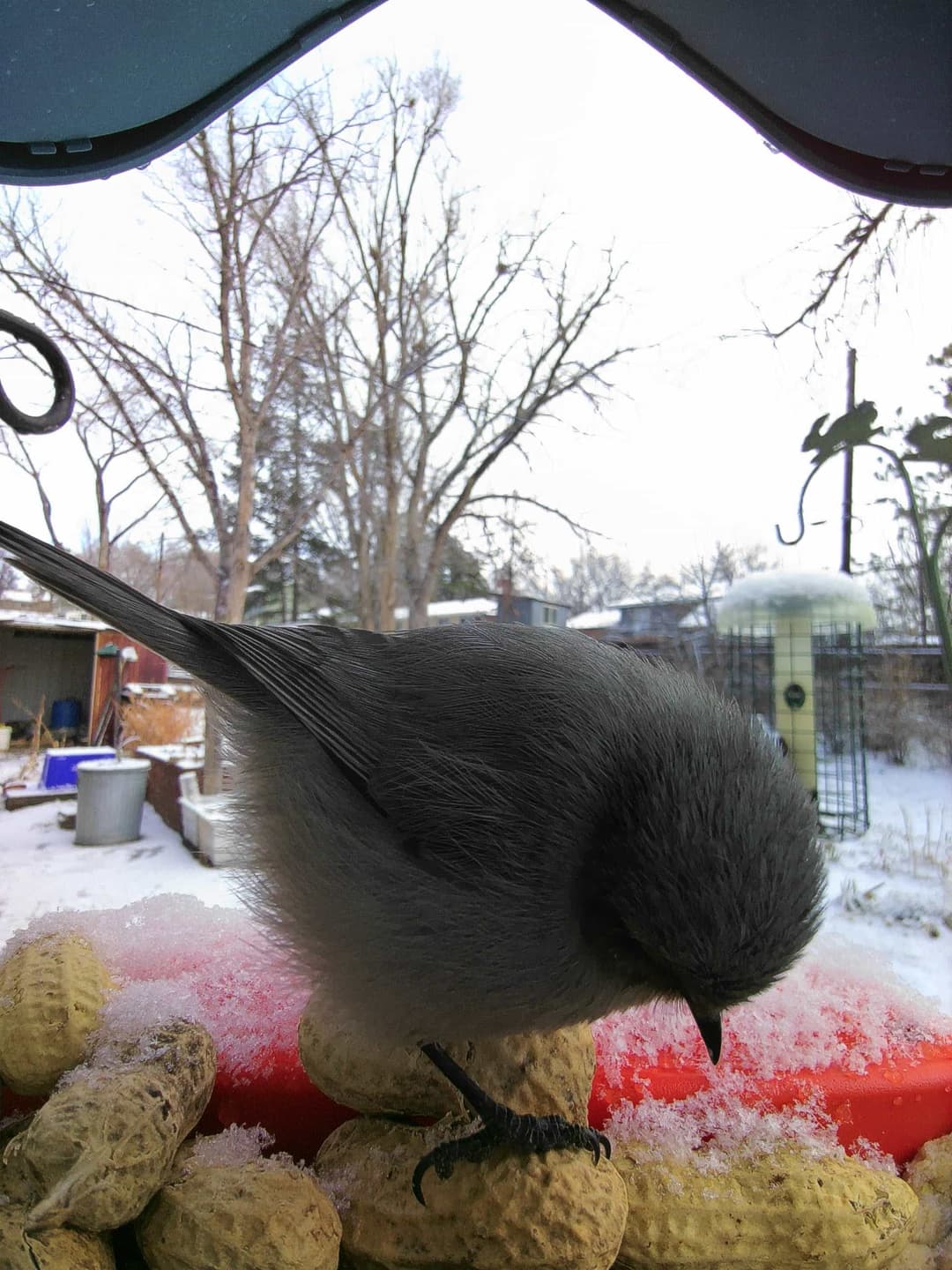
Bushtits are smaller and have a plainer gray color compared to Oak Titmice. They lack the distinctive crest that Oak Titmice have. Behaviorally, Bushtits are often seen in large flocks, while Oak Titmice are more solitary or found in pairs.
Tufted Titmouse vs Oak Titmouse
Tufted Titmouse has a tufted crest and a more vibrant gray coloration, with a whiter belly and rusty flanks, compared to the Oak Titmouse. The Tufted Titmouse has a wider range in the eastern United States, while the Oak Titmouse is primarily in California's oak woodlands.
Breeding and nesting habits of the oak titmouse
Mating behaviors
Oak titmice form pairs or family groups that may defend territories all year. The female selects the nest site, demonstrating a role in the courtship process.
Nesting details
Oak titmice typically nest in tree holes, which can be natural cavities or old woodpecker holes. In decayed wood, both partners may enlarge cavities. They can also use nest boxes or crevices in buildings. The nest foundation consists of grass, weeds, moss, bark fibers, and is lined with soft materials like feathers or animal hair.
Eggs and chick-rearing
After nest construction, the female lays eggs, which are incubated until hatching. Both parents participate in feeding and caring for the chicks until they are ready to fledge.
What does an oak titmouse like to eat?
Berries
Fruits
Insects
Nuts
Seeds
Spiders
Natural diet
The oak titmouse primarily feeds on a variety of insects, including caterpillars, beetles, true bugs, leafhoppers, aphids, and scale insects. It also consumes spiders. Additionally, its diet includes plant-based sources like acorns, weed seeds, and occasionally berries or small fruits.
Bird feeders
At bird feeders, the oak titmouse often consumes sunflower seeds, suet, and peanuts. These foods are commonly offered at feeders and provide an accessible energy source for the oak titmouse along with its natural insect and plant-based diet.
Create the perfect environment
Firstly, you'll need to create an enticing environment for these oak-loving birds. Have plenty of shrubs and low trees in your yard where the Titmouse can find shelter. Also, don't keep your yard too tidy. Fallen leaves and sticks are great for these creatures to rummage in for insects.
Set up the right feeders
Oak Titmice are fans of sunflower seeds, peanut kernels, and suet. They prefer tube feeders and suet feeders which can be hung from trees. Alternatively, you can scatter the feed on the ground.
Use bird buddy seeds
For the best chance of attracting the Oak Titmouse, use Bird Buddy seeds. These are selected by experts depending on the season, ensuring you always serve the right feeds.
Trick them with a sing-along
Oak Titmice are known for their strong, melodic voices. To encourage their visit, you can play recordings of their calls. Soon, they might just join your yard for a sing-along!
Where can you find oak titmouses?

Primary habitat
The oak titmouse thrives mostly in oak woodlands, including regions where oaks intersect with streamside trees or pines. It also adapts to well-forested suburban zones.
Additional range
Beside the Pacific seaboard, the bird can be found in pinyon-juniper woodlands, occasional river woods, and rarely in mountainous coniferous forests. It also inhabits pine and juniper dominated interiors.
Do they migrate?
The oak titmouse is a non-migratory bird, meaning it typically stays in one place throughout the year. This small, gray passerine is primarily found in the warm, dry oak and oak-pine woodlands of the Pacific Coast of the United States, ranging from southern Oregon through California and into Baja California, Mexico. These birds have a strong preference for habitats with oak trees, which provide food, nesting sites, and protection. Because they do not migrate, oak titmice establish and defend territories year-round. They are known for their high site fidelity, often spending their entire lives within a relatively small area. Adapted to their environment, oak titmice engage in behaviors that enable them to survive various seasons. During colder months, they rely on caches of seeds and other food items they have stored, as well as remaining in sheltered areas to conserve warmth. This non-migratory lifestyle means they do not follow specific routes or timings like migratory species. Their presence in the same territories throughout the year also makes them an integral part of their local ecosystems.
What is the role of oak titmouses in nature and how to protect them?
Conservation status
The oak titmouse is considered very common in parts of its range; however, surveys indicate a decline in numbers in recent decades. It is not currently classified as vulnerable or endangered, but the decreasing population trends warrant attention. Key threats to the oak titmouse include habitat loss due to urbanization and deforestation. Conservation efforts focus on preserving its oak woodland habitats and implementing measures to protect nesting sites. Monitoring of population trends continues to ensure any significant risks are addressed promptly.
Ecological role of oak titmouses
Its role in the ecosystem
The oak titmouse plays a vital role in the ecosystem primarily through pest control and seed dispersal. Its feeding behavior predominantly involves the consumption of a wide variety of insects, including caterpillars, beetles, bugs, leafhoppers, aphids, and scale insects, thus helping in natural pest control. Many of these insects are considered pests to plants, and by controlling their populations, the oak titmouse helps maintain the health of the local ecosystem. In addition, the oak titmouse's diet includes acorns, weed seeds, berries, and small fruits. When they consume these and subsequently excrete them in other locations, they contribute to seed dispersal, aiding in plant propagation. As such, their diet and feeding habits have direct impacts on both the insect and plant populations in their habitats, making oak titmice essential for a balanced ecosystem.
How to help protect oak titmouses
Preservation tips
Habitat preservation strategies
Preserving the oak titmouse habitat is crucial for its survival. Key strategies include controlling development and deforestation in areas populated by oak titmice. Local authorities and landowners may create protected zones and natural parks. Implementing responsible forest management practices such as clearing dead trees selectively and leaving mature oaks intact are key. Promoting native vegetation can also enhance food sources for the titmouse.
Promoting community science initiatives
Civic engagement is crucial to conservation efforts. Spreading awareness about the importance of the oak titmouse can yield significant results. Education programs and wildlife clubs in schools can instill respect for local fauna while citizen science projects can involve the local population in data collection and monitoring of the species. Fundraisers and volunteering opportunities can also support conservation initiatives.