
Juniper Titmouse
Juniper Titmouse
Baeolophus ridgwayi


Quick Identification guide
Quick Identification guide
- •
Features a short crest on the head that gives it a characteristic silhouette
- •
Displays drab gray upperparts with lighter gray underparts, providing subtle camouflage
- •
Possesses a small, pointed bill suited for probing and picking at seeds
What does a juniper titmouse sound like?
The Juniper Titmouse has a distinct vocalization characterized by a harsh "see-dee-dee" call. Its various call types include a falling call, a buzzing sound, chirping or chipping, and a high-pitched whistle. These sounds are used for different forms of communication within their species, each carrying diverse meanings.


Description
Is that a snake? Nope, just a juniper titmouse mum – and she's angry! When threatened, incubating females will flat-out refuse to move and instead hiss at the attacker. These bold and chatty birds love a nest box, so consider setting one up for them to move into. Did you know that they used to be considered the same species as the oak titmouse?
The juniper titmouse can weigh between 13to22grams and be from12.7to15.2centimeters tall.
The Juniper Titmouse typically lives for 4 to 5 years. This life span is similar to related species such as the Oak Titmouse and the Mountain Chickadee, which also have a typical lifespan of approximately 4 to 5 years. Some individuals of these species have been observed to live up to 8-10 years, but this is less common.
Did you know?
Most popular questions about juniper titmouse
How to recognise a juniper titmouse?
General appearance
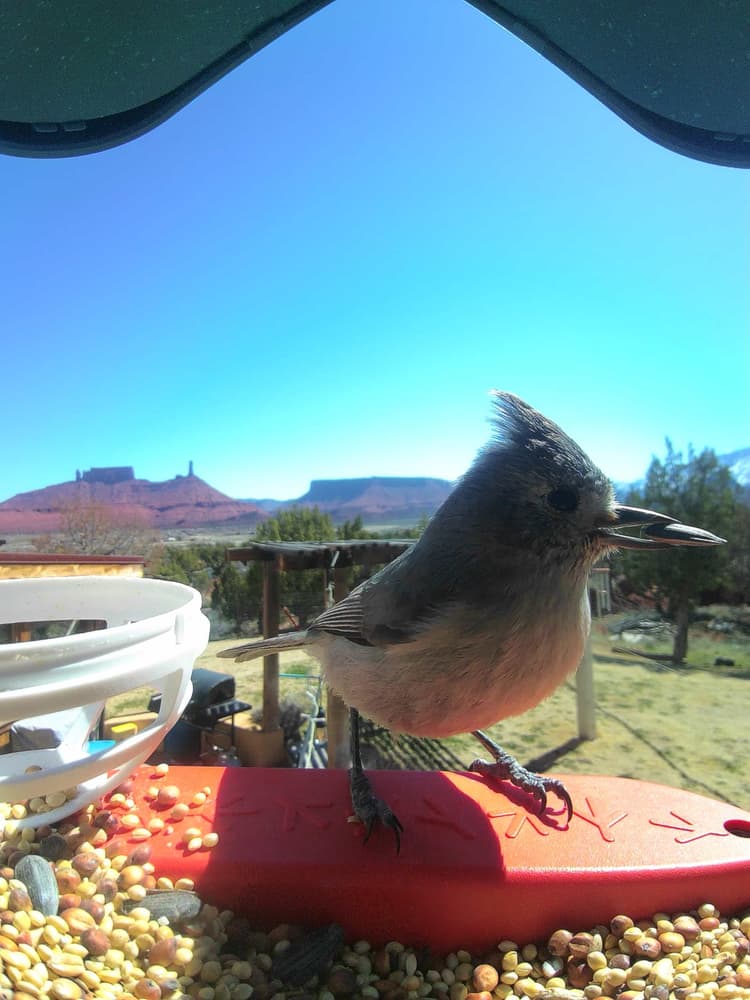
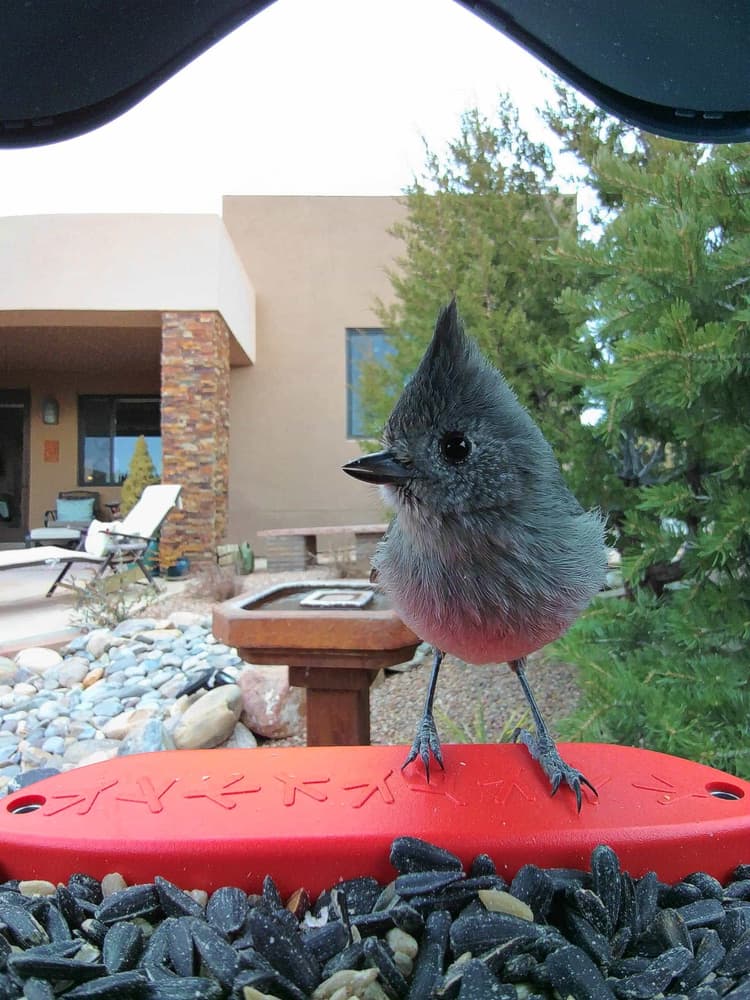
The Juniper Titmouse is a plain, grayish bird with a short crest, roughly the size of a Sparrow, about 15 cm in length. It possesses distinctly rounded wings and a rounded, square-tipped tail. Appearance is very similar to that of the Oak Titmouse, however, it tends to be a bit grayer with less brownish coloring.
Male vs female
This bird species does not have distinct differences in appearance between males and females. Both sexes share similar size and coloration, rendering gender identification in the wild considerably difficult based purely on physical appearance.
Juvenile
Young Juniper Titmice closely resemble adults, maintaining the same general appearance and grayish coloring. Attention to location may aid in identification as range is separate except very locally in northeast California. There are currently no documented seasonal variations in appearance.
Often mistaken for
Oak Titmouse vs Juniper Titmouse
The Juniper Titmouse has a duller brownish-gray plumage compared to the Oak Titmouse, which has a warmer brown tone. Both species have similar crests, but the Juniper Titmouse is often found in juniper-pinyon woodlands, whereas the Oak Titmouse favors oak woodlands.

Tufted Titmouse vs Juniper Titmouse
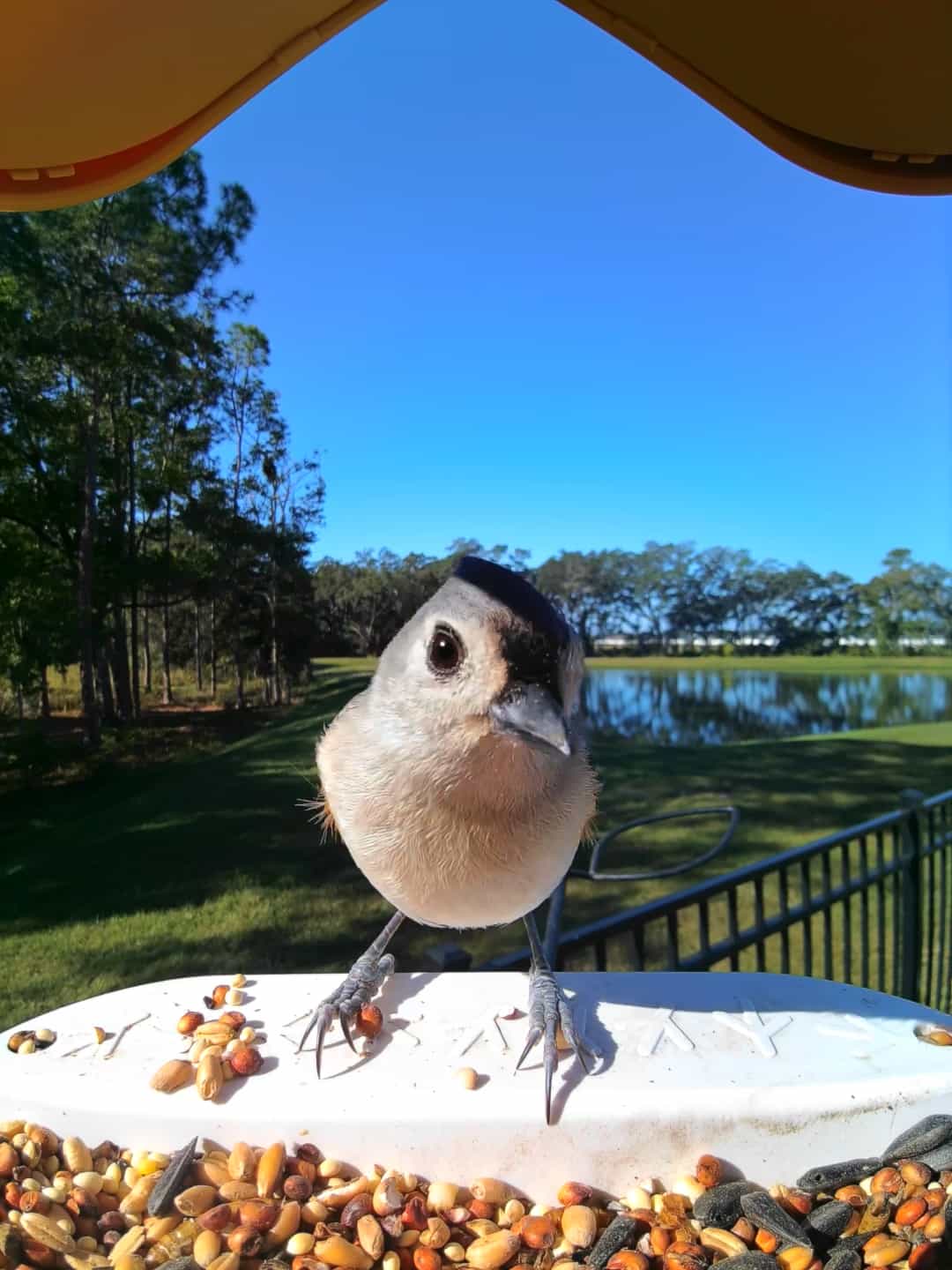
The Tufted Titmouse is distinct with its prominent black forehead and more contrasting gray plumage, unlike the uniformly colored Juniper Titmouse. The Juniper Titmouse lacks the Rufous flanks seen in the Tufted Titmouse and is localized to arid regions.
Bushtit vs Juniper Titmouse
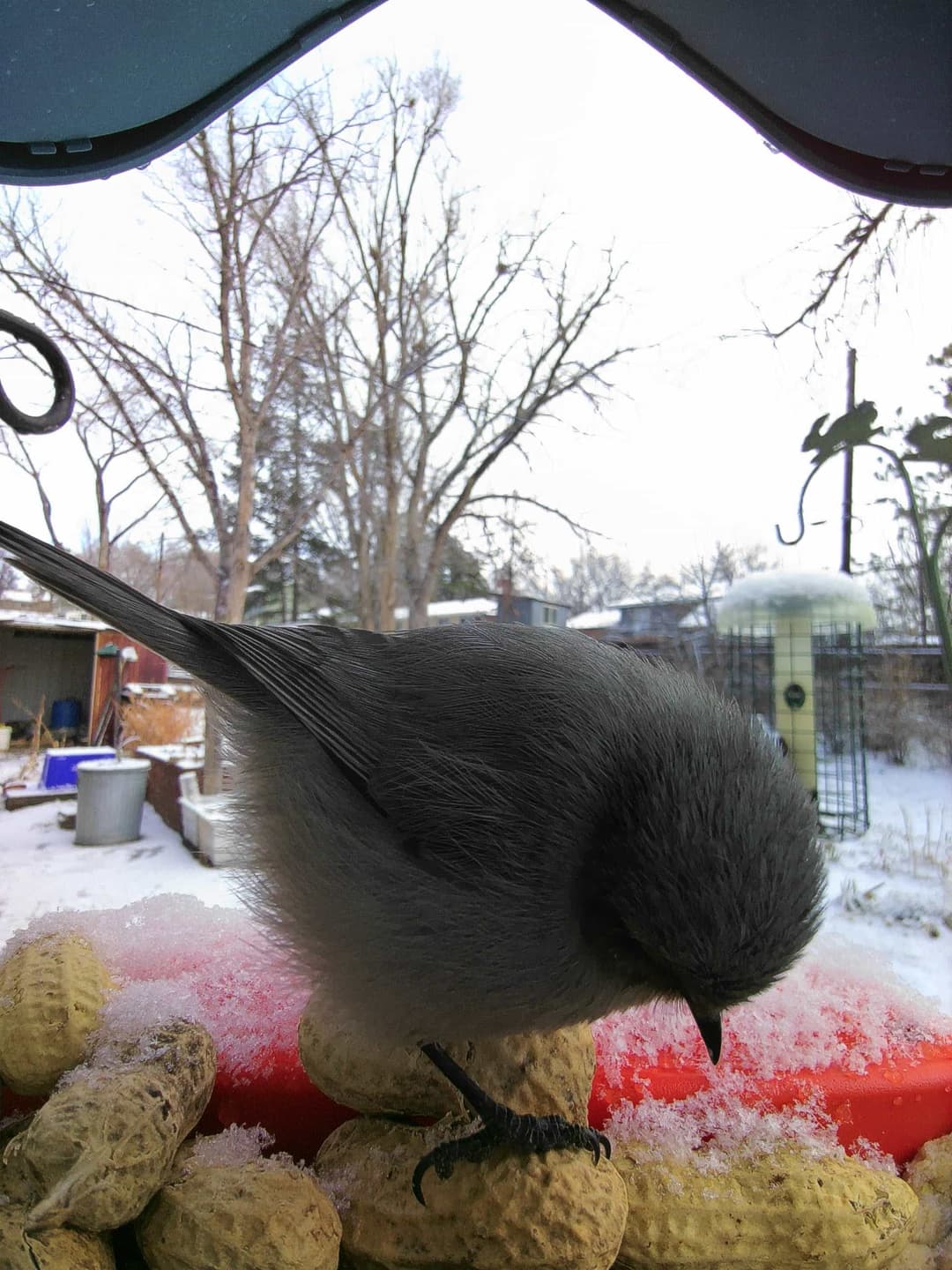
The Bushtit is smaller and has no crest, unlike the crested Juniper Titmouse. Bushtits travel in large, active flocks, while Juniper Titmice are more solitary or seen in pairs. The Bushtit’s plumage is more uniform and lacks the Juniper's slightly longer bill.
Breeding and nesting habits of the juniper titmouse
Mating behaviors
Juniper titmice may defend territories year-round, with pairs or family groups maintaining borders. Courtship includes joint efforts like cavity preparation.
Nesting details
Nests are typically in tree holes, stumps, fence posts, or poles, sometimes using natural cavities or old woodpecker holes. In decayed wood, both partners may enlarge a cavity. They also utilize nest boxes or crevices in old juniper or pine trunks. Nest foundations consist of grass, weeds, moss, and bark fibers, lined with soft materials such as feathers or animal hair.
Eggs and chick-rearing
Information on egg-laying and chick-rearing in juniper titmice is limited, but they likely engage in similar practices to related species, with both parents involved in feeding and protecting the young. Creating garden habitats can support nesting by providing suitable nest sites and materials.
What does a juniper titmouse like to eat?
Fruits
Insects
Nuts
Seeds
Spiders
Natural diet
The juniper titmouse primarily consumes insects, such as caterpillars, beetles, and true bugs, in addition to various spiders. It also incorporates plant-based foods like pinyon nuts, acorns, weed seeds, and occasionally berries or small fruits into its diet.
Bird feeders
At bird feeders, the juniper titmouse may be attracted to offerings such as sunflower seeds, suet mixtures, and shelled peanuts, which mimic parts of their natural diet.
Favorite snacks of juniper titmouse
Tempting the delightful juniper titmouse to visit your yard is as simple as providing their favorite snacks. They have a particular fondness for insects, berries, and seeds. If you want to attract these delightful visitors, we highly recommend Bird Buddy seeds. They are expertly chosen for the season and are designed to offer the best results.
Preffered feeder types
The juniper titmouse enjoys feeders that provide easy access and plenty of food. Tube feeders or platform feeders are an excellent choice. These types of feeders allow these little birds to easily perch while they dine. Remember to place the feeder in a quiet and safe location to make it more attractive to these shy birds.
Fun tricks to encourage juniper titmouse visits
Aside from feeders and their favorite food, you can encourage juniper titmouse visits by providing nesting boxes. These birds are cavity nesters, so a well-placed nesting box can convince them to stay longer. Another fun trick is to incorporate a bird bath in your yard; juniper titmice love to splash around and clean their feathers. Lastly, don’t forget the importance of a good sing-along! These birds are a pleasure to listen to with their sweet, melodic songs.
Where can you find juniper titmouses?

Primary habitat
The juniper titmouse primarily inhabits open woods with pinyon pine and juniper trees.
Additional range
In addition, they can be seen in oak or pine-oak woods, river woods and areas with shade trees.
Do they migrate?
The juniper titmouse is a permanent resident and does not migrate. It typically remains within the areas it inhabits and seldom wanders far from its nesting sites. This bird species is well-adapted to its environment, predominantly found in the woodlands of the southwestern United States. Its habitat primarily consists of pinyon-juniper woodlands, where it breeds and forages year-round. The juniper titmouse's sedentary lifestyle is characterized by its tendency to stay within a relatively small geographic range, taking advantage of the available resources throughout all seasons. This stability in habitat eliminates the need for migration, allowing the juniper titmouse to maintain its territory and evade the challenges associated with long-distance travel. Consequently, the juniper titmouse exemplifies a non-migratory species that thrives in its native environment by staying localized to the regions where it nests.
What is the role of juniper titmouses in nature and how to protect them?
Conservation status
The juniper titmouse is locally common across its range and shows no obvious population trends, indicating it is not currently vulnerable or endangered. Its conservation status appears stable, with no immediate threats endangering its population. While specific conservation efforts for the juniper titmouse might not be prominent, protecting its habitat, particularly juniper woodlands, remains crucial for its long-term stability. Continued monitoring of its habitat and population trends will help ensure the species remains common in the future.
Ecological role of juniper titmouses
Its role in the ecosystem
The juniper titmouse, a frequent consumer of insects, plays an important role in pest control, naturally reducing the population of harmful insects like caterpillars, beetles, bugs and others that may otherwise damage trees and negatively impact local ecosystems. By acting as natural pest controllers, they help to maintain a balance in the ecosystem. In addition to their role in pest control, the juniper titmouse also contributes to seed dispersal. Their diet includes nuts and seeds, therefore when they feed, they inadvertently end up dispersing these seeds, aiding in the proliferation of various plant species, especially pinyon, acorns, and weeds. Furthermore, by nesting in holes in trees, stumps, or poles, these birds promote decomposition and enhance the nutrient cycling within the ecosystem. By using soft materials like animal hair or feathers for lining their nests, the titmouse may also facilitate the redistribution of these resources within the ecosystem. Thus, the ecological significance of the juniper titmouse extends to roles in pest control, seed dispersion, decomposition, enhancements in nutrient cycling, and redistribution of resources.
How to help protect juniper titmouses
Preservation tips
Habitat preservation strategies
Community involvement is pivotal in juniper titmouse's habitat preservation. Advocacy for policies that limit deforestation and degradation of juniper woodland habitats can provide the bird with stable nesting areas. Additionally, introduction of nest boxes in juniper scrublands would encourage increase in their population as natural cavities are often limited.
Community science initiatives
Local communities can contribute to juniper titmouse conservation through participation in birdwatching activities and reporting sightings to databases like eBird. Such data can be precious for scientists researching population trends. Furthermore, creating awareness in society about the importance of these species would benefit the overall conservation effort. As many feed on insects, they are integral to maintaining a balanced ecosystem.