
Crimson Rosella
Crimson Rosella
Platycercus elegans


Quick Identification guide
Quick Identification guide
- •
Features a brilliant crimson body with a contrasting indigo-blue face and wings, making it visually striking
- •
Exhibits a strong, broad beak, ideal for feeding on a variety of seeds and fruits
- •
Displays a distinctive long, scalloped tail with blue and black bands, enhancing its elegant appearance
What does a crimson rosella sound like?
The Crimson Rosella vocalizes with a series of sharp, metallic, piping notes, usually in groups of 3 or 6. Its most common call is a 4-note "cossack-cossack-cossack-cossack", heard mainly at dawn and dusk. More prolonged songs, often during flight, are composed of a series of different notes and sound similar to ringing telephone. Additionally, they can mimic human speech when kept as pets. Even their alarm call is melodious, made up of a rapid and high-pitched succession of notes.


Description
Did you know that crimson rosellas come in red, yellow and orange! When a red and yellow bird decide to mate, the offspring is yellow. Looks like somebody paid attention in their colour theory class! They are chatty birds and like to hang out in feeding parties. Lunchtime is a social affair and they like to talk to each other while foraging.
The crimson rosella can weigh between 72to170grams and be from30to37centimeters tall.
The Crimson Rosella typically lives for 15-25 years. This lifespan is similar to other medium-sized parrots like the Galah or Cockatiel, which can live for 20-40 years, depending on the environment and care. Compared to larger parrots like Macaws or Cockatoos, which can live for over 50 years, the Rosella has a shorter lifespan.
Did you know?
Most popular questions about crimson rosella
How to recognise a crimson rosella?
General appearance
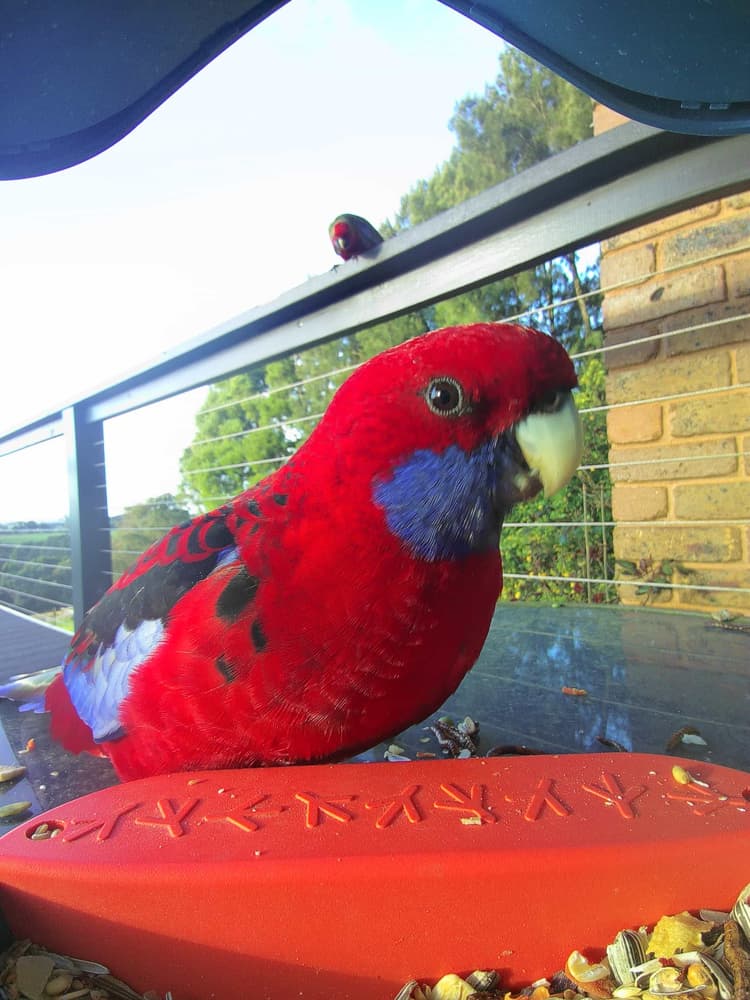
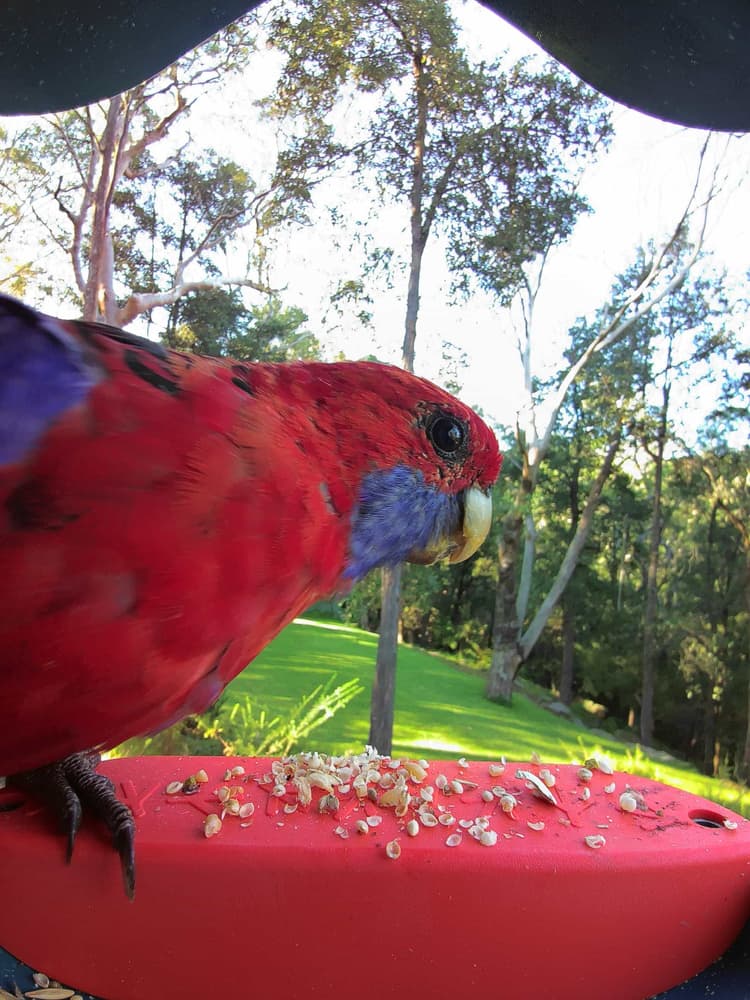
The Crimson Rosella is an eye-catching bird found in eastern and southeastern Australia. It's most known for its vibrant red color, complemented with patches of blue on its cheeks, wings and tail. The beauty of its plumage is further accentuated by black feathers on its back and an aerodynamic shape increasing its grace in flight.
Male vs female
Males and females share similar coloration, making gender determination challenging. However, mature males have slightly broader heads and beaks. Their color is also a bit more vibrant compared to the females. The females have comparatively thinner and pale beaks, which is one of the most prominent distinguishing features.
Juvenile
Juvenile Crimson Rosellas vary in color, making them fascinatingly different from adults. They initially have an olive-green plumage which, with time, morphs into an adult's characteristic crimson and blue color. Their color transformation is a gradual process that takes about 15 months. Therefore, recognizing a young Crimson Rosella can be difficult without knowledge of their early coloration.
Often mistaken for
Eastern Rosella vs Crimson Rosella
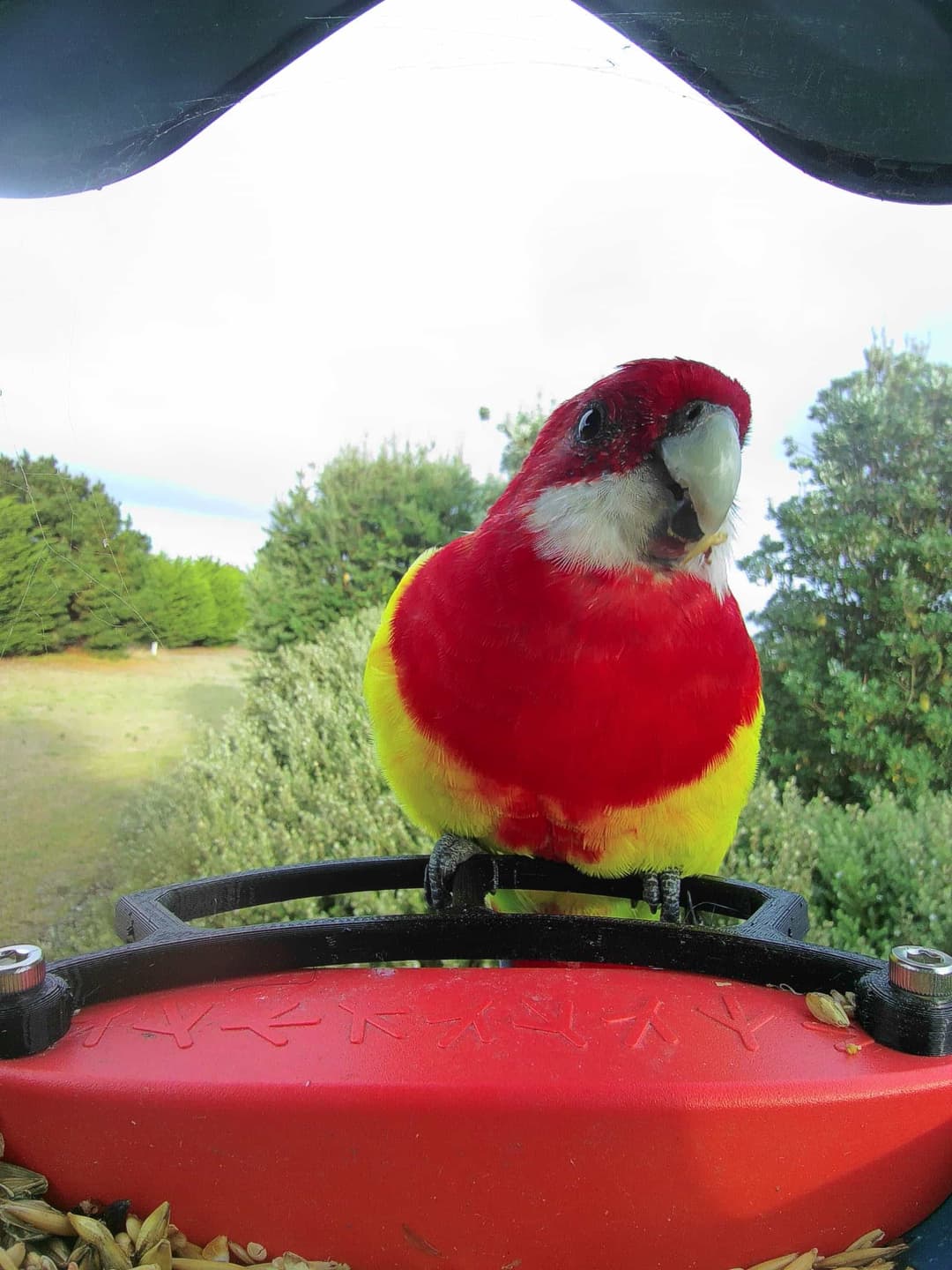
The Eastern Rosella is similar to the Crimson Rosella in terms of body shape and vibrant plumage. However, the Eastern Rosella has a predominantly yellow and green body with a red head, while the Crimson Rosella is mostly red with blue highlights.
Green Rosella vs Crimson Rosella
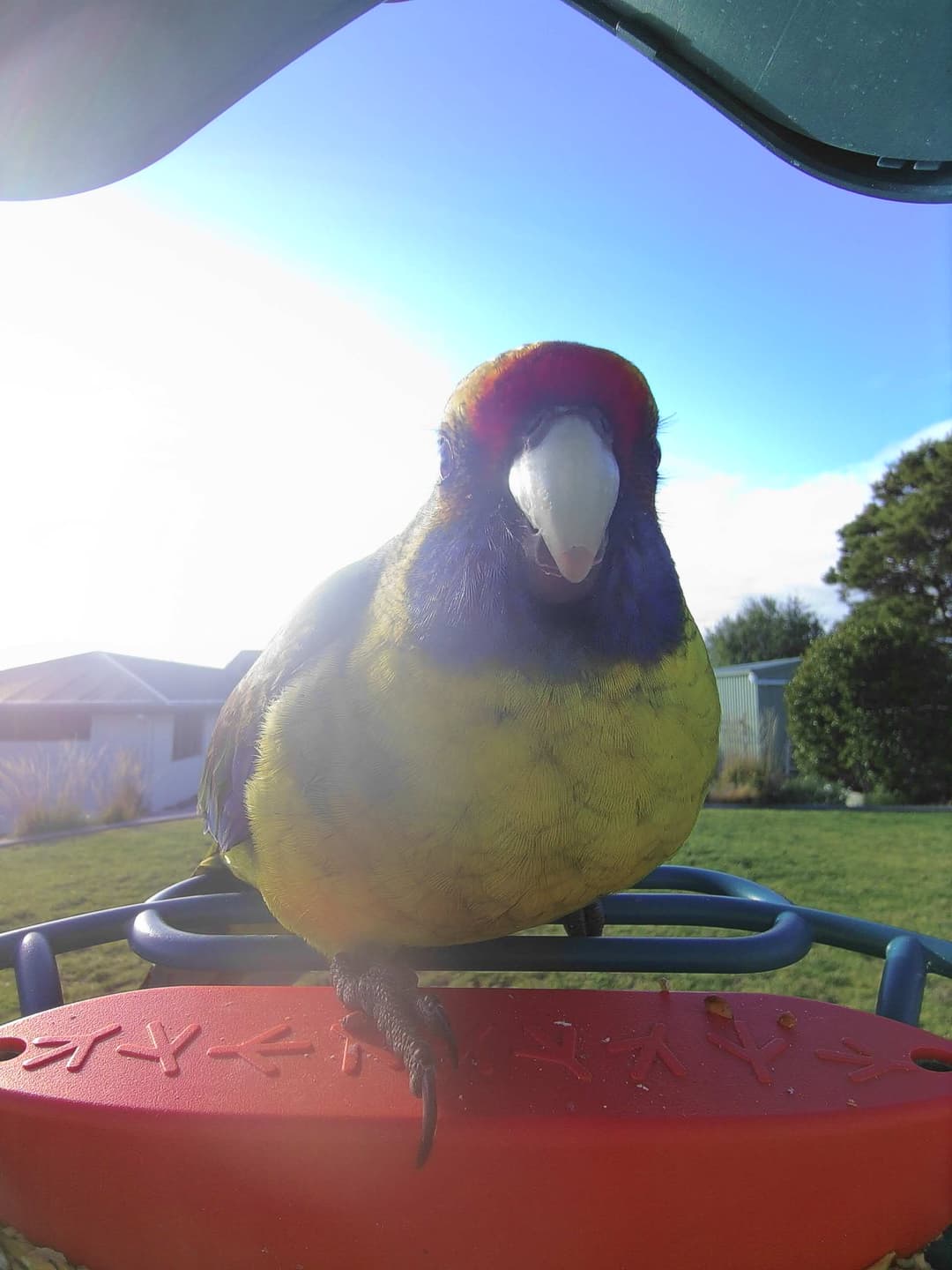
The Green Rosella resembles the Crimson Rosella in size and body structure. It differs by having a primarily green and yellow body, whereas the Crimson Rosella has red and blue coloration.
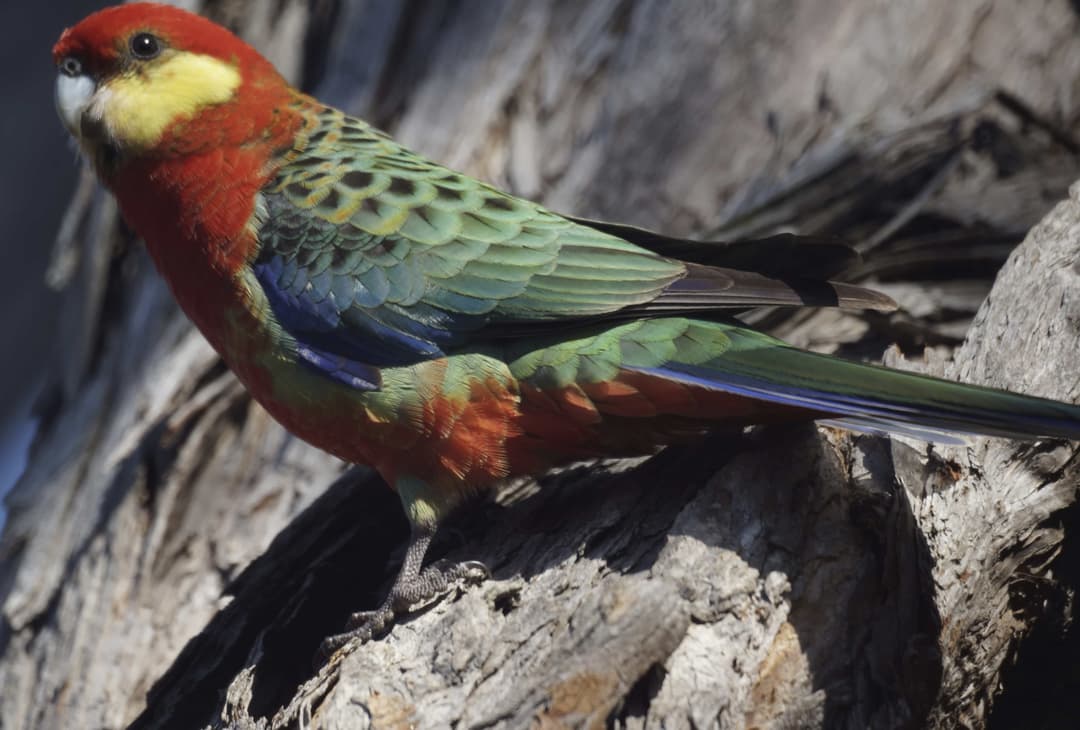
Western Rosella vs Crimson Rosella
The Western Rosella can be confused with the Crimson Rosella, but it has a yellowish-green body with red patches, as opposed to the Crimson Rosella's red and blue plumage.
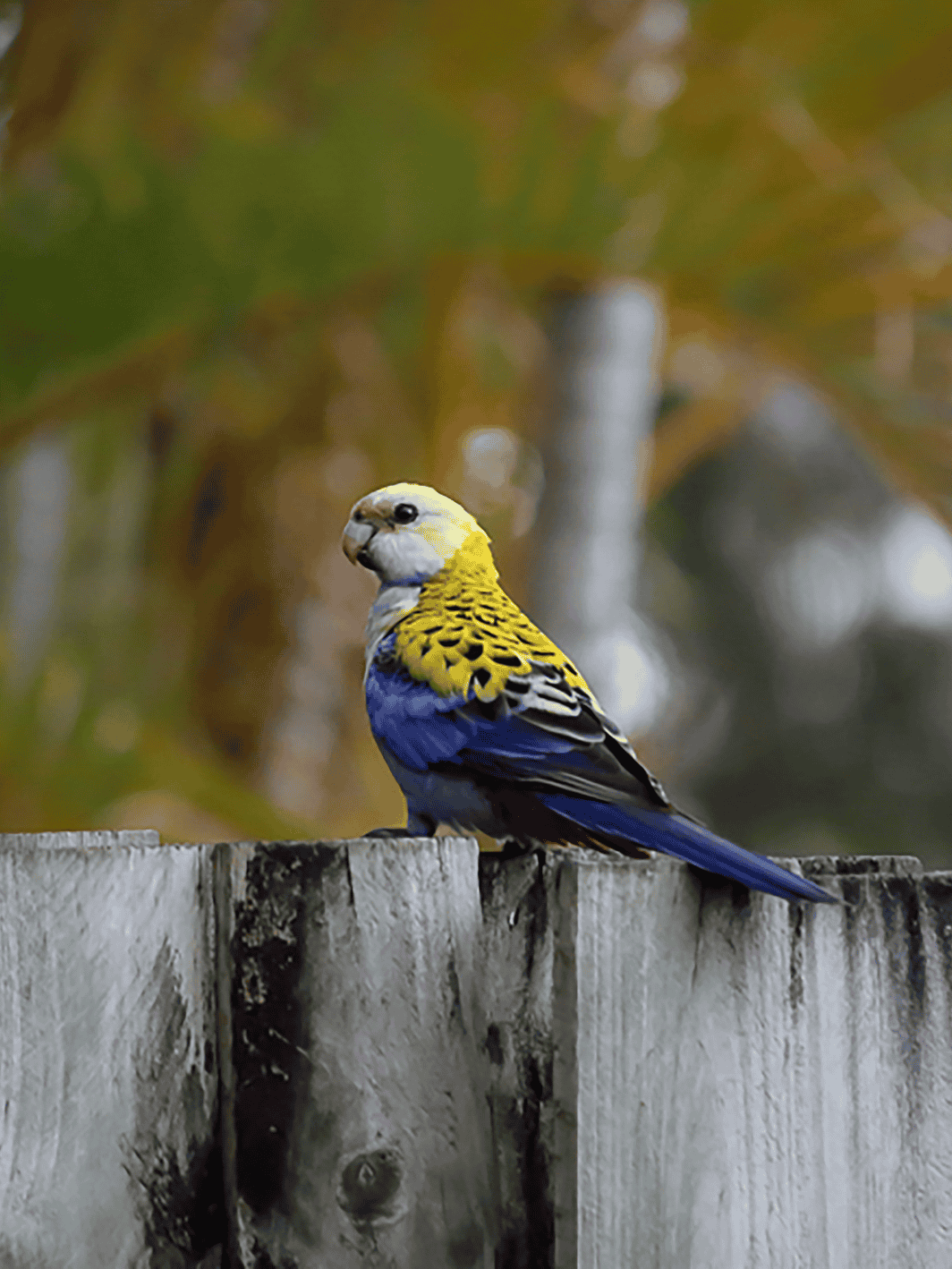
Pale-Headed Rosella vs Crimson Rosella
Pale-Headed Rosella shares a similar body shape with the Crimson Rosella but is distinct with its pale yellow head and mottled blue and yellow body, unlike the red-dominated Crimson Rosella.
Breeding and nesting habits of the crimson rosella
Mating behaviors
Crimson rosellas exhibit courtship displays that include vocalizations and mutual feeding between pairs. These behaviors help strengthen pair bonds before the breeding season.
Nesting details
Crimson rosellas typically nest in tree hollows, preferring eucalyptus trees. They may also nest in garden areas if suitable nest boxes are available. Nests are lined with wood dust and other soft plant materials to cushion the eggs.
Eggs and chick-rearing
Females lay 3-8 eggs, which they incubate for about 21 days. Chicks are fed by both parents and fledge approximately five weeks after hatching. Garden habitats can support breeding by offering food sources and safe nest locations.
What does a crimson rosella like to eat?
Berries
Fruits
Insects
Plants
Seeds
Natural diet
Crimson rosellas primarily feed on a variety of seeds, fruits, nuts, berries, nectar, and blossoms found in their natural habitat. They forage in the trees and on the ground, consuming seeds from grasses, eucalypts, and acacias along with fruits and nuts from native shrubs and trees. These parrots also eat insects and their larvae, which provide essential proteins.
Bird feeders
At bird feeders, crimson rosellas often enjoy sunflower seeds, millet, and cracked corn. They are also attracted to fruit offerings like apples, pears, and grapes. Providing a diverse mix of seeds along with fresh fruit can attract these vivid birds, catering to their varied dietary preferences. However, it's important to maintain a balanced diet and avoid overfeeding them processed or unhealthy foods.
Attracting the crimson rosella
This exquisitely colored parrot is native to coastal regions and mountain forests in southeastern Australia. Their stunning features can make your yard their favorite spot if you know how to lure them in.
Crimson rosella's favorite foods
Crimson Rosellas are primarily herbivores and love seeds, fruits, nectar, and flowers. Invest in a good quality bird mix. We recommend the Bird Buddy seeds as they have been selected by bird experts to suit the changing seasons.
Best crimson rosella feeders
To attract the Crimson Rosella, opt for feeders with a tray or platform. These birds enjoy a sturdy place to perch while they dine. Place the feeder at a quiet, predator-free spot in your yard.
Fun tricks to tempt the crimson rosella
Consider a birdbath or just a simple dish of water, as rosellas like to bathe regularly. Playing some soft bird songs can also entice them to come in for a sing-along. Lastly, a bird-friendly garden with native Australian plants can be an irresistible invitation.
Where can you find crimson rosellas?

Primary habitat
The Crimson Rosella typically resides in coastal and mountain forests and woodlands in Southeastern Australia.
Additional range
Apart from native range, it also occupies urban areas and parks. It adapts to a variety of climates, from cool-temperate to tropical.
Do they migrate?
The crimson rosella is generally a sedentary bird, meaning it tends to stay in the same area year-round rather than migrating over long distances. Native to eastern and southeastern Australia, these parrots are often found in forests, woodlands, and gardens, adapting well to various habitats. While they do not undertake true migration, some crimson rosellas may exhibit altitudinal movements, relocating between higher and lower elevations in response to seasonal changes. During winter, crimson rosellas might move to lower altitudes or more sheltered areas to escape harsher weather conditions found in higher regions. These movements are typically local and not extensive. In some cases, particularly in fragmented habitats or where food resources fluctuate, crimson rosellas might shift locations in search of better foraging opportunities. Overall, the crimson rosella's movements are influenced by local environmental conditions rather than adhering to specific migratory routes or schedules. They remain one of the more consistent features of their native landscapes, making them a familiar presence in many parts of their range year-round.
What is the role of crimson rosellas in nature and how to protect them?
Conservation status
The crimson rosella is classified as "Least Concern" by conservation authorities, indicating it is common and not currently vulnerable or endangered. This colorful parrot is widespread in southeastern Australia and adapts well to various habitats, including urban areas. Key conservation efforts focus on habitat preservation and protection from habitat loss due to deforestation and land development. While the species faces threats from habitat fragmentation and competition with introduced species, its adaptability and broad distribution help maintain stable populations. Conservation measures ensure continued monitoring and habitat management to mitigate potential future risks.
Ecological role of crimson rosellas
Its role in the ecosystem
The Crimson Rosella is a bird species native to eastern and southeastern Australia, playing a crucial role in maintaining the ecological balance of its habitat. With its diet consisting of fruits, seeds, and nectar, it helps in seed dispersal of various plants, thus promoting vegetation growth and biodiversity. The dispersal of seeds assists in regeneration of flora, especially in areas that have been hit by natural calamities or human activities. The Crimson Rosella also aids in pest control by feeding on numerous types of insects. This helps to maintain the insect population and prevents overpopulation of certain harmful insect species. Moreover, the nests of the Crimson Rosella, located in hollows of large trees, assist in the sustenance of tree-dwelling microecosystems. As a prey species, they are crucial for maintaining the food chain, supporting predatory animals such as larger birds and mammals. Thus, the Crimson Rosella contributes in multiple ways to the sustenance, growth, and balance of the ecosystems it inhabits.
How to help protect crimson rosellas
Preservation tips
Habitat preservation strategies
Preserve existing habitats of crimson rosellas by opposing deforestation and advocating for responsible land-use policies. Create ‘bird-friendly’ spaces in urban gardens using native plants to provide natural food sources and nesting sites. Leave dead trees standing as they provide crucial nesting hollows. Participate in reforestation efforts by planting species that are part of the rosella's native diet.
Community science initiatives
Engage in citizen science projects like bird counts, nesting surveys, and reporting sightings to local conservation groups. Take part in events like backyard bird counts or worldwide birdwatching days to increase awareness and knowledge about crimson rosellas. Encourage community education on the importance of the crimson rosella to the ecosystem and the threats they face. Support research into the species' ecology, behavior, and conservation needs.