Crimson Rosella or Green Rosella?
Here's how to tell the difference




Crimson Rosella


Green Rosella
Crimson Rosella
Platycercus elegans
General appearance
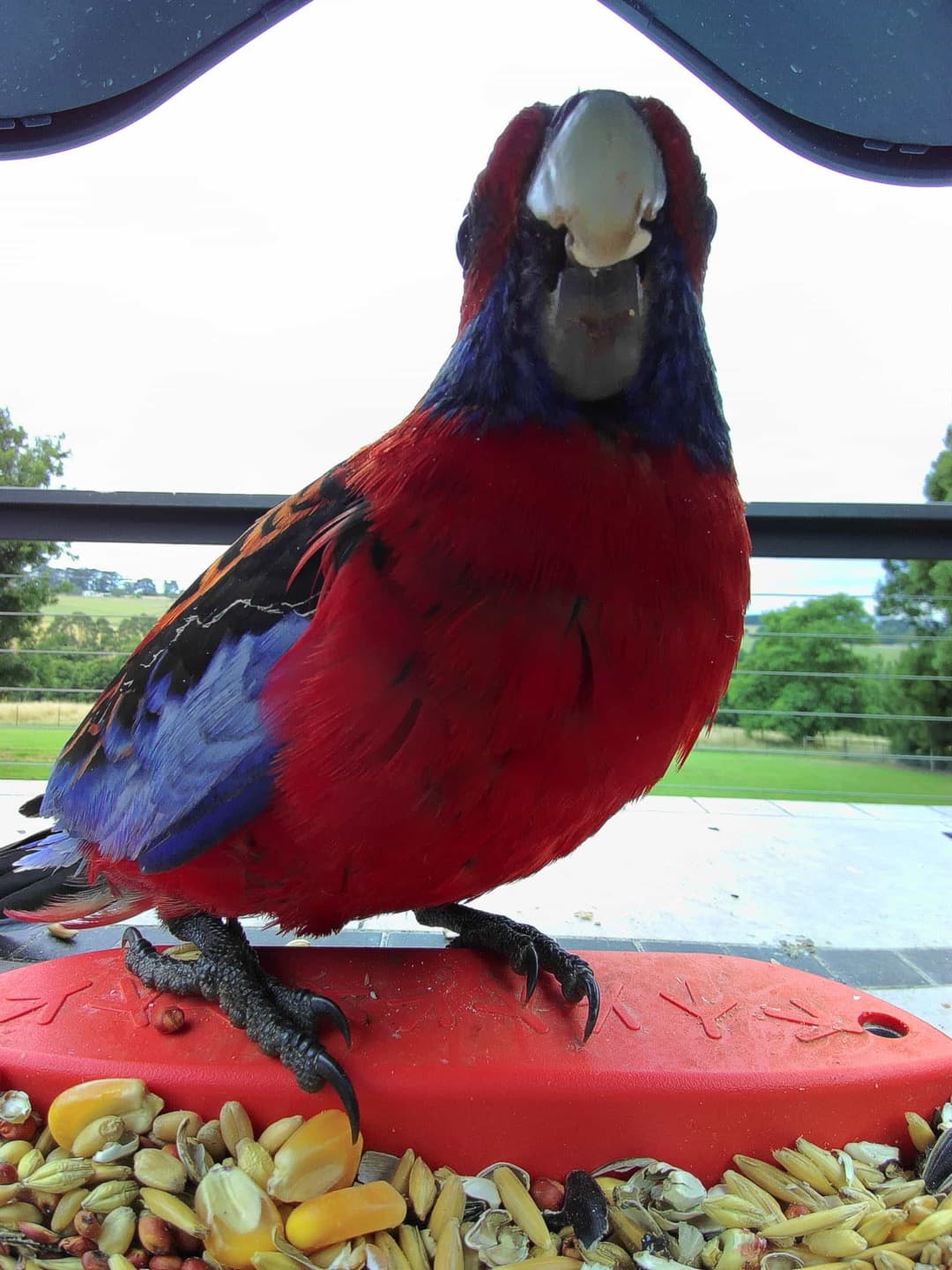
The Crimson Rosella is an eye-catching bird found in eastern and southeastern Australia. It's most known for its vibrant red color, complemented with patches of blue on its cheeks, wings and tail. The beauty of its plumage is further accentuated by black feathers on its back and an aerodynamic shape increasing its grace in flight.
Male vs female
Males and females share similar coloration, making gender determination challenging. However, mature males have slightly broader heads and beaks. Their color is also a bit more vibrant compared to the females. The females have comparatively thinner and pale beaks, which is one of the most prominent distinguishing features.
Juvenile
Juvenile Crimson Rosellas vary in color, making them fascinatingly different from adults. They initially have an olive-green plumage which, with time, morphs into an adult's characteristic crimson and blue color. Their color transformation is a gradual process that takes about 15 months. Therefore, recognizing a young Crimson Rosella can be difficult without knowledge of their early coloration.
Size
11.8 - 14.6 in/2.5 - 6.0 oz
There's more to learn about Crimson Rosella
View full detailsGreen Rosella
Platycercus caledonicus
Also known as: Tasmanian Rosella
General appearance
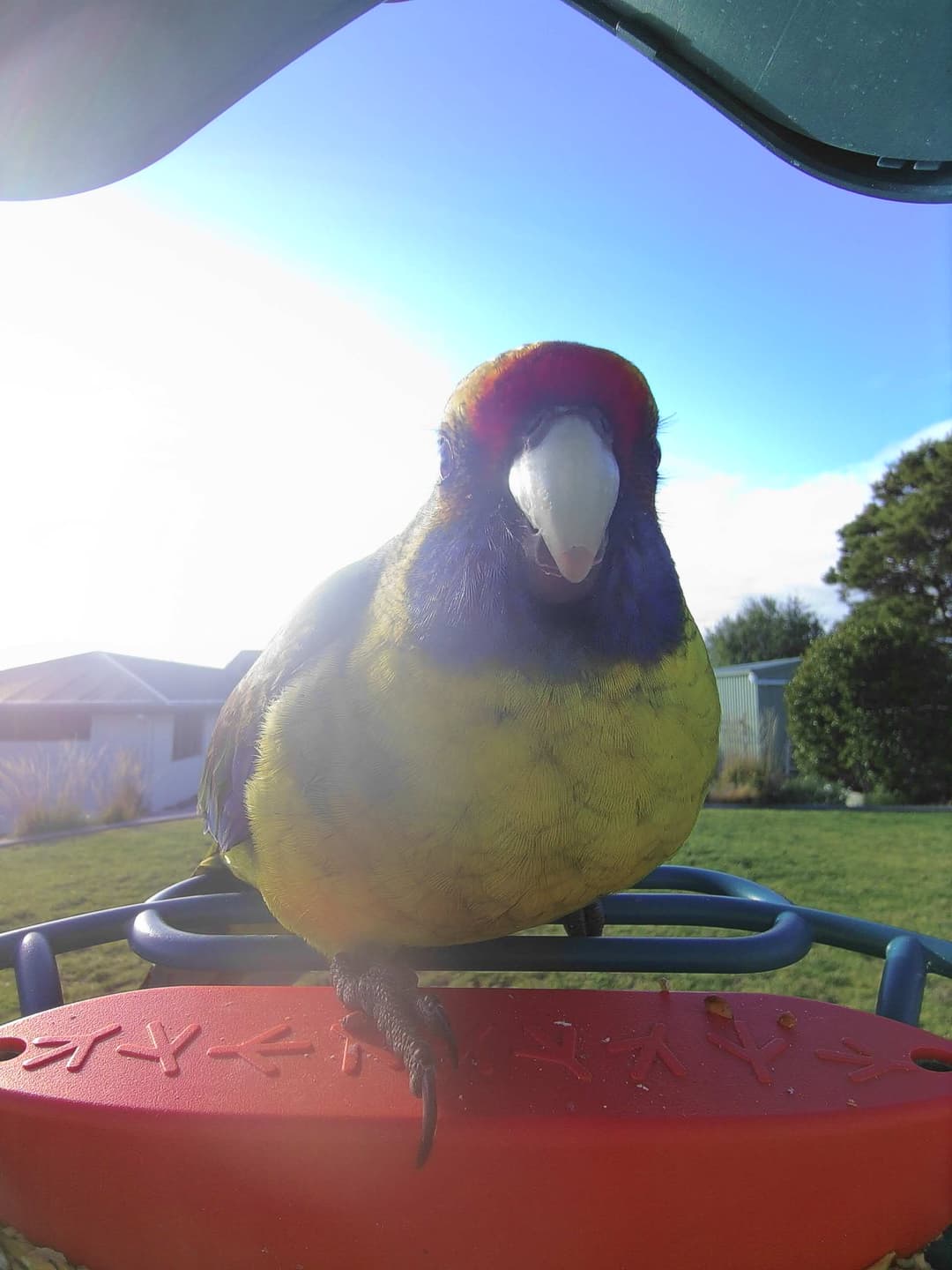
The Green Rosella, or Tasmanian Rosella, possess a unique coloration that is primarily green, with patches of blue on the head and wings. It also has a conspicuous yellowish stomach. With a size up to 37 cm, they are considered the largest rosella species. They have round bodies, broad tails and strong beaks, equipping them perfectly for their native environment in Tasmania and Bass Strait islands.
Male vs female
Sexual dimorphism is difficult to detect in Green Rosellas. Both genders share the same coloration. However, adult males tend to be slightly larger in size and possess a larger beak compared to females. Due to these slight variations, an experienced breeder or a DNA test is usually needed to determine gender accurately.
Juvenile
Juvenile Green Rosellas have a more muted coloration compared to adults, their green color is less vibrant and they lack the yellow belly. Furthermore, their beaks are initially more orange compared to the whitish color seen in adults. As they mature, they gradually acquire the distinctive adult coloration. Their full colouring, size, and gender traits will be fully recognisable after 12-18 months.
Size
11.4 - 14.2 in/3.2 - 5.8 oz
There's more to learn about Green Rosella
View full detailsHow to tell the Crimson Rosella from the Green Rosella
Visual differences
The Crimson Rosella is known for its vibrant red plumage with blue patches on the cheeks, wings, and tail, and black feathers on the back. In contrast, the Green Rosella is primarily green with blue on the head and wings and a yellowish stomach. Crimson Rosellas range from 11.8 to 14.6 inches in length, similar to Green Rosellas at 11.4 to 14.2 inches. However, Green Rosellas are the largest rosella species with robust beaks. Identifying juveniles involves recognizing their muted colors transforming to adult hues over time.
Key differences and behavior
Crimson Rosellas (30-37 cm, 72-170 g) and Green Rosellas (29-36 cm, 90-165 g) display distinct behaviors and habitats. Crimson Rosellas, social in nature, form feeding parties and adapt to diverse habitats, including forests and urban parks in southeastern Australia. Their diet combines seeds, fruits, and insects both in the wild and at feeders. Green Rosellas, Tasmania-native, favor rainforests and shrublands, often foraging in large groups of over 20 birds in tree canopies. They also utilize suburban gardens. Both species engage in courtship through vocalizations and mutual preening/feeding, nest in tree hollows, and involve both parents in offspring care. While feeding, both enjoy seeds and fruits, though Green Rosellas uniquely extract seeds using robust beaks and may indulge in nectar. Despite similar social behaviors, they adapt to different environments and slight dietary preferences.
Still not sure? Here are more lookalikes!
Crimson Rosella vs [Select a bird]

[Select a bird]
Pick a bird to compare
Green Rosella vs [Select a bird]
[Select a bird]
Pick a bird to compare