
Nashville Warbler
Nashville Warbler
Leiothlypis ruficapilla
Quick Identification guide
Quick Identification guide
Male
- •
olive-green upperparts contrasting with yellow underparts
- •
A distinct gray head with a white eye-ring
- •
Small rufous crown patch often hidden from view
Female
- •
olive-green upperparts with paler yellow underparts
- •
Similar gray head and white eye-ring as the male, though slightly duller
- •
Lacks the rufous crown patch found in males
What does a Nashville warbler sound like?
The Nashville Warbler has a distinct vocalization characterized by two clearly segmented sounds. It usually produces a loud and resonant 'teebit-teebit-teebit' followed by an enthusiastic 'chipper-chipper-chipper-chipper'. The call pattern of this warbler is flat, though it can transition to an undulating melody. Its call types vary significantly, ranging from a chip or chirp-like sound to high pitches, trilling, and even whistling. Each has a different purpose, making the Nashville Warbler's communication complex and diverse.
Description
Guess what? Nashville warblers don't even breed in Nashville! They just pass through when migrating, and it happens to be where they were first spotted. They are fun and bold tiny bundles of energy that like to get creative with their nest-building materials: they often include porcupine quills!
The Nashville warbler can weigh between 7to14grams and be from11to12centimeters tall.
The lifespan of the Nashville Warbler is typically 7 to 8 years. This is quite similar to other related species such as the Tennessee Warbler, which typically lives for about 8 years. Other closely related species such as the Northern Parula also have a lifespan ranging from 7 to 8 years.
Did you know?
Most popular questions about Nashville warbler
How to recognise a Nashville warbler?
General appearance
The Nashville warbler is a small songbird with olive-green upperparts and a bright yellow underside. It features a distinctive white eye ring and a gray head. The wings and tail are a darker shade of olive, and it has a thin, pointed bill ideal for insect hunting.
Male vs female
Both male and female Nashville warblers share similar coloration, though males are generally more vibrant. The male has a more pronounced gray head and may exhibit subtle rust tones on the crown and chest not seen in females. Females tend to have a slightly duller overall appearance.
Juvenile
Juvenile Nashville warblers resemble adults but with paler, less defined coloration. Their eye ring may be less distinct, and the yellow underside is more subdued. Juveniles lack the mature head patterns of adults, appearing more uniformly olive-gray.
Often mistaken for
Tennessee Warbler vs Nashville Warbler
Nashville Warblers have a more noticeable eye-ring compared to Tennessee Warblers and feature a gray head with a subtle olive back, while Tennessee Warblers are generally more uniformly green. Look for the distinct white belly and slightly more colorful plumage in Nashville Warblers.
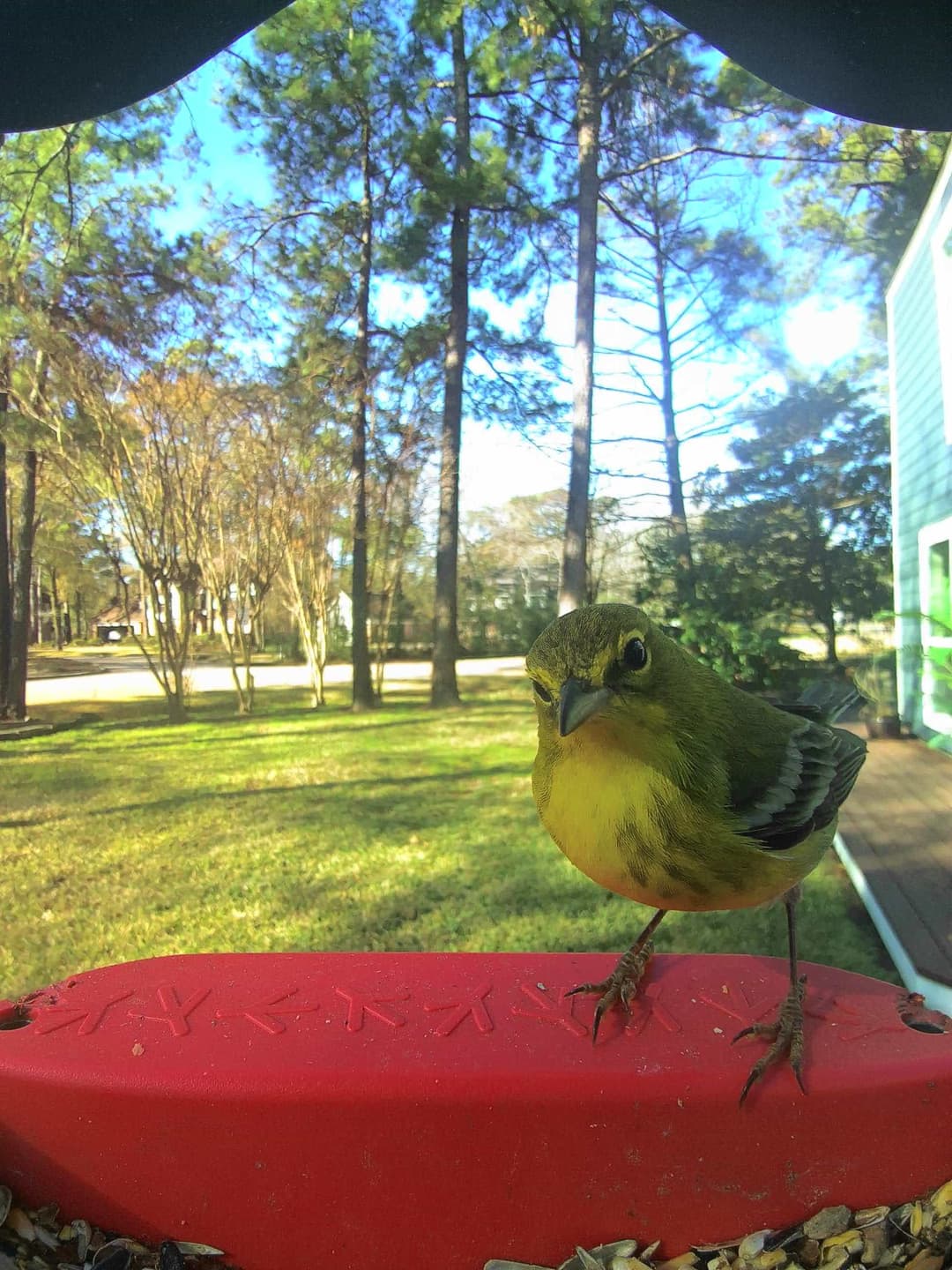
Orange-Crowned Warbler vs Nashville Warbler
Unlike the Nashville Warbler, which showcases a prominent white eye-ring and a vibrant yellow throat, the Orange-Crowned Warbler is often duller, lacking the eye-ring, with more muted underparts. Check for the orange crown patch, which is typically hidden.
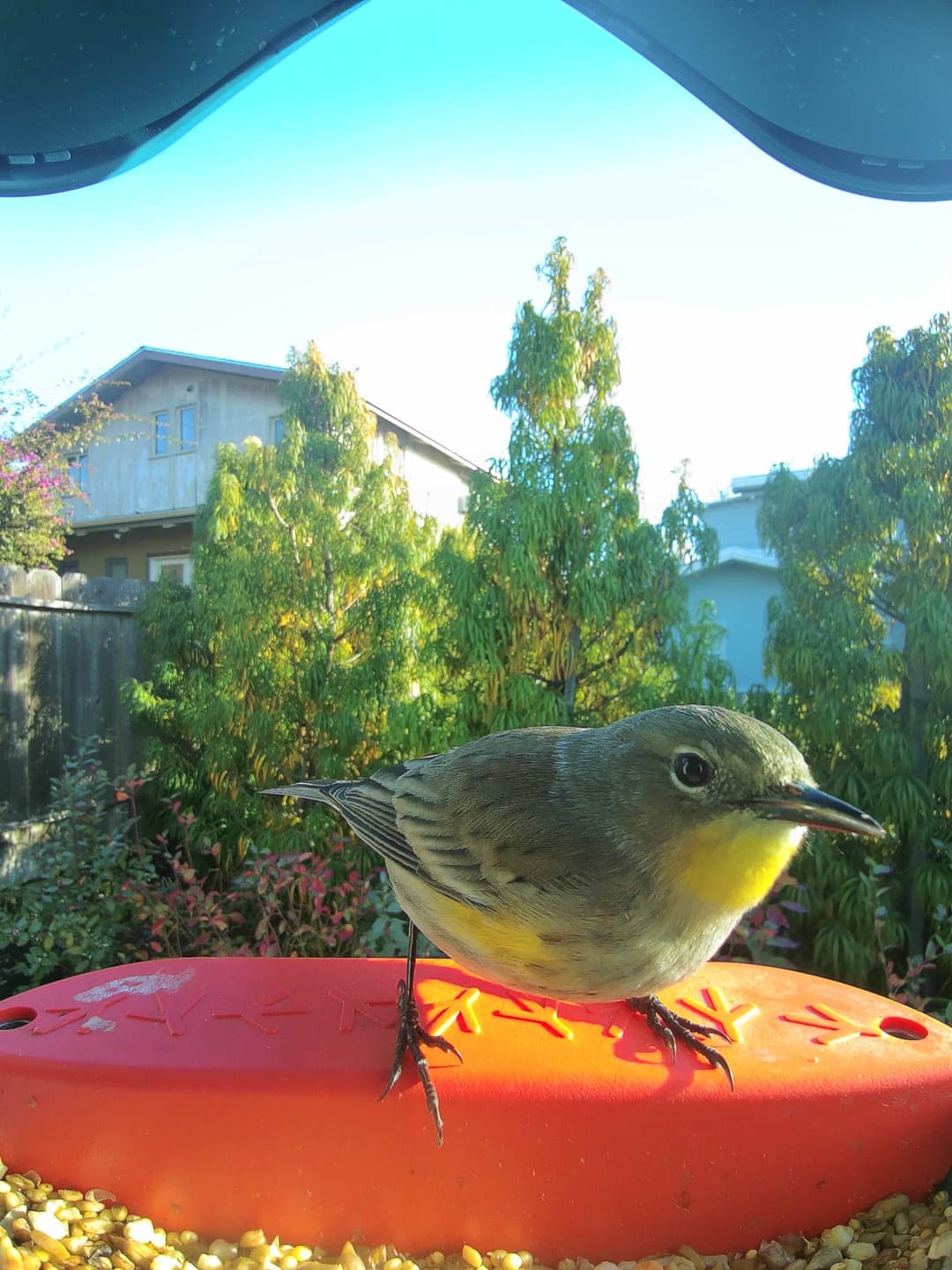
Breeding and nesting habits of the Nashville warbler
Mating behaviors
The mating behaviors of the species include males singing from perches on their breeding territory. Sometimes they perform a slow, hovering display flight while singing, likely to attract a mate.
Nesting details
Nests are well-hidden on the ground, created in depressions among club mosses, grass, and ferns, typically under bushes or saplings. The open cup-shaped nest is constructed from coarse grass, ferns, and strips of bark with moss rim edges and is lined with fine grass, animal hair, or pine needles. The female constructs the nest.
Eggs and chick-rearing
Though specific details on eggs and raising chicks are unknown, the choice of nesting materials suggests an environment that provides insulation and protection. Ensuring adequate cover and food supply may be essential for successful chick-rearing.
What does a Nashville warbler like to eat?
Berries
Insects
Natural diet
Nashville warblers primarily consume a variety of insects. Adult warblers feast on beetles, caterpillars, grasshoppers, leafhoppers, aphids, and other insects, including the eggs and larvae of different insect species. Nestlings are predominantly fed caterpillars, small beetles, flies, and a selection of other insects.
Bird feeders
Nashville warblers are not commonly attracted to bird feeders. However, they might occasionally visit feeders providing suet, mealworms, or small insects, resembling their natural food sources.
Feed to attract
To lure the elusive Nashville Warbler to your yard or feeder, you'd want to go for their favourite snacks. They love to munch on insects and arthropods but are also fond of fruity deposits. Therefore, offering a blend of Bird Buddy seeds, especially chosen by experts for the season, can deliver excellent results. Setup feeders with these nutrition-packed seeds known for their high warbler-attraction quotient.
Feeder preference
As for feeders, Nashville Warblers are often found foraging in the undergrowth or mid-level in trees, so choose feeders that are hung at a similar height. Tube feeders or platform feeders should work well. Bird Buddy's range of feeders cater perfectly to these preferences.
The habitat
Creating a Nashville Warbler-friendly habitat in your yard can be very helpful. This includes maintaining native shrubs and trees, particularly fruit-bearing varieties. Also, providing a clean source of water would increase the attractiveness of your yard to them.
The sing-along trick
Fun fact, Nashville Warblers are attracted to familiar songs! Playing recorded warbler songs, especially during the breeding season, can give the impression of a secure and thriving territory and hence, tempt them in.
Where can you find Nashville warblers?

Primary habitat
The Nashville warbler predominantly resides in cool, open mixed woods with undergrowth, edges of forests and bogs. It breeds in both deciduous and coniferous woodlands, as well bogs and thickets, particularly favoring cedar and spruce bogs in the northern range.
Additional range
In the eastern United States, Nashville warblers occupy abandoned fields and mountain pastures with young trees and saplings. Moreover, in the west, this bird is found in pine and fir belts and shrub thickets like manzanita.
Do they migrate?
The Nashville warbler is a migratory bird. During the winter months, birds from both the eastern and western breeding populations mainly spend their time in Mexico. Unlike some other warbler species, the Nashville warbler does not migrate north across the Gulf of Mexico in the spring. Instead, their migration route involves traveling around the Gulf of Mexico. Following this path, they move northeastward to reach their easternmost breeding areas. In terms of timing, the spring migration generally occurs from late March to early May, as they head towards their breeding grounds. Once they complete breeding in the summer, they commence their southward migration back to Mexico during the fall, typically from August to October. Key locations for their migration include stopover sites along the Gulf Coast, which provide vital resources for refueling during their journey. This migration pattern helps the Nashville warbler avoid the challenges of crossing large bodies of water, making their migration route around the Gulf a strategic adaptation. Overall, the Nashville warbler’s migratory behavior exemplifies their adaptability and survival strategies.
What is the role of Nashville warblers in nature and how to protect them?
Conservation status
The Nashville warbler is considered to have a stable population and is not currently classified as vulnerable or endangered. A key factor contributing to its stable status is that its nests are rarely parasitized by cowbirds, a significant threat to many songbirds. There are no major conservation efforts specifically targeting this species due to its healthy population levels. However, maintaining and protecting its habitat is essential to ensure its continued stability. The primary focus remains on monitoring population trends and preventing habitat loss to support its ongoing well-being.
Ecological role of Nashville warblers
Its role in the ecosystem
The Nashville Warbler is an important ecological contributor, especially in pest control due to its diet primarily consisting of insects such as beetles, caterpillars, grasshoppers, leafhoppers, aphids, and insect eggs and larvae. This feeding behavior controls the population of these insect species, thereby maintaining a balance in the ecosystem. The warbler also forages in the lower parts of trees and on the ground, thus subtly impacting the distribution of nutrient matter, and contributing to soil health, as insects make up part of the soil when they die. Although not explicitly mentioned, birds are often involved in seed dispersal through their droppings, promoting plant diversity and growth. Therefore, its role in the natural order contributes to overall ecosystem health and diversity.
How to help protect Nashville warblers
Preservation tips
Habitat preservation strategies for the nashville warbler
Support the protection of boreal forests and shrublands — the key habitats for the Nashville Warbler. Advocate for sustainable forestry practices to minimise habitat destruction. Participate in native vegetation planting schemes to restore habitats and provide optimal nesting sites for these birds. Minimise the use of pesticides and encourage biological pest control to maintain a healthy insect population, the primary food source for the Nashville Warbler.
Community science initiatives
Engage in citizen science programs such as the North American Breeding Bird Survey and Christmas Bird Count to help monitor Nashville Warbler populations and contribute valuable data for conservation studies. Share observations and photos of these birds on platforms like eBird and iNaturalist. Support local and international bird conservation organizations through donations or volunteer work. Educational outreach in schools and local communities can also generate awareness and cultivate the importance of conserving the Nashville Warbler.