
Japanese Tit
Japanese Tit
Also known as: Oriental Tit
Parus minor


Quick Identification guide
Quick Identification guide
- •
Features a black head and throat contrasting with white cheeks making the face appear strikingly patterned
- •
Shows a greenish back and blue-gray wings and tail contributing to its subtle yet distinct color palette
- •
Compact build with a short, conical beak ideal for handling various food items
What does a Japanese tit sound like?
The Japanese tit's vocalizations comprise complex, stereotyped "chick-a-dee" calls and intricate songs. The "chick-a-dee” call is modulated based on threats, with its D-note number indicating predator size. Their multifaceted songs vary based on geographical region, often used in territorial disputes and mate attraction. Furthermore, they are capable of 'referential communication', using specific warning calls for different predators, and even mimic the alarm calls of other species.


Description
Did you know that this little bird has made headlines in the past? Scientists discovered experimental evidence of them using compositional syntax, which would make it a first among non-human animals! What does this mean? It means they may know how to combine a finite set of sounds to form an infinite number of meanings!
The Japanese tit can weigh between 11.9to22.1grams and be from12.5to15centimeters tall.
The Japanese tit typically lives up to 3 years. This lifespan is rather short compared to related species, such as the great tit, which can live up to 15 years. Factors such as predation, disease, and harsh environments can sharply reduce their survivorship.
Did you know?
Most popular questions about Japanese tit
How to recognise a Japanese tit?
General appearance
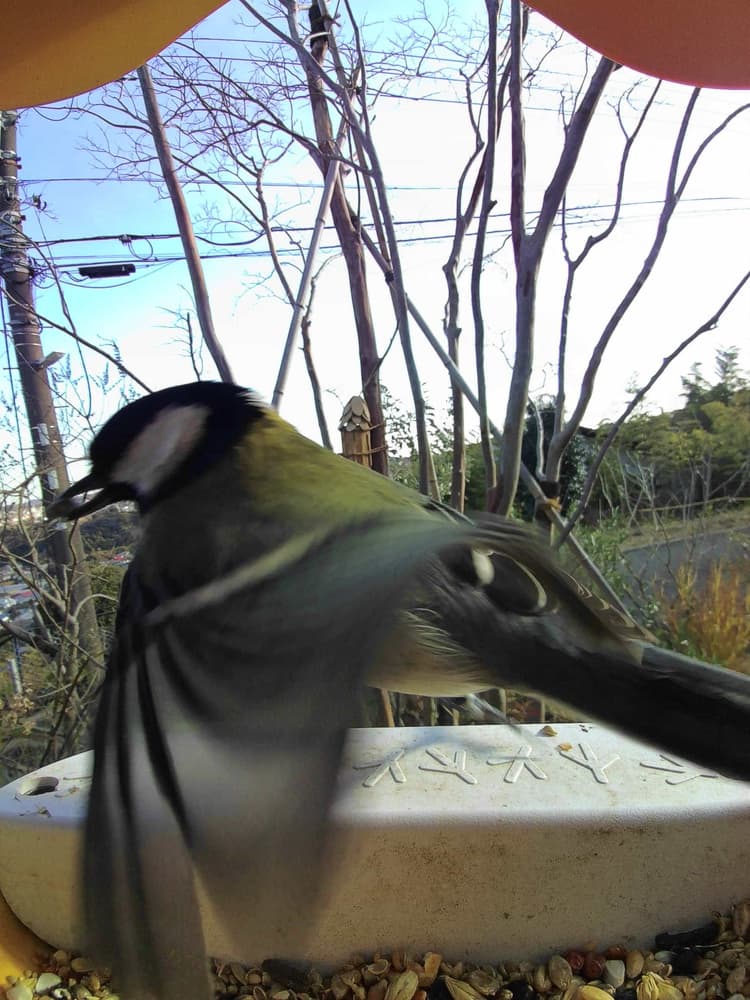
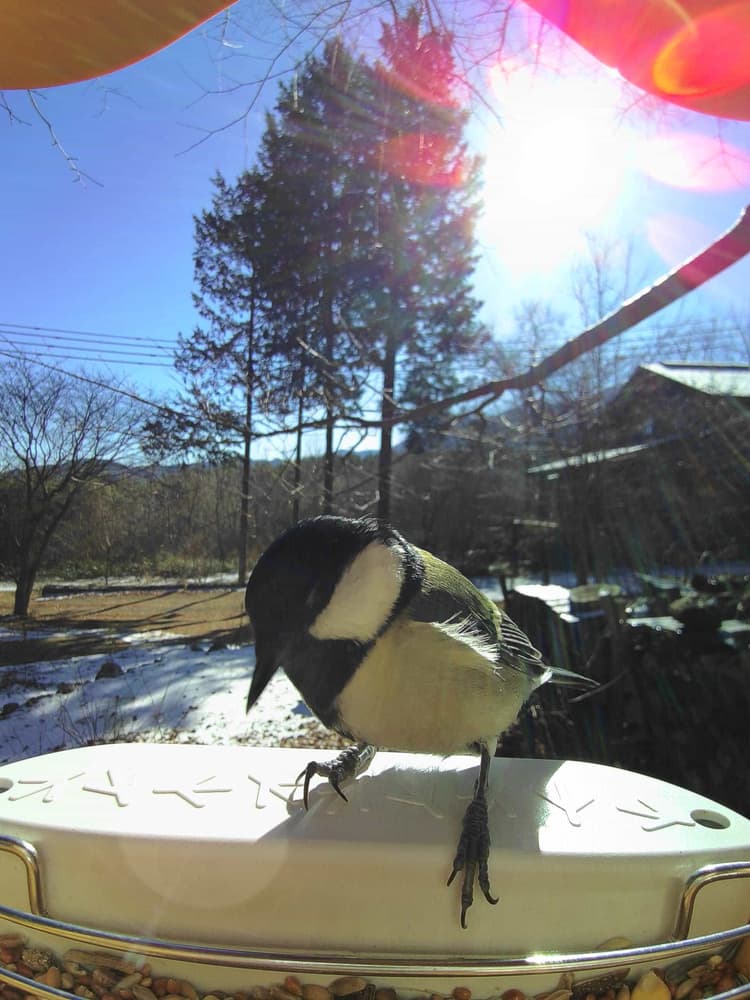
The Japanese tit is a small bird species native to East Asia. Its prominent features include a yellow chest, greenish-back feathers, and an inky black head. There's also a distinctive white pattern cresting each of its black cheek patches and their plain sides are punctuated by a variable black stripe. Their bill is blackish-grey, becoming more yellowish at the base of the lower mandible. The eye is dark brown.
Male vs female
Males and females don't show much dimorphism and have similar appearances. However, adult males often possess a slightly broader black ventral stripe than the female, extending from the throat to the lower belly. Observing this stripe can help differentiate between the sexes.
Juvenile
Juvenile Japanese tits are noticeably duller than adults in coloration. The side of the head is greyish white and black parts are not as pronounced as in adult birds. They tend to have less extensive black on their nape and throat. The yellow on the belly and vent is paler. As the juvenile matures, their colour will get closer to the vibrant adult colorings.
Often mistaken for
Great Tit vs Japanese Tit
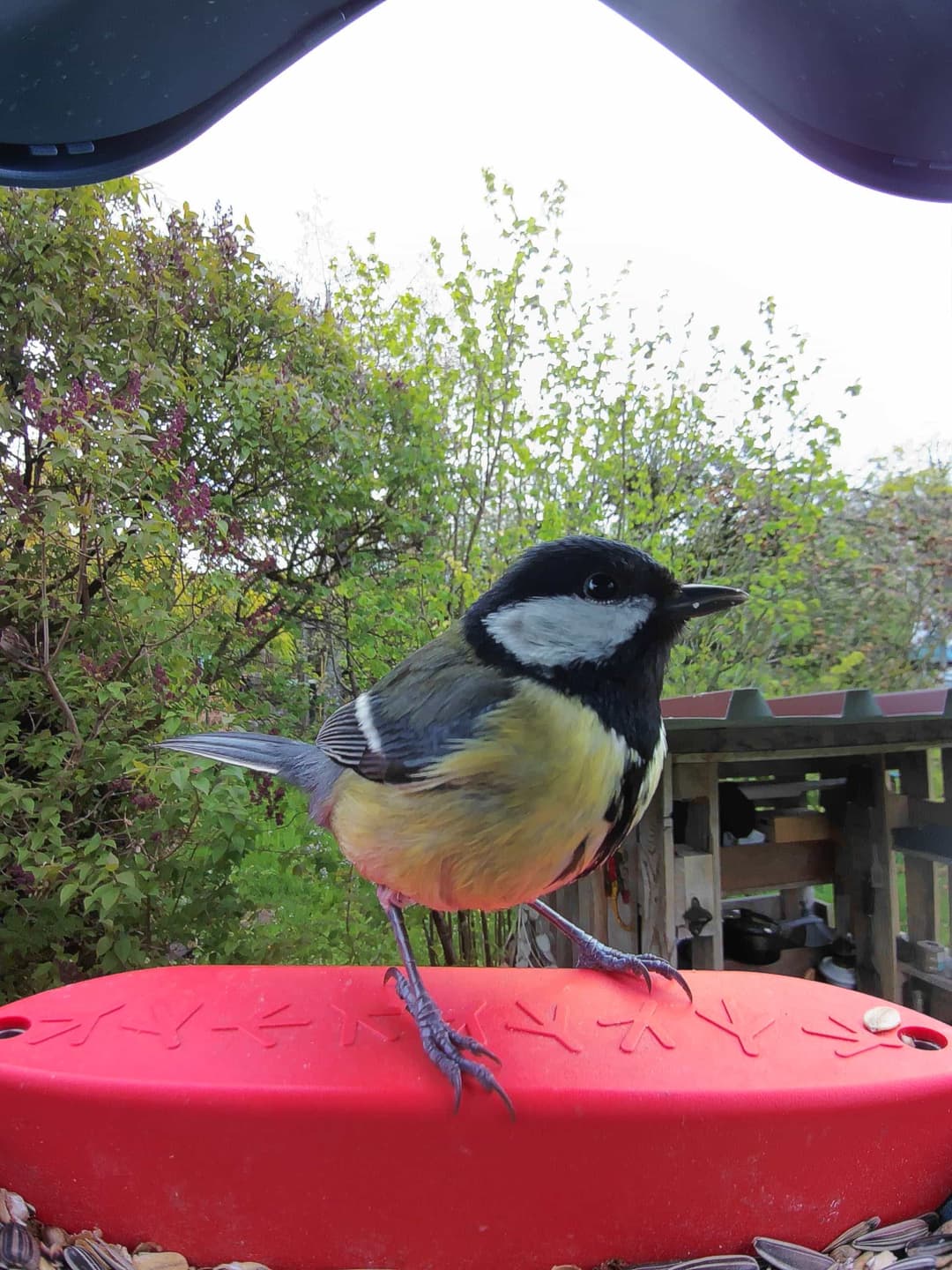
The Great Tit is very similar to the Japanese Tit in terms of color and pattern, with both having black caps, white cheeks, and a greenish back. However, the Japanese Tit tends to have a more distinct glossy blue sheen on its wings and tail.
Cinereous Tit vs Japanese Tit
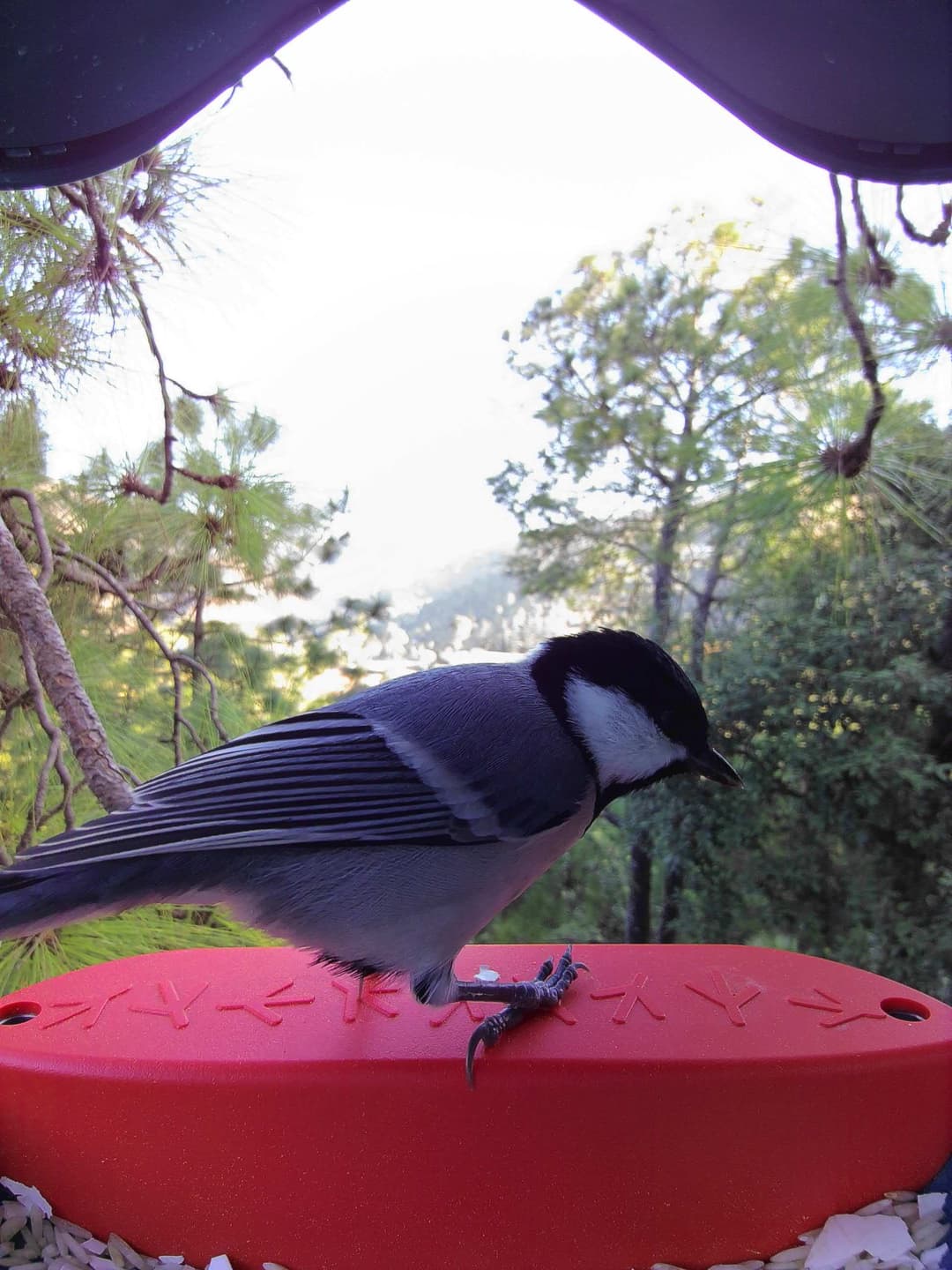
The Cinereous Tit can resemble the Japanese Tit, with both species sharing a black and white plumage pattern. The main difference is in the overall coloration; the Cinereous Tit often lacks the subtle blue and green hues seen in the Japanese Tit.
Breeding and nesting habits of the Japanese tit
Mating behaviors
The Japanese tit engages in elaborate courtship displays, including singing and aerial antics. Males showcase their plumage to attract females, often involving a series of calls and postures.
Nesting details
Japanese tits prefer to nest in tree cavities or man-made nest boxes. They use moss, grasses, and feathers as nesting materials. They are also known to nest in gardens, where providing a nest box with a small entrance hole can encourage habitation.
Eggs and chick-rearing
Females typically lay 5-10 eggs per clutch. Both parents play a role in incubating the eggs and feeding the chicks. The chicks fledge about two weeks after hatching, with the parents continuing to feed them for a short period post-fledging.
What does a Japanese tit like to eat?
Berries
Fruits
Insects
Nectar
Nuts
Sap
Scraps
Seeds
Snails
Spiders
Suet
Natural diet
The Japanese tit primarily feeds on a varied diet consisting of insects and other small invertebrates, particularly caterpillars, spiders, beetles, and flies. It also consumes seeds, fruits, and berries from native plants, providing a balanced intake of proteins and carbohydrates.
Bird feeders
At bird feeders, Japanese tits typically consume a range of common offerings such as sunflower seeds, peanuts, suet, and mealworms. They are adaptable feeders and will readily take advantage of supplemental food provided in residential gardens, especially during the harsher months.
Create an inviting environment
The first step to attract the Japanese tit to your yard is to create a welcoming environment. This includes placing bird feeders around, especially those of the tube or hopper type that are filled with their favorite snacks. Another tip is to add a birdbath or a small fountain, as these birds are attracted to water sources.
Provide tasty snacks
Japanese tits are primarily insect-eaters, but they will also eat seeds, nuts, and fruits. Supply feeders with high-quality seeds, like Bird Buddy seeds, which are selected by experts for suitability by season, to ensure the best results. Toss in some peanuts, sunflower seeds, and chopped fruits to offer a diverse menu.
Add nesting boxes
Providing nesting boxes around your yard can give the Japanese tits a safe place to breed and raise their offspring, enhancing the likelihood of them staying for longer periods. Ensure they are positioned out of reach of predators.
Learn their song
One fun trick to encourage these birds to visit your yard is to mimic their song. The Japanese tit has a unique and complex song. By playing a recording of it, you might just be able to strike a 'conversation' and have them stick around for a sing-along.
Where can you find Japanese tits?
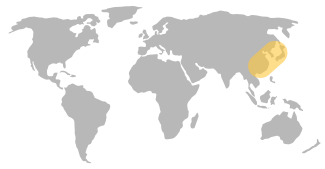
Primary habitat
The Japanese tit prefers the deciduous and mixed deciduous-coniferous forests across Japan, the Korean Peninsula, Taiwan, and eastern mainland China.
Additional range
This species also adapts well to urban environments, occupying parks and gardens, provided there are trees or thick shrubs for nesting.
Do they migrate?
The Japanese tit primarily exhibits sedentary behavior, meaning it tends to stay in one place year-round and does not undertake long-distance migrations typical of some other bird species. Found across a range of habitats including forests, parks, and gardens, the Japanese tit is distributed in Japan, Korea, Taiwan, and parts of eastern Russia and China. While these birds predominantly remain in their local territories, some minor seasonal movements have been observed, largely influenced by their search for food rather than true migratory behavior. These movements are typically limited to altitudinal shifts or short distances within their home range, particularly when food resources become scarce in winter. During this time, they may descend from higher, colder altitudes to more temperate lowlands. Overall, the Japanese tit's adaptation to varied environments allows it to find sufficient resources in its resident areas, negating the need for extensive migration. Consequently, the species is well-suited to its varied habitats and exhibits remarkable resilience in the face of seasonal changes, maintaining its presence year-round without the need for long-distance migratory routes.
What is the role of Japanese tits in nature and how to protect them?
Conservation status
The Japanese tit is classified as a species of least concern, indicating it is currently common and not at immediate risk of extinction. This bird is widely distributed across East Asia, thriving in a variety of forested habitats. Significant threats include habitat loss due to urban development and deforestation. Conservation efforts are generally limited, as the species' adaptability has allowed it to maintain stable population levels. Continued monitoring of habitat changes and environmental impacts remains important to ensure its ongoing stability.
Ecological role of Japanese tits
Its role in the ecosystem
The Japanese tit, scientifically known as Parus minor, plays a significant role in maintaining ecological balance in its habitat. As an insectivore, it contributes to pest control by feeding on insects that can be destructive to plants, thus promoting the health and proliferation of vegetation. In the process of foraging, it also helps in the dispersal of seeds, contributing to the propagation of various plant species. Apart from these, the tit's bird nests provide living spaces for certain insects and other small animals, thereby supporting biodiversity. Its role as a prey to larger predatory birds and animals also holds relevance in the food chain. Overall, the existence and behaviors of the Japanese tit have intertwined and crucial roles in the ecosystem dynamics, highlighting its ecological significance.
How to help protect Japanese tits
Preservation tips
Active involvement in habitat preservation
Combat deforestation by planting native trees, creating much-needed shelter for the Japanese tit. Small actions, like purchasing sustainable wood products, can indirectly protect tit habitats. Engaging with organizations focused on forest conservation could also enable you to actively contribute to safe haven establishment.
Adaptive gardening practices
Making your garden bird-friendly can make a world of difference. Plant native shrubs or put up nesting boxes to provide a small sanctuary. Provide food and water specially during harsh winters and dry summers. Such inviting spots can certainly offer respite to these charming birds.
Participation in citizen science projects
Information is ammunition in conservation. Join birdwatching projects or participate in bird counts organized by research institutions. Your contribution can help in tracking the Japanese tit population trend and in making fact-based strategic interventions.
Raise awareness and advocate
Raising public awareness about the plight of Japanese tit is instrumental for its survival. Use social platforms to inform and inspire your circles about the cause. Petition your local and national government, endorsing policies that deter habitat destruction and promote bird conservation.