
Gray Catbird
Gray Catbird
Dumetella carolinensis


Quick Identification guide
Quick Identification guide
- •
Features a slate-gray plumage overall, making it appear quite uniform in color
- •
Possesses a black cap on the head, which contrasts subtly with its gray body
- •
Has a rust-colored patch under the tail, adding a splash of color to its otherwise gray appearance
What does a gray catbird sound like?
The gray catbird produces a lengthy, irregular sequence of musical and mechanical sounds, often resembling a cat's mew, and is known to mimic the songs of other birds. Its varied call patterns include falling, flat and undulating notes, and can range in type from chatter-like sounds, chirps or chips, screams, to more melodic whistles.


Description
Catbirds got their name after their cat-like mew! Unsurprisingly, the collective noun for them is a mewing! They are real musical virtuosos: they can copy the sounds of other birds, produce over 100 different sounds and have a song that lasts up to 10 minutes! Not only that but their vocal organ (or syrinx) is split and both halves can open independently, which means they can sing using two voices at the same time.
The gray catbird can weigh between 23.2to56.5grams and be from21to24centimeters tall.
The grey catbird typically lives for 2-3 years, but can reach up to 10-15 years in optimal conditions. This is comparable to its close relatives, the North American mockingbird and brown thrasher, which average similar lifespans. However, some other related species, such as the American robin, have shorter average lifespans of around 2 years.
Did you know?
Most popular questions about gray catbird
How to recognise a gray catbird?
General appearance
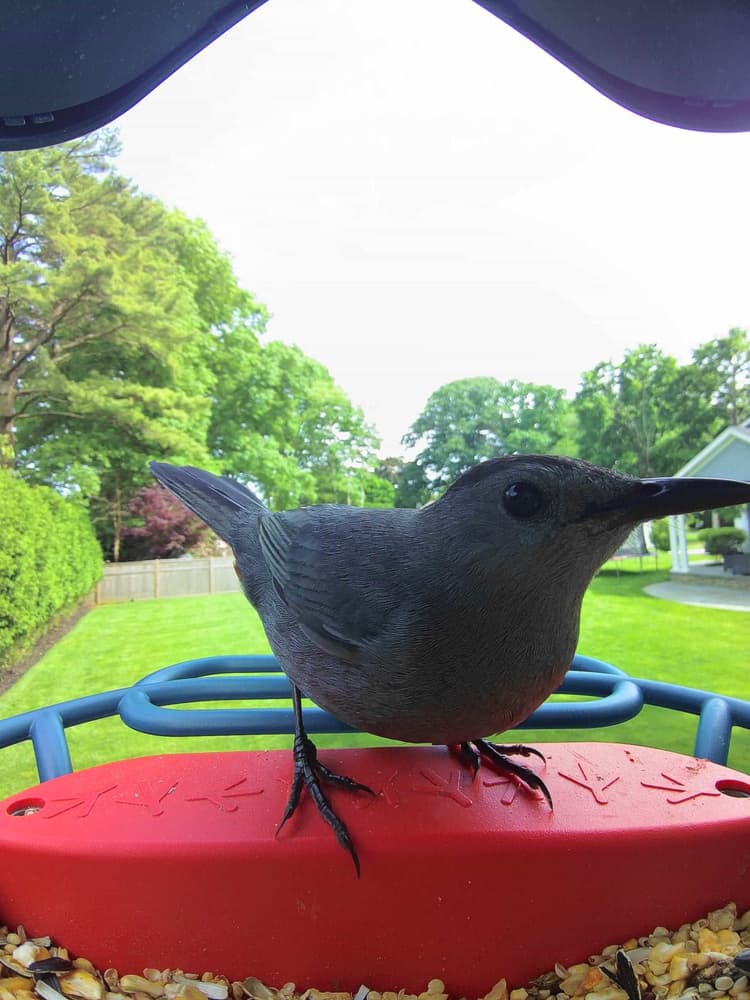
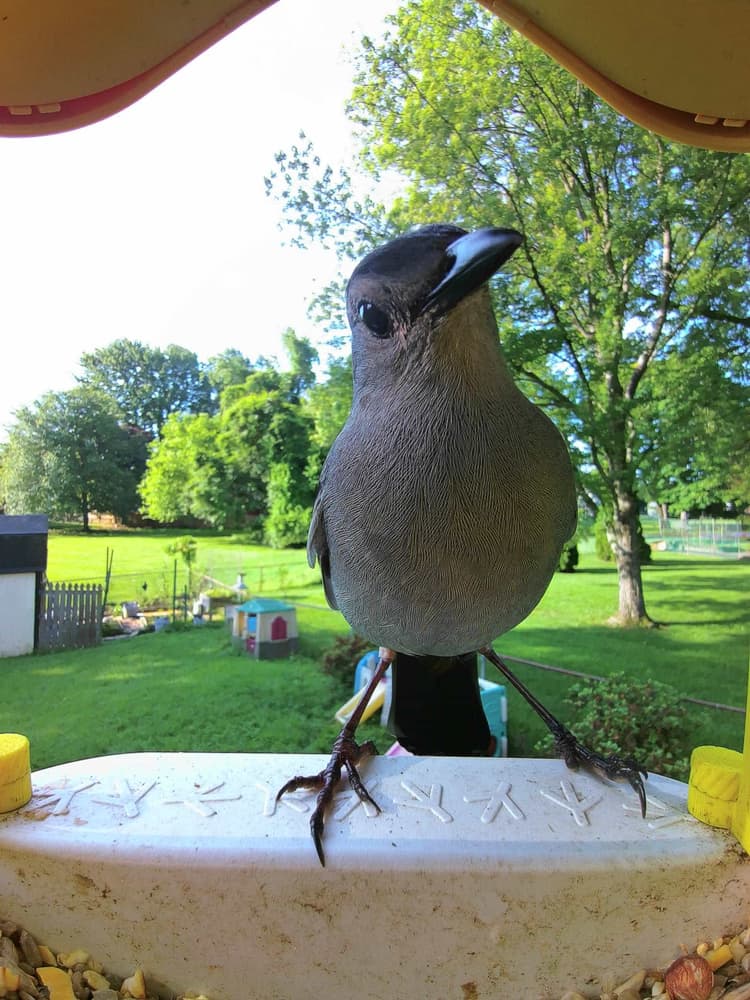
The gray catbird, measuring 8-9 1/4 inches long, is about the size of a Robin. This species stands out for its slim frame, long tail which it often flips around expressively, broad wings, and a rounded, square-tipped tail. Its coloration is primarily gray, featuring a black cap and chestnut undertail coverts.
Male vs female
Both male and female gray catbirds share similar physical traits and coloration, making it difficult to distinguish between the two sexes based on appearance alone. Both genders exhibit smooth gray color all over, with a characteristic black cap and chestnut undertail coverts.
Juvenile
Juveniles, like adult Catbirds, are mostly gray but they may have a fuzzier appearance. Their tails may be shorter than their adult counterparts, and their plumage slightly duller. Black cap may be less visible in some individuals. As they mature, they will develop the distinctive black cap and chestnut undertail coverts of adults.
Often mistaken for
Northern Mockingbird vs Gray Catbird
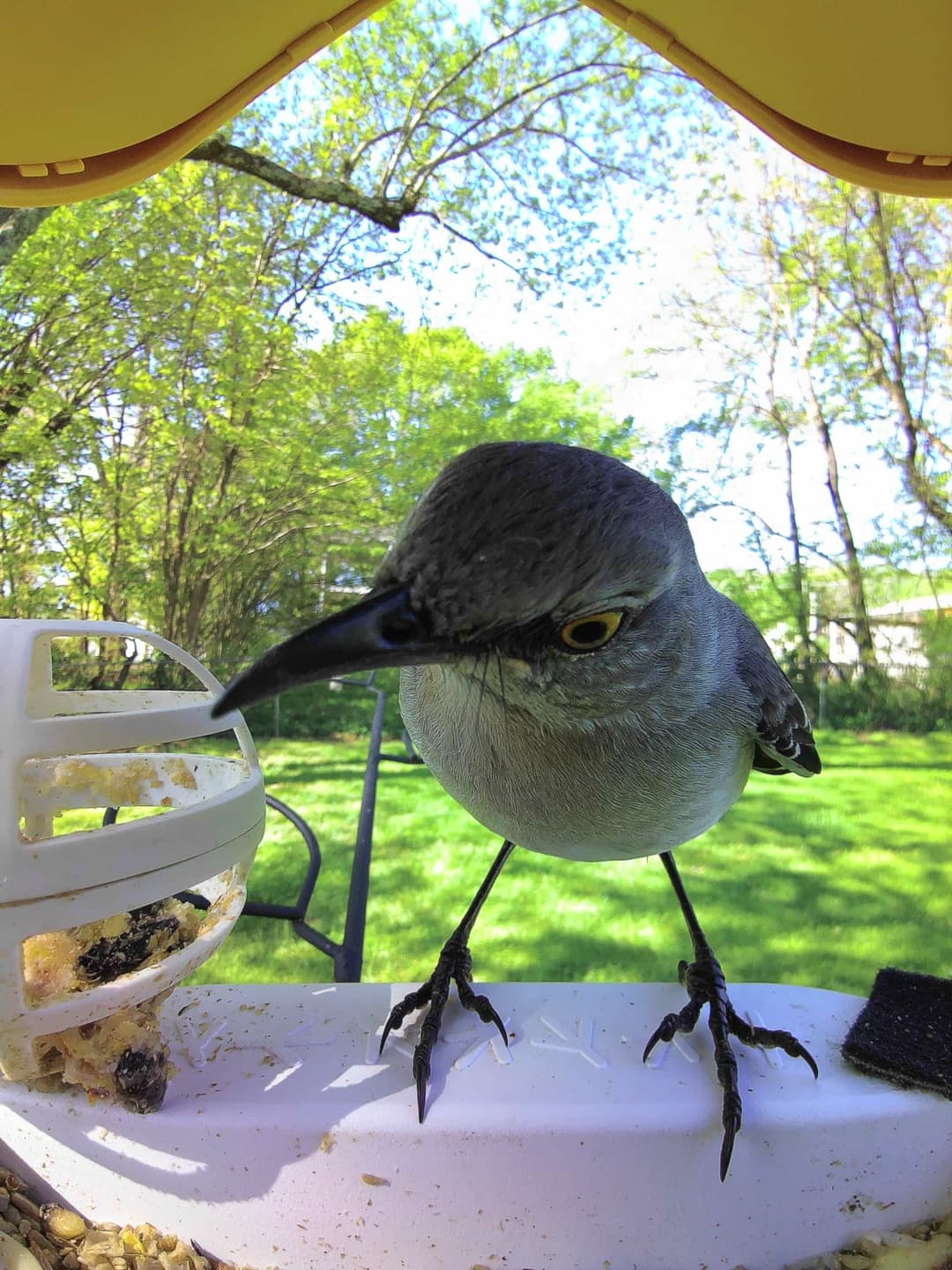
The Gray Catbird is uniformly slate gray with a black cap and rufous undertail coverts, while the Northern Mockingbird is paler gray with white wing patches and no rufous color under the tail. Mockingbirds often show off with elaborate songs that mimic other species, unlike the Catbird's less varied, cat-like 'mew' call.
Brown-Headed Cowbird vs Gray Catbird
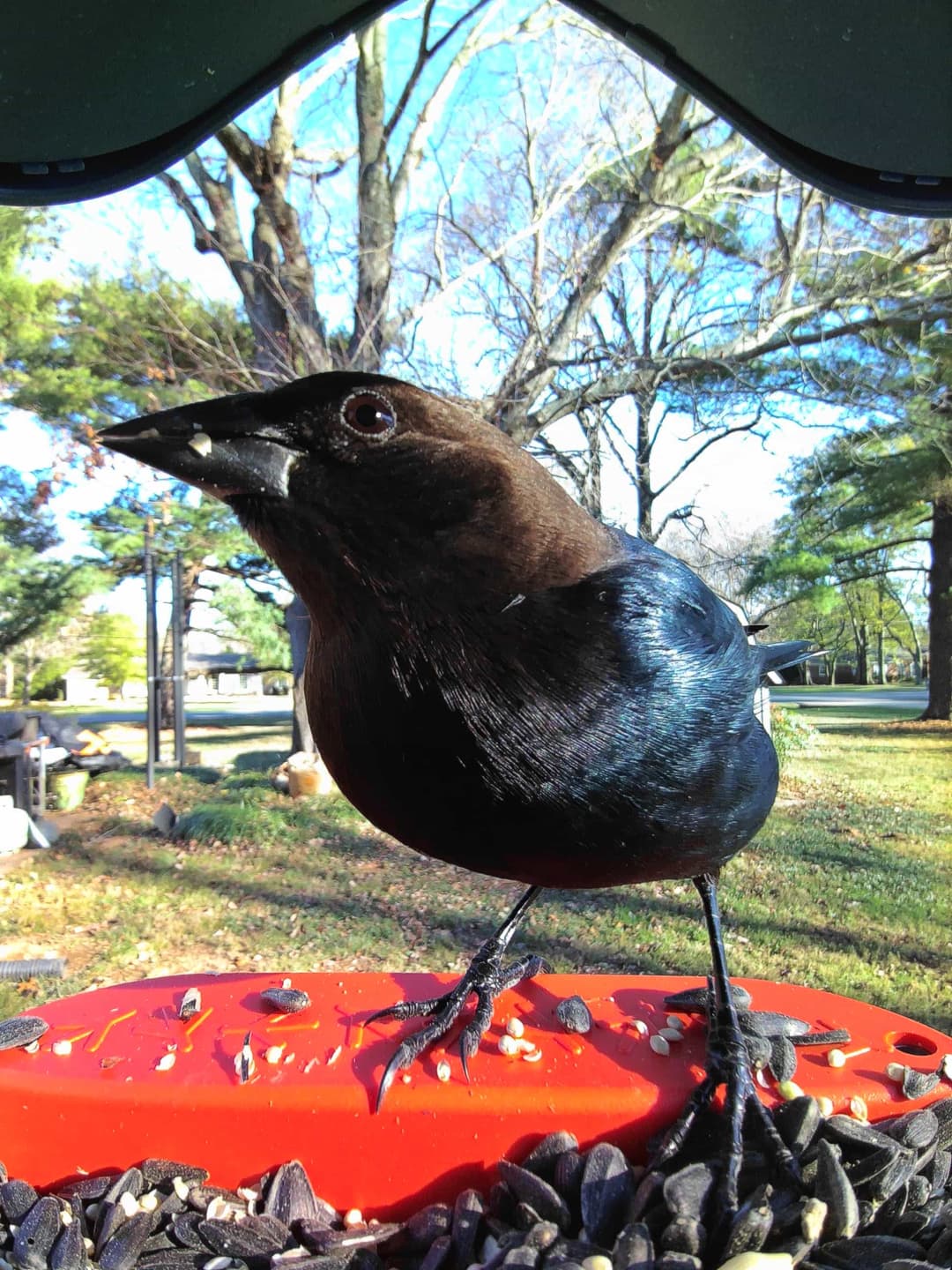
Gray Catbirds are entirely gray with a distinct black cap and chestnut undertail coverts. In contrast, Brown-headed Cowbirds sport a glossy black body and distinct brown head. Cowbirds lack the lengthy tail and understated elegance of Catbirds and are often found in more open habitats.
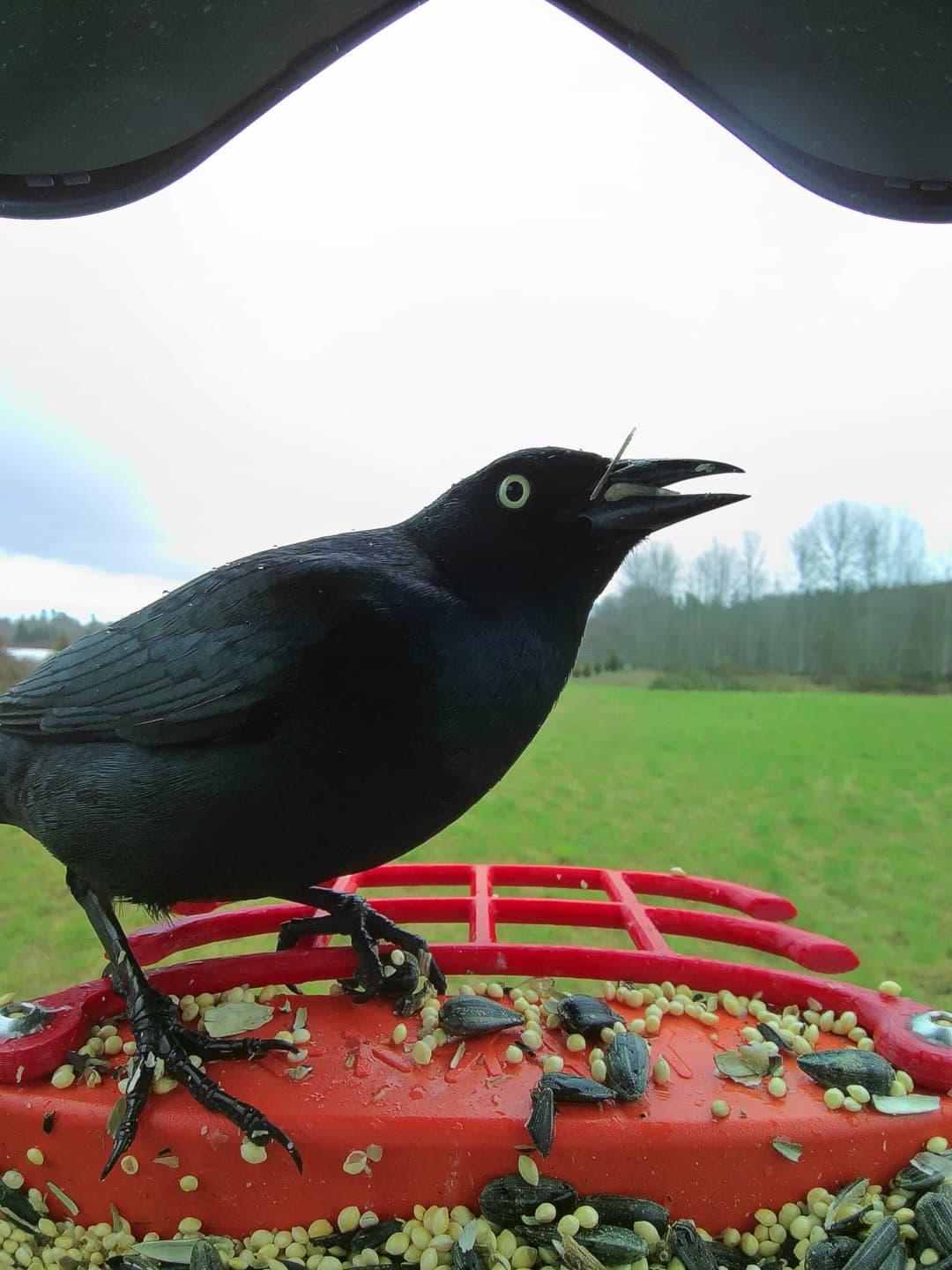
Brewer’s Blackbird vs Gray Catbird
The Gray Catbird's plumage is slate gray with a black cap and chestnut undertail coverts, differing from Brewer's Blackbird, which has a glossy black (males) or brownish (females) plumage. Brewer's also have pale eyes, whereas Catbirds have dark eyes, and are generally found in more open areas.
Breeding and nesting habits of the gray catbird
Mating behaviors
During the early breeding season, male gray catbirds sing extensively in the mornings and evenings and sometimes at night. Courtship includes the male chasing the female, performing postures, and bowing with drooped wings and a raised tail to display a patch of chestnut under the tail.
Nesting details
Nests are usually placed in dense shrubs, thickets, briar tangles, or low trees, 3-10 feet above the ground. The nest, mainly built by the female, is a large, bulky cup constructed of twigs, weeds, grass, leaves, and occasionally pieces of trash, lined with rootlets and other fine materials. To attract nesting catbirds, ensure your garden has dense vegetation or shrubs.
Eggs and chick-rearing
Gray catbirds are known to reject eggs from Brown-headed Cowbirds by puncturing and ejecting them. More information on their egg and chick-rearing practices has not been provided, but ensuring dense shrubbery can support their nesting success.
What does a gray catbird like to eat?
Berries
Flowers
Fruits
Insects
Spiders
Natural diet
The gray catbird's natural diet primarily consists of insects and berries. In early summer, it consumes various insects including beetles, ants, caterpillars, grasshoppers, crickets, true bugs, spiders, and millipedes. Nestlings are fed almost exclusively on insects, ensuring they get a protein-rich start. More than half of the adult catbird's diet is composed of vegetable matter, especially during the fall and winter seasons. During these times, the catbird feasts on a variety of wild berries and some cultivated fruits. This diet makes the gray catbird an important species for pest control as well as seed dispersal. Occasionally, they may catch small fish, but this is not a primary food source.
Bird feeders
At bird feeders, the gray catbird displays unconventional feeding habits, consuming a bizarre assortment of foods not typically associated with birds. Common feeder items they enjoy include doughnuts, cheese, boiled potato, and corn flakes. Their willingness to eat such diverse foods highlights their adaptability and varied dietary preferences when natural food sources are supplemented by human offerings.
Feeding the gray catbird
Gray Catbirds love to feed on a variety of berries and fruits. These birds have a special liking for strawberries, blueberries, and cherries. To entice them, try placing these fruits in a platform or tray feeder. Along with fruits, they also appreciate Bird Buddy seeds and enjoy a mixed diet. Bird Buddy seeds are particularly recommended since they are chosen by experts for the season, ensuring your birds get the best nutrition possible.
Creating a catbird-friendly yard
Gray Catbird enjoys dense shrubbery, especially in areas with thick, tangled undergrowth. Adding native plants to your yard will not only attract these birds but will also create an environment that they feel secure in. This could encourage them to stay for a longer period. Make sure to provide thickets, brush piles or dense shrubs as these are Catbird's favorite.
Fun tricks to encourage catbird visits
In addition to providing food and a suitable environment, there are also other fun tricks to lure Gray Catbird to your yard. These birds are very curious and they love to mimic sounds. If you have a wind chime or any source of melodious sound in your yard, it may pique their interest and might even encourage them to join in a sing-along!
Where can you find gray catbirds?

Primary habitat
The gray catbird favors dense low growth environments most commonly found in leafy thickets along woods and streams, suburban gardens, shrubby swamps, overgrown brushy fields, and garden hedges.
Additional range
Unexpectedly, it inhabits thorn scrub and undergrowth. It avoids unbroken forest and coniferous woods in all seasons.
Do they migrate?
The gray catbird is a migratory bird. It generally migrates in a nocturnal pattern. During the fall migration, gray catbirds breed in the northern parts of North America and then move to their wintering grounds in the southeastern United States, Central America, and the Caribbean. Birds that breed in the northwestern regions of North America apparently migrate eastward before turning south. This is suggested by their rare sightings in the southwestern United States. Instead, they make their way to the southeast, avoiding the arid regions to the southwest. Migration typically occurs between late summer and early fall, with birds departing from their breeding grounds as early as September and arriving at their wintering sites by late October or early November. Key locations for their migration include eastern and central parts of the United States, where they are frequently observed during these transitional seasons. Upon arrival in their wintering areas, gray catbirds inhabit dense thickets and brushy areas, similar to their breeding habitats, until they return north in the spring to begin the breeding cycle anew. The spring migration usually begins in March or April, when they head back to their breeding territories.
What is the role of gray catbirds in nature and how to protect them?
Conservation status
The gray catbird is generally considered a common species, particularly in the eastern regions where populations have been increasing in recent decades. It is not currently classified as vulnerable or endangered. Key conservation efforts focus on maintaining habitat, as the species thrives in dense shrublands and edges. Significant threats include habitat loss due to urbanization and deforestation. Conservation programs aim to protect these natural habitats to support the gray catbird's stable population. Overall, the species is not at immediate risk but benefits from ongoing habitat preservation efforts.
Ecological role of gray catbirds
Its role in the ecosystem
The gray catbird plays a critical role in ecology and in maintaining the balance of ecosystems. In terms of pest control, the gray catbird is a consumer primarily of insects such as beetles, ants, caterpillars, grasshoppers, crickets, true bugs, spiders, and millipedes, especially during the early summer period. This feeding behavior keeps the insect population in check, effectively mitigating potential harm to vegetation and the surrounding habitats. In fall and winter, the gray catbird's diet shifts towards berries and fruits which leads to another ecological contribution - seed dispersal. As the bird consumes fruit, it transports its seeds wide distances, aiding in the distribution and propagation of these plant species. Furthermore, the gray catbird is known for rejecting and ejecting the eggs of the Brown-headed Cowbirds, a brood parasite known to lay its eggs in other bird species' nests, suggesting it serves a niche role in limiting the proliferation of this parasitic behavior. Lastly, its nesting habits in dense shrubs and thickets may maintain the structure of these habitats, contributing indirectly to the overall biodiversity.
How to help protect gray catbirds
Preservation tips
Habitat preservation strategies
To conserve the gray catbird population, it’s vital to protect and restore their natural habitats which include thickets and shrubs. Encourage reforestation efforts, especially with native plant species to provide them with food and shelter. Further, wetland preservation is crucial, as these areas are crucial nesting sites for catbirds. Avoid unnecessary land development and introduce policies to take into account the needs of native wildlife.
Community science initiatives
Public involvement in gray catbird conservation can be majorly helpful. Launch community science projects involving local schools and groups to monitor catbird populations and their habitats. Encourage reporting of sightings via apps or online platforms to gather data regarding the species distribution and behavior. Provide educational initiatives to raise awareness about the importance of the catbird and the threats they face. Encourage locals to provide bird-friendly environments in their yards with native plants.