
Gray Francolin
Gray Francolin
Also known as: Gray Partridge
Ortygornis pondicerianus


Quick Identification guide
Quick Identification guide
- •
Recognizable by its rufous-brown plumage interspersed with fine black and white markings
- •
Features a small, stout bill that is ideal for pecking
- •
Exhibits a short tail and round body that give it a compact appearance
What does a gray francolin sound like?
The gray francolin has distinct vocalizations. Its typical call, described as hoarse 'kee-ah,' exhibits a falling, flat pattern. When disturbed or flushed, it emits a rapid cackle - an odd, rattling chatter that is distinctively peculiar to its species. This variation in calls and tone contributes to its unique acoustic presence in its habitat.


Description
Did you know that grey francolins are particularly renowned for being extremely graceful runners? And quick, too! You can usually hear their loud calls in the early morning hours, and they are probably fighting words! By calling, males attract potential challengers, so they can duke it out and impress the ladies.
The gray francolin can weigh between 200to418grams and be from30to35centimeters tall.
The gray francolin typically lives for an average of 5-7 years. This is a shorter lifespan compared to other members of the Phasianidae family, such as the ring-necked pheasant, which can live up to 18 years in captivity. Factors known to affect the gray francolin's lifespan include predation and habitat loss.
Did you know?
Most popular questions about gray francolin
How to recognise a gray francolin?
General appearance
The gray francolin, also called the 'teetar,' has a medium-sized body with a rounded form. Its plumage is predominantly gray-brown and features fine barring in shades of buff. Fine dark streaks cover the neck and head, and a distinctive pale eye stripe enhances its features. The bird's underparts are whitish with a hint of buff, and the wings showcase a complex pattern of brown and white.


Male vs female
Males and females are similar in appearance, though males are slightly larger. Both sexes have the characteristic barred plumage, but males have added features like spurs on their legs. These spurs, more pronounced as the bird ages, are a key identifier. Females typically have subtler patterns and lack spurs, making them appear more delicate.
Juvenile
Juvenile gray francolins exhibit more muted coloration than adults, with a generally browner hue and less distinct barring. Their plumage lacks the well-defined patterns seen in mature birds, and they do not have spurs. Young francolins gradually develop adult characteristics as they mature, making them distinguishable from adults by their less refined markings.
Often mistaken for
Chukar vs Gray Francolin
Gray Francolins are smaller and lack the bold face pattern of Chukars. Francolins have a more uniform brown and streaky plumage compared to the Chukar's striking black and white bands on the face and flanks. Chukars also have red legs and a more pronounced red bill.

California Quail vs Gray Francolin
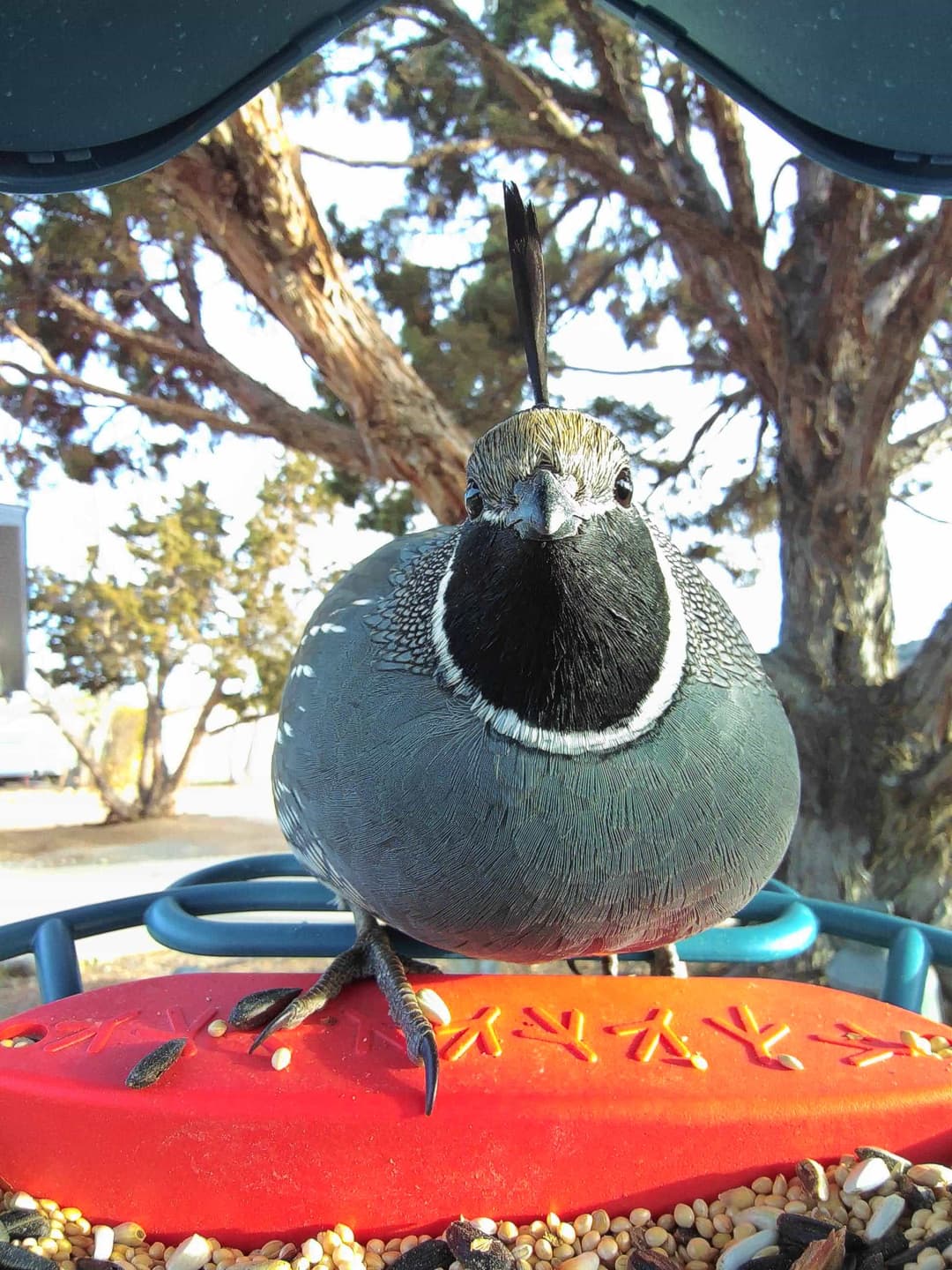
Gray Francolins have a plainer brown appearance and lack the distinctive black plume on the California Quail's head. The Francolin's plumage is less patterned, focusing on a subtle blend of brown shades, whereas California Quails have a scaled pattern on the neck and chest. They are also slightly larger than quails.
Breeding and nesting habits of the gray francolin
Mating behaviors
The gray francolin engages in elaborate courtship displays characterized by the male's vocalizations and physical displays such as strutting and wing flapping to attract females. These behaviors establish monogamous pair bonds during the breeding season.
Nesting details
Gray francolins prefer ground nests, often concealed in thick grass, bushes, or under rocks. They select sites in open fields, gardens, or scrubby areas. The nest is a simple scrape lined with leaves, grass, and feathers. To create a suitable habitat in gardens, ensure there are secluded areas with tall grass and minimal disturbance.
Eggs and chick-rearing
Females lay 6-8 eggs, which are buff-colored and speckled. Incubation lasts around 18-21 days, undertaken mainly by the female. Once hatched, chicks are precocial, moving and feeding shortly after. Both parents guard and guide the chicks, teaching them foraging skills necessary for survival.
What does a gray francolin like to eat?
Berries
Flowers
Fruits
Insects
Plants
Seeds
Small animals
Natural diet
The gray francolin primarily feeds on seeds from a wide array of plants, including many grasses and weeds. In fall and winter, seeds constitute the main portion of its diet. The bird also eats waste grains from crops such as wheat, oats, corn, and sunflower. In spring, it consumes more green leaves, while in summer, insects become a more significant part of its diet. Young chicks predominantly eat insects to support their growth.
Bird feeders
Gray francolins are generally not attracted to typical bird feeders as their diet consists mainly of seeds from natural sources, green leaves, and insects that they forage for in their habitat. They may occasionally eat waste grains but do not commonly visit bird feeders like many other bird species.
Attracting the gray francolin: favorite snacks
Gray Francolins are partial to seeds and insects, making them an excellent bird to have in your yard as they love to snack on common pests. Bird Buddy seeds are highly recommended because they are chosen by experts according to the season. Variety is important, so try to rotate the seeds from time to time to keep the birds interested.
Choose the right feeder
Ground feeders are best for Gray Francolins since they are ground-dwelling birds. Make sure the feeder is in a protected area where predators cannot easily reach it. They tend to be shy, so avoid placing the feeder in high-traffic areas.
Fun tricks to encourage gray francolin visits
Aside from providing nourishing snacks, maintaining cleanliness and quiet around the feeding area are crucial. Restocking the feeder regularly, especially with Bird Buddy seeds, will ensure that the birds don't have to look elsewhere for food. Also, creating a dust bath area or shallow water pool can attract more Gray Francolins to your yard.
Enjoy a francolin sing-along
Gray Francolins are known for their beautiful, flute-like songs. Once they are comfortable in your yard, they may treat you to a chorus. Enjoy this natural concert! Remember, patience is key. Consistency in maintaining a welcoming environment will eventually encourage these shy birds to let their guard down and interact more.
Where can you find gray francolins?

Primary habitat
The gray francolin's primary habitat includes grasslands, cultivated land, and agricultural fields, particularly farmland with hedgerows and shelterbelts.
Additional range
In winter, gray francolin often inhabits stubble fields, moving to the edges of woodlots during harsh weather. This bird also comfortably resides in bushy pastures and meadows.
Do they migrate?
The gray francolin (Francolinus pondicerianus) is a non-migratory bird that typically stays in one area throughout the year. It is a resident species commonly found in the plains and foothills of the Indian Subcontinent and the Arabian Peninsula, including countries like India, Pakistan, Nepal, Bangladesh, and the southern parts of Iran and the UAE. Gray francolins inhabit scrublands, grasslands, and cultivated areas, adapting well to agricultural landscapes. They often remain in relatively small home ranges unless environmental conditions, such as food scarcity or habitat disturbance, force short-distance movements. Such movements are localized rather than migratory. Because the gray francolin does not undertake long-distance migrations, there are no specific migratory routes, timing, or key staging areas associated with their movement patterns. Their populations remain stable in their preferred habitats, and they are known for their adaptability to changes in their immediate environment. Furthermore, gray francolins form small groups or pairs, rarely engaging in long-distance travel outside their established territories.
What is the role of gray francolins in nature and how to protect them?
Conservation status
The gray francolin is common and widespread across many areas, though its population in North America may be lower now than in the 1950s. This species does not fall under vulnerable or endangered categories. Key conservation efforts focus on habitat preservation and monitoring of populations in regions where numbers fluctuate. The primary threats include habitat loss due to agriculture and urban development, as well as hunting in certain areas. Nonetheless, its adaptability to various environments helps maintain stable populations, suggesting no immediate risk of decline in most of its range.
Ecological role of gray francolins
Its role in the ecosystem
The gray francolin plays a significant ecological role within its ecosystem. Notably, its diet consists largely of seeds, contributing to seed dispersal as it forages and excretes seeds, aiding in vegetation growth and potentially biodiversity. It also consumes leaves, which supports nutrient cycling within the ecosystem. Furthermore, gray francolins also diversify their diet by consuming insects, acting as a form of biological pest control. This consumption of pests can be particularly beneficial to surrounding agriculture by reducing the need for harmful pesticides. Thus, by performing these roles, gray francolins contribute to biodiversity, nutrient cycling, and equilibrium within their ecosystem, while also supporting agricultural sustainability. Their behavior supports overall ecosystem health and functionality. They also serve as prey species for larger predators, contributing to the ecological food web. The gray francolin's ecological activities, therefore, reinforce many key ecosystem processes and dynamics.
How to help protect gray francolins
Preservation tips
Habitat preservation strategies for gray francolin
Implement local legislation to protect gray francolin habitats from deforestation and agricultural encroachment. Promote sustainable land use and farming practices that do not degrade natural habitat spaces. Restore degraded landscapes by planting native vegetation creating suitable habitat for the species.
Community science initiatives for gray francolin conservation
Engage local communities in the conservation effort through citizen science projects. Encourage locals to monitor gray francolin populations and report sightings. This data collection can help understand their behavior, migration patterns and threats. Educate communities about the importance of the gray francolin and their role in the ecosystem.