
California Quail
California Quail
Also known as: California Valley Quail, Valley Quail
Callipepla californica


Quick Identification guide
Quick Identification guide
- •
Recognizable by its plump, round body and distinctive teardrop-shaped plume or topknot on its head
- •
Features a blue-gray chest with scaling pattern on the belly and rich brown flanks
- •
Boasts a short, dark beak and scaled pattern on the lower neck forming a unique bordering look
What does a California quail sound like?
The California quail vocalizes with a distinctive and loud ka-kah-ko or Chi-ca-go call, with the second note being the highest. Its call pattern can be described as undulating, fluctuating in pitch and intensity. The quail's call type is best categorized as a scream, characteristically loud and piercing. These sounds make up the typical calls and songs of this bird, setting it apart from others in its delicate communication methods.


Description
California quails are the state bird of California and they travel in small groups called coveys. They engage in communal brooding: when chicks hatch, they are all one big happy family and all the adults take care of all the kids! Doing this actually helps them live longer. Did you know the feathers atop their heads are actually a cluster of six overlapping plumes?
The California quail can weigh between 140to230grams and be from24to27centimeters tall.
The California quail typically lives up to 4-5 years in the wild. This is slightly longer compared to related species such as the Gambel's quail, which averages a lifespan of 1.5-2 years. Other species such as the mountain quail can live up to 3-4 years. Factors such as predation, disease, and habitat loss can influence longevity.
Did you know?
Most popular questions about California quail
How to recognise a California quail?
General appearance
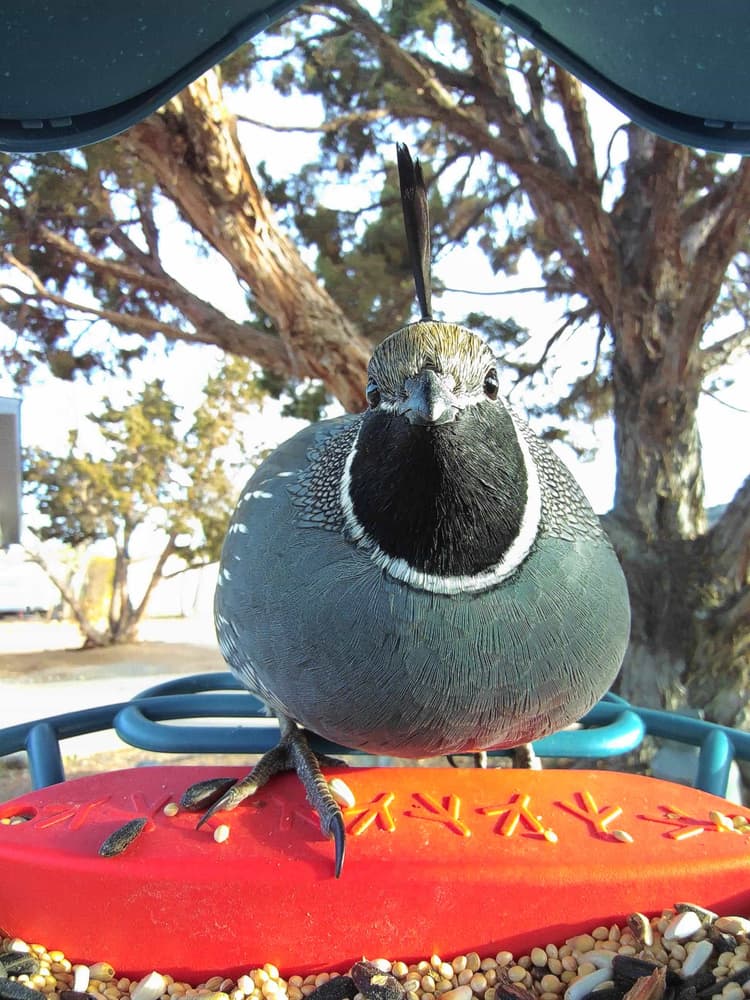
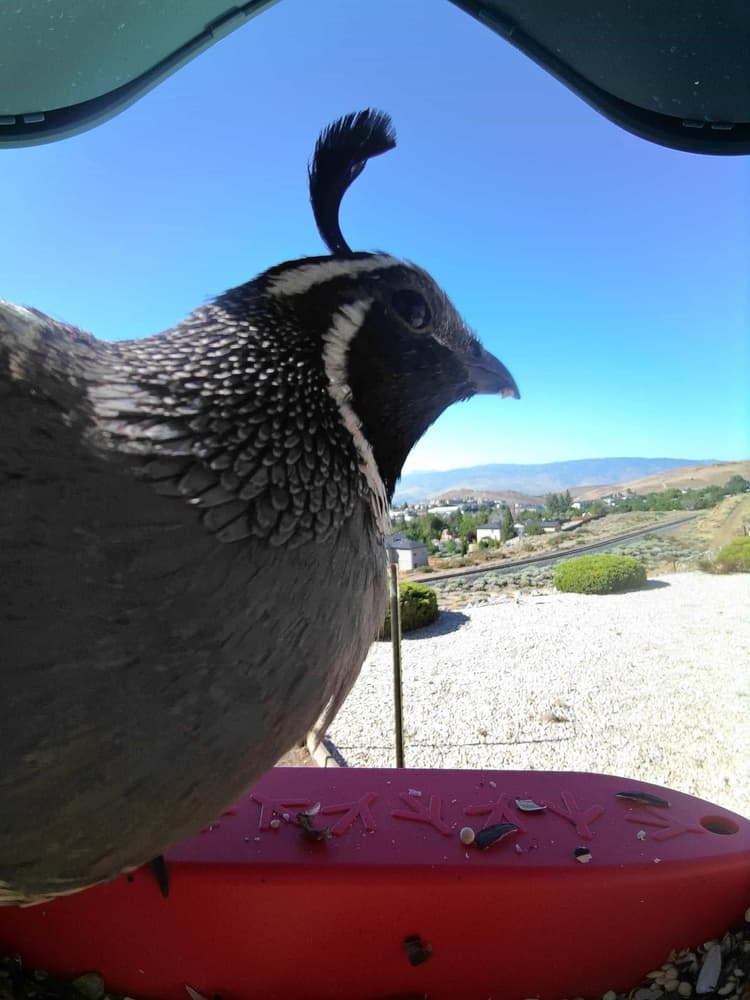
The California quail is a small, plump bird with a short neck and a distinctive forward-curving black plume on top of its head. Its body is gray-brown with a scaled pattern on the belly, and the flanks are marked with white and chestnut streaks. The bird has a short, square tail and a stout bill. Its stocky build and unique topknot make it easily recognizable in its habitat.
Male vs female
Male California quails have bold, black and white facial markings with a black throat and a bright brown crown, which contrasts with their blue-gray body. They also possess a more prominent crest. Females have a more subdued coloration with brown tones, a smaller, darker crest, and generally lack the male's black throat and bold facial markings.
Juvenile
Juvenile California quails have a mottled appearance with a predominantly brown body and faint streaks. They lack the distinctive crest seen in adults and have more subtle facial patterns. As they mature, their plumage becomes more defined and the crest develops. Juveniles also exhibit a more uniform color, which gradually differentiates into the adults' distinct markings.
Often mistaken for
Gambel’s Quail vs California Quail
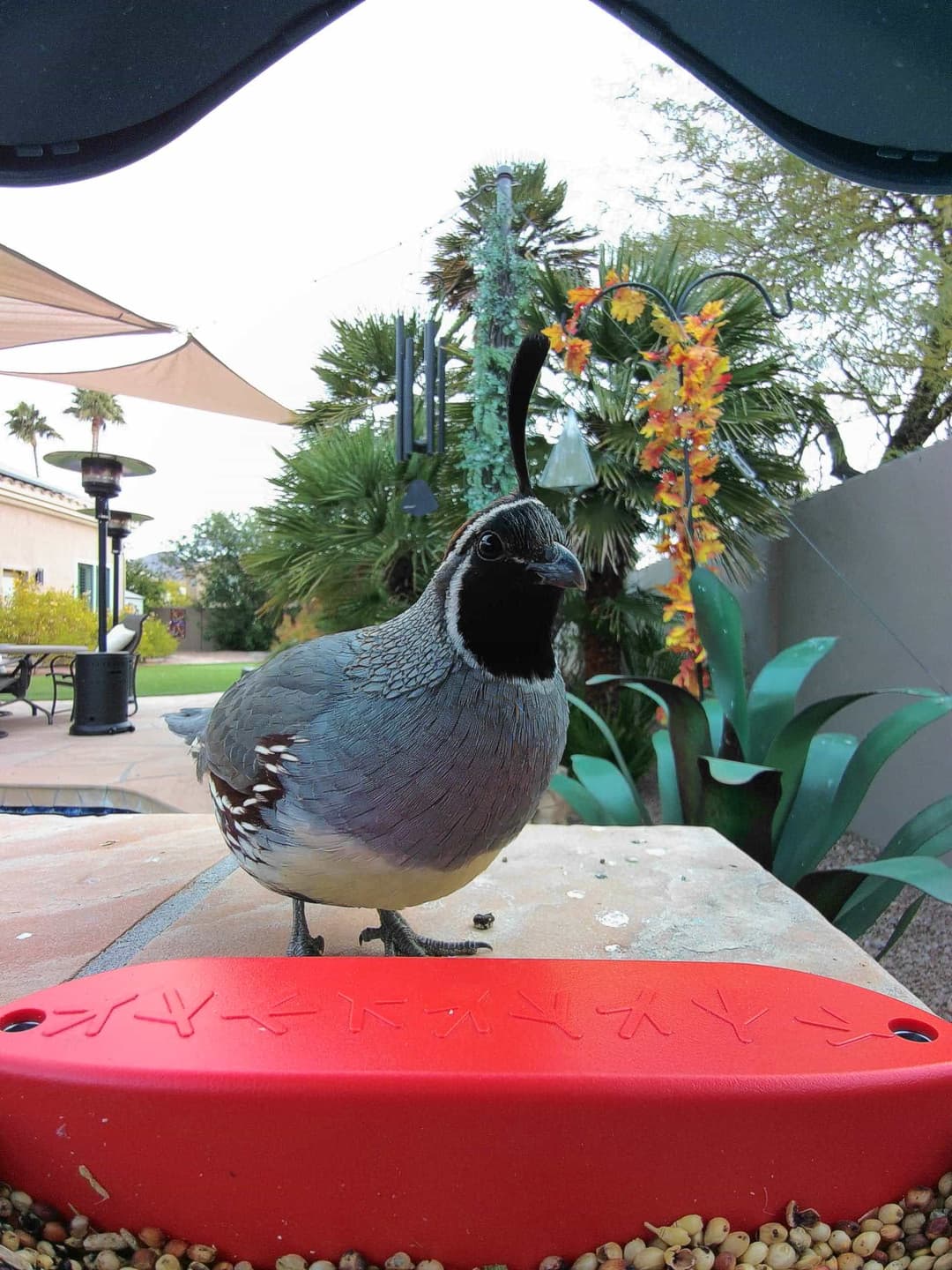
California Quail males have distinctive black faces and a teardrop-shaped plume, while Gambel’s Quail males have copper crowns and more muted facial patterns. Look for the bolder scale pattern on California Quail's belly. The California Quail's call is a distinctive 'chi-ca-go', different from Gambel's.
Chukar vs California Quail
California Quail are smaller and prefer bushier habitats compared to the Chukar's open, rocky environments. Chukars have bold black stripes along their sides and a more uniform gray body, while the California Quail shows a speckled belly and brown back. The Chukar's distinctive loud 'chuk-chuk-chuk' call contrasts with the California Quail's more melodic notes.

Breeding and nesting habits of the California quail
Mating behaviors
California quails engage in courtship displays where males perform calls and spread their plumage to attract females. Pair bonding is generally formed during the breeding season.
Nesting details
They nest on the ground, using shallow depressions lined with grass, leaves, and twigs. Nests are often concealed under bushes or hedges, sometimes in gardens. To create a suitable habitat, provide dense shrubbery and avoid disturbing ground cover.
Eggs and chick-rearing
Females lay 10-16 eggs per clutch. Incubation lasts about 22-23 days, predominantly by the female. Chicks are precocial, staying with parents and learning to forage immediately after hatching.
What does a California quail like to eat?
Berries
Flowers
Fruits
Insects
Nuts
Plants
Seeds
Natural diet
The California quail primarily consumes a diet consisting of seeds and leaves. It feeds on a diverse range of plants, showing a preference for annual weeds, including their seeds, leaves, and fresh shoots. Additionally, it eats acorns, berries, flowers, and bulbs. Its diet is supplemented with insects, providing a source of protein.
Bird feeders
At bird feeders, California quail may consume seeds commonly offered, such as millet or sunflower seeds. Quail block or mixed bird feed designed to attract a variety of bird species may also appeal to them.
Attract california quails with favorite snacks
California quails are partial to seeds, berries, and small insects. A feeding station stocked with these will make your yard irresistible to them. Bird Buddy seeds in particular, are chosen by bird-feeding experts for the season and have been observed to be greatly favored by these birds.
Suitable feeder types for california quails
California quails are ground-feeding birds, so a low platform feeder or a ground feeder is ideal. And don't forget to keep the feeders clean to prevent disease.
Fun tricks to encourage california quails to your yard
Keeping a bird bath filled with fresh water, and providing shelter like low bushes and birdhouses can make your yard more enticing. Playing some recorded quail calls can also attract these birds for a visit and even a sing-along.
Why use bird buddy seeds
Bird Buddy seeds are chosen by bird-feeding experts depending on the season. These seeds attract more birds due to their high quality and the variety that cater to different bird species, including the California quail.
Where can you find California quails?
Primary habitat
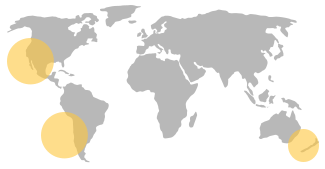
California quail thrives in open oak woodland, streamside vegetation bordered by chaparral. It adapts well in varying landscapes like farmlands, parks, and coastal scrub.
Additional range
This bird is also found in suburbs and semi-desert conditions. Areas of pinyon-juniper woods, grassland and coastal sage scrub have also been inhabited. Mountains are typically avoided.
Do they migrate?
The California quail is a permanent resident throughout its range, meaning it does not migrate and stays in one place all year. This species is known for its sedentary lifestyle, residing primarily in the western United States, including California, Oregon, Washington, and Nevada, as well as some parts of the Baja California Peninsula in Mexico. The California quail typically inhabits environments such as chaparral, oak woodlands, and suburban gardens, where it can find cover and food. This non-migratory bird is well-suited to its habitats, relying on its ability to find resources year-round rather than migrating to different regions. They have adapted to a variety of climates within their range, allowing them to thrive in both coastal and inland areas, including regions with significant seasonal variations. Given their non-migratory nature, there is no specific migratory route, timing, or key locations associated with the California quail, as they do not partake in seasonal migrations typical of many other bird species. Instead, they establish permanent home ranges where they live, breed, and forage throughout the year.
What is the role of California quails in nature and how to protect them?
Conservation status
The California quail adapts fairly well to human presence, but its population is declining in some regions due to urban development in coastal areas. It is generally considered common rather than vulnerable or endangered. Key threats to the species include habitat loss and fragmentation as coastal regions are increasingly built up. Conservation efforts focus on habitat preservation and management. Protecting natural landscapes and supporting sustainable development practices are crucial to ensuring the species' long-term survival in affected areas.
Ecological role of California quails
Its role in the ecosystem
The California quail plays multiple key roles in the ecosystem. Firstly, it contributes to pest control, as it feeds on insects as part of its varied diet. The consumption of insects helps to keep their populations in check, therefore aiding in the management of pests that can have detrimental effects on plants. The California quail is also instrumental in seed dispersal. Since its diet primarily consists of seeds (from weeds, acorns, berries, flowers, bulbs), the seeds they ingest can be transported to different areas through their droppings, promoting plant diversity and proliferation. Moreover, by feeding on various plants, especially annual weeds, quails help control the overgrowth of these plants. Given that two females sometimes lay eggs in the same nest, their brooding pattern may also contribute to a form of population control for various bird species, while their nests occasionally provide homes for other birds. This crucial balance they introduce to the environment underscores the ecological importance of the California quail.
How to help protect California quails
Preservation tips
Habitat preservation strategies
Preserve and maintain native shrublands as these provide ideal habitats for California quails. Avoid land development activities that disturb these habitats. Employ control strategies to reduce the population of predators and invasive species that threaten the quail. Support policies promoting the conservation of biodiversity, including the restriction of pesticides harmful to the quail. Develop green corridors to connect fragmented habitats, allowing the quail to safely navigate across territories.
Community science initiatives
Participate in local citizen science projects that focus on monitoring and studying the California quail. Reporting sightings and helping to identify their behaviors and habitats will greatly contribute to the understanding of the species. Join initiatives promoting public education about the importance of quails and their conservation. Advocate for sustainable landscaping in urban areas that is friendly to quails and other local fauna.