
Eastern Meadowlark
Eastern Meadowlark
Sturnella magna
Quick Identification guide
Quick Identification guide
- •
Features a bright yellow throat and underparts contrasting with a distinctive black V-shaped band across its chest
- •
The back is covered in streaked brown and buff plumage, providing excellent camouflage in grasslands
- •
Exhibits a short, conical bill typical of seed-eating birds, and long, pointed wings that aid in flight
What does an eastern meadowlark sound like?
The Eastern Meadowlark's vocalizations encompass a blend of distinctive sounds. It produces a clear, mellow whistle that sounds like "see-you, see-yeeeer." In addition to this, it emits a loud rattling alarm note. The bird's call patterns are falling and flat and exemplified in a series of buzz, chirp/chip, flute, trill, and whistle sounds. These various calls make their song both distinctive and diverse in tone and pattern.
Description
Did you know that eastern meadowlarks are not larks at all but members of the blackbird family? These adept songbirds are capable of singing up to 100 variations of their song – by the way, eastern and western meadowlarks' songs are so different, they might as well be a different language! – and males typically have two mates at a time, sometimes even three!
The eastern meadowlark can weigh between 58to150grams and be from19to26centimeters tall.
The Eastern Meadowlark typically lives up to 10 years. Compared to similar species like the Western Meadowlark, which has a similar lifespan of up to 10 years, or the Dickcissel bird that lives around 9-10 years, its lifespan is quite average. Factors like predation, disease, and habitat loss can affect their survival rate.
Did you know?
Most popular questions about eastern meadowlark
How to recognise an eastern meadowlark?
General appearance
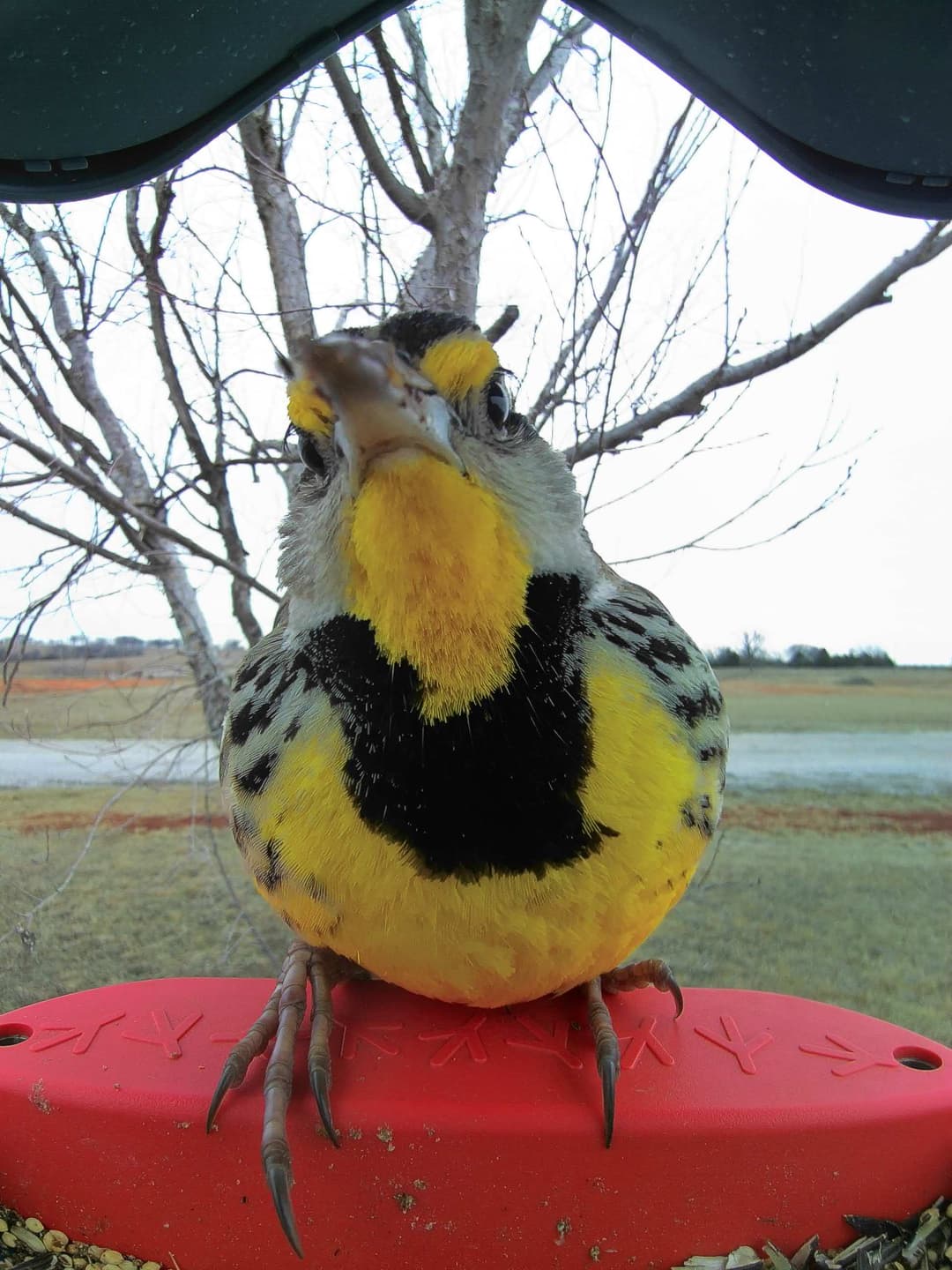
The eastern meadowlark is a medium-sized songbird, characterized by its bright yellow underparts and a distinctive black 'V' necklace on its chest. The upperparts are brown with intricate streaks, providing camouflage in grassy habitats. The face features a sharp contrast with a white or pale yellow stripe above the eye and a dark crown. They possess a long, pointed bill.
Male vs female
Males and females have similar plumage, making them difficult to distinguish by appearance alone in the field. However, males are typically slightly larger and possess more vibrant colors. During the breeding season, males' songs are more pronounced, assisting in identification.
Juvenile
Juvenile eastern meadowlarks resemble adults but have duller and more muted colors. The black 'V' on the chest is less defined, and the overall plumage shows more spotting rather than streaking. Juveniles lack the fully-developed song of adults, with more subdued calls.
Often mistaken for
Western Meadowlark vs Eastern Meadowlark
The Eastern Meadowlark and Western Meadowlark both have yellow underparts and a distinctive black 'V' on the chest. However, the Eastern Meadowlark has a clearer, whiter flanks and a more defined, pale throat. Listen for the song too; Eastern Meadowlark has a simple, flute-like whistle compared to the Western's complex, melodious song.
Bobolink vs Eastern Meadowlark
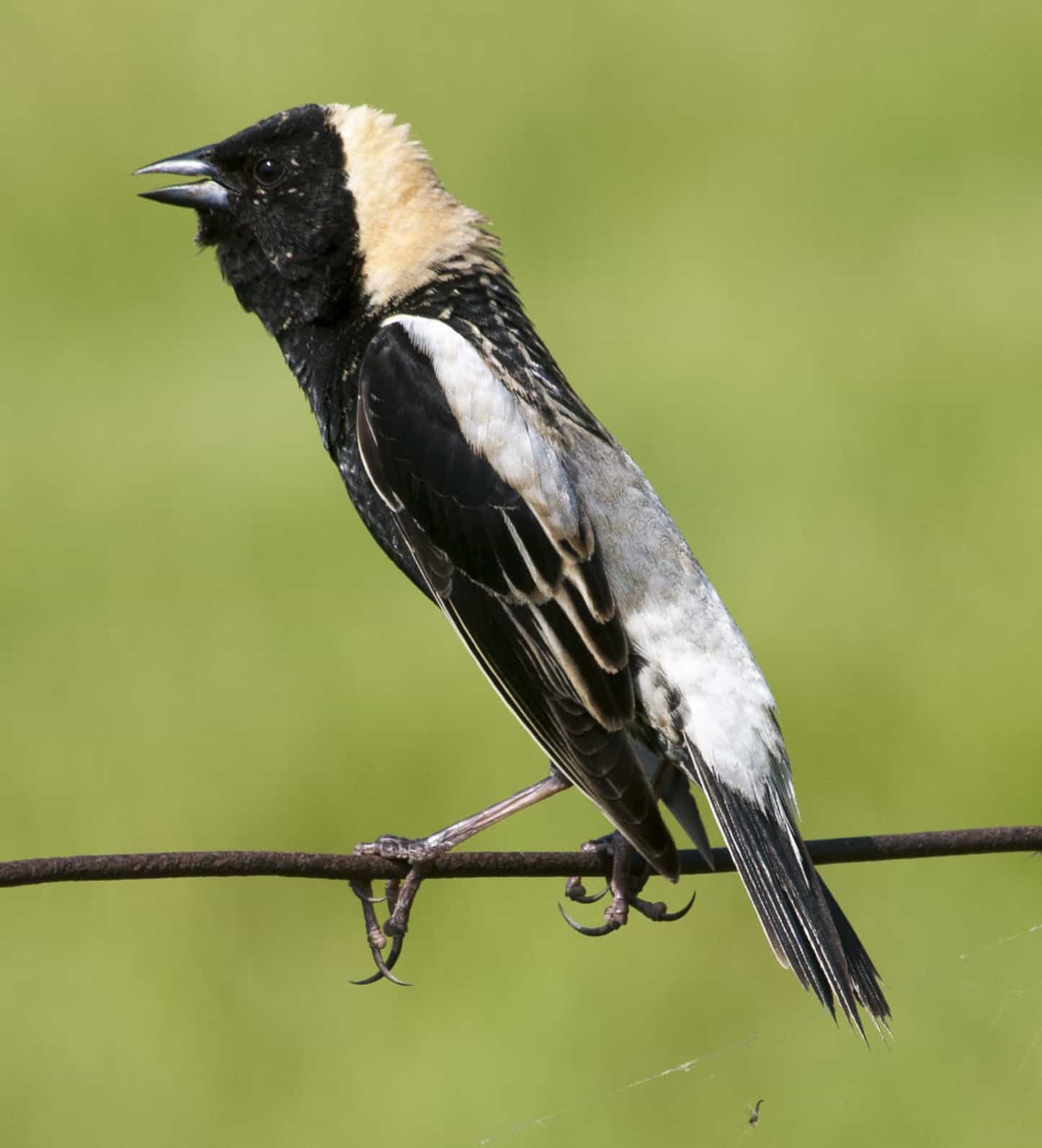
While both have similar size and share a preference for grassy habitats, Bobolinks, in breeding plumage, are strikingly different with their black bodies and white backs. Look for the Eastern Meadowlark's yellow breast and a bold black 'V' marking. Bobolinks have a bubbly, musical song, contrasting the meadowlark's simpler calls.
Savannah Sparrow vs Eastern Meadowlark
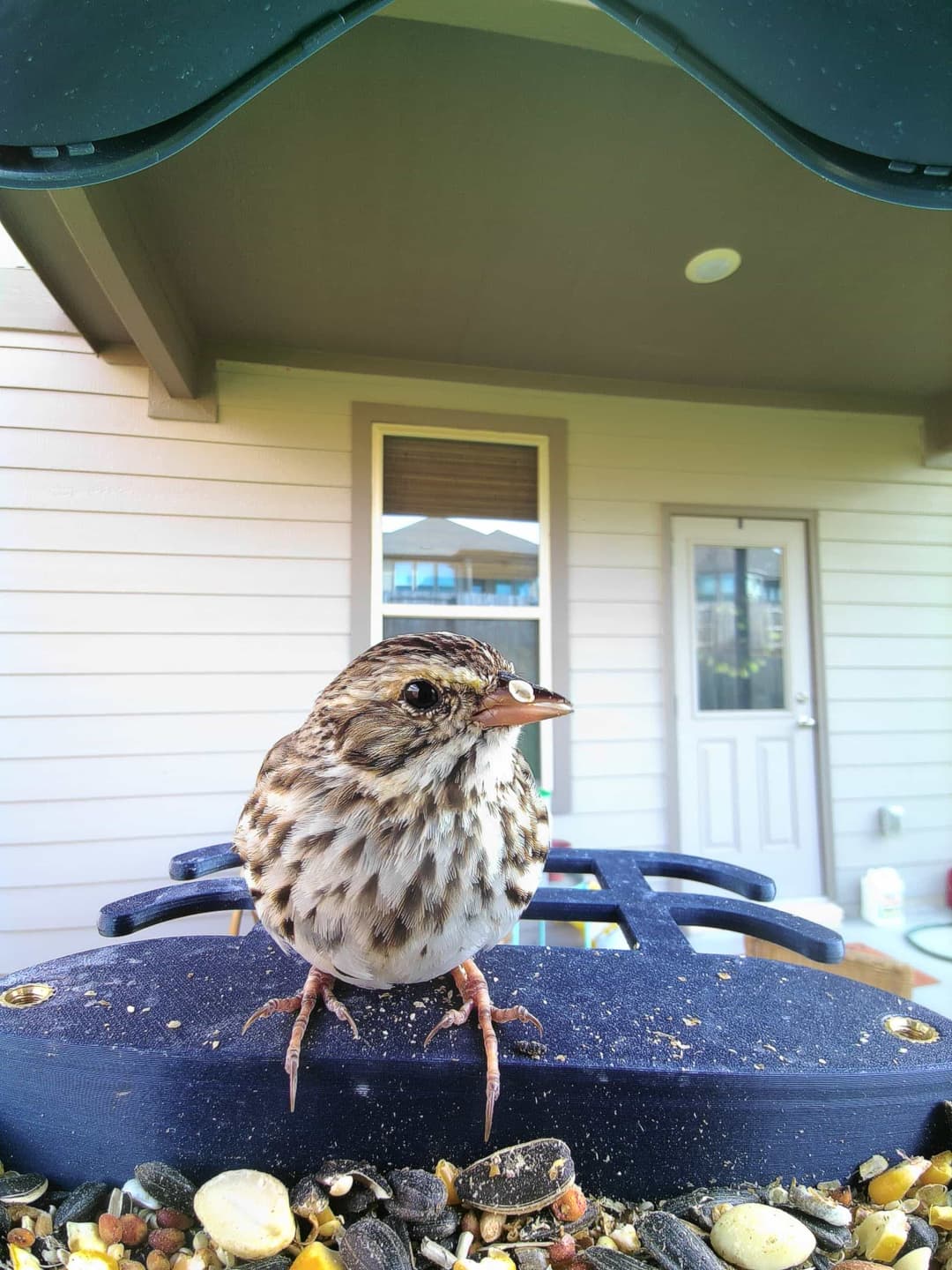
The Eastern Meadowlark is larger with notable yellow underparts, whereas the Savannah Sparrow is smaller and more streaked with a distinctive yellow spot between its eyes and beak. Meadowlarks have shorter tails and more robust bills compared to the slim build and fine bill of the sparrow.
Breeding and nesting habits of the eastern meadowlark
Mating behaviors
Eastern meadowlarks engage in elaborate courtship displays. Males sing from elevated perches to attract females and may spread their wings and display their bright yellow plumage.
Nesting details
Nests are built on the ground in open fields or grasslands. Females construct cup-shaped nests using grass, stems, and leaves, often hidden by surrounding vegetation.
Eggs and chick-rearing
Females lay 3-5 eggs, incubating them for about two weeks. Chicks are altricial, requiring parental feeding and care. Both parents feed insects to the chicks, who fledge in approximately 12 days.
What does an eastern meadowlark like to eat?
Carrion
Insects
Plants
Seeds
Spiders
Worms
Natural diet
The eastern meadowlark primarily consumes a variety of insects and seeds. During summer, its diet is dominated by insects, including grasshoppers, crickets, beetles and their larvae, caterpillars, ants, true bugs, and spiders. These insects provide essential nutrients during the breeding season. In fall and winter, the bird's diet shifts to include more seeds and waste grain, which make up over a quarter of its annual diet.
Bird feeders
Eastern meadowlarks are not commonly known to visit bird feeders. Their natural diet in the wild does not typically include the seeds and grains frequently found in feeders designed for other bird species. They prefer to forage on the ground for their natural food sources.
Attracting the eastern meadowlark: food and feeder
The Eastern Meadowlark enjoys a mix of seeds, insects and berries. Try placing a variety of bird-friendly seeds in your feeder – we recommend Bird Buddy seeds, as they are handpicked by experts for each season and specifically cater to the meadowlark's diet. Ground feeders work best as the meadowlark tends to forage on the ground. Scatter some seeds around the feeder to encourage their natural foraging behavior.
Creating a meadowlark-friendly landscape
To make your yard more inviting for the Eastern Meadowlark, try re-creating a small meadow-like environment. Planting native grasses will cater to the meadowlark’s natural likes. Aim to create an undisturbed, open space as they prefer open habitats. A small pond or birdbath can also be a great addition to ensure they have access to water.
Fun tricks to encourage visits
You can tempt the meadowlark to visit more often by playing meadowlark songs from a bird song recording. This could potentially lure them into a sing-off, as they are a very territorial bird species. Be cautious not to play the song intensely during breeding season, as this could stress the birds and deter them from your yard.
Where can you find eastern meadowlarks?

Primary habitat
The eastern meadowlark prefers natural grasslands, meadows, and pastures. It also resides in hayfields and other crop fields. It prefers taller, lusher grass in the Midwest.
Additional range
In winter, the meadowlark inhabits both natural and cultivated fields. Despite its usual preference for lush grass, in the Southwest it adapts to arid desert grasslands.
Do they migrate?
The eastern meadowlark is a bird that exhibits a combination of migratory and resident behaviors depending on its geographical location. While the species is present throughout most of its range all year, the extent to which individuals migrate varies. In the northern parts of its range, only small populations typically remain through the winter, suggesting that a portion migrates southward to escape harsher conditions. The migration pattern of the eastern meadowlark can be characterized by its timing and movement. Migrants tend to arrive early in spring, indicating an upward movement towards their summer breeding grounds. In fall, they linger longer before starting their southward migration. This timing suggests an adaptation to take advantage of food availability and favorable weather conditions. Key locations along their migration route include grasslands and open fields, which provide ideal habitats for feeding and nesting. Overall, the eastern meadowlark demonstrates partial migratory behavior, with more pronounced movements in northern populations, while those in the southern parts of its range may remain resident year-round. Understanding these patterns provides insight into how the species adapts to different environmental conditions across North America.
What is the role of eastern meadowlarks in nature and how to protect them?
Conservation status
The eastern meadowlark is currently considered vulnerable, as its populations have declined in recent decades, especially in the East. Although once thriving when forests were converted to farmland in the 1700s and 1800s, the species now faces reduced and degraded habitats as major threats. Conservation efforts focus on preserving grasslands and improving habitat quality to stabilize and potentially increase their numbers. Preservation of open fields and promoting sustainable agricultural practices are essential to counteract the declining population trends.
Ecological role of eastern meadowlarks
Its role in the ecosystem
The Eastern Meadowlark plays a crucial role in the ecosystem by foraging on pests which helps in pest control. Its diet mainly consists of insects, particularly during summer, including grasshoppers, crickets, beetles and their larvae, caterpillars, ants, true bugs, among others, significantly minimizing the pest population in the environment. In winter, it consumes seeds and waste grains, aiding in seed dispersal which is influential in the propagation of various plant species. The Meadowlark can also assist in aeration and the potential nutrient cycling in soils as it is known to probe the soil using its bill while foraging. Moreover, through its nesting habits, utilizing grass stems interwoven with surrounding growth, it contributes to the regulation of plant growth. Finally, it can impact the structure of the habitat indirectly through its territorial behaviours.
How to help protect eastern meadowlarks
Preservation tips
Habitat preservation strategies
Maintain and restore open, grassy habitats necessary for eastern meadowlark nesting such as pastures, hayfields, and cultivated fields. Avoid intensive mowing or agricultural activity during the breeding season (early spring through summer), as it may destroy nests and kill newly hatched birds. Preserving native grasslands and implementing rotational grazing systems can also bolster their conservation.
Community science initiatives
Participate in citizen science projects collecting data on bird populations like the Audubon Society's Christmas Bird Count or the North American Breeding Bird Survey. These initiatives provide invaluable data for scientists studying species decline and habitat loss. Educating the community about the importance of grassland conservation to the survival of species like the Eastern Meadowlark can also foster wider community involvement in their preservation.