
Bobolink
Bobolink
Dolichonyx oryzivorus
Quick Identification guide
Quick Identification guide
- •
Males in breeding season display a striking black face, wings, and tail, contrasted by a pale yellow nape and white back and rump
- •
Non-breeding plumage features buff-brown tones with dark streaks running along the back and sides
- •
Characterized by a pointed, conical bill suited for seed consumption
What does a bobolink sound like?
The bobolink's vocalizations are distinct and joyous, featuring a complex series of bubbling, tumbling and gurgling phrases where each note is on a different pitch, often referred to as a flight song. It also has a soft pink call that is typically heard during migration. Its call pattern combines complexity with a falling, undulating rhythm and can be classified into the following types: Buzz, Chirp/Chip, and Trill.
Description
Bobolinks absolutely love their rice; you can tell by their name, oryzivorus, which means rice-eating! These birds are like little winged GPSes! They can orientate themselves due to the Earth's magnetic field and also use the stars to know where they're going at night. They need to be good navigators because they have an impressively long migratory path! Each year, they will fly from North to South America, a distance of 12,500 miles or 20,000 kilometers!
The bobolink can weigh between 29to56grams and be from15to20centimeters tall.
Bobolinks typically live for 6 years. This mid-length lifespan is relatively long compared to other small birds, such as the American Tree Sparrow but shorter than larger species, like the Red-Winged Blackbird. Factors like predation, climate conditions, and availability of food resources influence lifespan.
Did you know?
Most popular questions about bobolink
How to recognise a bobolink?
General appearance
The Bobolink is approximately 18 cm long and has a multi-pointed or rounded tail. Its wings are pointed and it is roughly the size of a Sparrow or Robin. It has a distinct color combination of black, brown, tan, white, and yellow.
Male vs female
The males are identifiable in spring and summer by their solid black underparts and substantial white patch on the back, coupled with a yellow nape. They molt into the buffy, streaked looks similar to females and juveniles at the end of summer, with black stripes on the crown. Females maintain a buffy, streaky appearance throughout.
Juvenile
Juveniles share a similar appearance to females with their buffy, streaky complexion. They are distinguishable by the black stripes on their crown. It is advised to compare their size and markings to sparrows for an easier identification.
Often mistaken for
Red-Winged Blackbird vs Bobolink
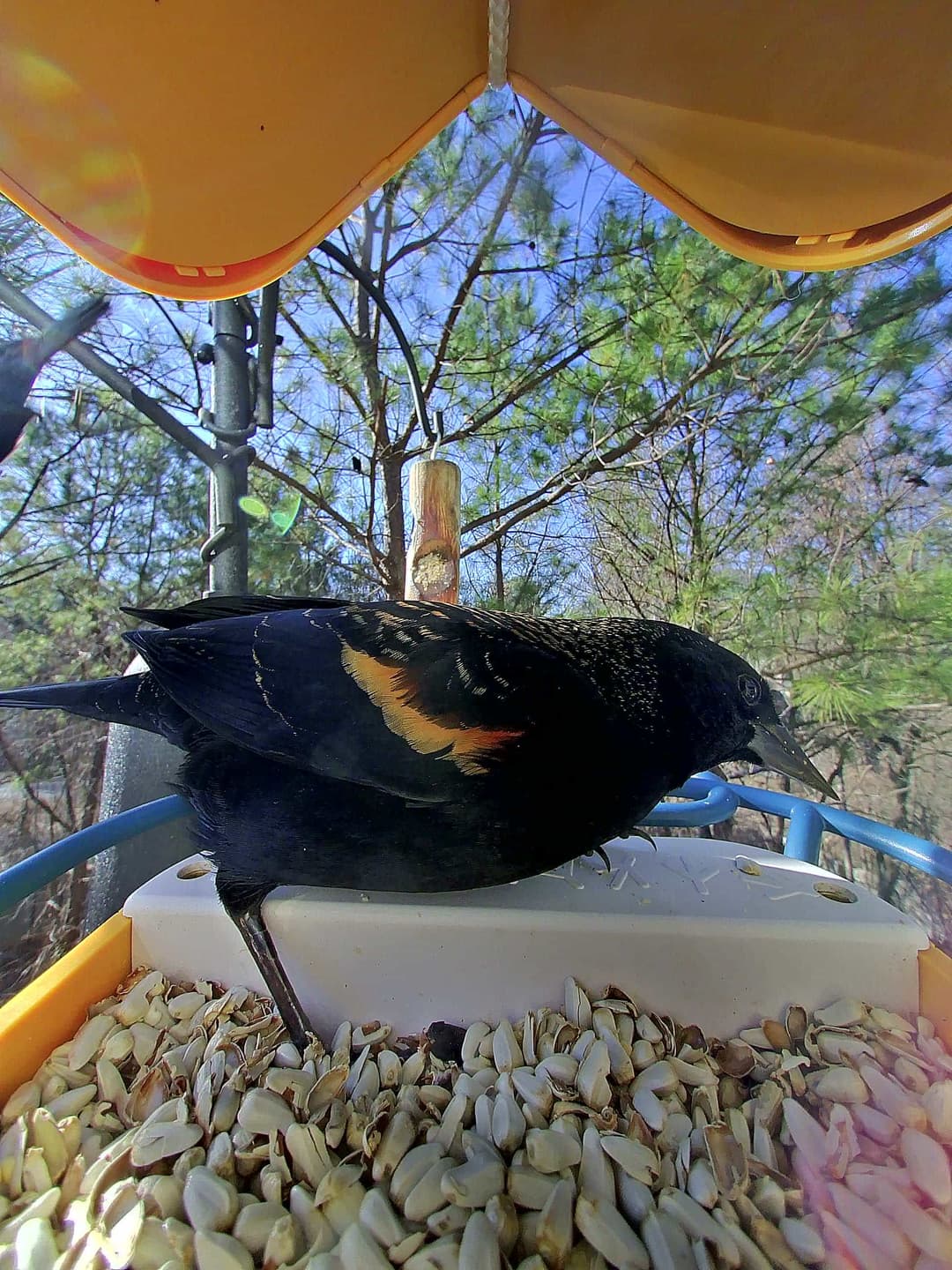
Bobolinks and Red-Winged Blackbirds can appear similar but have noticeable differences. Bobolinks are recognizable by their unique coloring: males have black underparts with white backs and yellow caps, while females are brown with streaks. In contrast, male Red-Winged Blackbirds are black with distinctive red and yellow shoulder patches, and females are brown and heavily streaked. Bobolinks are also smaller, with a rounded body, whereas Red-Winged Blackbirds are larger with a slender build. Bobolinks are often found in grassy fields, while Red-Winged Blackbirds favor wetlands and marshy areas. Listening for their songs can also help; Bobolinks have bubbly, musical chirps compared to the Red-Winged Blackbird's conk-la-ree call.
Breeding and nesting habits of the bobolink
Mating behaviors
Male bobolinks perform dynamic flight displays and sing to attract females, who select mates based on territory quality.
Nesting details
Bobolinks prefer open grasslands for nesting. They build nests on the ground using grass stems and leaves, concealed in dense vegetation.
Eggs and chick-rearing
Females lay 4-7 eggs, incubating them for about 11-13 days. Both parents feed chicks insects until they fledge approximately 10 days after hatching.
What does a bobolink like to eat?
Insects
Seeds
Snails
Spiders
Natural diet
Bobolinks primarily consume insects and seeds. During summer, their diet consists largely of insects such as beetles, grasshoppers, caterpillars, wasps, ants, and other invertebrates like spiders and millipedes. Seeds from weeds, grasses, and grains are also important components of their diet. During migration periods, they may rely more on grains and have historically caused damage to southern rice fields. In winter, particularly in tropical regions, bobolinks may supplement their diet with berries.
Bird feeders
Bobolinks are not commonly observed at bird feeders as their natural diet of insects and wild seeds does not typically align with the offerings at feeders. Instead, they rely on the abundance of food available in their natural habitats, particularly in open fields and grasslands.
Attracting the bobolink: first steps
To invite the bobolink into your yard, you must first create a safe and welcoming environment. These birds love open grasslands and wetlands, but will happily visit a comfortable, green yard with plenty of insect life for them to feast on. Setting up a bird bath or a shallow pool might also allure these birds as they are fond of water. Secure potential predators like cats and dogs so that the bird feels safe visiting and feeder your yard.
Feeding the bobolink: feeder types and snacks
Bobolinks like to eat seeds and insects. Bird Buddy Seeds would be a great choice as the birds will absolutely love them. They are chosen by bird feeding experts according to the season and are thus appropriate and beneficial for the Bobolinks. You could also add a variety of native plants to your yard that attract insects, another of Bobolink’s favorite treats. Regarding feeders, platform feeders tend to work best for them. These feeders allow the bird to land completely and peck at the food easily.
Entertaining the bobolink: tricks and treats
Bobolinks are known for their charming and melodic songs. To encourage them to sing and hang around, maintain a calm, quiet atmosphere in your yard as much as possible. Playing soft, bird-friendly music could possibly inspire them to start a sing-along! Remember, consistency is the key- keep refilling your feeders with Bird Buddy Seeds, maintain their bathing space, and let them enjoy your yard- soon they will be regular visitors.
Where can you find bobolinks?
Primary habitat
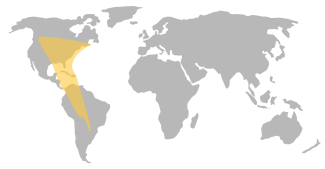
Bobolinks primarily occupy damp meadows, natural prairies with dense grass, weeds, and few low bushes, and hayfields in the eastern United States.
Additional range
During migration, bobolinks inhabit marshes and often stop over in fields, even feeding in rice fields. Nowadays, due to the rarity of their favored habitats, they also nest in hayfields.
Do they migrate?
The bobolink is a migratory bird that undertakes long-distance journeys annually. It migrates in flocks and is known for its extensive travel pattern. During the winter, bobolinks relocate to southern parts of South America, making one of the longest migrations of any North American songbird. The primary migration route includes traveling mostly via Florida and the West Indies. Few bobolinks occur in Mexico or Central America, indicating that these areas are not part of their main migratory pathway. The bobolink typically begins its southward migration in late summer to early fall, around August to September, allowing it to reach its wintering grounds as the southern hemisphere enters a warmer season. The return northward begins in spring, around March to April, as the birds journey back to their breeding habitats in North America. Key locations that mark their migratory route include stopovers in the wetlands and grasslands of Florida and islands within the West Indies. These areas provide essential resting and feeding spots necessary for the birds to sustain their energy throughout the extensive journey. The precise nature of the bobolink's migration reflects its adaptation to seasonal changes and the need to exploit different ecological zones for breeding and survival.
What is the role of bobolinks in nature and how to protect them?
Conservation status
The bobolink is currently considered vulnerable due to significant population declines in recent decades. The primary threat is the loss of nesting habitat, as grasslands are converted to agriculture or developed. Key conservation efforts focus on protecting and restoring these habitats, particularly in breeding and migratory areas. Sustainable land management practices and the preservation of grasslands are crucial for the species' recovery. Conservation organizations are working with farmers and landowners to create more bobolink-friendly environments to help stabilize and eventually increase their populations.
Ecological role of bobolinks
Its role in the ecosystem
The Bobolink plays a vital role in maintaining balance in the ecosystem through natural pest control. Through its nutritional habits, it contributes significantly to the reduction of pest populations, such as beetles, grasshoppers, caterpillars, wasps, ants by consuming them during their foraging behavior. Furthermore, its selection for spiders and millipedes in its diet has an impact on their population control as well. Its diet also includes seeds of weeds, grasses, and grains, meaning it participates in seed dispersion. This can have an impact both as a form of weed control and as a means of assisting in the propagation of certain plant species. The Bobolink indirectly supports other creatures in the ecosystem since their nests, usually well hidden among dense grass and weeds, are often used by other animals once abandoned, contributing to biodiversity. Similarly, when they migrate to winter in the tropics, they slightly shift their diet, including berries, supporting the dispersal and germination process of new plants.
How to help protect bobolinks
Preservation tips
Habitat preservation strategies
Focus on maintaining and restoring grassland habitats to support the Bobolink's nesting and foraging. Avoid mowing fields from May to August when Bobolinks are nesting. Implement rotational grazing, which allows portions of grasslands to rest and regenerate. Support policies and conservation easements that protect key habitats from being developed.
Community science initiatives
Engage the public in bird monitoring projects to record sightings and behavior of Bobolinks. These data can assist scientists in tracking population trends. Host workshops or webinars to educate the community about the importance of Bobolink conservation. Organize habitat restoration events to involve community members in hands-on conservation work. Advocate for citizen science as a way of involving the larger community in the efforts to save the bobolinks.