
American Goldfinch
American Goldfinch
Also known as: Eastern Goldfinch, Wild Canary
Spinus tristis


Quick Identification guide
Quick Identification guide
Male
- •
vivid yellow body with black wings and tail featuring white markings
- •
black cap on the head, contrasting with the yellow body
- •
conical, pale beak suited for seed-eating
Female
- •
olive or muted yellow body with darker, dull wings and tail
- •
Lacks the black cap present in males, with a more uniform head color
- •
Shares the conical, pale beak typical of the species
What does an American goldfinch sound like?
The American Goldfinch's vocalizations are varied and complex. Its call incorporates a "per-chick-o-ree" sound, alternatively known as "potato-chips," typically delivered mid-flight in sync with its undulating flying pattern. This bird showcases a range of call types including chatter, chirp or chip, a greeting sounding like "Hi," and whistle tunes. Call attributes include a falling and undulating pattern. Its song conjure a natural symphony, truly reflecting its vibrant personality.


Description
These guys are really incredible fliers! They also aren't big on the cold and, come winter, fly south. The destination? Anywhere where temperatures don't drop below zero. Who can blame them? The only reason some will stay is if the food supply is tempting enough. Did you know that their call sounds like po-ta-to-chip?
The American goldfinch can weigh between 11to20grams and be from11to13centimeters tall.
The American Goldfinch typically lives up to 10-15 years. This longevity is relatively high compared to other related species; for instance, the Lesser Goldfinch rarely exceeds 5 years. Aging can be determined through changes in plumage coloration and patterns. Predation and harsh environments can impact lifespan. However, in the absence of threats, American Goldfinches are known for their longevity.
Did you know?
Most popular questions about American goldfinch
How to recognise an American goldfinch?
General appearance
The American Goldfinch is roughly the size of a Sparrow, approximately 4.5-5 inches or 11-13 cm in length. It has a rounded wing shape and a notched tail. The bird's standout colorations are black, brown, gray, white, and particularly, yellow.
Male vs female
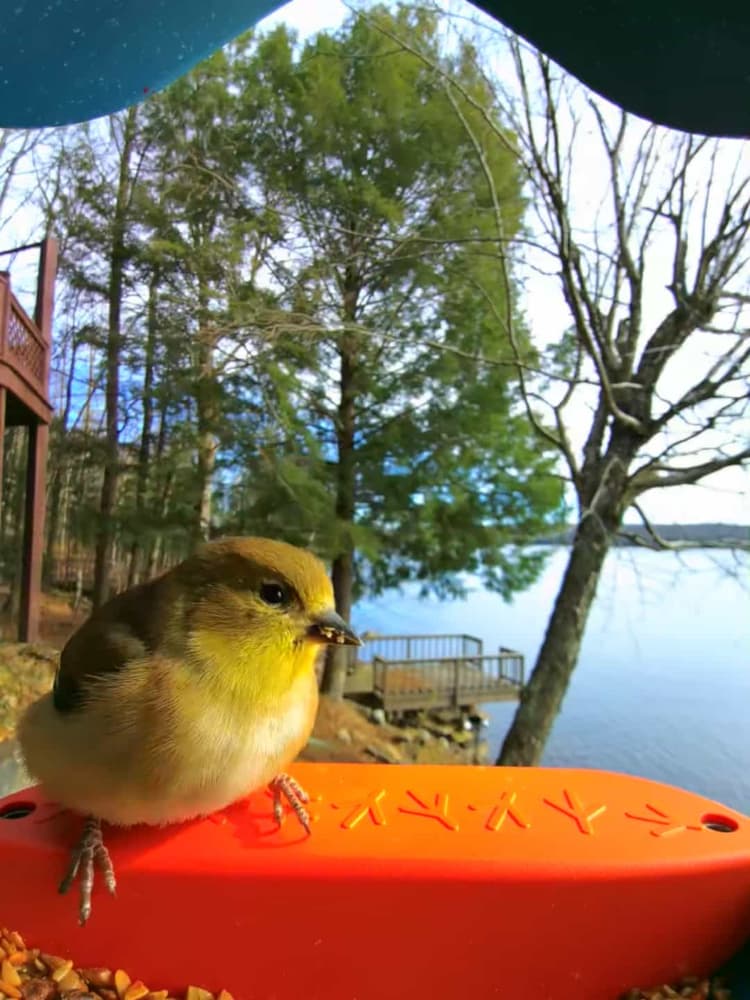
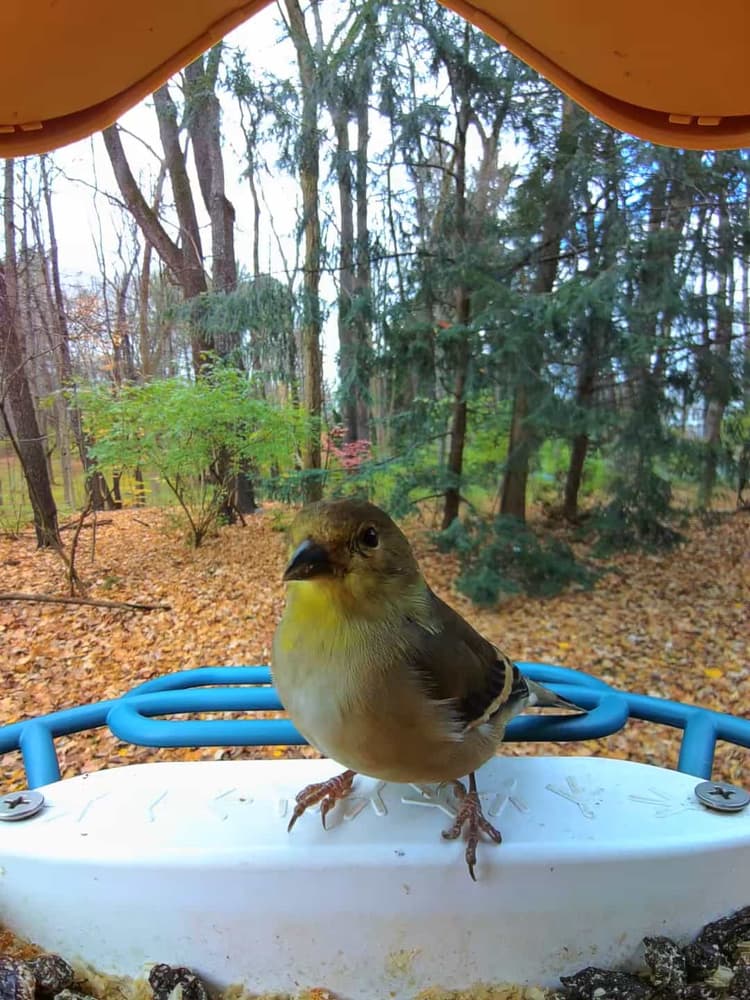
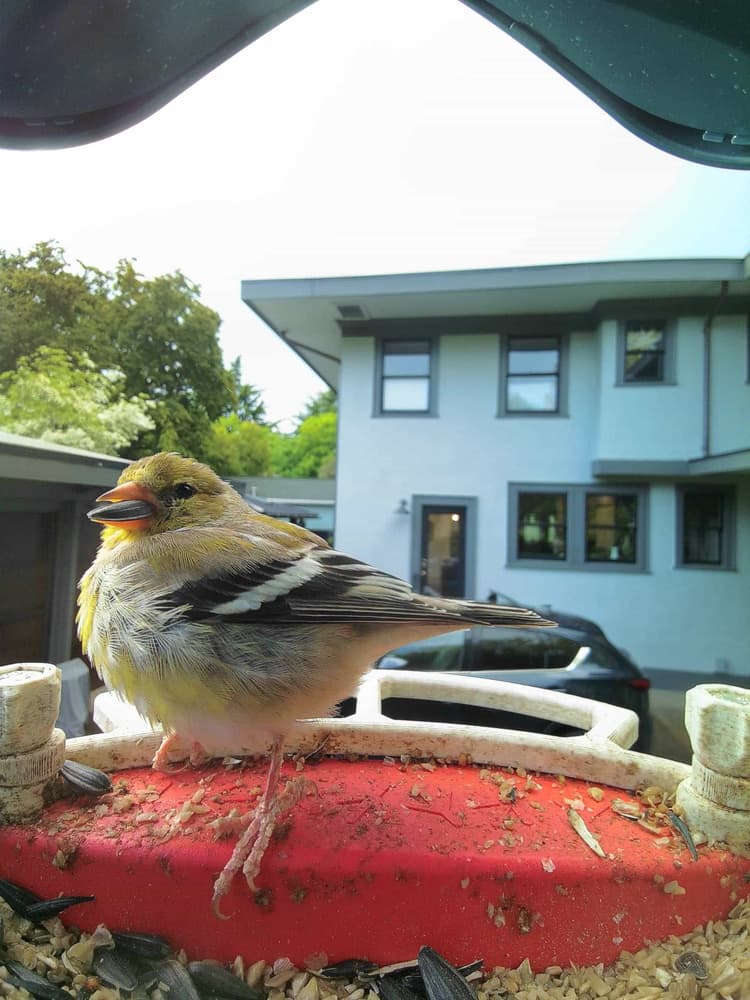
In summer, the male American Goldfinch is a vibrant yellow with black wings, tail, and forehead. This bold coloration makes it easy to spot. Conversely, summer female birds are a more subdued yellow-green. In winter, the colors of both males and females may vary from yellowish brown to gray, with notable, bold wing-bars of white or buff on black wings, and white tail spots.
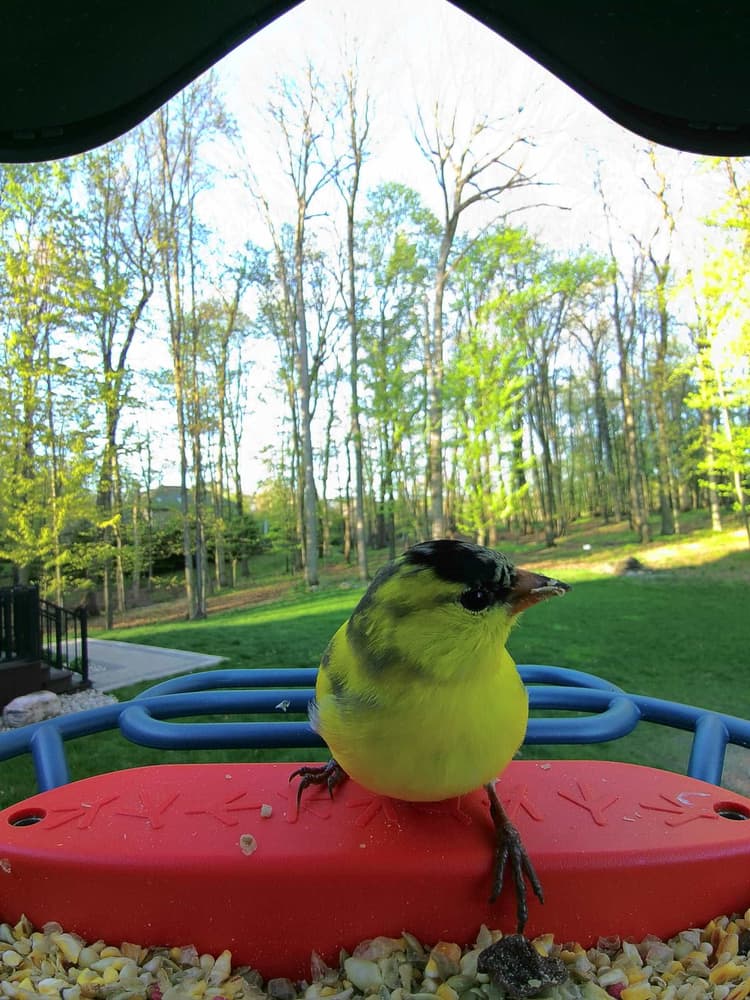
Male American Goldfinch
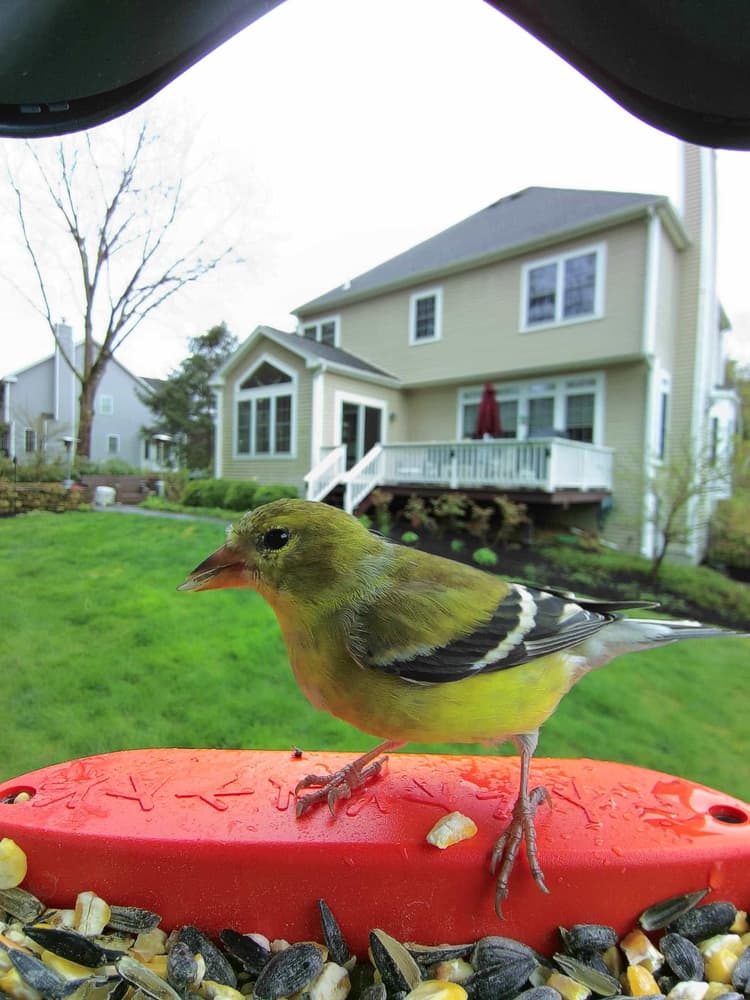
Female American Goldfinch
Juvenile
The juveniles don't have the distinguishing yellow coloring of the adults. Their plumage tends to range from a dull brown to a gray color, making them trickier to identify. This less distinct appearance serves as a form of camouflage against potential predators.
Often mistaken for
Lesser Goldfinch vs American Goldfinch
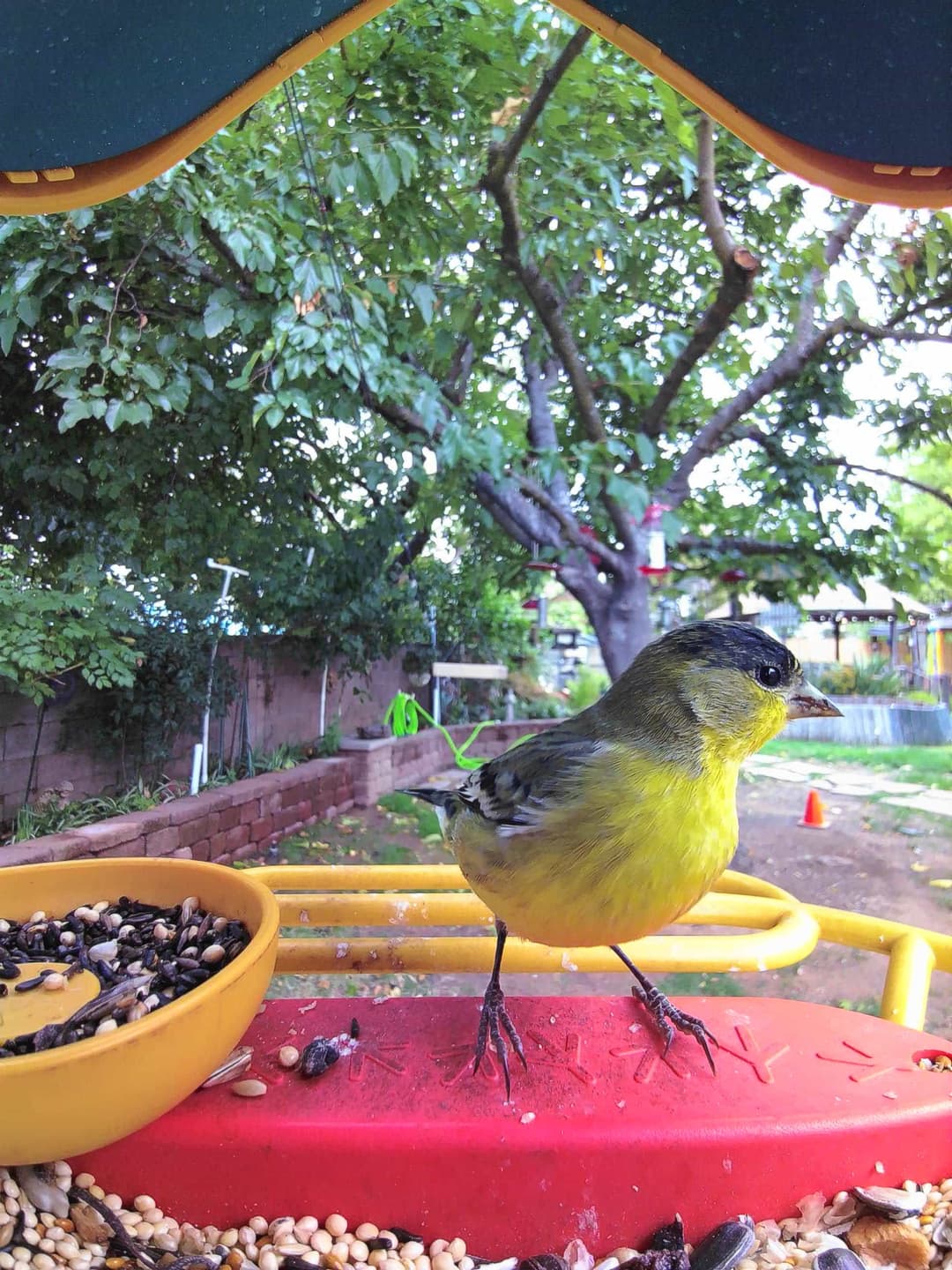
The Lesser Goldfinch often confuses people due to its similarity to the American Goldfinch. The two species differ subtly, in that the American Goldfinch males have a brighter, more vibrant yellow color in summer and a distinctive black cap, which the Lesser Goldfinch lacks. Another useful tip for identification is their call and song, which are evidently different.
Pine Siskin vs American Goldfinch
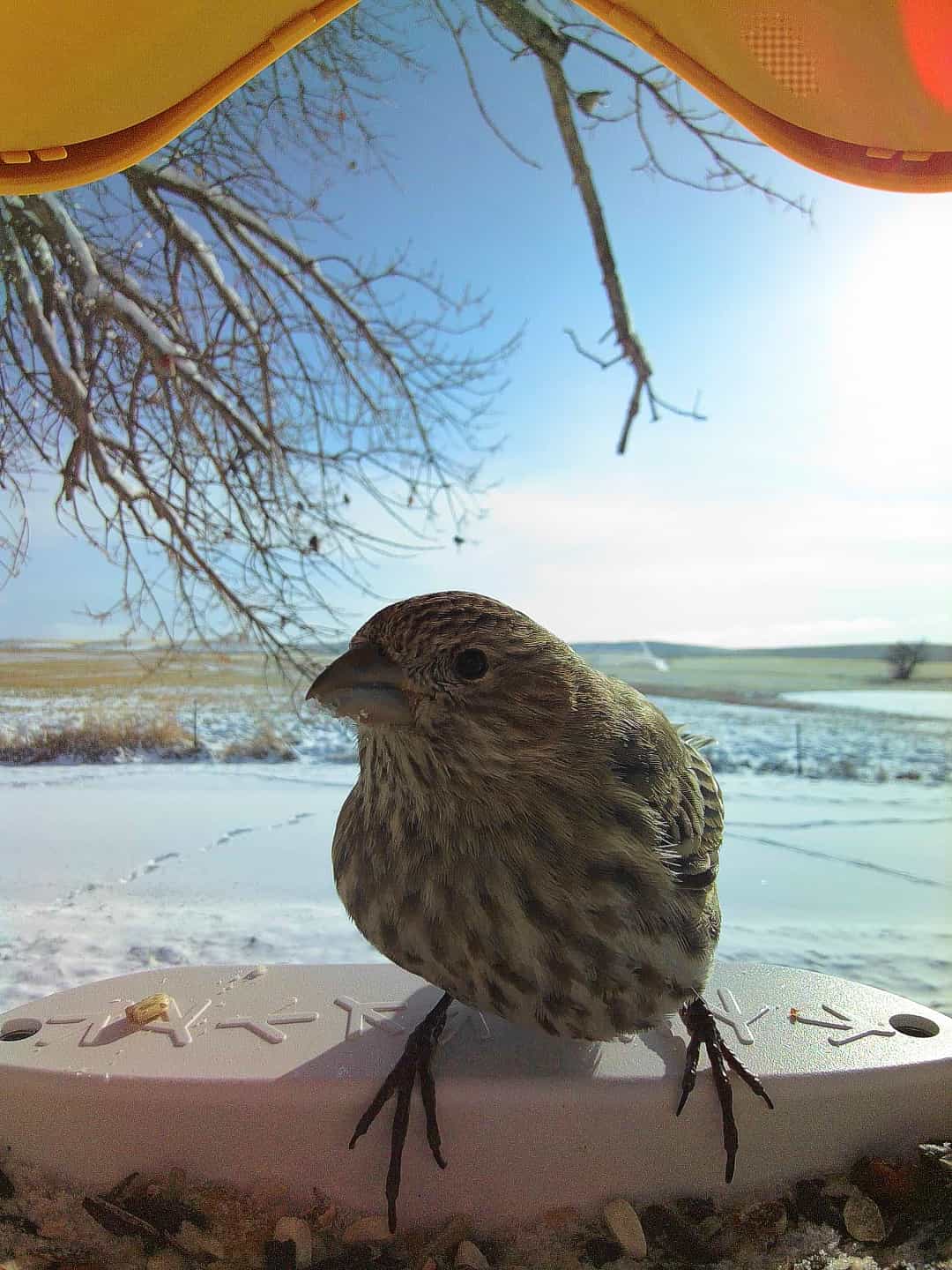
Pine Siskins are another bird that can be mistaken for American Goldfinches. However, the Pine Siskin features heavy, crisp streaking all over its body. An insider tip would be to note their long, slim beaks, which are unlike the stubby, thick beaks of the American Goldfinch.
Breeding and nesting habits of the American goldfinch
Mating behaviors
The American goldfinch exhibits a unique courtship behavior where the male performs a fluttering flight while singing to attract a mate. Nesting begins late in the season, primarily in July and August, allowing for an ample display of these behaviors during this period.
Nesting details
Nests are typically found in deciduous shrubs or trees and occasionally in conifers or dense weeds, usually less than 30 feet above ground. The female constructs the nest in a horizontal or upright fork using plant fibers, spiderwebs, and plant down, creating a solid structure that may even hold water.
Eggs and chick-rearing
After the nesting site is secured, the female lays eggs, which she incubates without assistance from the male. Upon hatching, both parents are involved in feeding the chicks, which primarily consist of regurgitated seeds. The species thrives in gardens with suitable trees and shrubs for nesting, as well as an abundance of native flowering plants that provide seeds.
What does an American goldfinch like to eat?
Insects
Plants
Sap
Seeds
Natural diet
The American goldfinch primarily consumes seeds, with a strong preference for those belonging to the daisy family. It also eats seeds of various weeds and grasses, and small seeds from trees like elm, birch, and alder. Occasionally, it consumes buds, bark of young twigs, and maple sap. In summer, its diet includes a small portion of insects. The young are fed regurgitated matter that mostly contains seeds.
Bird feeders
At bird feeders, American goldfinches are commonly attracted to sunflower seeds, especially black oil sunflowers, and nyjer (thistle) seeds. They may also eat millet, hulled sunflower chips, and other small seeds provided at feeders.
Favorite snacks of the american goldfinch
Offer sunflower seeds, thistle seeds, and dandelion seeds in your feeders. These are some of the preferred food sources of the American Goldfinch. We recommend using 'Bird Buddy seeds' as they are expertly selected and have shown the best results in attracting these gorgeous birds.
Suitable feeder types
Tube feeders filled with thistle seed or sunflower seeds work best for Goldfinches as these types of feeders are easy for them to cling to. Another good option is a hopper feeder, which can hold a large quantity of seed and protect it from weather.
Fun tricks to encourage visits
Plant native thistles and milkweed in your garden. These birds love the seeds from such plants and it can also encourage them to build nests nearby. Additionally, providing a bird bath or fresh water source can also enhance the appeal of your yard to a Goldfinch.
Creating an environment for sing-alongs
American Goldfinches are known for their bubbly songs. To encourage them to sing, make sure your yard is peaceful and free from predators. Also, having several feeders can create a social atmosphere which can encourage singing.
Where can you find American goldfinches?
Based on Birdbuddy sighting data. The heatmap shows where Birdbuddy users have spotted this species.
Embed this map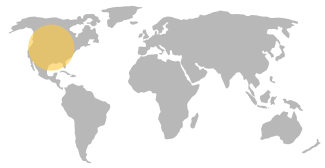
This map shows the full native range based on scientific range data.
Primary habitat
The American Goldfinch prefers semi-open areas with open weedy ground and sheltering trees and bushes. Typical surroundings include patches of thistles and weeds, second growth areas, streamsides, roadsides, and woodland edges.
Additional range
The Goldfinch can also adapt to orchards, suburban zones for the majority of seasons. In winter, it extends its range to include open fields farther from trees.
Do they migrate?
The American goldfinch exhibits irregular migratory behavior, influenced by food supply and weather conditions. In winters with ample food, a greater number remain in northern areas, while others migrate to more southerly regions. Their migration is typically characterized by a north-south shift within North America and primarily occurs during the daytime. Peak migration periods for the American goldfinch are mid-fall and early spring. However, some goldfinches may prolong their stay in southern areas beyond their typical nesting range, lingering into late spring or early summer. Their migratory destinations can include the southern parts of Canada and the northern United States for breeding. In the non-breeding season, they move towards the southern United States and even into parts of Mexico. Key locations for observing the goldfinch during migration include open fields, meadows, and areas abundant with seeds, which are their primary food sources. The route isn't as strongly defined as in other migratory birds, with some goldfinches potentially making local or partial migrations rather than traveling extensive distances. This variable migratory pattern highlights their adaptability to changes in environmental conditions and food availability.
What is the role of American goldfinches in nature and how to protect them?
Conservation status
The American goldfinch is widespread and very common, though it may have declined recently in certain areas. It is not currently classified as vulnerable or endangered. Key conservation efforts focus on maintaining and restoring its habitat, including meadows and open fields, and protecting these areas from urbanization and pesticide use. Significant threats include habitat loss due to development and agricultural intensification. Conservationists emphasize the importance of creating bird-friendly environments in urban settings to support their population. Overall, the species remains adaptable with stable numbers in many regions.
Ecological role of American goldfinches
Its role in the ecosystem
The American goldfinch serves a significant ecological role, contributing to seed dispersal and pest control within its ecosystem. Predominantly feeding on seeds, particularly those of daisies, weeds, grasses, and trees like elm, birch, and alder, the bird aids in the distribution of these plants. As the goldfinch forages and moves from one place to another, it unwittingly carries seeds with it, promoting the growth and spread of these species. On the other hand, while insects make up only a small portion of its diet, the bird's consumption of them, particularly during the summer months, helps control insect populations, effectively acting as a natural form of pest control. This, in turn, can benefit farmers and gardeners as well as the overall biodiversity of the ecosystem. Additionally, the American goldfinch's nesting habits can have positive effects on the environment. The bird's thrifty use of plant fibers, spiderwebs, and thistle down recycles these materials into sturdy nests in a variety of locations, offering indicators of environmental health and supporting biodiversity.
How to help protect American goldfinches
Preservation tips
Habitat preservation strategies
The American Goldfinch thrives in regions with shrubby areas, fields, floodplains, gardens, orchards, and open woods. Preserve these habitats by reducing deforestation and any form of habitat destruction. It is vital to plant native thistles, asters, and sunflowers as they supply seeds that the Goldfinch feeds on. Minimize the use of pesticides to ensure a continuous supply of healthy insects for the birds.
Community science initiatives
Community involvement is crucial in the conservation of the American Goldfinch. Actions may include taking part in bird counting exercises, such as the Great Backyard Bird Count or using platforms like eBird to share bird sightings. Schools and community groups can organise learning sessions about the Goldfinch's habitat needs. Native plant fairs that promote planting Goldfinch-friendly flora will create food resources. Remember, we all have a role to play in conserving our water and maintaining clean environments to support bird populations.