
Common Redpoll
Common Redpoll
Also known as: Mealy Redpoll
Acanthis flammea


Quick Identification guide
Quick Identification guide
- •
Small, finch-like build with a distinctively forked tail, providing a characteristic appearance
- •
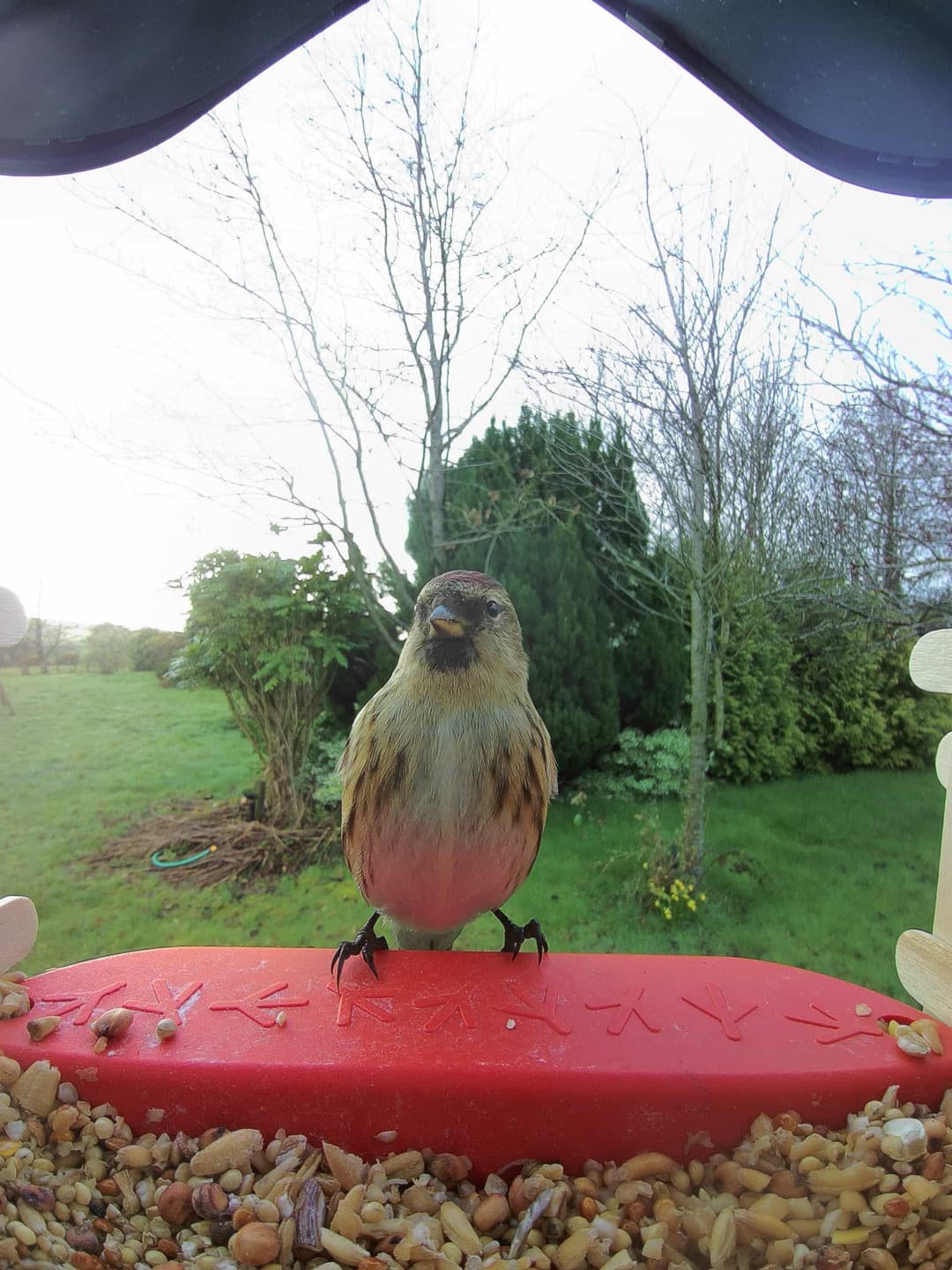
Featuring a reddish cap on the forehead, it contrasts with a streaked brown and white body
- •
Possesses a short, conical yellow beak ideal for seed consumption
What does a common redpoll sound like?
The common redpoll's vocalizations are diverse and melodious. They typically resort to a twittering trill with their songs, often mixed with a soft rattle. The call patterns range from flat to rising in pitch, demonstrating their dynamic range of sound. Their calls can be categorized into several types including chatter, chirp or chip, trill, and whistle. These harmonious sequences of notes sets them apart. The nuanced chirp, trill and whistle resonate through their territories, making the redpoll's vocalizations distinct and easily recognizable.


Description
Did you know that, when they get cold, common redpolls tunnel into the snow to keep warm? Their beaks also change colour during breeding season! They go from yellow with a black tip to ochre with a brown tip. These guys are monogamous and live in pairs or small flocks.
The common redpoll can weigh between 11to20grams and be from12to14centimeters tall.
The typical lifespan of the common redpoll is around 2 years; however, the oldest recorded individual lived up to 7 years. This small finch species' lifespan is relatively short compared to larger, related species like the pine grosbeak that can reach 9 years. The redpoll lifespan is similar to other small finch species such as the American goldfinch, which averages around 3 years.
Did you know?
Most popular questions about common redpoll
How to recognise a common redpoll?
General appearance
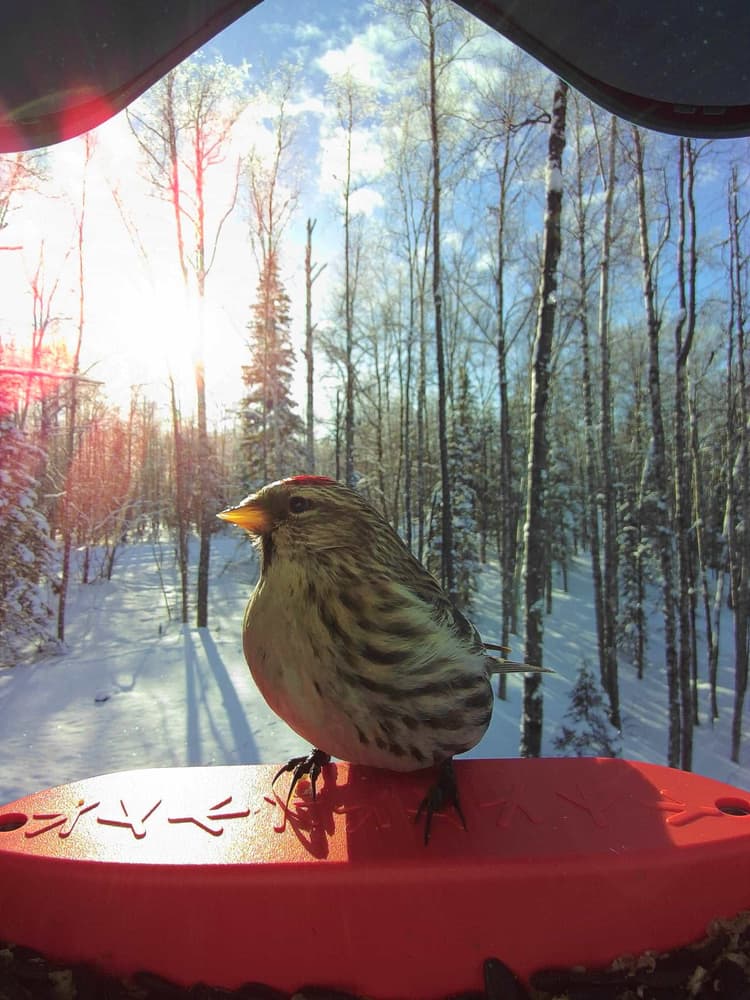
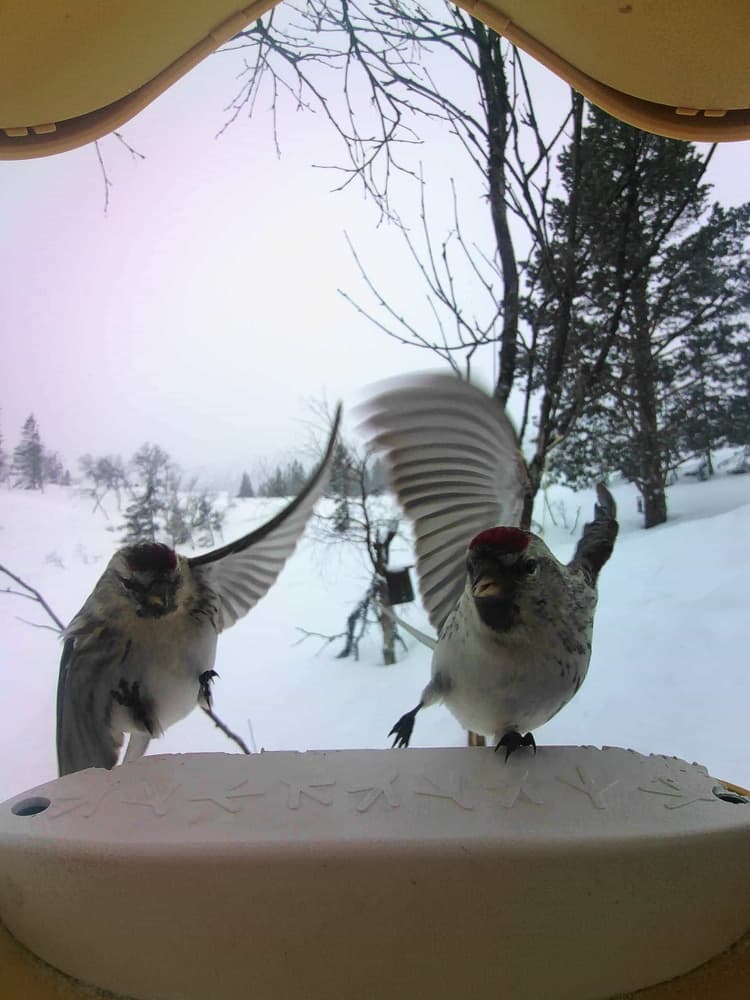
The common redpoll is of small size, similar to a sparrow, with a length of 5-5 1/2 inches (13-14 cm). It features a red forehead, a black chin, and maintains a darker overall appearance during the summer seasons. Its wings are pointed, and their tail shape is either notched or square-tipped.
Male vs female
Sexual dimorphism exists in common redpolls. The male redpoll is distinguished by a variable pink wash over its chest. The female, on the other hand, doesn't exhibit this coloring. Both sexes, however, exhibit the signature black chin and red forehead.
Juvenile
The juvenile common redpoll has similar features to the adults but may not have developed the identifiable red forehead or the male’s characteristic pink wash on the chest. The plumage patterns and color intensity may also differ, becoming more pronounced as they inch towards adulthood.
Often mistaken for
House Finch vs Common Redpoll
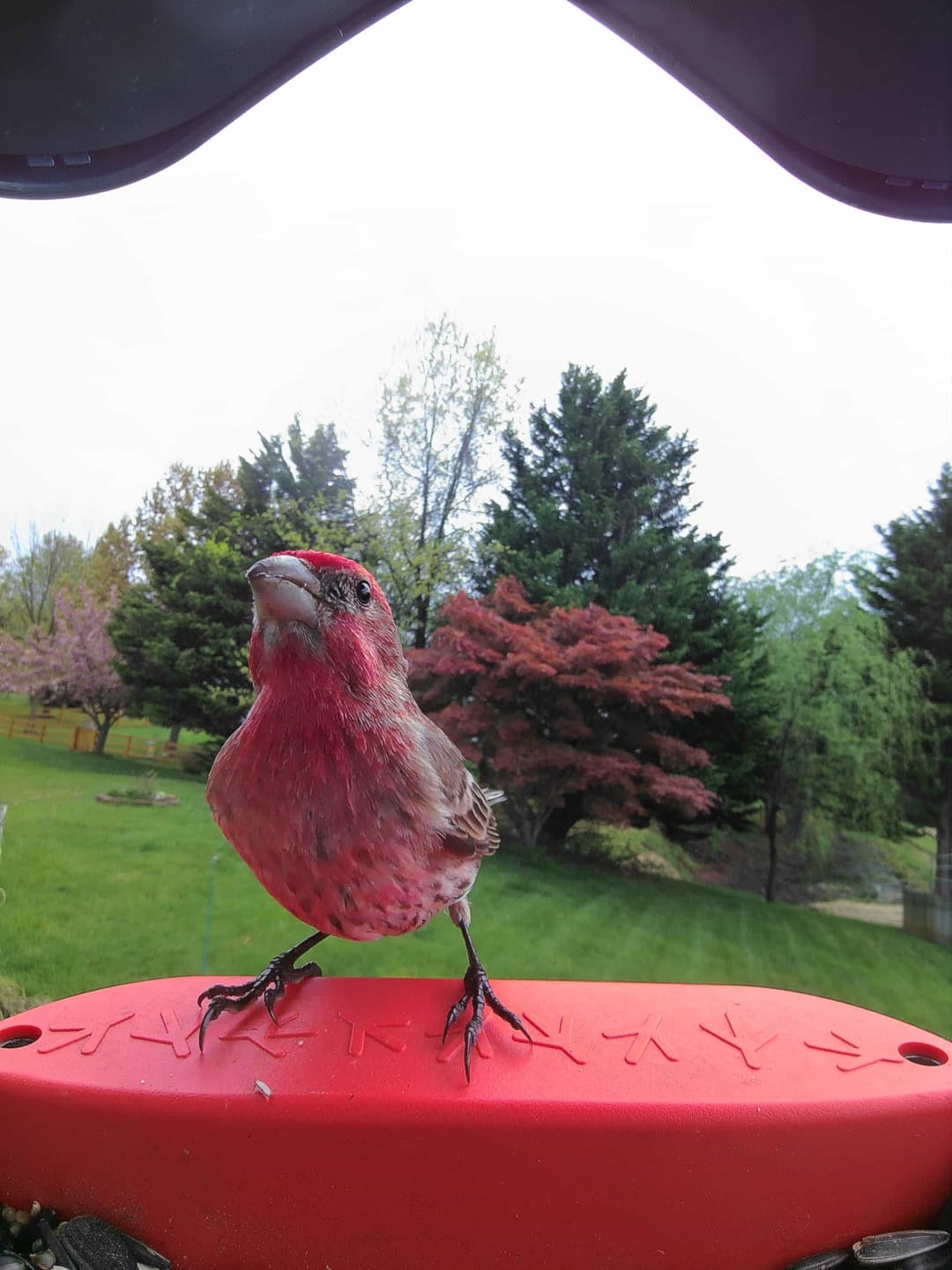
Both the House Finch and the Common Redpoll are small, with some red coloring. However, the Redpoll is distinguished by its red forehead and black chin, whereas the House Finch has a more uniform red head without a red forehead patch.
Purple Finch vs Common Redpoll
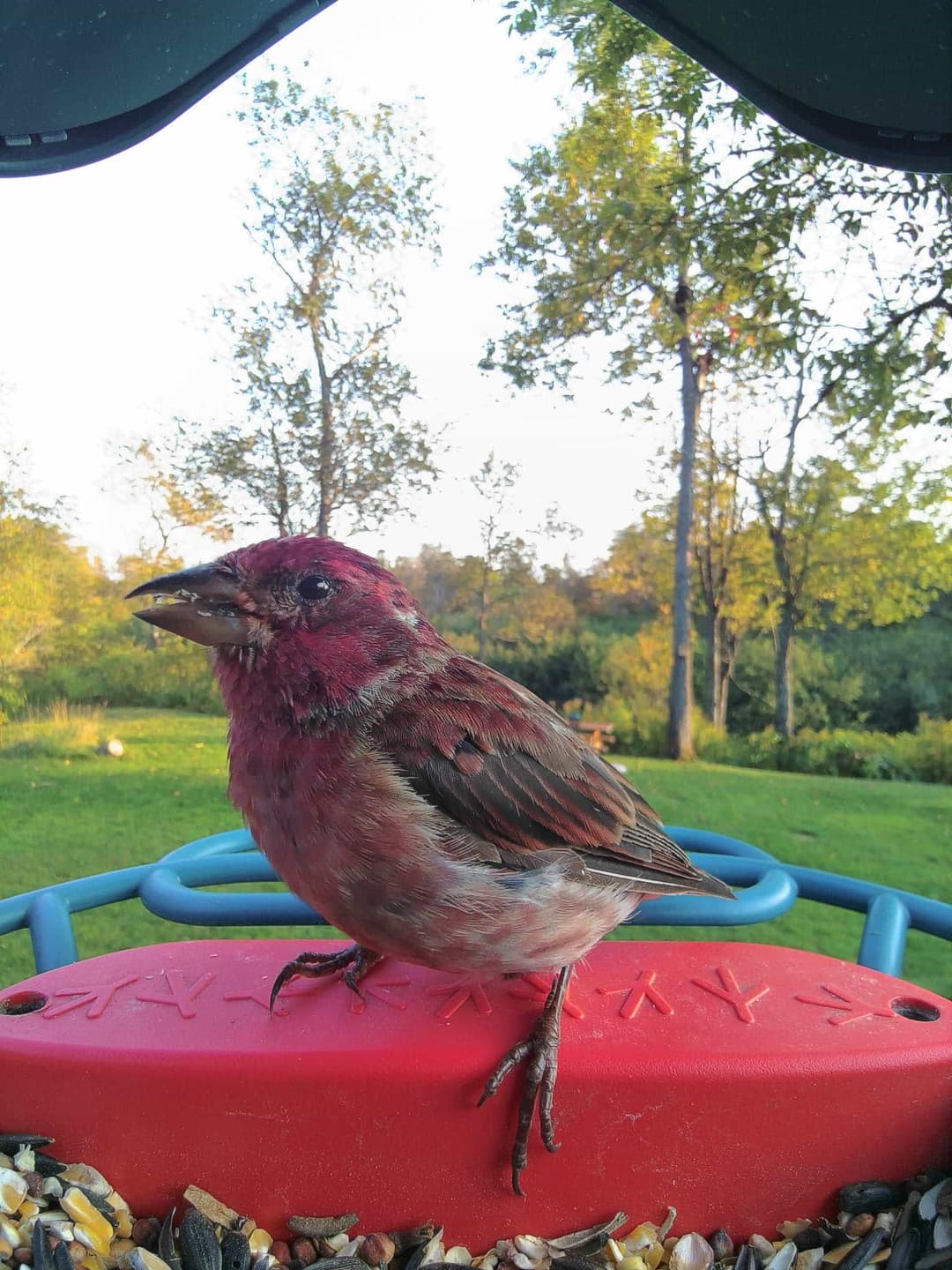
The Purple Finch resembles a Common Redpoll with its reddish hue. The main differentiator is the lack of the distinctive red forehead patch and black chin that the Redpoll has. The Purple Finch's red is more widespread and less concentrated on the head.
Lesser Redpoll vs Common Redpoll
The Lesser Redpoll closely resembles the Common Redpoll with very similar markings, including the red forehead patch and black chin. Distinguishing between them can sometimes require close inspection of size and plumage details.
Breeding and nesting habits of the common redpoll
Mating behaviors
As the breeding season approaches, female common redpolls become dominant and may take the lead in courtship, reversing the male dominance seen in winter flocks.
Nesting details
Common redpoll nests are usually very well hidden in dense low shrubs, within a few feet of the ground, sometimes in grass clumps or under brushpiles. The nest, probably built by the female, is an open cup constructed from fine twigs, grass, moss, and lined with feathers, plant down, or animal hair.
Eggs and chick-rearing
The species does not defend much of a nesting territory, and nests of different pairs may be close together. No specific details of chick-rearing practices are provided, but the typical small open cup nest suggests standard passerine rearing behaviors.
What does a common redpoll like to eat?
Flowers
Insects
Plants
Seeds
Snails
Spiders
Natural diet
The common redpoll primarily feeds on seeds and other vegetable matter throughout the year. They consume seeds, catkins, and buds from trees such as willows, alders, and birches. Additionally, they eat small conifer seeds and seeds from various weeds and grasses. During the summer, their diet includes a larger proportion of insects.
Bird feeders
Common redpolls are often attracted to bird feeders where they consume various seeds such as nyjer (thistle) and sunflower seeds. They are known to visit feeders particularly in winter when natural food sources become scarce.
Use favorite snacks
Common redpolls are particularly fond of eating seeds, especially thistle seeds. These little birds also like sunflower seeds, especially the smaller ones. Bird Buddy seeds are highly recommended, for they are expertly chosen to match the season, ensuring best results and attracting more redpolls to your yard or feeder.
Choose appropriate feeders
Redpolls are fond of tubular feeders that have multiple perches and feeding ports, particularly those designed for thistle seeds. They also enjoy tray or platform feeders where they can have a good view of their surroundings while dining. Position the feeders appropriately in your yard or near windows where you can comfortably watch them.
Create an inviting environment
Ensure your yard or garden is a safe and welcoming haven for redpolls. Keeping it clean and relatively noise-free can help to attract them. Planting vegetation that produces seeds will also attract them. Fun tricks to encourage redpolls include using bird baths filled with clean water, or hanging colorful ribbons near the feeders to catch their attention.
Encourage a sing-along
Redpolls are social birds that enjoy the company of their kind. To encourage more redpoll visits, play pre-recorded redpoll songs near the feeder. Coming across these familiar chirps and tweets can entice these birds to drop by more often, and maybe even spark a delightful sing-along.
Where can you find common redpolls?
Primary habitat
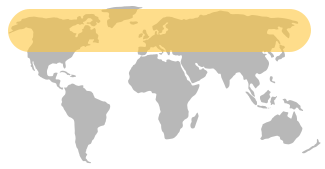
The Common Redpoll breeds in the bushy regions of the North, often choosing shrubby spaces in birch or spruce forest, willow, alder, or dwarf birch thicket, and areas on tundra.
Additional range
During the winter, it shifts to semi-open areas like woodland edges, brushy or weedy fields, and areas filled with weeds or brush.
Do they migrate?
The common redpoll is a migratory bird known for its irregular migration patterns. It typically migrates during the day in flocks and is highly adaptable in its winter range. The species exhibits an unpredictable, irruptive migration behavior, primarily influenced by food availability, particularly seeds from birches and alders. In search of food, common redpolls move south in the fall and winter, but they do not follow a fixed migration route like many other avian species. Instead, they only travel as far south as necessary, which results in significant variability in their wintering areas from year to year. Their southward migration range can extend into parts of southern Canada and the northern United States during particularly sparse food years, while some may remain further north if conditions are favorable. Key wintering locations often include boreal forests, open woodland edges, and weedy fields, where seed abundance is high. Due to their opportunistic foraging strategies, it is challenging to pinpoint specific migration timing and key locations consistently across different years. This flexibility ensures their survival in fluctuating environmental conditions, exemplifying their adaptability and resilience.
What is the role of common redpolls in nature and how to protect them?
Conservation status
The common redpoll is currently classified as "still widespread and abundant," indicating it is not considered vulnerable or endangered. This bird remains common across its range, facing relatively few significant threats. Key conservation efforts are minimal due to its stable population, but monitoring habitat changes, particularly in Arctic and boreal regions, is essential. Climate change and habitat loss pose potential future threats, although their impact is currently limited. Conservationists focus on preserving natural habitats to ensure the continued abundance of the common redpoll.
Ecological role of common redpolls
Its role in the ecosystem
The Common Redpoll plays a significant role in the ecosystem in terms of seed dispersal and pest control. Their diet mainly consists of seeds and insects, helping in containing the population of certain insects and weeds, thereby contributing to pest control. At the same time, as they forage for seeds from various trees and plants, any uneaten seeds are dispersed, aiding in the propagation of these plant species. They also consume catkins, the flowers of birch, alder, and willow trees, assisting in pollination. The pouch within their throat allows them to store and later digest food, an adaptation that helps them survive in harsh cold weather, indicating their resilience and significance in cold climate ecosystems. Additionally, their nesting behavior, which involves using a variety of natural materials, may help in the decomposition of organic matter.
How to help protect common redpolls
Preservation tips
Habitat preservation strategies
To support the conservation of the common redpoll, it is crucial to preserve their natural habitats, which are primarily boreal forests and tundra regions. Actions include lobbying for the protection and reforestation of these habitats, avoiding pesticide use which can harm their food sources, and maintaining areas with birch and alder for the birds’ seasonal feeding.
Community science initiatives
Community participation is essential for conserving common redpolls. Regular bird counts and reporting any sighting of redpoll to local wildlife authorities can help track and protect the population. Participate or organize local bird-watching groups and citizen science projects that gather data on bird species, including the common redpoll. Promote and engage in educational programs that raise awareness about the importance of biodiversity and the role of common redpolls in our ecosystem.