
Rufous-Crowned Sparrow
Rufous-Crowned Sparrow
Aimophila ruficeps


Quick Identification guide
Quick Identification guide
Male
- •
Rufous crown contrasting with a grey face and white eyering
- •
Small and slender body with streaked brownish wings
- •
Short, stout conical beak suitable for seed eating
Female
- •
Rufous crown similar to male with a softer grey face and whitish eyering
- •
Equally small build with less pronounced streaking on brownish wings
- •
Matches male's short, robust conical beak
What does a rufous-crowned sparrow sound like?
The Rufous-crowned Sparrow has a pleasing, rapid jumble of notes similar to a House Wren but with a distinctive "sparrow quality." Its distinctive calls include a down-slurred "dear dear dear" and a thin, plaintive "tseeee." The call pattern is falling and undulating, incorporating a mix of chirps, trills, and whistles.


Description
Rufous-crowned sparrows are birds that would prefer to be left alone. They establish a territory and stick to it, avoiding a great deal of socialising and tending to be generally wary of humans as well. They're also not all that great at flying. The longest recorded flight distance is a mere 540 feet!
The rufous-crowned sparrow can weigh between 18to20grams and be from13to15centimeters tall.
The Rufous-crowned Sparrow typically lives for around 5 years. While the exact lifespan can vary, it is relatively shorter compared to species like the Song Sparrow, which can live up to 11 years, or the Dark-eyed Junco which can reach 13 years old. However, it is similar to the lifespans of other sparrow species such as the Seaside Sparrows which average around 4 to 5 years.
Did you know?
Most popular questions about rufous-crowned sparrow
How to recognise a rufous-crowned sparrow?
General appearance
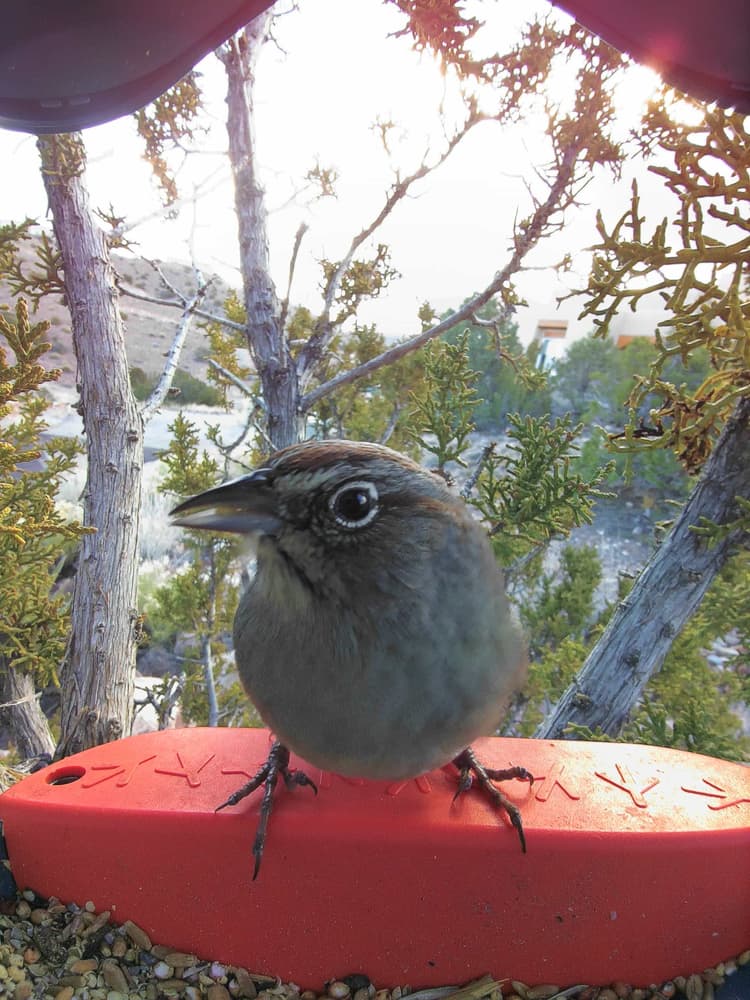
The Rufous-crowned Sparrow is small to medium-sized, measuring between 5-6 inches long. It has a distinctive rusty crown and heavy dark whisker mark. The bird appears to have a big bill and flat head. It displays black, brown, gray, red, and tan colors. Its wings are broad and its tail has a rounded, square-tipped shape. The Sparrow's habitat is very different from that of others, being less secretive.
Male vs female
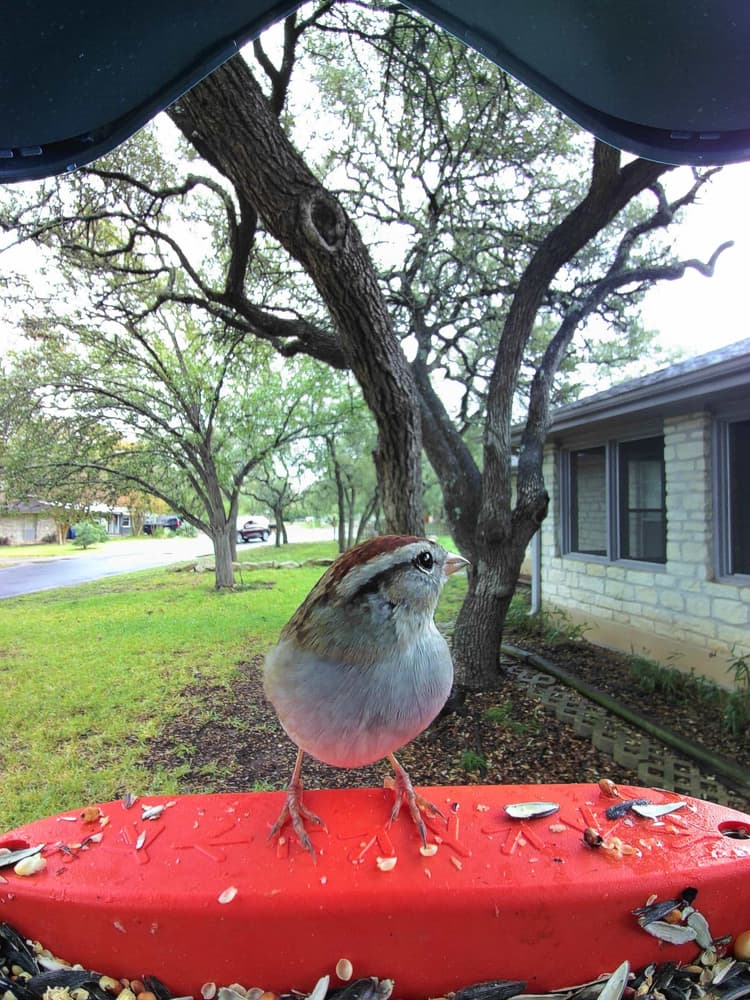
In the Rufous-crowned Sparrow species, there are no notable differences between the males and females in terms of physical appearance or coloration. Both sexes share the same rusty crown, dark whisker mark, and color scheme. Therefore, the males and females are visually similar.
Juvenile
Juvenile Rufous-crowned Sparrows are not distinctly different from the adults in physical appearance. However, they are typically more secretive like the adult Swamp Sparrows but unlike the other more petite and less secretive chipping and other rusty-capped sparrows. More detailed information would be needed to accurately describe their juvenile stage.
Often mistaken for
Chipping Sparrow vs Rufous-Crowned Sparrow
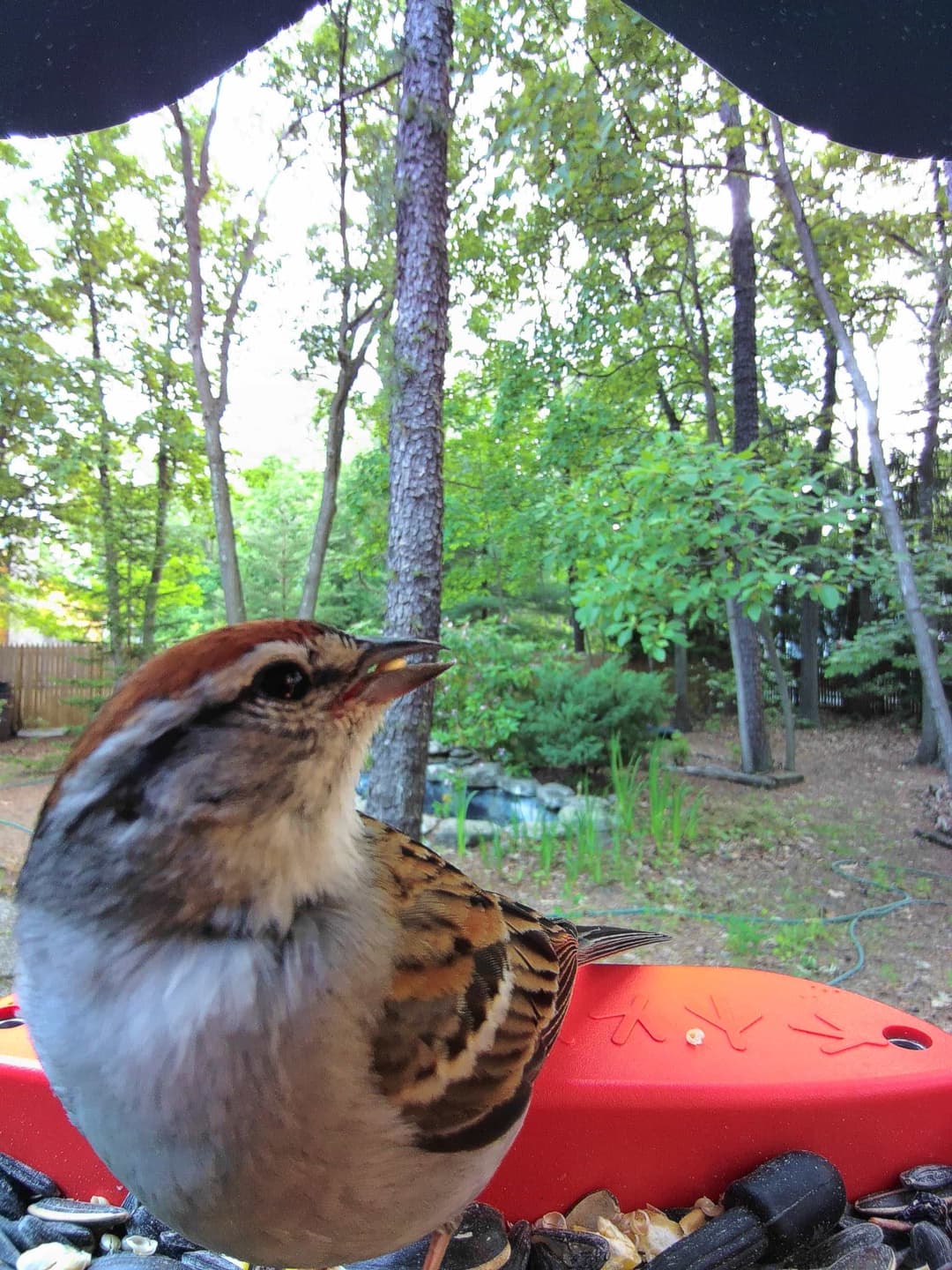
With a striking similarity to the Rufous-crowned Sparrow, the Chipping Sparrow is often mistaken due to their similar size and body shape. However, the Chipping Sparrow tends to have a more pronounced, rusty cap and a white stripe over its eyes, while the Rufous-crowned Sparrow has a rufous, unmarked crown.
Breeding and nesting habits of the rufous-crowned sparrow
Mating behaviors
Rufous-crowned sparrows are monogamous, with pairs often remaining together year-round within a permanent home range. During spring and summer, males actively sing to establish and defend their nesting territory.
Nesting details
Nests are typically located on the ground, well-hidden at the base of a bush or grass clump, placed in a slight depression to keep the rim near ground level. Occasionally, nests may be found in low shrubs, 1-3 feet above ground, especially in the eastern parts of their range. The nest construction consists of an open cup made from materials such as small twigs, grass, weeds, and plant fibers, sometimes incorporating animal hair in the lining.
Eggs and chick-rearing
The female rufous-crowned sparrow lays and incubates the eggs while both parents participate in feeding the chicks once they hatch. Parents ensure the nest location provides ample cover to protect against predators and environmental conditions. When creating a suitable habitat, dense shrubbery and avoiding disturbances in their nesting areas can significantly attract and support breeding pairs in gardens.
What does a rufous-crowned sparrow like to eat?
Insects
Plants
Seeds
Spiders
Natural diet
The rufous-crowned sparrow primarily consumes insects and seeds, with its diet varying based on the season and locality. During summer, it tends to eat more insects, including caterpillars, beetle larvae and adults, grasshoppers, ants, and other insects and spiders. In winter, the sparrow shifts to a seed-heavy diet, particularly seeds from grasses and weeds, though it consumes these seeds throughout the year.
Bird feeders
The rufous-crowned sparrow is less commonly observed at bird feeders compared to some other species. However, when visiting feeders, it may consume small seeds, such as those from millet or cracked corn, similar to the seeds it finds in its natural habitat.
Attracting the rufous-crowned sparrow
To attract the Rufous-crowned Sparrow into your yard, you need to make their favorite environment. The sparrow likes areas with a lot of shrubs and short trees that they can use for nesting and protection. Try implementing these in your yard to make it more appealing to them.
What to feed the rufous-crowned sparrow
Providing the right food is crucial to tempt them. The sparrows are mainly insectivorous but they also eat seeds. This is particularly true during winter when insects are less prevalent. Your best bet to attract this little bird is to fill your feeder with Bird Buddy seeds. These seeds are chosen by experts for the season and have shown the best results.
Feeder types for rufous-crowned sparrow
Rufous-Crowned Sparrows prefer ground feeders or low platform feeders. They are ground feeding birds and they feel more comfortable feeding from lower levels. Remember to place the feeder near shrubs or any vegetation so they can easily hide if they sense danger.
Fun tricks to attract the rufous-crowned sparrow
Once you've set up the feeder and proper environment, consider attracting them using bird calls. You can play the songs of the Rufous-crowned Sparrow in your garden. This might pique their curiosity and they might pay a visit to investigate and sing along.
Where can you find rufous-crowned sparrows?

Primary habitat
The rufous-crowned sparrow prefers grassy or rocky slopes with sparse low bushes or open pine-oak woods. In the Southwest, it inhabits rocky foothill areas and lower forested canyons.
Additional range
In the southern Great Plains, they can be found in rocky outcrops with dense grass and scattered bushes. It also dwells in chaparral or coastal scrub settings.
Do they migrate?
The rufous-crowned sparrow is generally considered a permanent resident, meaning it typically stays in the same place throughout the year. However, there is some evidence suggesting that it might retreat from the northern parts of its range during the winter months. This movement could be a form of short-distance migration or simply a shift in location within its usual range, but details about the specific routes or timing are not well-documented and may indicate that the bird is simply overlooked during this season. Since the rufous-crowned sparrow is primarily a resident species, it does not engage in long-distance migrations like other migratory birds. Instead, any movements are likely limited to local adjustments within its habitat, generally influenced by environmental factors such as temperature and food availability. In summary, while there may be some seasonal movement within its northern range, the rufous-crowned sparrow does not undertake the extensive, predictable migrations associated with many other bird species. Consequently, detailed routes and timing for such movements are not distinctly mapped or studied.
What is the role of rufous-crowned sparrows in nature and how to protect them?
Conservation status
The rufous-crowned sparrow remains widespread and common, yet recent surveys show a decline in its population, suggesting potential vulnerability. Although not currently classified as endangered, the species may face threats from habitat loss and fragmentation. Maintaining native vegetation and controlling urban sprawl are key conservation efforts aimed at supporting these sparrows. Monitoring population trends remains crucial to detect any significant changes that could heighten concern for their conservation status in the future.
Ecological role of rufous-crowned sparrows
Its role in the ecosystem
The Rufous-crowned Sparrow plays a significant role in the ecological balance due to its feeding habits and behaviors. Predominantly, it feeds on insects such as caterpillars, beetle larvae and adults, grasshoppers, ants, and spiders. The consumption of these organisms can help control the insect population, thereby contributing to a natural form of pest regulation. Furthermore, the Sparrow's diet also includes seeds from grasses and weeds. Eating these seeds and subsequently dispersing them through excretion aids in the process of seed dispersal, promoting plant diversity and healthy growth in their habitats. Moreover, Rufous-crowned Sparrows tend to forage in pairs or in family groups, indicating a propensity for social structures and behaviors which can have intricate and multifaceted impacts on the ecosystem. The intricate nest-building behavior of these sparrows also contributes to the ecosystem, particularly as they use materials from their environment, highlighting their interaction with, and dependence on, the local ecological factors in their habitat.
How to help protect rufous-crowned sparrows
Preservation tips
Habitat preservation strategies
Protect the natural habitats of the Rufous-crowned Sparrow such as grassland and shrubland from any form of destruction. Maintain openness of habitats by preventing the encroachment of trees and larger shrubs. Prohibit the use of harmful pesticides and chemicals that might harm the sparrow's food sources. Practice sustainable use of land and water resources around these habitats.
Community science initiatives
Promote community involvement through citizen science projects. Create awareness about the Rufous-crowned Sparrow through educational programs and habitat identification workshops. Encourage locals to use eBird, iNaturalist or other bird spotting apps to submit sightings and document the presence and activities of the bird in various habitats. Encourage landowners to dedicate a portion of their lands as bird-friendly spaces. Support local research initiatives focused on understanding and sustaining the Rufous-crowned Sparrow.